Vulnerability Mapping:ALLOWEDThis CWE ID may be used to map to real-world vulnerabilities Abstraction:
BaseBase - a weakness that is still mostly independent of a resource or technology, but with sufficient details to provide specific methods for detection and prevention. Base level weaknesses typically describe issues in terms of 2 or 3 of the following dimensions: behavior, property, technology, language, and resource.
View customized information:
For users who are interested in more notional aspects of a weakness. Example: educators, technical writers, and project/program managers.For users who are concerned with the practical application and details about the nature of a weakness and how to prevent it from happening. Example: tool developers, security researchers, pen-testers, incident response analysts.For users who are mapping an issue to CWE/CAPEC IDs, i.e., finding the most appropriate CWE for a specific issue (e.g., a CVE record). Example: tool developers, security researchers.For users who wish to see all available information for the CWE/CAPEC entry.For users who want to customize what details are displayed.
×
Edit Custom Filter
Description
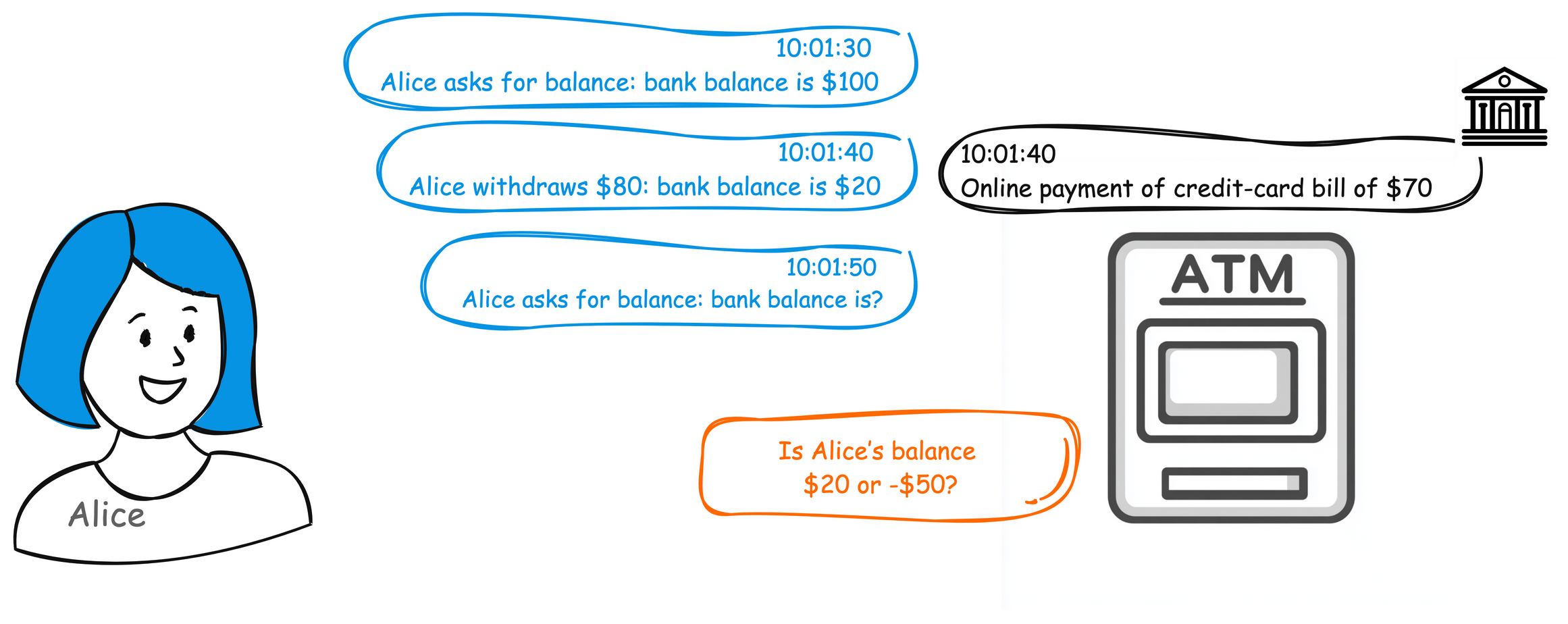
The product checks the state of a resource before using that resource, but the resource's state can change between the check and the use in a way that invalidates the results of the check.
Alternate Terms
TOCTTOU
The TOCTTOU acronym expands to "Time Of Check To Time Of Use".
TOCCTOU
The TOCCTOU acronym is most likely a typo of TOCTTOU, but it has been used in some influential documents, so the typo is repeated fairly frequently.
Common Consequences
This table specifies different individual consequences
associated with the weakness. The Scope identifies the application security area that is
violated, while the Impact describes the negative technical impact that arises if an
adversary succeeds in exploiting this weakness. The Likelihood provides information about
how likely the specific consequence is expected to be seen relative to the other
consequences in the list. For example, there may be high likelihood that a weakness will be
exploited to achieve a certain impact, but a low likelihood that it will be exploited to
achieve a different impact.
Impact
Details
Alter Execution Logic; Unexpected State
Scope: Integrity, Other
The attacker can gain access to otherwise unauthorized resources.
Modify Application Data; Modify Files or Directories; Modify Memory; Other
Scope: Integrity, Other
Race conditions such as this kind may be employed to gain read or write access to resources which are not normally readable or writable by the user in question.
Other
Scope: Integrity, Other
The resource in question, or other resources (through the corrupted one), may be changed in undesirable ways by a malicious user.
Hide Activities
Scope: Non-Repudiation
If a file or other resource is written in this method, as opposed to in a valid way, logging of the activity may not occur.
Other
Scope: Non-Repudiation, Other
In some cases it may be possible to delete files a malicious user might not otherwise have access to, such as log files.
Unexpected State
Scope: Other
The product may perform invalid actions when the resource is in an unexpected state.
Potential Mitigations
Phase(s)
Mitigation
Implementation
The most basic advice for TOCTOU vulnerabilities is to not perform a check before the use. This does not resolve the underlying issue of the execution of a function on a resource whose state and identity cannot be assured, but it does help to limit the false sense of security given by the check.
Implementation
When the file being altered is owned by the current user and group, set the effective gid and uid to that of the current user and group when executing this statement.
Architecture and Design
Limit the interleaving of operations on files from multiple processes.
Implementation; Architecture and Design
If you cannot perform operations atomically and you must share access to the resource between multiple processes or threads, then try to limit the amount of time (CPU cycles) between the check and use of the resource. This will not fix the problem, but it could make it more difficult for an attack to succeed.
Implementation
Recheck the resource after the use call to verify that the action was taken appropriately.
Architecture and Design
Ensure that some environmental locking mechanism can be used to protect resources effectively.
Implementation
Ensure that locking occurs before the check, as opposed to afterwards, such that the resource, as checked, is the same as it is when in use.
Relationships
This table shows the weaknesses and high level categories that are related to this
weakness. These relationships are defined as ChildOf, ParentOf, MemberOf and give insight to
similar items that may exist at higher and lower levels of abstraction. In addition,
relationships such as PeerOf and CanAlsoBe are defined to show similar weaknesses that the user
may want to explore.
Relevant to the view "Research Concepts" (View-1000)
Nature
Type
ID
Name
ChildOf
Class - a weakness that is described in a very abstract fashion, typically independent of any specific language or technology. More specific than a Pillar Weakness, but more general than a Base Weakness. Class level weaknesses typically describe issues in terms of 1 or 2 of the following dimensions: behavior, property, and resource.
Concurrent Execution using Shared Resource with Improper Synchronization ('Race Condition')
ParentOf
Base - a weakness that is still mostly independent of a resource or technology, but with sufficient details to provide specific methods for detection and prevention. Base level weaknesses typically describe issues in terms of 2 or 3 of the following dimensions: behavior, property, technology, language, and resource.
Base - a weakness that is still mostly independent of a resource or technology, but with sufficient details to provide specific methods for detection and prevention. Base level weaknesses typically describe issues in terms of 2 or 3 of the following dimensions: behavior, property, technology, language, and resource.
Base - a weakness that is still mostly independent of a resource or technology, but with sufficient details to provide specific methods for detection and prevention. Base level weaknesses typically describe issues in terms of 2 or 3 of the following dimensions: behavior, property, technology, language, and resource.
Relevant to the view "Weaknesses for Simplified Mapping of Published Vulnerabilities" (View-1003)
Nature
Type
ID
Name
ChildOf
Class - a weakness that is described in a very abstract fashion, typically independent of any specific language or technology. More specific than a Pillar Weakness, but more general than a Base Weakness. Class level weaknesses typically describe issues in terms of 1 or 2 of the following dimensions: behavior, property, and resource.
Concurrent Execution using Shared Resource with Improper Synchronization ('Race Condition')
Modes
Of Introduction
The different Modes of Introduction provide information
about how and when this
weakness may be introduced. The Phase identifies a point in the life cycle at which
introduction
may occur, while the Note provides a typical scenario related to introduction during the
given
phase.
Phase
Note
Implementation
This weakness can be security-relevant when an attacker can influence the state of the resource between check and use. This can happen with shared resources such as files, memory, or even variables in multithreaded programs.
Applicable Platforms
This listing shows possible areas for which the given
weakness could appear. These
may be for specific named Languages, Operating Systems, Architectures, Paradigms,
Technologies,
or a class of such platforms. The platform is listed along with how frequently the given
weakness appears for that instance.
Languages
Class: Not Language-Specific
(Undetermined Prevalence)
Likelihood Of Exploit
Medium
Demonstrative Examples
Example 1
The following code checks a file, then updates its contents.
(bad code)
Example Language: C
struct stat *sb; ... lstat("...",sb); // it has not been updated since the last time it was read printf("stated file\n"); if (sb->st_mtimespec==...){
print("Now updating things\n"); updateThings();
}
Potentially the file could have been updated between the time of the check and the lstat, especially since the printf has latency.
Example 2
The following code is from a program installed setuid root. The program performs certain file operations on behalf of non-privileged users, and uses access checks to ensure that it does not use its root privileges to perform operations that should otherwise be unavailable the current user. The program uses the access() system call to check if the person running the program has permission to access the specified file before it opens the file and performs the necessary operations.
(bad code)
Example Language: C
if(!access(file,W_OK)) {
f = fopen(file,"w+"); operate(f); ...
} else {
fprintf(stderr,"Unable to open file %s.\n",file);
}
The call to access() behaves as expected, and returns 0 if the user running the program has the necessary permissions to write to the file, and -1 otherwise. However, because both access() and fopen() operate on filenames rather than on file handles, there is no guarantee that the file variable still refers to the same file on disk when it is passed to fopen() that it did when it was passed to access(). If an attacker replaces file after the call to access() with a symbolic link to a different file, the program will use its root privileges to operate on the file even if it is a file that the attacker would otherwise be unable to modify. By tricking the program into performing an operation that would otherwise be impermissible, the attacker has gained elevated privileges. This type of vulnerability is not limited to programs with root privileges. If the application is capable of performing any operation that the attacker would not otherwise be allowed perform, then it is a possible target.
Example 3
This code prints the contents of a file if a user has permission.
(bad code)
Example Language: PHP
function readFile($filename){
$user = getCurrentUser();
//resolve file if its a symbolic link if(is_link($filename)){
$filename = readlink($filename);
}
if(fileowner($filename) == $user){
echo file_get_contents($realFile); return;
} else{
echo 'Access denied'; return false;
}
}
This code attempts to resolve symbolic links before checking the file and printing its contents. However, an attacker may be able to change the file from a real file to a symbolic link between the calls to is_link() and file_get_contents(), allowing the reading of arbitrary files. Note that this code fails to log the attempted access (CWE-778).
Example 4
This example is adapted from [REF-18]. Assume that this code block is invoked from multiple threads. The switch statement will execute different code depending on the time when MYFILE.txt was last changed.
case 0: printf("Option 1\n"); break;
case 1: printf("Option 2\n"); break;
default: printf("this should be unreachable?\n"); break;
}
If this code block were executed within multiple threads, and MYFILE.txt changed between the operation of one thread and another, then the switch could produce different, possibly unexpected results.
Selected Observed
Examples
Note: this is a curated list of examples for users to understand the variety of ways in which this
weakness can be introduced. It is not a complete list of all CVEs that are related to this CWE entry.
Chain: A multi-threaded race condition (CWE-367) allows attackers to cause two threads to process the same RPC request, which causes a use-after-free (CWE-416) in one thread
chain: time-of-check time-of-use (TOCTOU) race condition in program allows bypass of protection mechanism that was designed to prevent symlink attacks.
chain: time-of-check time-of-use (TOCTOU) race condition in program allows bypass of protection mechanism that was designed to prevent symlink attacks.
Weakness Ordinalities
Ordinality
Description
Primary
(where the weakness exists independent of other weaknesses)
Detection
Methods
Method
Details
Automated Static Analysis
Automated static analysis, commonly referred to as Static Application Security Testing (SAST), can find some instances of this weakness by analyzing source code (or binary/compiled code) without having to execute it. Typically, this is done by building a model of data flow and control flow, then searching for potentially-vulnerable patterns that connect "sources" (origins of input) with "sinks" (destinations where the data interacts with external components, a lower layer such as the OS, etc.)
Effectiveness: High
Affected Resources
File or Directory
Memberships
This MemberOf Relationships table shows additional CWE Categories and Views that
reference this weakness as a member. This information is often useful in understanding where a
weakness fits within the context of external information sources.
Nature
Type
ID
Name
MemberOf
Category - a CWE entry that contains a set of other entries that share a common characteristic.
CERT C++ Secure Coding Section 09 - Input Output (FIO)
MemberOf
View - a subset of CWE entries that provides a way of examining CWE content. The two main view structures are Slices (flat lists) and Graphs (containing relationships between entries).
(this CWE ID may be used to map to real-world vulnerabilities)
Reason
Acceptable-Use
Rationale
This CWE entry is at the Base level of abstraction, which is a preferred level of abstraction for mapping to the root causes of vulnerabilities.
Comments
Carefully read both the name and description to ensure that this mapping is an appropriate fit. Do not try to 'force' a mapping to a lower-level Base/Variant simply to comply with this preferred level of abstraction.
Notes
Relationship
TOCTOU issues do not always involve symlinks, and not every symlink issue is a TOCTOU problem.
Research Gap
Non-symlink TOCTOU issues are not reported frequently, but they are likely to occur in code that attempts to be secure.
Taxonomy
Mappings
Mapped Taxonomy Name
Node ID
Fit
Mapped Node Name
PLOVER
Time-of-check Time-of-use race condition
7 Pernicious Kingdoms
File Access Race Conditions: TOCTOU
CLASP
Time of check, time of use race condition
CLASP
Race condition in switch
CERT C Secure Coding
FIO01-C
Be careful using functions that use file names for identification
Michael Howard, David LeBlanc and John Viega. "24 Deadly Sins of Software Security". "Sin 13: Race Conditions." Page 205. McGraw-Hill. 2010.
[REF-62]
Mark Dowd, John McDonald and Justin Schuh. "The Art of Software Security Assessment". Chapter 9, "TOCTOU", Page 527. 1st Edition. Addison Wesley. 2006.


 Description
 This table specifies different individual consequences
associated with the weakness. The Scope identifies the application security area that is
violated, while the Impact describes the negative technical impact that arises if an
adversary succeeds in exploiting this weakness. The Likelihood provides information about
how likely the specific consequence is expected to be seen relative to the other
consequences in the list. For example, there may be high likelihood that a weakness will be
exploited to achieve a certain impact, but a low likelihood that it will be exploited to
achieve a different impact.
This table specifies different individual consequences
associated with the weakness. The Scope identifies the application security area that is
violated, while the Impact describes the negative technical impact that arises if an
adversary succeeds in exploiting this weakness. The Likelihood provides information about
how likely the specific consequence is expected to be seen relative to the other
consequences in the list. For example, there may be high likelihood that a weakness will be
exploited to achieve a certain impact, but a low likelihood that it will be exploited to
achieve a different impact.