Vulnerability Mapping:DISCOURAGEDThis CWE ID should not be used to map to real-world vulnerabilities Abstraction:
ClassClass - a weakness that is described in a very abstract fashion, typically independent of any specific language or technology. More specific than a Pillar Weakness, but more general than a Base Weakness. Class level weaknesses typically describe issues in terms of 1 or 2 of the following dimensions: behavior, property, and resource.
View customized information:
For users who are interested in more notional aspects of a weakness. Example: educators, technical writers, and project/program managers.For users who are concerned with the practical application and details about the nature of a weakness and how to prevent it from happening. Example: tool developers, security researchers, pen-testers, incident response analysts.For users who are mapping an issue to CWE/CAPEC IDs, i.e., finding the most appropriate CWE for a specific issue (e.g., a CVE record). Example: tool developers, security researchers.For users who wish to see all available information for the CWE/CAPEC entry.For users who want to customize what details are displayed.
×
Edit Custom Filter
Description
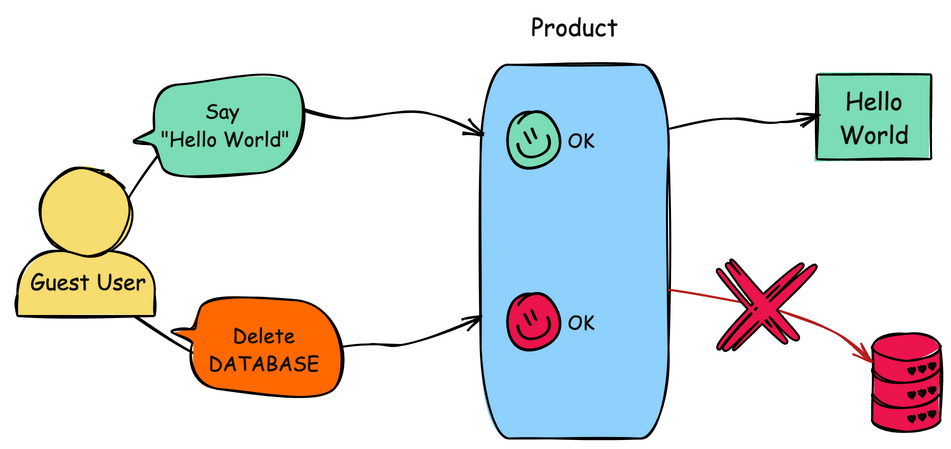
The product does not properly assign, modify, track, or check privileges for an actor, creating an unintended sphere of control for that actor.
Common Consequences
This table specifies different individual consequences
associated with the weakness. The Scope identifies the application security area that is
violated, while the Impact describes the negative technical impact that arises if an
adversary succeeds in exploiting this weakness. The Likelihood provides information about
how likely the specific consequence is expected to be seen relative to the other
consequences in the list. For example, there may be high likelihood that a weakness will be
exploited to achieve a certain impact, but a low likelihood that it will be exploited to
achieve a different impact.
Impact
Details
Gain Privileges or Assume Identity
Scope: Access Control
Potential Mitigations
Phase(s)
Mitigation
Architecture and Design; Operation
Very carefully manage the setting, management, and handling of privileges. Explicitly manage trust zones in the software.
Architecture and Design
Strategy: Separation of Privilege
Follow the principle of least privilege when assigning access rights to entities in a software system.
Architecture and Design
Strategy: Separation of Privilege
Consider following the principle of separation of privilege. Require multiple conditions to be met before permitting access to a system resource.
Relationships
This table shows the weaknesses and high level categories that are related to this
weakness. These relationships are defined as ChildOf, ParentOf, MemberOf and give insight to
similar items that may exist at higher and lower levels of abstraction. In addition,
relationships such as PeerOf and CanAlsoBe are defined to show similar weaknesses that the user
may want to explore.
Relevant to the view "Research Concepts" (View-1000)
Nature
Type
ID
Name
ChildOf
Pillar - a weakness that is the most abstract type of weakness and represents a theme for all class/base/variant weaknesses related to it. A Pillar is different from a Category as a Pillar is still technically a type of weakness that describes a mistake, while a Category represents a common characteristic used to group related things.
Base - a weakness that is still mostly independent of a resource or technology, but with sufficient details to provide specific methods for detection and prevention. Base level weaknesses typically describe issues in terms of 2 or 3 of the following dimensions: behavior, property, technology, language, and resource.
Base - a weakness that is still mostly independent of a resource or technology, but with sufficient details to provide specific methods for detection and prevention. Base level weaknesses typically describe issues in terms of 2 or 3 of the following dimensions: behavior, property, technology, language, and resource.
Base - a weakness that is still mostly independent of a resource or technology, but with sufficient details to provide specific methods for detection and prevention. Base level weaknesses typically describe issues in terms of 2 or 3 of the following dimensions: behavior, property, technology, language, and resource.
Base - a weakness that is still mostly independent of a resource or technology, but with sufficient details to provide specific methods for detection and prevention. Base level weaknesses typically describe issues in terms of 2 or 3 of the following dimensions: behavior, property, technology, language, and resource.
Base - a weakness that is still mostly independent of a resource or technology, but with sufficient details to provide specific methods for detection and prevention. Base level weaknesses typically describe issues in terms of 2 or 3 of the following dimensions: behavior, property, technology, language, and resource.
Class - a weakness that is described in a very abstract fashion, typically independent of any specific language or technology. More specific than a Pillar Weakness, but more general than a Base Weakness. Class level weaknesses typically describe issues in terms of 1 or 2 of the following dimensions: behavior, property, and resource.
Base - a weakness that is still mostly independent of a resource or technology, but with sufficient details to provide specific methods for detection and prevention. Base level weaknesses typically describe issues in terms of 2 or 3 of the following dimensions: behavior, property, technology, language, and resource.
Base - a weakness that is still mostly independent of a resource or technology, but with sufficient details to provide specific methods for detection and prevention. Base level weaknesses typically describe issues in terms of 2 or 3 of the following dimensions: behavior, property, technology, language, and resource.
Relevant to the view "Weaknesses for Simplified Mapping of Published Vulnerabilities" (View-1003)
Nature
Type
ID
Name
MemberOf
View - a subset of CWE entries that provides a way of examining CWE content. The two main view structures are Slices (flat lists) and Graphs (containing relationships between entries).
The different Modes of Introduction provide information
about how and when this
weakness may be introduced. The Phase identifies a point in the life cycle at which
introduction
may occur, while the Note provides a typical scenario related to introduction during the
given
phase.
Phase
Note
Architecture and Design
Implementation
REALIZATION: This weakness is caused during implementation of an architectural security tactic.
Operation
Applicable Platforms
This listing shows possible areas for which the given
weakness could appear. These
may be for specific named Languages, Operating Systems, Architectures, Paradigms,
Technologies,
or a class of such platforms. The platform is listed along with how frequently the given
weakness appears for that instance.
Languages
Class: Not Language-Specific
(Undetermined Prevalence)
Likelihood Of Exploit
Medium
Demonstrative Examples
Example 1
This code temporarily raises the program's privileges to allow creation of a new user folder.
print('Unable to create new user directory for user:' + username) return False
return True
While the program only raises its privilege level to create the folder and immediately lowers it again, if the call to os.mkdir() throws an exception, the call to lowerPrivileges() will not occur. As a result, the program is indefinitely operating in a raised privilege state, possibly allowing further exploitation to occur.
// privileged code goes here, for example: System.loadLibrary("awt"); return null; // nothing to return
}
Example 4
This code intends to allow only Administrators to print debug information about a system.
(bad code)
Example Language: Java
public enum Roles {
ADMIN,USER,GUEST
}
public void printDebugInfo(User requestingUser){
if(isAuthenticated(requestingUser)){
switch(requestingUser.role){
case GUEST:
System.out.println("You are not authorized to perform this command"); break;
default:
System.out.println(currentDebugState()); break;
}
} else{
System.out.println("You must be logged in to perform this command");
}
}
While the intention was to only allow Administrators to print the debug information, the code as written only excludes those with the role of "GUEST". Someone with the role of "ADMIN" or "USER" will be allowed access, which goes against the original intent. An attacker may be able to use this debug information to craft an attack on the system.
Example 5
This code allows someone with the role of "ADMIN" or "OPERATOR" to reset a user's password. The role of "OPERATOR" is intended to have less privileges than an "ADMIN", but still be able to help users with small issues such as forgotten passwords.
(bad code)
Example Language: Java
public enum Roles {
ADMIN,OPERATOR,USER,GUEST
}
public void resetPassword(User requestingUser, User user, String password ){
if(isAuthenticated(requestingUser)){
switch(requestingUser.role){
case GUEST:
System.out.println("You are not authorized to perform this command"); break;
case USER:
System.out.println("You are not authorized to perform this command"); break;
default:
setPassword(user,password); break;
}
}
else{
System.out.println("You must be logged in to perform this command");
}
}
This code does not check the role of the user whose password is being reset. It is possible for an Operator to gain Admin privileges by resetting the password of an Admin account and taking control of that account.
Selected Observed
Examples
Note: this is a curated list of examples for users to understand the variety of ways in which this
weakness can be introduced. It is not a complete list of all CVEs that are related to this CWE entry.
FTP client program on a certain OS runs with setuid privileges and has a buffer overflow. Most clients do not need extra privileges, so an overflow is not a vulnerability for those clients.
Composite: application running with high privileges (CWE-250) allows user to specify a restricted file to process, which generates a parsing error that leaks the contents of the file (CWE-209).
User with capability can prevent setuid program from dropping privileges (Unsafe privileged actions).
Weakness Ordinalities
Ordinality
Description
Primary
(where the weakness exists independent of other weaknesses)
Detection
Methods
Method
Details
Automated Static Analysis
Automated static analysis, commonly referred to as Static Application Security Testing (SAST), can find some instances of this weakness by analyzing source code (or binary/compiled code) without having to execute it. Typically, this is done by building a model of data flow and control flow, then searching for potentially-vulnerable patterns that connect "sources" (origins of input) with "sinks" (destinations where the data interacts with external components, a lower layer such as the OS, etc.)
Effectiveness: High
Memberships
This MemberOf Relationships table shows additional CWE Categories and Views that
reference this weakness as a member. This information is often useful in understanding where a
weakness fits within the context of external information sources.
Nature
Type
ID
Name
MemberOf
Category - a CWE entry that contains a set of other entries that share a common characteristic.
View - a subset of CWE entries that provides a way of examining CWE content. The two main view structures are Slices (flat lists) and Graphs (containing relationships between entries).
OWASP Top Ten 2021 Category A04:2021 - Insecure Design
MemberOf
View - a subset of CWE entries that provides a way of examining CWE content. The two main view structures are Slices (flat lists) and Graphs (containing relationships between entries).
View - a subset of CWE entries that provides a way of examining CWE content. The two main view structures are Slices (flat lists) and Graphs (containing relationships between entries).
Weaknesses in the 2023 CWE Top 25 Most Dangerous Software Weaknesses
MemberOf
View - a subset of CWE entries that provides a way of examining CWE content. The two main view structures are Slices (flat lists) and Graphs (containing relationships between entries).
CWE-269 is commonly misused. It can be conflated with "privilege escalation," which is a technical impact that is listed in many low-information vulnerability reports [REF-1287]. It is not useful for trend analysis.
Comments
If an error or mistake allows privilege escalation, then use the CWE ID for that mistake. Avoid using CWE-269 when only phrases such as "privilege escalation" or "gain privileges" are available, as these indicate technical impact of the vulnerability - not the root cause weakness. If the root cause seems to be directly related to privileges, then examine the children of CWE-269 for additional hints.
The relationships between privileges, permissions, and actors (e.g. users and groups) need further refinement within the Research view. One complication is that these concepts apply to two different pillars, related to control of resources (CWE-664) and protection mechanism failures (CWE-693).
Michael Howard, David LeBlanc and John Viega. "24 Deadly Sins of Software Security". "Sin 16: Executing Code With Too Much Privilege." Page 243. McGraw-Hill. 2010.
[REF-62]
Mark Dowd, John McDonald and Justin Schuh. "The Art of Software Security Assessment". Chapter 9, "Dropping Privileges Permanently", Page 479. 1st Edition. Addison Wesley. 2006.


 Description
 This table specifies different individual consequences
associated with the weakness. The Scope identifies the application security area that is
violated, while the Impact describes the negative technical impact that arises if an
adversary succeeds in exploiting this weakness. The Likelihood provides information about
how likely the specific consequence is expected to be seen relative to the other
consequences in the list. For example, there may be high likelihood that a weakness will be
exploited to achieve a certain impact, but a low likelihood that it will be exploited to
achieve a different impact.
This table specifies different individual consequences
associated with the weakness. The Scope identifies the application security area that is
violated, while the Impact describes the negative technical impact that arises if an
adversary succeeds in exploiting this weakness. The Likelihood provides information about
how likely the specific consequence is expected to be seen relative to the other
consequences in the list. For example, there may be high likelihood that a weakness will be
exploited to achieve a certain impact, but a low likelihood that it will be exploited to
achieve a different impact.