CWE entries in this view (graph) are listed in the 2010 CWE/SANS Top 25 Programming Errors. This view is considered obsolete as a newer version of the Top 25 is available.
Audience
Stakeholder
Description
Software Developers
By following the Top 25, developers will be able to significantly reduce the number of weaknesses that occur in their software.
Product Customers
If a software developer claims to be following the Top 25, then customers can use the weaknesses in this view in order to formulate independent evidence of that claim.
Educators
Educators can use this view in multiple ways. For example, if there is a focus on teaching weaknesses, the educator could focus on the Top 25.
Relationships
The following graph shows the tree-like relationships between
weaknesses that exist at different levels of abstraction. At the highest level, categories
and pillars exist to group weaknesses. Categories (which are not technically weaknesses) are
special CWE entries used to group weaknesses that share a common characteristic. Pillars are
weaknesses that are described in the most abstract fashion. Below these top-level entries
are weaknesses are varying levels of abstraction. Classes are still very abstract, typically
independent of any specific language or technology. Base level weaknesses are used to
present a more specific type of weakness. A variant is a weakness that is described at a
very low level of detail, typically limited to a specific language or technology. A chain is
a set of weaknesses that must be reachable consecutively in order to produce an exploitable
vulnerability. While a composite is a set of weaknesses that must all be present
simultaneously in order to produce an exploitable vulnerability.
800(Weaknesses in the 2010 CWE/SANS Top 25 Most Dangerous Programming Errors) >
808(2010 Top 25 - Weaknesses On the Cusp)
Weaknesses in this category are not part of the general Top 25, but they were part of the original nominee list from which the Top 25 was drawn.
Base - a weakness that is still mostly independent of a resource or technology, but with sufficient details to provide specific methods for detection and prevention. Base level weaknesses typically describe issues in terms of 2 or 3 of the following dimensions: behavior, property, technology, language, and resource.
Use of Externally-Controlled Format String
- (134)
800(Weaknesses in the 2010 CWE/SANS Top 25 Most Dangerous Programming Errors) >
808(2010 Top 25 - Weaknesses On the Cusp) >
134(Use of Externally-Controlled Format String)
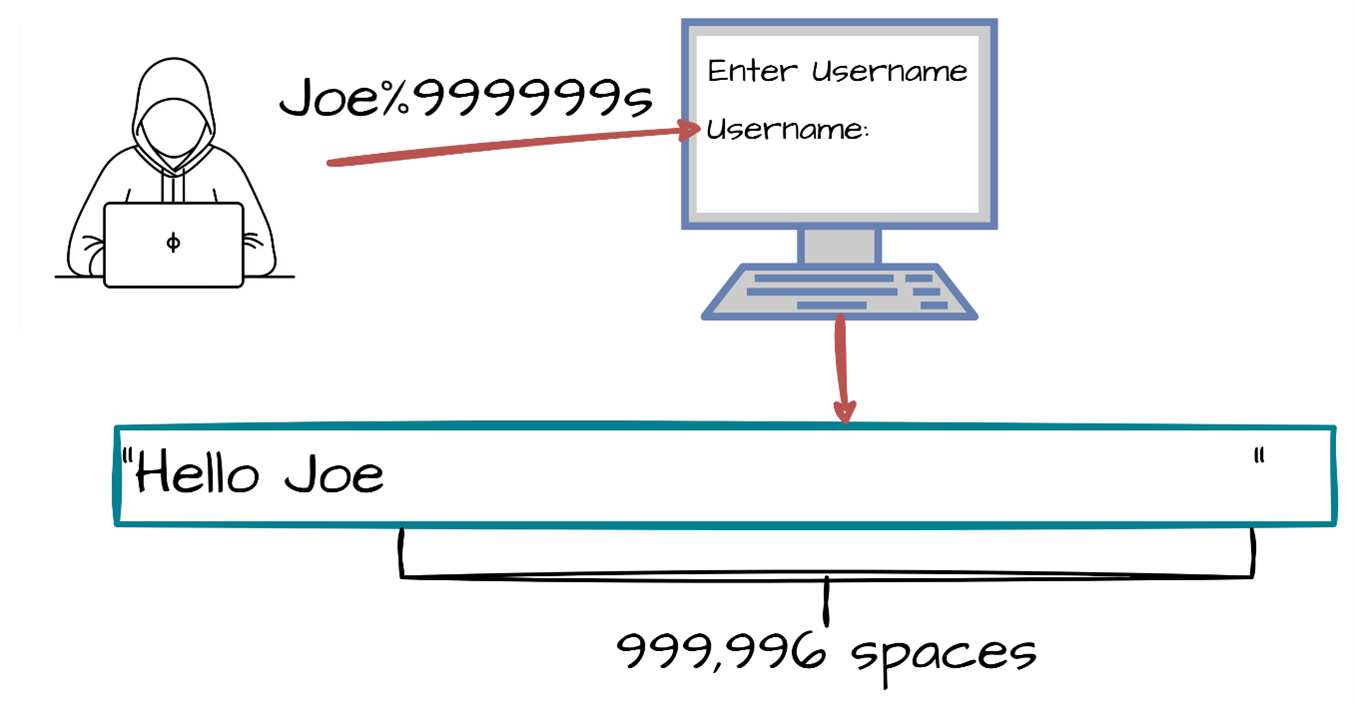
The product uses a function that accepts a format string as an argument, but the format string originates from an external source.
Base - a weakness that is still mostly independent of a resource or technology, but with sufficient details to provide specific methods for detection and prevention. Base level weaknesses typically describe issues in terms of 2 or 3 of the following dimensions: behavior, property, technology, language, and resource.
Improper Removal of Sensitive Information Before Storage or Transfer
- (212)
800(Weaknesses in the 2010 CWE/SANS Top 25 Most Dangerous Programming Errors) >
808(2010 Top 25 - Weaknesses On the Cusp) >
212(Improper Removal of Sensitive Information Before Storage or Transfer)
The product stores, transfers, or shares a resource that contains sensitive information, but it does not properly remove that information before the product makes the resource available to unauthorized actors.
Base - a weakness that is still mostly independent of a resource or technology, but with sufficient details to provide specific methods for detection and prevention. Base level weaknesses typically describe issues in terms of 2 or 3 of the following dimensions: behavior, property, technology, language, and resource.
Improper Restriction of Excessive Authentication Attempts
- (307)
800(Weaknesses in the 2010 CWE/SANS Top 25 Most Dangerous Programming Errors) >
808(2010 Top 25 - Weaknesses On the Cusp) >
307(Improper Restriction of Excessive Authentication Attempts)
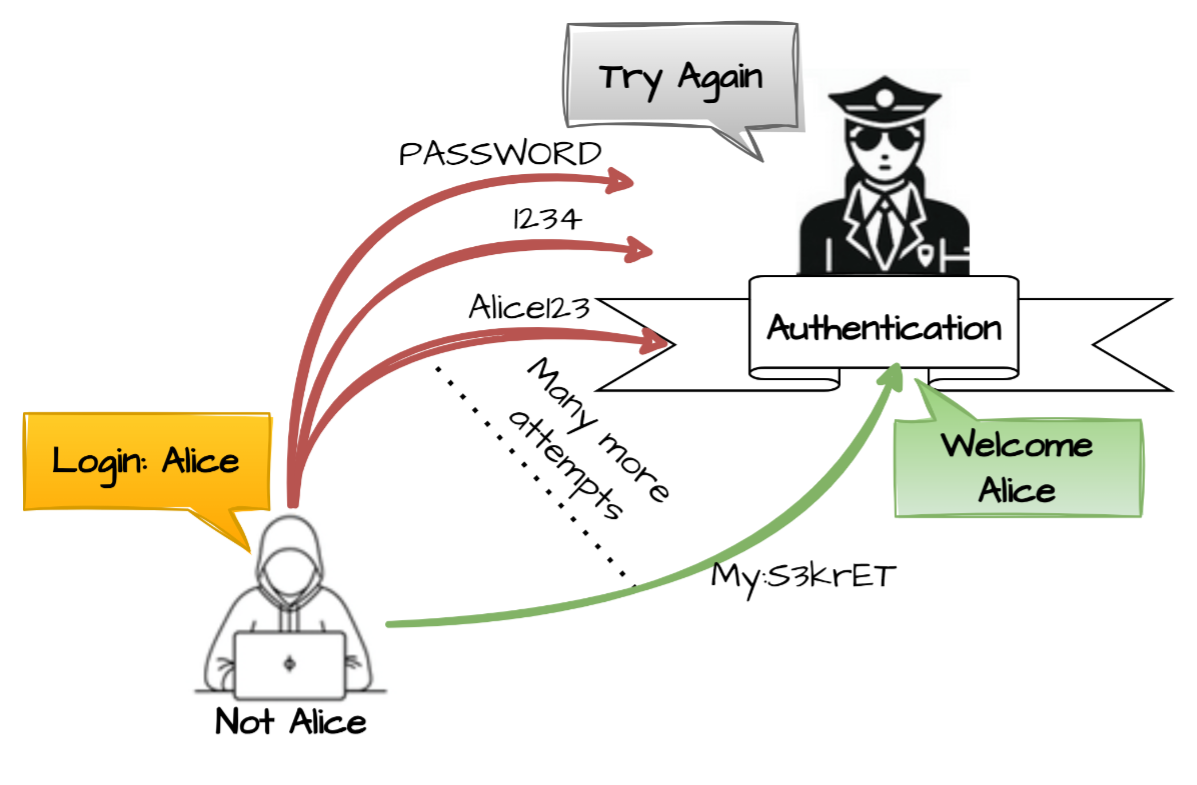
The product does not implement sufficient measures to prevent multiple failed authentication attempts within a short time frame.
Class - a weakness that is described in a very abstract fashion, typically independent of any specific language or technology. More specific than a Pillar Weakness, but more general than a Base Weakness. Class level weaknesses typically describe issues in terms of 1 or 2 of the following dimensions: behavior, property, and resource.
Use of Insufficiently Random Values
- (330)
800(Weaknesses in the 2010 CWE/SANS Top 25 Most Dangerous Programming Errors) >
808(2010 Top 25 - Weaknesses On the Cusp) >
330(Use of Insufficiently Random Values)
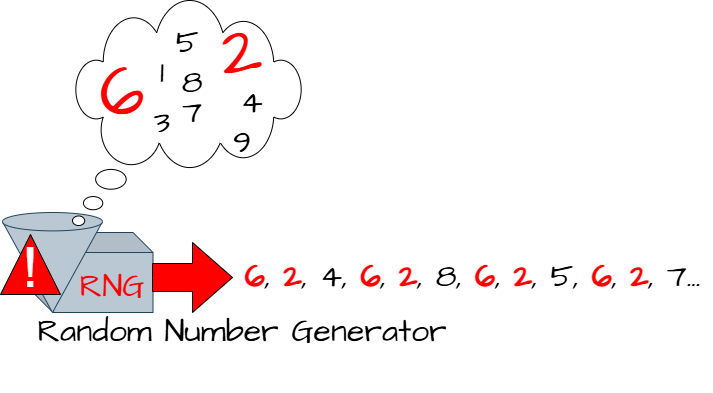
The product uses insufficiently random numbers or values in a security context that depends on unpredictable numbers.
Variant - a weakness that is linked to a certain type of product, typically involving a specific language or technology. More specific than a Base weakness. Variant level weaknesses typically describe issues in terms of 3 to 5 of the following dimensions: behavior, property, technology, language, and resource.
Use After Free
- (416)
800(Weaknesses in the 2010 CWE/SANS Top 25 Most Dangerous Programming Errors) >
808(2010 Top 25 - Weaknesses On the Cusp) >
416(Use After Free)
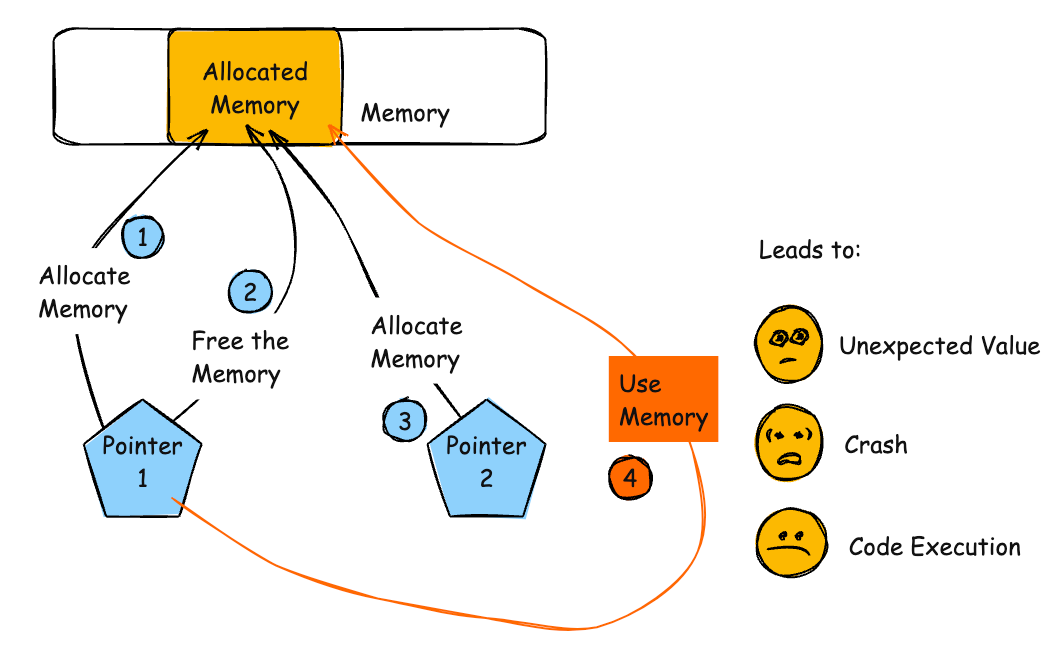
The product reuses or references memory after it has been freed. At some point afterward, the memory may be allocated again and saved in another pointer, while the original pointer references a location somewhere within the new allocation. Any operations using the original pointer are no longer valid because the memory "belongs" to the code that operates on the new pointer.
Dangling pointerUAFUse-After-Free
Base - a weakness that is still mostly independent of a resource or technology, but with sufficient details to provide specific methods for detection and prevention. Base level weaknesses typically describe issues in terms of 2 or 3 of the following dimensions: behavior, property, technology, language, and resource.
Untrusted Search Path
- (426)
800(Weaknesses in the 2010 CWE/SANS Top 25 Most Dangerous Programming Errors) >
808(2010 Top 25 - Weaknesses On the Cusp) >
426(Untrusted Search Path)
The product searches for critical resources using an externally-supplied search path that can point to resources that are not under the product's direct control.
Untrusted Path
Base - a weakness that is still mostly independent of a resource or technology, but with sufficient details to provide specific methods for detection and prevention. Base level weaknesses typically describe issues in terms of 2 or 3 of the following dimensions: behavior, property, technology, language, and resource.
External Initialization of Trusted Variables or Data Stores
- (454)
800(Weaknesses in the 2010 CWE/SANS Top 25 Most Dangerous Programming Errors) >
808(2010 Top 25 - Weaknesses On the Cusp) >
454(External Initialization of Trusted Variables or Data Stores)
The product initializes critical internal variables or data stores using inputs that can be modified by untrusted actors.
Variant - a weakness that is linked to a certain type of product, typically involving a specific language or technology. More specific than a Base weakness. Variant level weaknesses typically describe issues in terms of 3 to 5 of the following dimensions: behavior, property, technology, language, and resource.
Missing Initialization of a Variable
- (456)
800(Weaknesses in the 2010 CWE/SANS Top 25 Most Dangerous Programming Errors) >
808(2010 Top 25 - Weaknesses On the Cusp) >
456(Missing Initialization of a Variable)
The product does not initialize critical variables, which causes the execution environment to use unexpected values.
Base - a weakness that is still mostly independent of a resource or technology, but with sufficient details to provide specific methods for detection and prevention. Base level weaknesses typically describe issues in terms of 2 or 3 of the following dimensions: behavior, property, technology, language, and resource.
NULL Pointer Dereference
- (476)
800(Weaknesses in the 2010 CWE/SANS Top 25 Most Dangerous Programming Errors) >
808(2010 Top 25 - Weaknesses On the Cusp) >
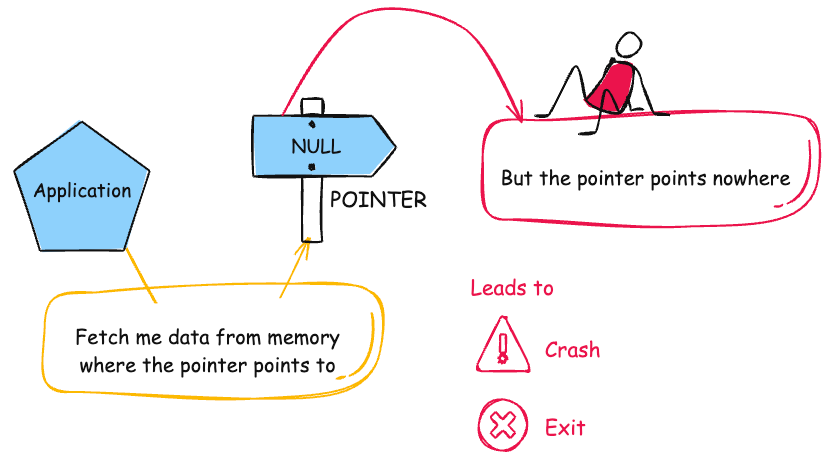
476(NULL Pointer Dereference)
The product dereferences a pointer that it expects to be valid but is NULL.
NPDnull derefNPEnil pointer dereference
Base - a weakness that is still mostly independent of a resource or technology, but with sufficient details to provide specific methods for detection and prevention. Base level weaknesses typically describe issues in terms of 2 or 3 of the following dimensions: behavior, property, technology, language, and resource.
Improper Link Resolution Before File Access ('Link Following')
- (59)
800(Weaknesses in the 2010 CWE/SANS Top 25 Most Dangerous Programming Errors) >
808(2010 Top 25 - Weaknesses On the Cusp) >
59(Improper Link Resolution Before File Access ('Link Following'))
The product attempts to access a file based on the filename, but it does not properly prevent that filename from identifying a link or shortcut that resolves to an unintended resource.
insecure temporary fileZip Slip
Class - a weakness that is described in a very abstract fashion, typically independent of any specific language or technology. More specific than a Pillar Weakness, but more general than a Base Weakness. Class level weaknesses typically describe issues in terms of 1 or 2 of the following dimensions: behavior, property, and resource.
Operation on a Resource after Expiration or Release
- (672)
800(Weaknesses in the 2010 CWE/SANS Top 25 Most Dangerous Programming Errors) >
808(2010 Top 25 - Weaknesses On the Cusp) >
672(Operation on a Resource after Expiration or Release)
The product uses, accesses, or otherwise operates on a resource after that resource has been expired, released, or revoked.
Base - a weakness that is still mostly independent of a resource or technology, but with sufficient details to provide specific methods for detection and prevention. Base level weaknesses typically describe issues in terms of 2 or 3 of the following dimensions: behavior, property, technology, language, and resource.
Incorrect Conversion between Numeric Types
- (681)
800(Weaknesses in the 2010 CWE/SANS Top 25 Most Dangerous Programming Errors) >
808(2010 Top 25 - Weaknesses On the Cusp) >
681(Incorrect Conversion between Numeric Types)
When converting from one data type to another, such as long to integer, data can be omitted or translated in a way that produces unexpected values. If the resulting values are used in a sensitive context, then dangerous behaviors may occur.
Base - a weakness that is still mostly independent of a resource or technology, but with sufficient details to provide specific methods for detection and prevention. Base level weaknesses typically describe issues in terms of 2 or 3 of the following dimensions: behavior, property, technology, language, and resource.
Exposed Dangerous Method or Function
- (749)
800(Weaknesses in the 2010 CWE/SANS Top 25 Most Dangerous Programming Errors) >
808(2010 Top 25 - Weaknesses On the Cusp) >
749(Exposed Dangerous Method or Function)
The product provides an Applications Programming Interface (API) or similar interface for interaction with external actors, but the interface includes a dangerous method or function that is not properly restricted.
Base - a weakness that is still mostly independent of a resource or technology, but with sufficient details to provide specific methods for detection and prevention. Base level weaknesses typically describe issues in terms of 2 or 3 of the following dimensions: behavior, property, technology, language, and resource.
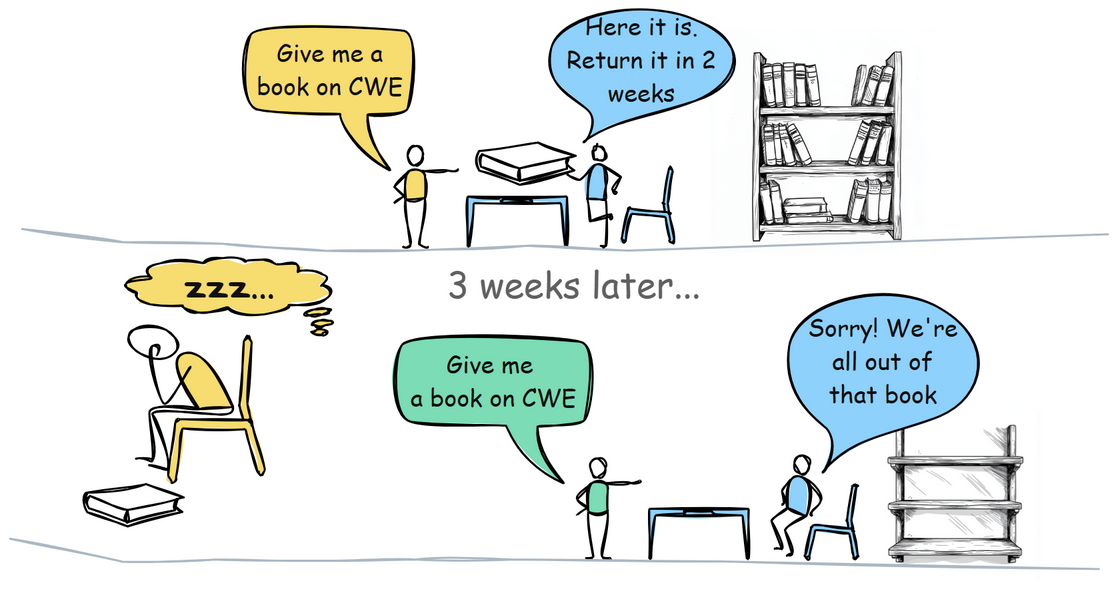
Missing Release of Resource after Effective Lifetime
- (772)
800(Weaknesses in the 2010 CWE/SANS Top 25 Most Dangerous Programming Errors) >
808(2010 Top 25 - Weaknesses On the Cusp) >
772(Missing Release of Resource after Effective Lifetime)
The product does not release a resource after its effective lifetime has ended, i.e., after the resource is no longer needed.
Class - a weakness that is described in a very abstract fashion, typically independent of any specific language or technology. More specific than a Pillar Weakness, but more general than a Base Weakness. Class level weaknesses typically describe issues in terms of 1 or 2 of the following dimensions: behavior, property, and resource.
Improper Control of Interaction Frequency
- (799)
800(Weaknesses in the 2010 CWE/SANS Top 25 Most Dangerous Programming Errors) >
808(2010 Top 25 - Weaknesses On the Cusp) >
799(Improper Control of Interaction Frequency)
The product does not properly limit the number or frequency of interactions that it has with an actor, such as the number of incoming requests.
Insufficient anti-automationBrute force
Base - a weakness that is still mostly independent of a resource or technology, but with sufficient details to provide specific methods for detection and prevention. Base level weaknesses typically describe issues in terms of 2 or 3 of the following dimensions: behavior, property, technology, language, and resource.
Guessable CAPTCHA
- (804)
800(Weaknesses in the 2010 CWE/SANS Top 25 Most Dangerous Programming Errors) >
808(2010 Top 25 - Weaknesses On the Cusp) >
804(Guessable CAPTCHA)
The product uses a CAPTCHA challenge, but the challenge can be guessed or automatically recognized by a non-human actor.
800(Weaknesses in the 2010 CWE/SANS Top 25 Most Dangerous Programming Errors) >
803(2010 Top 25 - Porous Defenses)
Weaknesses in this category are listed in the "Porous Defenses" section of the 2010 CWE/SANS Top 25 Programming Errors.
Class - a weakness that is described in a very abstract fashion, typically independent of any specific language or technology. More specific than a Pillar Weakness, but more general than a Base Weakness. Class level weaknesses typically describe issues in terms of 1 or 2 of the following dimensions: behavior, property, and resource.
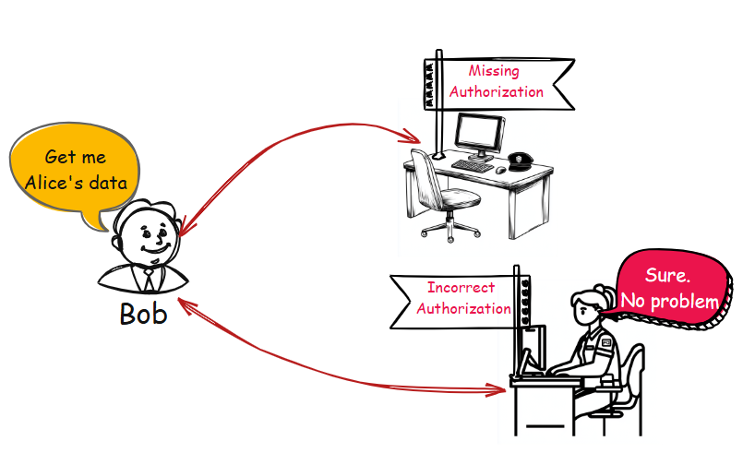
Improper Authorization
- (285)
800(Weaknesses in the 2010 CWE/SANS Top 25 Most Dangerous Programming Errors) >
803(2010 Top 25 - Porous Defenses) >
285(Improper Authorization)
The product does not perform or incorrectly performs an authorization check when an actor attempts to access a resource or perform an action.
AuthZ
Base - a weakness that is still mostly independent of a resource or technology, but with sufficient details to provide specific methods for detection and prevention. Base level weaknesses typically describe issues in terms of 2 or 3 of the following dimensions: behavior, property, technology, language, and resource.
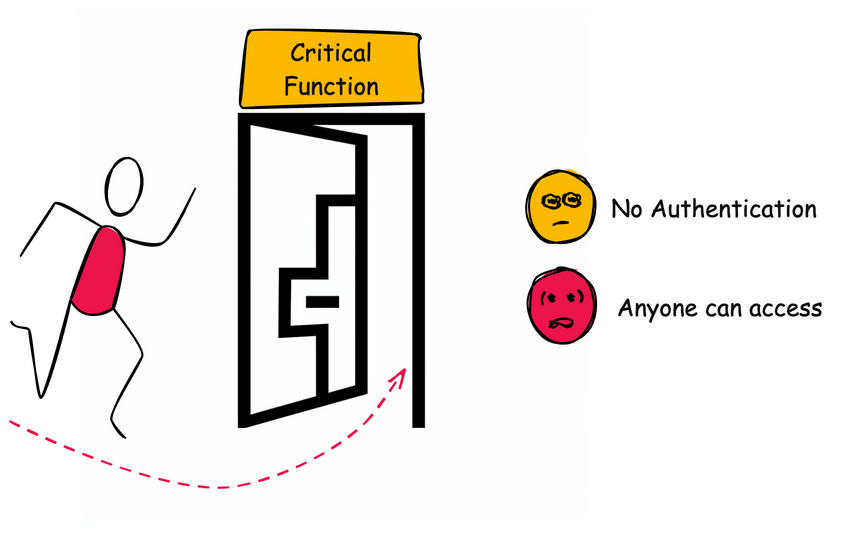
Missing Authentication for Critical Function
- (306)
800(Weaknesses in the 2010 CWE/SANS Top 25 Most Dangerous Programming Errors) >
803(2010 Top 25 - Porous Defenses) >
306(Missing Authentication for Critical Function)
The product does not perform any authentication for functionality that requires a provable user identity or consumes a significant amount of resources.
Class - a weakness that is described in a very abstract fashion, typically independent of any specific language or technology. More specific than a Pillar Weakness, but more general than a Base Weakness. Class level weaknesses typically describe issues in terms of 1 or 2 of the following dimensions: behavior, property, and resource.
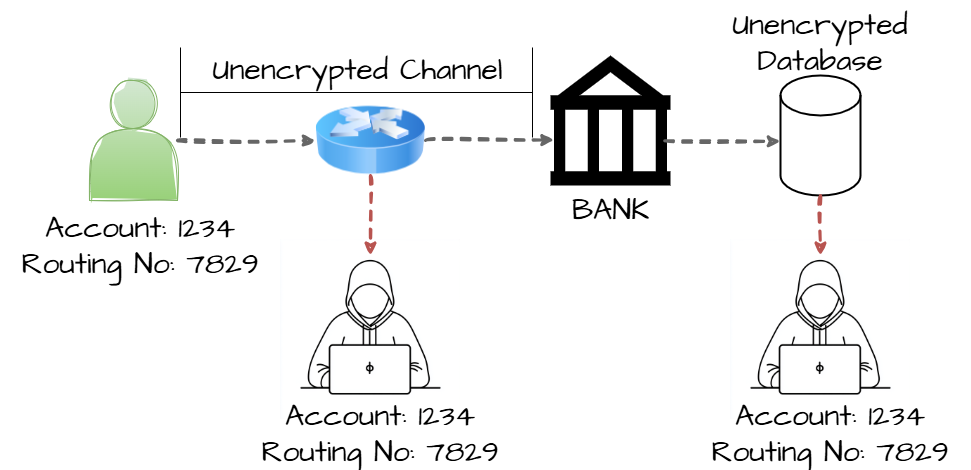
Missing Encryption of Sensitive Data
- (311)
800(Weaknesses in the 2010 CWE/SANS Top 25 Most Dangerous Programming Errors) >
803(2010 Top 25 - Porous Defenses) >
311(Missing Encryption of Sensitive Data)
The product does not encrypt sensitive or critical information before storage or transmission.
Class - a weakness that is described in a very abstract fashion, typically independent of any specific language or technology. More specific than a Pillar Weakness, but more general than a Base Weakness. Class level weaknesses typically describe issues in terms of 1 or 2 of the following dimensions: behavior, property, and resource.
Use of a Broken or Risky Cryptographic Algorithm
- (327)
800(Weaknesses in the 2010 CWE/SANS Top 25 Most Dangerous Programming Errors) >
803(2010 Top 25 - Porous Defenses) >
327(Use of a Broken or Risky Cryptographic Algorithm)
The product uses a broken or risky cryptographic algorithm or protocol.
Class - a weakness that is described in a very abstract fashion, typically independent of any specific language or technology. More specific than a Pillar Weakness, but more general than a Base Weakness. Class level weaknesses typically describe issues in terms of 1 or 2 of the following dimensions: behavior, property, and resource.
Incorrect Permission Assignment for Critical Resource
- (732)
800(Weaknesses in the 2010 CWE/SANS Top 25 Most Dangerous Programming Errors) >
803(2010 Top 25 - Porous Defenses) >
732(Incorrect Permission Assignment for Critical Resource)
The product specifies permissions for a security-critical resource in a way that allows that resource to be read or modified by unintended actors.
Base - a weakness that is still mostly independent of a resource or technology, but with sufficient details to provide specific methods for detection and prevention. Base level weaknesses typically describe issues in terms of 2 or 3 of the following dimensions: behavior, property, technology, language, and resource.
Use of Hard-coded Credentials
- (798)
800(Weaknesses in the 2010 CWE/SANS Top 25 Most Dangerous Programming Errors) >
803(2010 Top 25 - Porous Defenses) >
798(Use of Hard-coded Credentials)
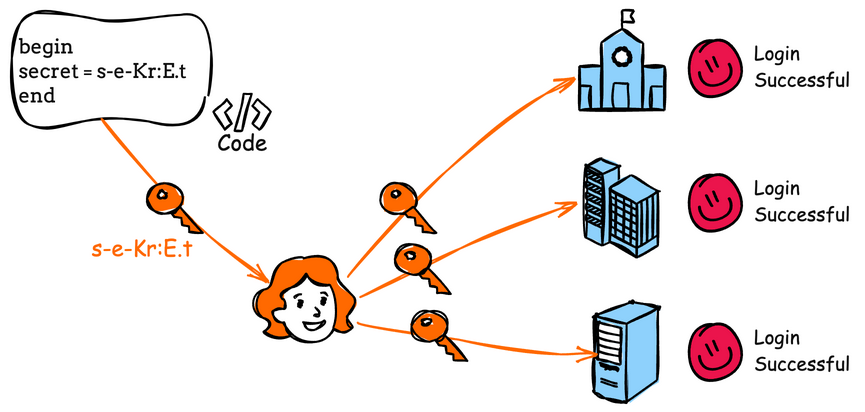
The product contains hard-coded credentials, such as a password or cryptographic key.
Base - a weakness that is still mostly independent of a resource or technology, but with sufficient details to provide specific methods for detection and prevention. Base level weaknesses typically describe issues in terms of 2 or 3 of the following dimensions: behavior, property, technology, language, and resource.
Reliance on Untrusted Inputs in a Security Decision
- (807)
800(Weaknesses in the 2010 CWE/SANS Top 25 Most Dangerous Programming Errors) >
803(2010 Top 25 - Porous Defenses) >
807(Reliance on Untrusted Inputs in a Security Decision)
The product uses a protection mechanism that relies on the existence or values of an input, but the input can be modified by an untrusted actor in a way that bypasses the protection mechanism.
800(Weaknesses in the 2010 CWE/SANS Top 25 Most Dangerous Programming Errors) >
802(2010 Top 25 - Risky Resource Management)
Weaknesses in this category are listed in the "Risky Resource Management" section of the 2010 CWE/SANS Top 25 Programming Errors.
Base - a weakness that is still mostly independent of a resource or technology, but with sufficient details to provide specific methods for detection and prevention. Base level weaknesses typically describe issues in terms of 2 or 3 of the following dimensions: behavior, property, technology, language, and resource.
Buffer Copy without Checking Size of Input ('Classic Buffer Overflow')
- (120)
800(Weaknesses in the 2010 CWE/SANS Top 25 Most Dangerous Programming Errors) >
802(2010 Top 25 - Risky Resource Management) >
120(Buffer Copy without Checking Size of Input ('Classic Buffer Overflow'))
The product copies an input buffer to an output buffer without verifying that the size of the input buffer is less than the size of the output buffer.
Classic Buffer OverflowUnbounded Transfer
Variant - a weakness that is linked to a certain type of product, typically involving a specific language or technology. More specific than a Base weakness. Variant level weaknesses typically describe issues in terms of 3 to 5 of the following dimensions: behavior, property, technology, language, and resource.
Improper Validation of Array Index
- (129)
800(Weaknesses in the 2010 CWE/SANS Top 25 Most Dangerous Programming Errors) >
802(2010 Top 25 - Risky Resource Management) >
129(Improper Validation of Array Index)
The product uses untrusted input when calculating or using an array index, but the product does not validate or incorrectly validates the index to ensure the index references a valid position within the array.
out-of-bounds array indexindex-out-of-rangearray index underflow
Base - a weakness that is still mostly independent of a resource or technology, but with sufficient details to provide specific methods for detection and prevention. Base level weaknesses typically describe issues in terms of 2 or 3 of the following dimensions: behavior, property, technology, language, and resource.
Incorrect Calculation of Buffer Size
- (131)
800(Weaknesses in the 2010 CWE/SANS Top 25 Most Dangerous Programming Errors) >
802(2010 Top 25 - Risky Resource Management) >
131(Incorrect Calculation of Buffer Size)
The product does not correctly calculate the size to be used when allocating a buffer, which could lead to a buffer overflow.
Base - a weakness that is still mostly independent of a resource or technology, but with sufficient details to provide specific methods for detection and prevention. Base level weaknesses typically describe issues in terms of 2 or 3 of the following dimensions: behavior, property, technology, language, and resource.
Integer Overflow or Wraparound
- (190)
800(Weaknesses in the 2010 CWE/SANS Top 25 Most Dangerous Programming Errors) >
802(2010 Top 25 - Risky Resource Management) >
190(Integer Overflow or Wraparound)
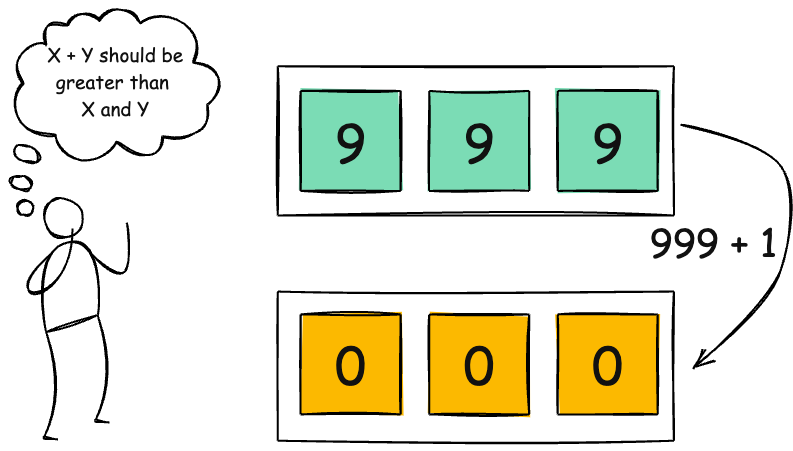
The product performs a calculation that can
produce an integer overflow or wraparound when the logic
assumes that the resulting value will always be larger than
the original value. This occurs when an integer value is
incremented to a value that is too large to store in the
associated representation. When this occurs, the value may
become a very small or negative number.
OverflowWraparoundwrap, wrap-around, wrap around
Base - a weakness that is still mostly independent of a resource or technology, but with sufficient details to provide specific methods for detection and prevention. Base level weaknesses typically describe issues in terms of 2 or 3 of the following dimensions: behavior, property, technology, language, and resource.
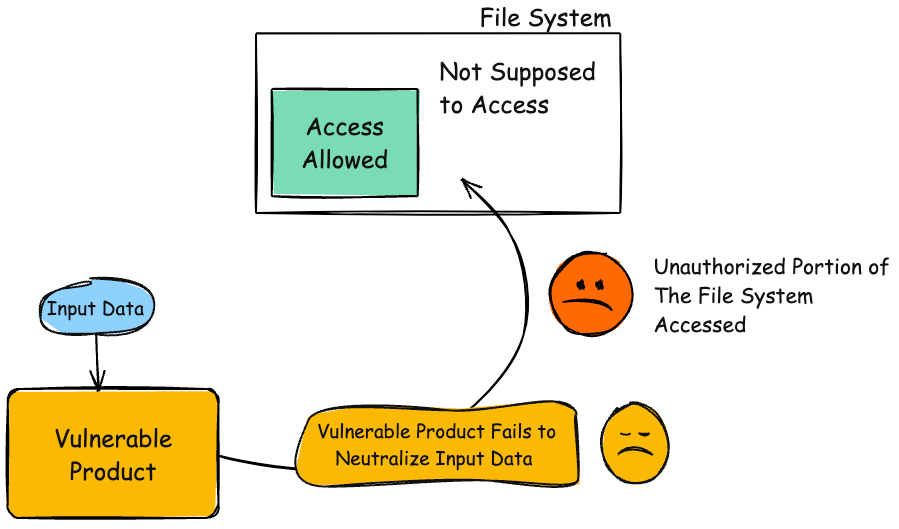
Improper Limitation of a Pathname to a Restricted Directory ('Path Traversal')
- (22)
800(Weaknesses in the 2010 CWE/SANS Top 25 Most Dangerous Programming Errors) >
802(2010 Top 25 - Risky Resource Management) >
22(Improper Limitation of a Pathname to a Restricted Directory ('Path Traversal'))
The product uses external input to construct a pathname that is intended to identify a file or directory that is located underneath a restricted parent directory, but the product does not properly neutralize special elements within the pathname that can cause the pathname to resolve to a location that is outside of the restricted directory.
Path traversalDirectory traversalPath transversal
Base - a weakness that is still mostly independent of a resource or technology, but with sufficient details to provide specific methods for detection and prevention. Base level weaknesses typically describe issues in terms of 2 or 3 of the following dimensions: behavior, property, technology, language, and resource.
Download of Code Without Integrity Check
- (494)
800(Weaknesses in the 2010 CWE/SANS Top 25 Most Dangerous Programming Errors) >
802(2010 Top 25 - Risky Resource Management) >
494(Download of Code Without Integrity Check)
The product downloads source code or an executable from a remote location and executes the code without sufficiently verifying the origin and integrity of the code.
Class - a weakness that is described in a very abstract fashion, typically independent of any specific language or technology. More specific than a Pillar Weakness, but more general than a Base Weakness. Class level weaknesses typically describe issues in terms of 1 or 2 of the following dimensions: behavior, property, and resource.
Improper Check for Unusual or Exceptional Conditions
- (754)
800(Weaknesses in the 2010 CWE/SANS Top 25 Most Dangerous Programming Errors) >
802(2010 Top 25 - Risky Resource Management) >
754(Improper Check for Unusual or Exceptional Conditions)
The product does not check or incorrectly checks for unusual or exceptional conditions that are not expected to occur frequently during day to day operation of the product.
Base - a weakness that is still mostly independent of a resource or technology, but with sufficient details to provide specific methods for detection and prevention. Base level weaknesses typically describe issues in terms of 2 or 3 of the following dimensions: behavior, property, technology, language, and resource.
Allocation of Resources Without Limits or Throttling
- (770)
800(Weaknesses in the 2010 CWE/SANS Top 25 Most Dangerous Programming Errors) >
802(2010 Top 25 - Risky Resource Management) >
770(Allocation of Resources Without Limits or Throttling)
The product allocates a reusable resource or group of resources on behalf of an actor without imposing any intended restrictions on the size or number of resources that can be allocated.
Base - a weakness that is still mostly independent of a resource or technology, but with sufficient details to provide specific methods for detection and prevention. Base level weaknesses typically describe issues in terms of 2 or 3 of the following dimensions: behavior, property, technology, language, and resource.
Buffer Access with Incorrect Length Value
- (805)
800(Weaknesses in the 2010 CWE/SANS Top 25 Most Dangerous Programming Errors) >
802(2010 Top 25 - Risky Resource Management) >
805(Buffer Access with Incorrect Length Value)
The product uses a sequential operation to read or write a buffer, but it uses an incorrect length value that causes it to access memory that is outside of the bounds of the buffer.
800(Weaknesses in the 2010 CWE/SANS Top 25 Most Dangerous Programming Errors) >
802(2010 Top 25 - Risky Resource Management) >
98(Improper Control of Filename for Include/Require Statement in PHP Program ('PHP Remote File Inclusion'))
The PHP application receives input from an upstream component, but it does not restrict or incorrectly restricts the input before its usage in "require," "include," or similar functions.
Remote file includeRFILocal file inclusion
800(Weaknesses in the 2010 CWE/SANS Top 25 Most Dangerous Programming Errors) >
801(2010 Top 25 - Insecure Interaction Between Components)
Weaknesses in this category are listed in the "Insecure Interaction Between Components" section of the 2010 CWE/SANS Top 25 Programming Errors.
Base - a weakness that is still mostly independent of a resource or technology, but with sufficient details to provide specific methods for detection and prevention. Base level weaknesses typically describe issues in terms of 2 or 3 of the following dimensions: behavior, property, technology, language, and resource.
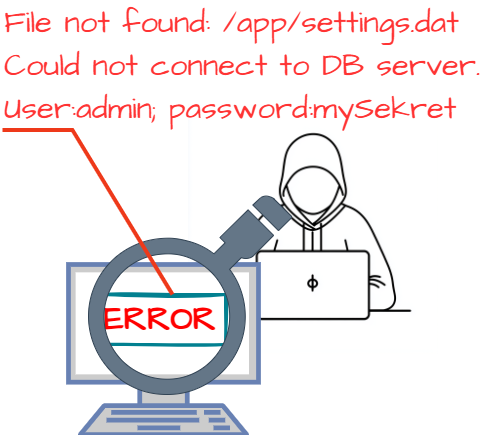
Generation of Error Message Containing Sensitive Information
- (209)
800(Weaknesses in the 2010 CWE/SANS Top 25 Most Dangerous Programming Errors) >
801(2010 Top 25 - Insecure Interaction Between Components) >
209(Generation of Error Message Containing Sensitive Information)
The product generates an error message that includes sensitive information about its environment, users, or associated data.
Composite - a Compound Element that consists of two or more distinct weaknesses, in which all weaknesses must be present at the same time in order for a potential vulnerability to arise. Removing any of the weaknesses eliminates or sharply reduces the risk. One weakness, X, can be "broken down" into component weaknesses Y and Z. There can be cases in which one weakness might not be essential to a composite, but changes the nature of the composite when it becomes a vulnerability.
Cross-Site Request Forgery (CSRF)
- (352)
800(Weaknesses in the 2010 CWE/SANS Top 25 Most Dangerous Programming Errors) >
801(2010 Top 25 - Insecure Interaction Between Components) >
352(Cross-Site Request Forgery (CSRF))
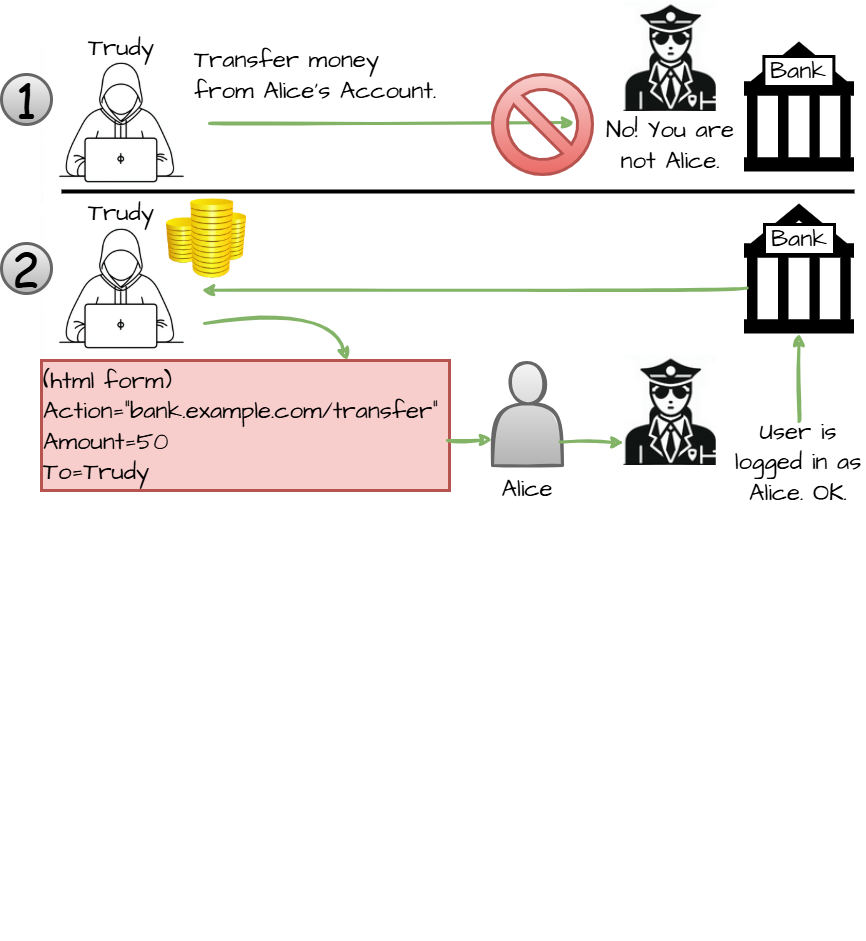
The web application does not, or cannot, sufficiently verify whether a request was intentionally provided by the user who sent the request, which could have originated from an unauthorized actor.
Session RidingCross Site Reference ForgeryXSRFCSRF
Class - a weakness that is described in a very abstract fashion, typically independent of any specific language or technology. More specific than a Pillar Weakness, but more general than a Base Weakness. Class level weaknesses typically describe issues in terms of 1 or 2 of the following dimensions: behavior, property, and resource.
Concurrent Execution using Shared Resource with Improper Synchronization ('Race Condition')
- (362)
800(Weaknesses in the 2010 CWE/SANS Top 25 Most Dangerous Programming Errors) >
801(2010 Top 25 - Insecure Interaction Between Components) >
362(Concurrent Execution using Shared Resource with Improper Synchronization ('Race Condition'))
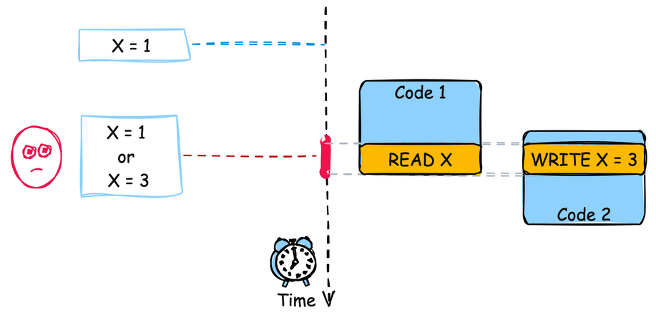
The product contains a concurrent code sequence that requires temporary, exclusive access to a shared resource, but a timing window exists in which the shared resource can be modified by another code sequence operating concurrently.
Race Condition
Base - a weakness that is still mostly independent of a resource or technology, but with sufficient details to provide specific methods for detection and prevention. Base level weaknesses typically describe issues in terms of 2 or 3 of the following dimensions: behavior, property, technology, language, and resource.
Unrestricted Upload of File with Dangerous Type
- (434)
800(Weaknesses in the 2010 CWE/SANS Top 25 Most Dangerous Programming Errors) >
801(2010 Top 25 - Insecure Interaction Between Components) >
434(Unrestricted Upload of File with Dangerous Type)
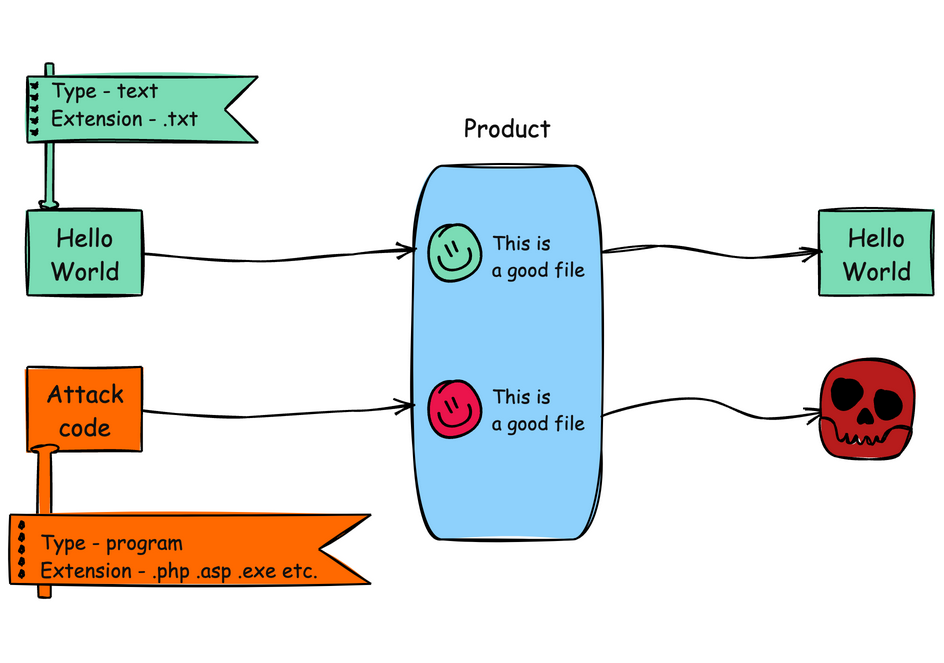
The product allows the upload or transfer of dangerous file types that are automatically processed within its environment.
Unrestricted File Upload
Base - a weakness that is still mostly independent of a resource or technology, but with sufficient details to provide specific methods for detection and prevention. Base level weaknesses typically describe issues in terms of 2 or 3 of the following dimensions: behavior, property, technology, language, and resource.
URL Redirection to Untrusted Site ('Open Redirect')
- (601)
800(Weaknesses in the 2010 CWE/SANS Top 25 Most Dangerous Programming Errors) >
801(2010 Top 25 - Insecure Interaction Between Components) >
601(URL Redirection to Untrusted Site ('Open Redirect'))
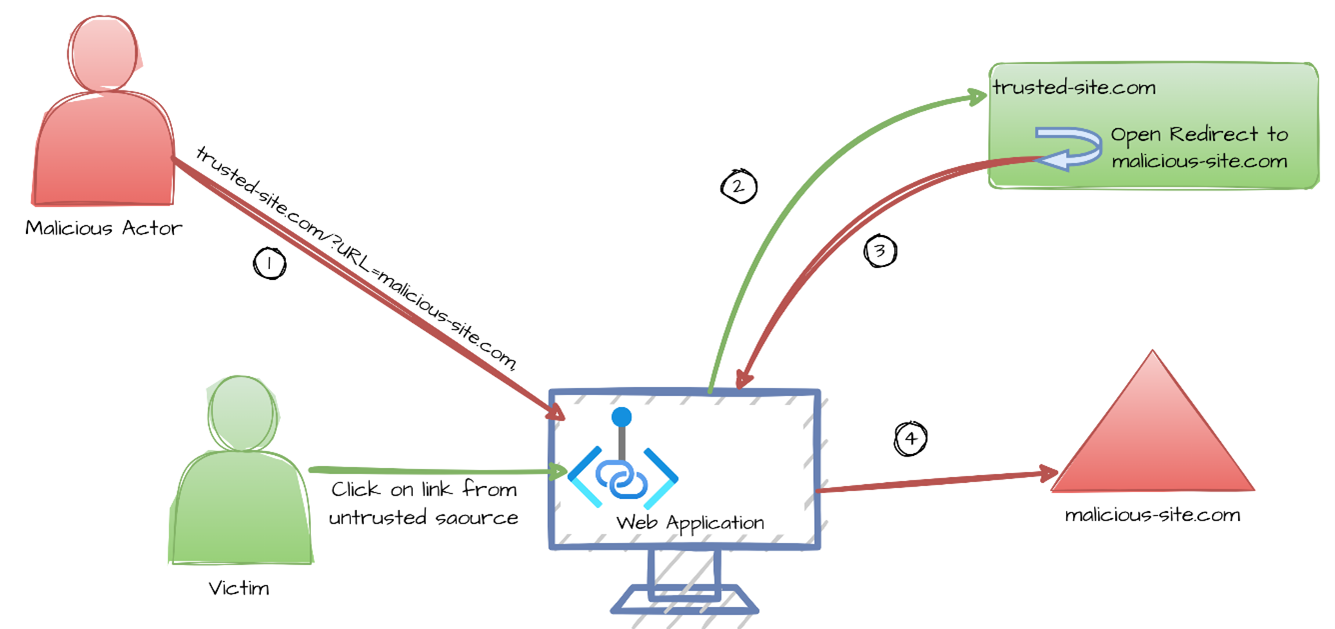
The web application accepts a user-controlled input that specifies a link to an external site, and uses that link in a redirect.
Open RedirectCross-site RedirectCross-domain RedirectUnvalidated RedirectDrive-by download
Base - a weakness that is still mostly independent of a resource or technology, but with sufficient details to provide specific methods for detection and prevention. Base level weaknesses typically describe issues in terms of 2 or 3 of the following dimensions: behavior, property, technology, language, and resource.
Improper Neutralization of Special Elements used in an OS Command ('OS Command Injection')
- (78)
800(Weaknesses in the 2010 CWE/SANS Top 25 Most Dangerous Programming Errors) >
801(2010 Top 25 - Insecure Interaction Between Components) >
78(Improper Neutralization of Special Elements used in an OS Command ('OS Command Injection'))
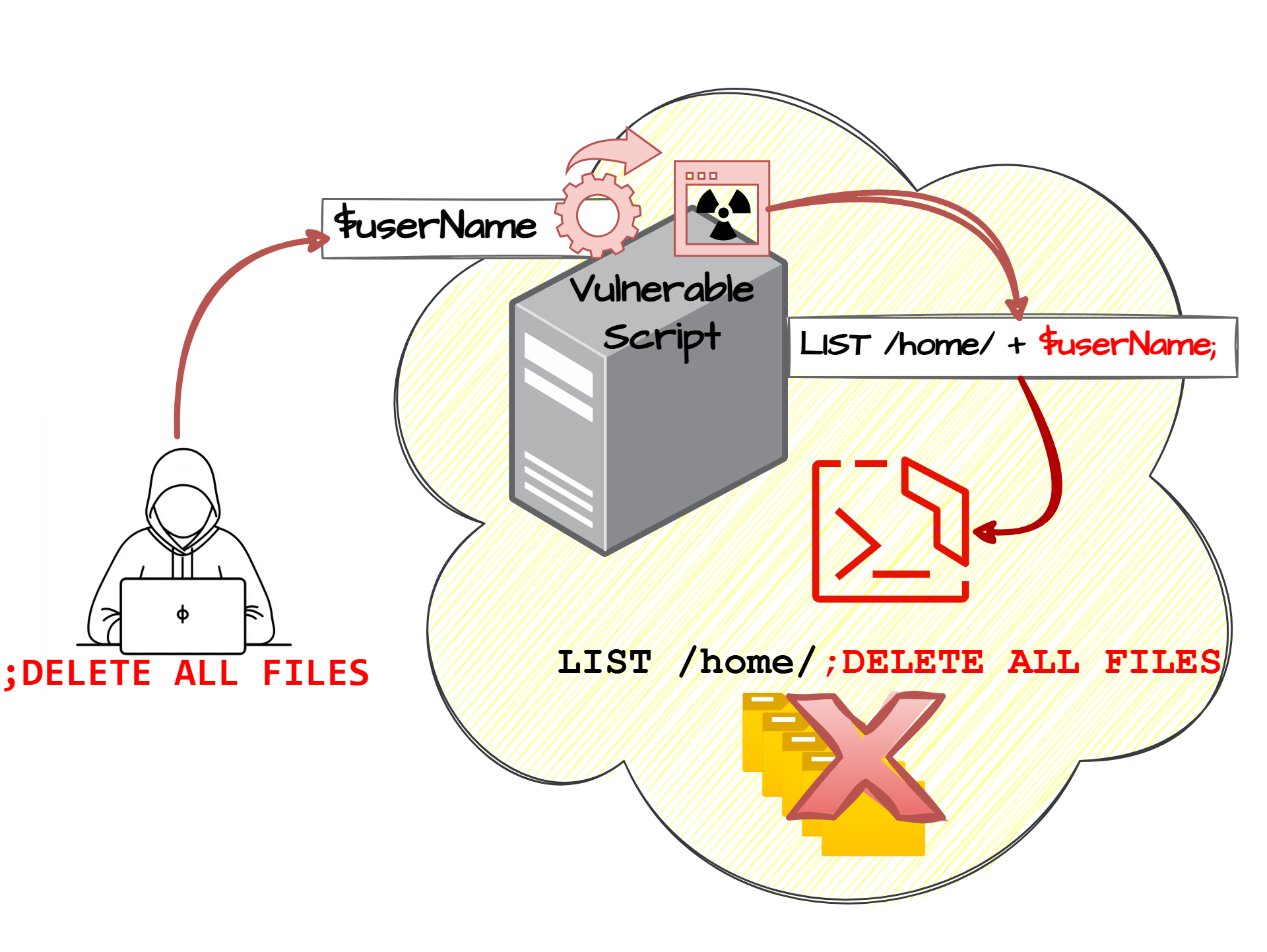
The product constructs all or part of an OS command using externally-influenced input from an upstream component, but it does not neutralize or incorrectly neutralizes special elements that could modify the intended OS command when it is sent to a downstream component.
Shell injectionShell metacharactersOS Command Injection
Base - a weakness that is still mostly independent of a resource or technology, but with sufficient details to provide specific methods for detection and prevention. Base level weaknesses typically describe issues in terms of 2 or 3 of the following dimensions: behavior, property, technology, language, and resource.
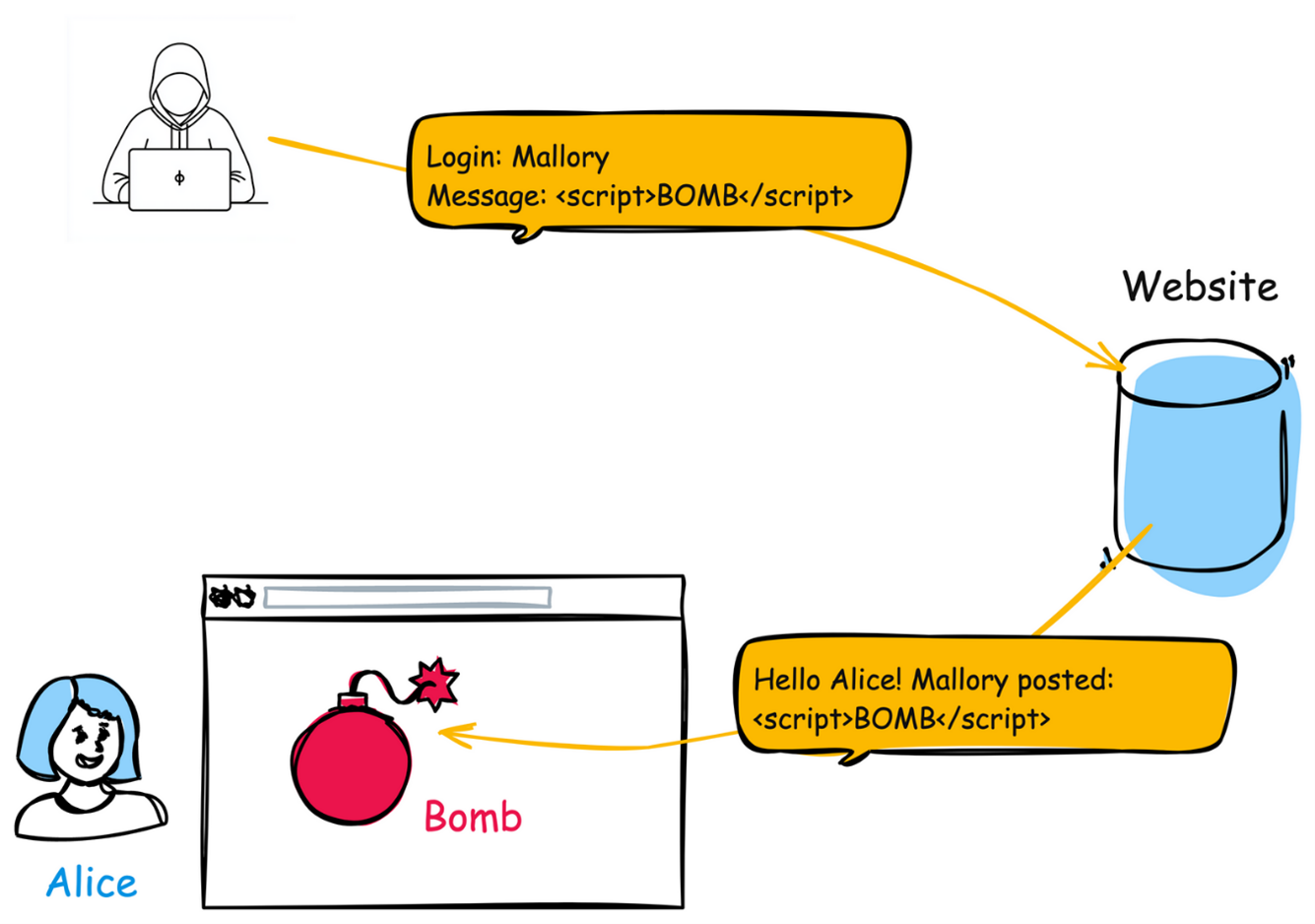
Improper Neutralization of Input During Web Page Generation ('Cross-site Scripting')
- (79)
800(Weaknesses in the 2010 CWE/SANS Top 25 Most Dangerous Programming Errors) >
801(2010 Top 25 - Insecure Interaction Between Components) >
79(Improper Neutralization of Input During Web Page Generation ('Cross-site Scripting'))
The product does not neutralize or incorrectly neutralizes user-controllable input before it is placed in output that is used as a web page that is served to other users.
XSSHTML InjectionReflected XSS / Non-Persistent XSS / Type 1 XSSStored XSS / Persistent XSS / Type 2 XSSDOM-Based XSS / Type 0 XSSCSS
Base - a weakness that is still mostly independent of a resource or technology, but with sufficient details to provide specific methods for detection and prevention. Base level weaknesses typically describe issues in terms of 2 or 3 of the following dimensions: behavior, property, technology, language, and resource.
Improper Neutralization of Special Elements used in an SQL Command ('SQL Injection')
- (89)
800(Weaknesses in the 2010 CWE/SANS Top 25 Most Dangerous Programming Errors) >
801(2010 Top 25 - Insecure Interaction Between Components) >
89(Improper Neutralization of Special Elements used in an SQL Command ('SQL Injection'))
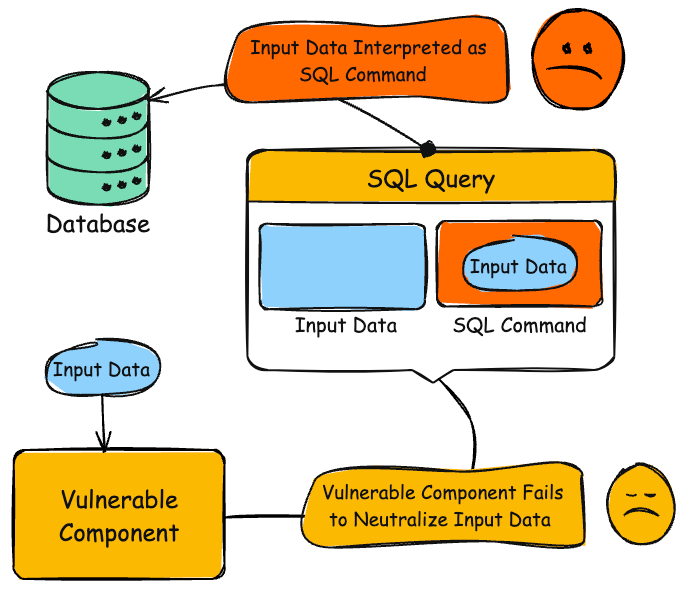
The product constructs all or part of an SQL command using externally-influenced input from an upstream component, but it does not neutralize or incorrectly neutralizes special elements that could modify the intended SQL command when it is sent to a downstream component. Without sufficient removal or quoting of SQL syntax in user-controllable inputs, the generated SQL query can cause those inputs to be interpreted as SQL instead of ordinary user data.
SQL injectionSQLi
CWE-770: Allocation of Resources Without Limits or Throttling
Weakness ID: 770
Vulnerability Mapping:ALLOWEDThis CWE ID may be used to map to real-world vulnerabilities Abstraction:
BaseBase - a weakness that is still mostly independent of a resource or technology, but with sufficient details to provide specific methods for detection and prevention. Base level weaknesses typically describe issues in terms of 2 or 3 of the following dimensions: behavior, property, technology, language, and resource.
View customized information:
For users who are interested in more notional aspects of a weakness. Example: educators, technical writers, and project/program managers.For users who are concerned with the practical application and details about the nature of a weakness and how to prevent it from happening. Example: tool developers, security researchers, pen-testers, incident response analysts.For users who are mapping an issue to CWE/CAPEC IDs, i.e., finding the most appropriate CWE for a specific issue (e.g., a CVE record). Example: tool developers, security researchers.For users who wish to see all available information for the CWE/CAPEC entry.For users who want to customize what details are displayed.
×
Edit Custom Filter
Description
The product allocates a reusable resource or group of resources on behalf of an actor without imposing any intended restrictions on the size or number of resources that can be allocated.
Common Consequences
This table specifies different individual consequences
associated with the weakness. The Scope identifies the application security area that is
violated, while the Impact describes the negative technical impact that arises if an
adversary succeeds in exploiting this weakness. The Likelihood provides information about
how likely the specific consequence is expected to be seen relative to the other
consequences in the list. For example, there may be high likelihood that a weakness will be
exploited to achieve a certain impact, but a low likelihood that it will be exploited to
achieve a different impact.
When allocating resources without limits, an attacker could prevent other systems, applications, or processes from accessing the same type of resource. It can be easy for an attacker to consume many resources by rapidly making many requests or causing larger resources to be used than is needed.
Potential Mitigations
Phase(s)
Mitigation
Requirements
Clearly specify the minimum and maximum expectations for capabilities, and dictate which behaviors are acceptable when resource allocation reaches limits.
Architecture and Design
Limit the amount of resources that are accessible to unprivileged users. Set per-user limits for resources. Allow the system administrator to define these limits. Be careful to avoid CWE-410.
Architecture and Design
Design throttling mechanisms into the system architecture. The best protection is to limit the amount of resources that an unauthorized user can cause to be expended. A strong authentication and access control model will help prevent such attacks from occurring in the first place, and it will help the administrator to identify who is committing the abuse. The login application should be protected against DoS attacks as much as possible. Limiting the database access, perhaps by caching result sets, can help minimize the resources expended. To further limit the potential for a DoS attack, consider tracking the rate of requests received from users and blocking requests that exceed a defined rate threshold.
Implementation
Strategy: Input Validation
Assume all input is malicious. Use an "accept known good" input validation strategy, i.e., use a list of acceptable inputs that strictly conform to specifications. Reject any input that does not strictly conform to specifications, or transform it into something that does.
When performing input validation, consider all potentially relevant properties, including length, type of input, the full range of acceptable values, missing or extra inputs, syntax, consistency across related fields, and conformance to business rules. As an example of business rule logic, "boat" may be syntactically valid because it only contains alphanumeric characters, but it is not valid if the input is only expected to contain colors such as "red" or "blue."
Do not rely exclusively on looking for malicious or malformed inputs. This is likely to miss at least one undesirable input, especially if the code's environment changes. This can give attackers enough room to bypass the intended validation. However, denylists can be useful for detecting potential attacks or determining which inputs are so malformed that they should be rejected outright.
Note: This will only be applicable to cases where user input can influence the size or frequency of resource allocations.
Architecture and Design
For any security checks that are performed on the client side, ensure that these checks are duplicated on the server side, in order to avoid CWE-602. Attackers can bypass the client-side checks by modifying values after the checks have been performed, or by changing the client to remove the client-side checks entirely. Then, these modified values would be submitted to the server.
Architecture and Design
Mitigation of resource exhaustion attacks requires that the target system either:
recognizes the attack and denies that user further access for a given amount of time, typically by using increasing time delays
uniformly throttles all requests in order to make it more difficult to consume resources more quickly than they can again be freed.
The first of these solutions is an issue in itself though, since it may allow attackers to prevent the use of the system by a particular valid user. If the attacker impersonates the valid user, they may be able to prevent the user from accessing the server in question.
The second solution can be difficult to effectively institute -- and even when properly done, it does not provide a full solution. It simply requires more resources on the part of the attacker.
Architecture and Design
Ensure that protocols have specific limits of scale placed on them.
Architecture and Design; Implementation
If the program must fail, ensure that it fails gracefully (fails closed). There may be a temptation to simply let the program fail poorly in cases such as low memory conditions, but an attacker may be able to assert control before the software has fully exited. Alternately, an uncontrolled failure could cause cascading problems with other downstream components; for example, the program could send a signal to a downstream process so the process immediately knows that a problem has occurred and has a better chance of recovery.
Ensure that all failures in resource allocation place the system into a safe posture.
Operation; Architecture and Design
Strategy: Resource Limitation
Use quotas or other resource-limiting settings provided by the operating system or environment. For example, when managing system resources in POSIX, setrlimit() can be used to set limits for certain types of resources, and getrlimit() can determine how many resources are available. However, these functions are not available on all operating systems.
When the current levels get close to the maximum that is defined for the application (see CWE-770), then limit the allocation of further resources to privileged users; alternately, begin releasing resources for less-privileged users. While this mitigation may protect the system from attack, it will not necessarily stop attackers from adversely impacting other users.
Ensure that the application performs the appropriate error checks and error handling in case resources become unavailable (CWE-703).
Relationships
This table shows the weaknesses and high level categories that are related to this
weakness. These relationships are defined as ChildOf, ParentOf, MemberOf and give insight to
similar items that may exist at higher and lower levels of abstraction. In addition,
relationships such as PeerOf and CanAlsoBe are defined to show similar weaknesses that the user
may want to explore.
Relevant to the view "Research Concepts" (View-1000)
Nature
Type
ID
Name
ChildOf
Class - a weakness that is described in a very abstract fashion, typically independent of any specific language or technology. More specific than a Pillar Weakness, but more general than a Base Weakness. Class level weaknesses typically describe issues in terms of 1 or 2 of the following dimensions: behavior, property, and resource.
Class - a weakness that is described in a very abstract fashion, typically independent of any specific language or technology. More specific than a Pillar Weakness, but more general than a Base Weakness. Class level weaknesses typically describe issues in terms of 1 or 2 of the following dimensions: behavior, property, and resource.
Variant - a weakness that is linked to a certain type of product, typically involving a specific language or technology. More specific than a Base weakness. Variant level weaknesses typically describe issues in terms of 3 to 5 of the following dimensions: behavior, property, technology, language, and resource.
Allocation of File Descriptors or Handles Without Limits or Throttling
ParentOf
Variant - a weakness that is linked to a certain type of product, typically involving a specific language or technology. More specific than a Base weakness. Variant level weaknesses typically describe issues in terms of 3 to 5 of the following dimensions: behavior, property, technology, language, and resource.
Base - a weakness that is still mostly independent of a resource or technology, but with sufficient details to provide specific methods for detection and prevention. Base level weaknesses typically describe issues in terms of 2 or 3 of the following dimensions: behavior, property, technology, language, and resource.
Class - a weakness that is described in a very abstract fashion, typically independent of any specific language or technology. More specific than a Pillar Weakness, but more general than a Base Weakness. Class level weaknesses typically describe issues in terms of 1 or 2 of the following dimensions: behavior, property, and resource.
Relevant to the view "Weaknesses for Simplified Mapping of Published Vulnerabilities" (View-1003)
Nature
Type
ID
Name
ChildOf
Class - a weakness that is described in a very abstract fashion, typically independent of any specific language or technology. More specific than a Pillar Weakness, but more general than a Base Weakness. Class level weaknesses typically describe issues in terms of 1 or 2 of the following dimensions: behavior, property, and resource.
The different Modes of Introduction provide information
about how and when this
weakness may be introduced. The Phase identifies a point in the life cycle at which
introduction
may occur, while the Note provides a typical scenario related to introduction during the
given
phase.
Phase
Note
Architecture and Design
OMISSION: This weakness is caused by missing a security tactic during the architecture and design phase.
Implementation
Operation
System Configuration
Applicable Platforms
This listing shows possible areas for which the given
weakness could appear. These
may be for specific named Languages, Operating Systems, Architectures, Paradigms,
Technologies,
or a class of such platforms. The platform is listed along with how frequently the given
weakness appears for that instance.
Languages
Class: Not Language-Specific
(Often Prevalent)
Technologies
Class: Not Technology-Specific
(Undetermined Prevalence)
Likelihood Of Exploit
High
Demonstrative Examples
Example 1
This code allocates a socket and forks each time it receives a new connection.
(bad code)
Example Language: C
sock=socket(AF_INET, SOCK_STREAM, 0); while (1) {
newsock=accept(sock, ...); printf("A connection has been accepted\n"); pid = fork();
}
The program does not track how many connections have been made, and it does not limit the number of connections. Because forking is a relatively expensive operation, an attacker would be able to cause the system to run out of CPU, processes, or memory by making a large number of connections. Alternatively, an attacker could consume all available connections, preventing others from accessing the system remotely.
Example 2
In the following example a server socket connection is used to accept a request to store data on the local file system using a specified filename. The method openSocketConnection establishes a server socket to accept requests from a client. When a client establishes a connection to this service the getNextMessage method is first used to retrieve from the socket the name of the file to store the data, the openFileToWrite method will validate the filename and open a file to write to on the local file system. The getNextMessage is then used within a while loop to continuously read data from the socket and output the data to the file until there is no longer any data from the socket.
(bad code)
Example Language: C
int writeDataFromSocketToFile(char *host, int port) {
char filename[FILENAME_SIZE]; char buffer[BUFFER_SIZE]; int socket = openSocketConnection(host, port);
if (socket < 0) {
printf("Unable to open socket connection"); return(FAIL);
} if (getNextMessage(socket, filename, FILENAME_SIZE) > 0) {
if (openFileToWrite(filename) > 0) {
while (getNextMessage(socket, buffer, BUFFER_SIZE) > 0){
if (!(writeToFile(buffer) > 0))
break;
}
} closeFile();
} closeSocket(socket);
}
This example creates a situation where data can be dumped to a file on the local file system without any limits on the size of the file. This could potentially exhaust file or disk resources and/or limit other clients' ability to access the service.
Example 3
In the following example, the processMessage method receives a two dimensional character array containing the message to be processed. The two-dimensional character array contains the length of the message in the first character array and the message body in the second character array. The getMessageLength method retrieves the integer value of the length from the first character array. After validating that the message length is greater than zero, the body character array pointer points to the start of the second character array of the two-dimensional character array and memory is allocated for the new body character array.
(bad code)
Example Language: C
/* process message accepts a two-dimensional character array of the form [length][body] containing the message to be processed */ int processMessage(char **message) {
char *body;
int length = getMessageLength(message[0]);
if (length > 0) {
body = &message[1][0]; processMessageBody(body); return(SUCCESS);
} else {
printf("Unable to process message; invalid message length"); return(FAIL);
}
}
This example creates a situation where the length of the body character array can be very large and will consume excessive memory, exhausting system resources. This can be avoided by restricting the length of the second character array with a maximum length check
Also, consider changing the type from 'int' to 'unsigned int', so that you are always guaranteed that the number is positive. This might not be possible if the protocol specifically requires allowing negative values, or if you cannot control the return value from getMessageLength(), but it could simplify the check to ensure the input is positive, and eliminate other errors such as signed-to-unsigned conversion errors (CWE-195) that may occur elsewhere in the code.
(good code)
Example Language: C
unsigned int length = getMessageLength(message[0]); if ((length > 0) && (length < MAX_LENGTH)) {...}
Example 4
In the following example, a server object creates a server socket and accepts client connections to the socket. For every client connection to the socket a separate thread object is generated using the ClientSocketThread class that handles request made by the client through the socket.
(bad code)
Example Language: Java
public void acceptConnections() {
try {
ServerSocket serverSocket = new ServerSocket(SERVER_PORT); int counter = 0; boolean hasConnections = true; while (hasConnections) {
Socket client = serverSocket.accept(); Thread t = new Thread(new ClientSocketThread(client)); t.setName(client.getInetAddress().getHostName() + ":" + counter++); t.start();
} serverSocket.close();
} catch (IOException ex) {...}
}
In this example there is no limit to the number of client connections and client threads that are created. Allowing an unlimited number of client connections and threads could potentially overwhelm the system and system resources.
The server should limit the number of client connections and the client threads that are created. This can be easily done by creating a thread pool object that limits the number of threads that are generated.
(good code)
Example Language: Java
public static final int SERVER_PORT = 4444; public static final int MAX_CONNECTIONS = 10; ...
public void acceptConnections() {
try {
ServerSocket serverSocket = new ServerSocket(SERVER_PORT); int counter = 0; boolean hasConnections = true; while (hasConnections) {
hasConnections = checkForMoreConnections(); Socket client = serverSocket.accept(); Thread t = new Thread(new ClientSocketThread(client)); t.setName(client.getInetAddress().getHostName() + ":" + counter++); ExecutorService pool = Executors.newFixedThreadPool(MAX_CONNECTIONS); pool.execute(t);
} serverSocket.close();
} catch (IOException ex) {...}
}
Example 5
An unnamed web site allowed a user to purchase tickets for an event. A menu option allowed the user to purchase up to 10 tickets, but the back end did not restrict the actual number of tickets that could be purchased.
Here the problem is that every time a connection is made, more memory is allocated. So if one just opened up more and more connections, eventually the machine would run out of memory.
(bad code)
Example Language: C
bar connection() {
foo = malloc(1024); return foo;
}
endConnection(bar foo) {
free(foo);
}
int main() {
while(1) {
foo=connection();
}
endConnection(foo)
}
Selected Observed
Examples
Note: this is a curated list of examples for users to understand the variety of ways in which this
weakness can be introduced. It is not a complete list of all CVEs that are related to this CWE entry.
Chain: Python library does not limit the resources used to process images that specify a very large number of bands (CWE-1284), leading to excessive memory consumption (CWE-789) or an integer overflow (CWE-190).
Go-based workload orchestrator does not limit resource usage with unauthenticated connections, allowing a DoS by flooding the service
Weakness Ordinalities
Ordinality
Description
Primary
(where the weakness exists independent of other weaknesses)
Detection
Methods
Method
Details
Manual Static Analysis
Manual static analysis can be useful for finding this weakness, but it might not achieve desired code coverage within limited time constraints. If denial-of-service is not considered a significant risk, or if there is strong emphasis on consequences such as code execution, then manual analysis may not focus on this weakness at all.
Fuzzing
While fuzzing is typically geared toward finding low-level implementation bugs, it can inadvertently find uncontrolled resource allocation problems. This can occur when the fuzzer generates a large number of test cases but does not restart the targeted product in between test cases. If an individual test case produces a crash, but it does not do so reliably, then an inability to limit resource allocation may be the cause.
When the allocation is directly affected by numeric inputs, then fuzzing may produce indications of this weakness.
Effectiveness: Opportunistic
Automated Dynamic Analysis
Certain automated dynamic analysis techniques may be effective in producing side effects of uncontrolled resource allocation problems, especially with resources such as processes, memory, and connections. The technique may involve generating a large number of requests to the product within a short time frame. Manual analysis is likely required to interpret the results.
Automated Static Analysis
Specialized configuration or tuning may be required to train automated tools to recognize this weakness.
Automated static analysis typically has limited utility in recognizing unlimited allocation problems, except for the missing release of program-independent system resources such as files, sockets, and processes, or unchecked arguments to memory. For system resources, automated static analysis may be able to detect circumstances in which resources are not released after they have expired, or if too much of a resource is requested at once, as can occur with memory. Automated analysis of configuration files may be able to detect settings that do not specify a maximum value.
Automated static analysis tools will not be appropriate for detecting exhaustion of custom resources, such as an intended security policy in which a bulletin board user is only allowed to make a limited number of posts per day.
Memberships
This MemberOf Relationships table shows additional CWE Categories and Views that
reference this weakness as a member. This information is often useful in understanding where a
weakness fits within the context of external information sources.
Nature
Type
ID
Name
MemberOf
Category - a CWE entry that contains a set of other entries that share a common characteristic.
CERT C++ Secure Coding Section 09 - Input Output (FIO)
MemberOf
View - a subset of CWE entries that provides a way of examining CWE content. The two main view structures are Slices (flat lists) and Graphs (containing relationships between entries).
View - a subset of CWE entries that provides a way of examining CWE content. The two main view structures are Slices (flat lists) and Graphs (containing relationships between entries).
Weaknesses in the 2025 CWE Top 25 Most Dangerous Software Weaknesses
Vulnerability Mapping Notes
Usage
ALLOWED
(this CWE ID may be used to map to real-world vulnerabilities)
Reason
Acceptable-Use
Rationale
This CWE entry is at the Base level of abstraction, which is a preferred level of abstraction for mapping to the root causes of vulnerabilities.
Comments
Carefully read both the name and description to ensure that this mapping is an appropriate fit. Do not try to 'force' a mapping to a lower-level Base/Variant simply to comply with this preferred level of abstraction.
Notes
Relationship
This entry is different from uncontrolled resource consumption (CWE-400) in that there are other weaknesses that are related to inability to control resource consumption, such as holding on to a resource too long after use, or not correctly keeping track of active resources so that they can be managed and released when they are finished (CWE-771).
Theoretical
Vulnerability theory is largely about how behaviors and resources interact. "Resource exhaustion" can be regarded as either a consequence or an attack, depending on the perspective. This entry is an attempt to reflect one of the underlying weaknesses that enable these attacks (or consequences) to take place.
Taxonomy
Mappings
Mapped Taxonomy Name
Node ID
Fit
Mapped Node Name
The CERT Oracle Secure Coding Standard for Java (2011)
FIO04-J
Close resources when they are no longer needed
The CERT Oracle Secure Coding Standard for Java (2011)
SER12-J
Avoid memory and resource leaks during serialization
The CERT Oracle Secure Coding Standard for Java (2011)
Joao Antunes, Nuno Ferreira Neves and Paulo Verissimo. "Detection and Prediction of Resource-Exhaustion Vulnerabilities". Proceedings of the IEEE International Symposium on Software Reliability Engineering (ISSRE). 2008-11.
<https://www.di.fc.ul.pt/~nuno/PAPERS/ISSRE08.pdf>.
(URL validated: 2025-07-24)
Mark Dowd, John McDonald and Justin Schuh. "The Art of Software Security Assessment". Chapter 10, "Resource Limits", Page 574. 1st Edition. Addison Wesley. 2006.
Content
History
Submissions
Submission Date
Submitter
Organization
2009-05-13
(CWE 1.4, 2009-05-27)
CWE Content Team
MITRE
Contributions
Contribution Date
Contributor
Organization
2023-11-14
(CWE 4.14, 2024-02-29)
participants in the CWE ICS/OT SIG 62443 Mapping Fall Workshop
Contributed or reviewed taxonomy mappings for ISA/IEC 62443
CWE-805: Buffer Access with Incorrect Length Value
Weakness ID: 805
Vulnerability Mapping:ALLOWEDThis CWE ID may be used to map to real-world vulnerabilities Abstraction:
BaseBase - a weakness that is still mostly independent of a resource or technology, but with sufficient details to provide specific methods for detection and prevention. Base level weaknesses typically describe issues in terms of 2 or 3 of the following dimensions: behavior, property, technology, language, and resource.
View customized information:
For users who are interested in more notional aspects of a weakness. Example: educators, technical writers, and project/program managers.For users who are concerned with the practical application and details about the nature of a weakness and how to prevent it from happening. Example: tool developers, security researchers, pen-testers, incident response analysts.For users who are mapping an issue to CWE/CAPEC IDs, i.e., finding the most appropriate CWE for a specific issue (e.g., a CVE record). Example: tool developers, security researchers.For users who wish to see all available information for the CWE/CAPEC entry.For users who want to customize what details are displayed.
×
Edit Custom Filter
Description
The product uses a sequential operation to read or write a buffer, but it uses an incorrect length value that causes it to access memory that is outside of the bounds of the buffer.
Extended Description
When the length value exceeds the size of the destination, a buffer overflow could occur.
Common Consequences
This table specifies different individual consequences
associated with the weakness. The Scope identifies the application security area that is
violated, while the Impact describes the negative technical impact that arises if an
adversary succeeds in exploiting this weakness. The Likelihood provides information about
how likely the specific consequence is expected to be seen relative to the other
consequences in the list. For example, there may be high likelihood that a weakness will be
exploited to achieve a certain impact, but a low likelihood that it will be exploited to
achieve a different impact.
Impact
Details
Read Memory; Modify Memory; Execute Unauthorized Code or Commands
Scope: Integrity, Confidentiality, Availability
Buffer overflows often can be used to execute arbitrary code, which is usually outside the scope of a program's implicit security policy. This can often be used to subvert any other security service.
Buffer overflows generally lead to crashes. Other attacks leading to lack of availability are possible, including putting the program into an infinite loop.
Potential Mitigations
Phase(s)
Mitigation
Requirements
Strategy: Language Selection
Use a language that does not allow this weakness to occur or provides constructs that make this weakness easier to avoid.
For example, many languages that perform their own memory management, such as Java and Perl, are not subject to buffer overflows. Other languages, such as Ada and C#, typically provide overflow protection, but the protection can be disabled by the programmer.
Be wary that a language's interface to native code may still be subject to overflows, even if the language itself is theoretically safe.
Architecture and Design
Strategy: Libraries or Frameworks
Use a vetted library or framework that does not allow this weakness to occur or provides constructs that make this weakness easier to avoid.
Examples include the Safe C String Library (SafeStr) by Messier and Viega [REF-57], and the Strsafe.h library from Microsoft [REF-56]. These libraries provide safer versions of overflow-prone string-handling functions.
Note: This is not a complete solution, since many buffer overflows are not related to strings.
Operation; Build and Compilation
Strategy: Environment Hardening
Use automatic buffer overflow detection mechanisms that are offered by certain compilers or compiler extensions. Examples include: the Microsoft Visual Studio /GS flag, Fedora/Red Hat FORTIFY_SOURCE GCC flag, StackGuard, and ProPolice, which provide various mechanisms including canary-based detection and range/index checking.
D3-SFCV (Stack Frame Canary Validation) from D3FEND [REF-1334] discusses canary-based detection in detail.
Effectiveness: Defense in Depth
Note:
This is not necessarily a complete solution, since these mechanisms only detect certain types of overflows. In addition, the result is still a denial of service, since the typical response is to exit the application.
Implementation
Consider adhering to the following rules when allocating and managing an application's memory:
Double check that the buffer is as large as specified.
When using functions that accept a number of bytes to copy, such as strncpy(), be aware that if the destination buffer size is equal to the source buffer size, it may not NULL-terminate the string.
Check buffer boundaries if accessing the buffer in a loop and make sure there is no danger of writing past the allocated space.
If necessary, truncate all input strings to a reasonable length before passing them to the copy and concatenation functions.
Architecture and Design
For any security checks that are performed on the client side, ensure that these checks are duplicated on the server side, in order to avoid CWE-602. Attackers can bypass the client-side checks by modifying values after the checks have been performed, or by changing the client to remove the client-side checks entirely. Then, these modified values would be submitted to the server.
Operation; Build and Compilation
Strategy: Environment Hardening
Run or compile the software using features or extensions that randomly arrange the positions of a program's executable and libraries in memory. Because this makes the addresses unpredictable, it can prevent an attacker from reliably jumping to exploitable code.
Examples include Address Space Layout Randomization (ASLR) [REF-58] [REF-60] and Position-Independent Executables (PIE) [REF-64]. Imported modules may be similarly realigned if their default memory addresses conflict with other modules, in a process known as "rebasing" (for Windows) and "prelinking" (for Linux) [REF-1332] using randomly generated addresses. ASLR for libraries cannot be used in conjunction with prelink since it would require relocating the libraries at run-time, defeating the whole purpose of prelinking.
For more information on these techniques see D3-SAOR (Segment Address Offset Randomization) from D3FEND [REF-1335].
Effectiveness: Defense in Depth
Note: These techniques do not provide a complete solution. For instance, exploits frequently use a bug that discloses memory addresses in order to maximize reliability of code execution [REF-1337]. It has also been shown that a side-channel attack can bypass ASLR [REF-1333].
Operation
Strategy: Environment Hardening
Use a CPU and operating system that offers Data Execution Protection (using hardware NX or XD bits) or the equivalent techniques that simulate this feature in software, such as PaX [REF-60] [REF-61]. These techniques ensure that any instruction executed is exclusively at a memory address that is part of the code segment.
For more information on these techniques see D3-PSEP (Process Segment Execution Prevention) from D3FEND [REF-1336].
Effectiveness: Defense in Depth
Note: This is not a complete solution, since buffer overflows could be used to overwrite nearby variables to modify the software's state in dangerous ways. In addition, it cannot be used in cases in which self-modifying code is required. Finally, an attack could still cause a denial of service, since the typical response is to exit the application.
Architecture and Design; Operation
Strategy: Environment Hardening
Run your code using the lowest privileges that are required to accomplish the necessary tasks [REF-76]. If possible, create isolated accounts with limited privileges that are only used for a single task. That way, a successful attack will not immediately give the attacker access to the rest of the product or its environment. For example, database applications rarely need to run as the database administrator, especially in day-to-day operations.
Architecture and Design; Operation
Strategy: Sandbox or Jail
Run the code in a "jail" or similar sandbox environment that enforces strict boundaries between the process and the operating system. This may effectively restrict which files can be accessed in a particular directory or which commands can be executed by the software.
OS-level examples include the Unix chroot jail, AppArmor, and SELinux. In general, managed code may provide some protection. For example, java.io.FilePermission in the Java SecurityManager allows the software to specify restrictions on file operations.
This may not be a feasible solution, and it only limits the impact to the operating system; the rest of the application may still be subject to compromise.
Be careful to avoid CWE-243 and other weaknesses related to jails.
Effectiveness: Limited
Note: The effectiveness of this mitigation depends on the prevention capabilities of the specific sandbox or jail being used and might only help to reduce the scope of an attack, such as restricting the attacker to certain system calls or limiting the portion of the file system that can be accessed.
Relationships
This table shows the weaknesses and high level categories that are related to this
weakness. These relationships are defined as ChildOf, ParentOf, MemberOf and give insight to
similar items that may exist at higher and lower levels of abstraction. In addition,
relationships such as PeerOf and CanAlsoBe are defined to show similar weaknesses that the user
may want to explore.
Relevant to the view "Research Concepts" (View-1000)
Nature
Type
ID
Name
ChildOf
Class - a weakness that is described in a very abstract fashion, typically independent of any specific language or technology. More specific than a Pillar Weakness, but more general than a Base Weakness. Class level weaknesses typically describe issues in terms of 1 or 2 of the following dimensions: behavior, property, and resource.
Improper Restriction of Operations within the Bounds of a Memory Buffer
ParentOf
Variant - a weakness that is linked to a certain type of product, typically involving a specific language or technology. More specific than a Base weakness. Variant level weaknesses typically describe issues in terms of 3 to 5 of the following dimensions: behavior, property, technology, language, and resource.
Base - a weakness that is still mostly independent of a resource or technology, but with sufficient details to provide specific methods for detection and prevention. Base level weaknesses typically describe issues in terms of 2 or 3 of the following dimensions: behavior, property, technology, language, and resource.
Relevant to the view "CISQ Quality Measures (2020)" (View-1305)
Nature
Type
ID
Name
ChildOf
Class - a weakness that is described in a very abstract fashion, typically independent of any specific language or technology. More specific than a Pillar Weakness, but more general than a Base Weakness. Class level weaknesses typically describe issues in terms of 1 or 2 of the following dimensions: behavior, property, and resource.
Improper Restriction of Operations within the Bounds of a Memory Buffer
Relevant to the view "CISQ Data Protection Measures" (View-1340)
Nature
Type
ID
Name
ChildOf
Class - a weakness that is described in a very abstract fashion, typically independent of any specific language or technology. More specific than a Pillar Weakness, but more general than a Base Weakness. Class level weaknesses typically describe issues in terms of 1 or 2 of the following dimensions: behavior, property, and resource.
Improper Restriction of Operations within the Bounds of a Memory Buffer
Modes
Of Introduction
The different Modes of Introduction provide information
about how and when this
weakness may be introduced. The Phase identifies a point in the life cycle at which
introduction
may occur, while the Note provides a typical scenario related to introduction during the
given
phase.
Phase
Note
Implementation
Applicable Platforms
This listing shows possible areas for which the given
weakness could appear. These
may be for specific named Languages, Operating Systems, Architectures, Paradigms,
Technologies,
or a class of such platforms. The platform is listed along with how frequently the given
weakness appears for that instance.
Languages
Class: Memory-Unsafe
(Undetermined Prevalence)
C
(Often Prevalent)
C++
(Often Prevalent)
Class: Assembly
(Undetermined Prevalence)
Likelihood Of Exploit
High
Demonstrative Examples
Example 1
This example takes an IP address from a user, verifies that it is well formed and then looks up the hostname and copies it into a buffer.
This function allocates a buffer of 64 bytes to store the hostname under the assumption that the maximum length value of hostname is 64 bytes, however there is no guarantee that the hostname will not be larger than 64 bytes. If an attacker specifies an address which resolves to a very large hostname, then the function may overwrite sensitive data or even relinquish control flow to the attacker.
Note that this example also contains an unchecked return value (CWE-252) that can lead to a NULL pointer dereference (CWE-476).
Example 2
In the following example, it is possible to request that memcpy move a much larger segment of memory than assumed:
(bad code)
Example Language: C
int returnChunkSize(void *) {
/* if chunk info is valid, return the size of usable memory,
If returnChunkSize() happens to encounter an error it will return -1. Notice that the return value is not checked before the memcpy operation (CWE-252), so -1 can be passed as the size argument to memcpy() (CWE-805). Because memcpy() assumes that the value is unsigned, it will be interpreted as MAXINT-1 (CWE-195), and therefore will copy far more memory than is likely available to the destination buffer (CWE-787, CWE-788).
Example 3
In the following example, the source character string is copied to the dest character string using the method strncpy.
(bad code)
Example Language: C
... char source[21] = "the character string"; char dest[12]; strncpy(dest, source, sizeof(source)-1); ...
However, in the call to strncpy the source character string is used within the sizeof call to determine the number of characters to copy. This will create a buffer overflow as the size of the source character string is greater than the dest character string. The dest character string should be used within the sizeof call to ensure that the correct number of characters are copied, as shown below.
(good code)
Example Language: C
... char source[21] = "the character string"; char dest[12]; strncpy(dest, source, sizeof(dest)-1); ...
Example 4
In this example, the method outputFilenameToLog outputs a filename to a log file. The method arguments include a pointer to a character string containing the file name and an integer for the number of characters in the string. The filename is copied to a buffer where the buffer size is set to a maximum size for inputs to the log file. The method then calls another method to save the contents of the buffer to the log file.
(bad code)
Example Language: C
#define LOG_INPUT_SIZE 40
// saves the file name to a log file int outputFilenameToLog(char *filename, int length) {
int success;
// buffer with size set to maximum size for input to log file char buf[LOG_INPUT_SIZE];
// copy filename to buffer strncpy(buf, filename, length);
// save to log file success = saveToLogFile(buf);
return success;
}
However, in this case the string copy method, strncpy, mistakenly uses the length method argument to determine the number of characters to copy rather than using the size of the local character string, buf. This can lead to a buffer overflow if the number of characters contained in character string pointed to by filename is larger then the number of characters allowed for the local character string. The string copy method should use the buf character string within a sizeof call to ensure that only characters up to the size of the buf array are copied to avoid a buffer overflow, as shown below.
(good code)
Example Language: C
... // copy filename to buffer strncpy(buf, filename, sizeof(buf)-1); ...
Example 5
Windows provides the MultiByteToWideChar(), WideCharToMultiByte(), UnicodeToBytes(), and BytesToUnicode() functions to convert between arbitrary multibyte (usually ANSI) character strings and Unicode (wide character) strings. The size arguments to these functions are specified in different units, (one in bytes, the other in characters) making their use prone to error.
In a multibyte character string, each character occupies a varying number of bytes, and therefore the size of such strings is most easily specified as a total number of bytes. In Unicode, however, characters are always a fixed size, and string lengths are typically given by the number of characters they contain. Mistakenly specifying the wrong units in a size argument can lead to a buffer overflow.
The following function takes a username specified as a multibyte string and a pointer to a structure for user information and populates the structure with information about the specified user. Since Windows authentication uses Unicode for usernames, the username argument is first converted from a multibyte string to a Unicode string.
This function incorrectly passes the size of unicodeUser in bytes instead of characters. The call to MultiByteToWideChar() can therefore write up to (UNLEN+1)*sizeof(WCHAR) wide characters, or (UNLEN+1)*sizeof(WCHAR)*sizeof(WCHAR) bytes, to the unicodeUser array, which has only (UNLEN+1)*sizeof(WCHAR) bytes allocated.
If the username string contains more than UNLEN characters, the call to MultiByteToWideChar() will overflow the buffer unicodeUser.
Selected Observed
Examples
Note: this is a curated list of examples for users to understand the variety of ways in which this
weakness can be introduced. It is not a complete list of all CVEs that are related to this CWE entry.
Language interpreter API function doesn't validate length argument, leading to information exposure
Weakness Ordinalities
Ordinality
Description
Resultant
(where the weakness is typically related to the presence of some other weaknesses)
Primary
(where the weakness exists independent of other weaknesses)
Detection
Methods
Method
Details
Automated Static Analysis
This weakness can often be detected using automated static analysis tools. Many modern tools use data flow analysis or constraint-based techniques to minimize the number of false positives.
Automated static analysis generally does not account for environmental considerations when reporting out-of-bounds memory operations. This can make it difficult for users to determine which warnings should be investigated first. For example, an analysis tool might report buffer overflows that originate from command line arguments in a program that is not expected to run with setuid or other special privileges.
Effectiveness: High
Note:Detection techniques for buffer-related errors are more mature than for most other weakness types.
Automated Dynamic Analysis
This weakness can be detected using dynamic tools and techniques that interact with the product using large test suites with many diverse inputs, such as fuzz testing (fuzzing), robustness testing, and fault injection. The product's operation may slow down, but it should not become unstable, crash, or generate incorrect results.
Effectiveness: Moderate
Note:Without visibility into the code, black box methods may not be able to sufficiently distinguish this weakness from others, requiring manual methods to diagnose the underlying problem.
Manual Analysis
Manual analysis can be useful for finding this weakness, but it might not achieve desired code coverage within limited time constraints. This becomes difficult for weaknesses that must be considered for all inputs, since the attack surface can be too large.
Automated Dynamic Analysis
Use tools that are integrated during
compilation to insert runtime error-checking mechanisms
related to memory safety errors, such as AddressSanitizer
(ASan) for C/C++ [REF-1518].
Effectiveness: Moderate
Note:Crafted inputs are necessary to
reach the code containing the error, such as generated
by fuzzers. Also, these tools may reduce performance,
and they only report the error condition - not the
original mistake that led to the
error.
Functional Areas
Memory Management
Affected Resources
Memory
Memberships
This MemberOf Relationships table shows additional CWE Categories and Views that
reference this weakness as a member. This information is often useful in understanding where a
weakness fits within the context of external information sources.
Nature
Type
ID
Name
MemberOf
Category - a CWE entry that contains a set of other entries that share a common characteristic.
CERT C++ Secure Coding Section 06 - Arrays and the STL (ARR)
MemberOf
View - a subset of CWE entries that provides a way of examining CWE content. The two main view structures are Slices (flat lists) and Graphs (containing relationships between entries).
(this CWE ID may be used to map to real-world vulnerabilities)
Reason
Acceptable-Use
Rationale
This CWE entry is at the Base level of abstraction, which is a preferred level of abstraction for mapping to the root causes of vulnerabilities.
Comments
Carefully read both the name and description to ensure that this mapping is an appropriate fit. Do not try to 'force' a mapping to a lower-level Base/Variant simply to comply with this preferred level of abstraction.
Taxonomy
Mappings
Mapped Taxonomy Name
Node ID
Fit
Mapped Node Name
CERT C Secure Coding
ARR38-C
Imprecise
Guarantee that library functions do not form invalid pointers
CWE-120: Buffer Copy without Checking Size of Input ('Classic Buffer Overflow')
Weakness ID: 120
Vulnerability Mapping:ALLOWEDThis CWE ID could be used to map to real-world vulnerabilities in limited situations requiring careful review
(with careful review of mapping notes)
Abstraction:
BaseBase - a weakness that is still mostly independent of a resource or technology, but with sufficient details to provide specific methods for detection and prevention. Base level weaknesses typically describe issues in terms of 2 or 3 of the following dimensions: behavior, property, technology, language, and resource.
View customized information:
For users who are interested in more notional aspects of a weakness. Example: educators, technical writers, and project/program managers.For users who are concerned with the practical application and details about the nature of a weakness and how to prevent it from happening. Example: tool developers, security researchers, pen-testers, incident response analysts.For users who are mapping an issue to CWE/CAPEC IDs, i.e., finding the most appropriate CWE for a specific issue (e.g., a CVE record). Example: tool developers, security researchers.For users who wish to see all available information for the CWE/CAPEC entry.For users who want to customize what details are displayed.
×
Edit Custom Filter
Description
The product copies an input buffer to an output buffer without verifying that the size of the input buffer is less than the size of the output buffer.
Alternate Terms
Classic Buffer Overflow
This term was frequently used by vulnerability researchers during approximately 1995 to 2005 to differentiate buffer copies without length checks (which had been known about for decades) from other emerging weaknesses that still involved invalid accesses of buffers, as vulnerability researchers began to develop advanced exploitation techniques.
Unbounded Transfer
Common Consequences
This table specifies different individual consequences
associated with the weakness. The Scope identifies the application security area that is
violated, while the Impact describes the negative technical impact that arises if an
adversary succeeds in exploiting this weakness. The Likelihood provides information about
how likely the specific consequence is expected to be seen relative to the other
consequences in the list. For example, there may be high likelihood that a weakness will be
exploited to achieve a certain impact, but a low likelihood that it will be exploited to
achieve a different impact.
Impact
Details
Modify Memory; Execute Unauthorized Code or Commands
Scope: Integrity, Confidentiality, Availability
Buffer overflows often can be used to execute arbitrary code, which is usually outside the scope of the product's implicit security policy. This can often be used to subvert any other security service.
Buffer overflows generally lead to crashes. Other attacks leading to lack of availability are possible, including putting the product into an infinite loop.
Potential Mitigations
Phase(s)
Mitigation
Requirements
Strategy: Language Selection
Use a language that does not allow this weakness to occur or provides constructs that make this weakness easier to avoid.
For example, many languages that perform their own memory management, such as Java and Perl, are not subject to buffer overflows. Other languages, such as Ada and C#, typically provide overflow protection, but the protection can be disabled by the programmer.
Be wary that a language's interface to native code may still be subject to overflows, even if the language itself is theoretically safe.
Architecture and Design
Strategy: Libraries or Frameworks
Use a vetted library or framework that does not allow this weakness to occur or provides constructs that make this weakness easier to avoid.
Examples include the Safe C String Library (SafeStr) by Messier and Viega [REF-57], and the Strsafe.h library from Microsoft [REF-56]. These libraries provide safer versions of overflow-prone string-handling functions.
Note: This is not a complete solution, since many buffer overflows are not related to strings.
Operation; Build and Compilation
Strategy: Environment Hardening
Use automatic buffer overflow detection mechanisms that are offered by certain compilers or compiler extensions. Examples include: the Microsoft Visual Studio /GS flag, Fedora/Red Hat FORTIFY_SOURCE GCC flag, StackGuard, and ProPolice, which provide various mechanisms including canary-based detection and range/index checking.
D3-SFCV (Stack Frame Canary Validation) from D3FEND [REF-1334] discusses canary-based detection in detail.
Effectiveness: Defense in Depth
Note:
This is not necessarily a complete solution, since these mechanisms only detect certain types of overflows. In addition, the result is still a denial of service, since the typical response is to exit the application.
Implementation
Consider adhering to the following rules when allocating and managing an application's memory:
Double check that your buffer is as large as you specify.
When using functions that accept a number of bytes to copy, such as strncpy(), be aware that if the destination buffer size is equal to the source buffer size, it may not NULL-terminate the string.
Check buffer boundaries if accessing the buffer in a loop and make sure there is no danger of writing past the allocated space.
If necessary, truncate all input strings to a reasonable length before passing them to the copy and concatenation functions.
Implementation
Strategy: Input Validation
Assume all input is malicious. Use an "accept known good" input validation strategy, i.e., use a list of acceptable inputs that strictly conform to specifications. Reject any input that does not strictly conform to specifications, or transform it into something that does.
When performing input validation, consider all potentially relevant properties, including length, type of input, the full range of acceptable values, missing or extra inputs, syntax, consistency across related fields, and conformance to business rules. As an example of business rule logic, "boat" may be syntactically valid because it only contains alphanumeric characters, but it is not valid if the input is only expected to contain colors such as "red" or "blue."
Do not rely exclusively on looking for malicious or malformed inputs. This is likely to miss at least one undesirable input, especially if the code's environment changes. This can give attackers enough room to bypass the intended validation. However, denylists can be useful for detecting potential attacks or determining which inputs are so malformed that they should be rejected outright.
Architecture and Design
For any security checks that are performed on the client side, ensure that these checks are duplicated on the server side, in order to avoid CWE-602. Attackers can bypass the client-side checks by modifying values after the checks have been performed, or by changing the client to remove the client-side checks entirely. Then, these modified values would be submitted to the server.
Operation; Build and Compilation
Strategy: Environment Hardening
Run or compile the software using features or extensions that randomly arrange the positions of a program's executable and libraries in memory. Because this makes the addresses unpredictable, it can prevent an attacker from reliably jumping to exploitable code.
Examples include Address Space Layout Randomization (ASLR) [REF-58] [REF-60] and Position-Independent Executables (PIE) [REF-64]. Imported modules may be similarly realigned if their default memory addresses conflict with other modules, in a process known as "rebasing" (for Windows) and "prelinking" (for Linux) [REF-1332] using randomly generated addresses. ASLR for libraries cannot be used in conjunction with prelink since it would require relocating the libraries at run-time, defeating the whole purpose of prelinking.
For more information on these techniques see D3-SAOR (Segment Address Offset Randomization) from D3FEND [REF-1335].
Effectiveness: Defense in Depth
Note: These techniques do not provide a complete solution. For instance, exploits frequently use a bug that discloses memory addresses in order to maximize reliability of code execution [REF-1337]. It has also been shown that a side-channel attack can bypass ASLR [REF-1333].
Operation
Strategy: Environment Hardening
Use a CPU and operating system that offers Data Execution Protection (using hardware NX or XD bits) or the equivalent techniques that simulate this feature in software, such as PaX [REF-60] [REF-61]. These techniques ensure that any instruction executed is exclusively at a memory address that is part of the code segment.
For more information on these techniques see D3-PSEP (Process Segment Execution Prevention) from D3FEND [REF-1336].
Effectiveness: Defense in Depth
Note: This is not a complete solution, since buffer overflows could be used to overwrite nearby variables to modify the software's state in dangerous ways. In addition, it cannot be used in cases in which self-modifying code is required. Finally, an attack could still cause a denial of service, since the typical response is to exit the application.
Build and Compilation; Operation
Most mitigating technologies at the compiler or OS level to date address only a subset of buffer overflow problems and rarely provide complete protection against even that subset. It is good practice to implement strategies to increase the workload of an attacker, such as leaving the attacker to guess an unknown value that changes every program execution.
Implementation
Replace unbounded copy functions with analogous functions that support length arguments, such as strcpy with strncpy. Create these if they are not available.
Effectiveness: Moderate
Note: This approach is still susceptible to calculation errors, including issues such as off-by-one errors (CWE-193) and incorrectly calculating buffer lengths (CWE-131).
Architecture and Design
Strategy: Enforcement by Conversion
When the set of acceptable objects, such as filenames or URLs, is limited or known, create a mapping from a set of fixed input values (such as numeric IDs) to the actual filenames or URLs, and reject all other inputs.
Architecture and Design; Operation
Strategy: Environment Hardening
Run your code using the lowest privileges that are required to accomplish the necessary tasks [REF-76]. If possible, create isolated accounts with limited privileges that are only used for a single task. That way, a successful attack will not immediately give the attacker access to the rest of the software or its environment. For example, database applications rarely need to run as the database administrator, especially in day-to-day operations.
Architecture and Design; Operation
Strategy: Sandbox or Jail
Run the code in a "jail" or similar sandbox environment that enforces strict boundaries between the process and the operating system. This may effectively restrict which files can be accessed in a particular directory or which commands can be executed by the software.
OS-level examples include the Unix chroot jail, AppArmor, and SELinux. In general, managed code may provide some protection. For example, java.io.FilePermission in the Java SecurityManager allows the software to specify restrictions on file operations.
This may not be a feasible solution, and it only limits the impact to the operating system; the rest of the application may still be subject to compromise.
Be careful to avoid CWE-243 and other weaknesses related to jails.
Effectiveness: Limited
Note: The effectiveness of this mitigation depends on the prevention capabilities of the specific sandbox or jail being used and might only help to reduce the scope of an attack, such as restricting the attacker to certain system calls or limiting the portion of the file system that can be accessed.
Relationships
This table shows the weaknesses and high level categories that are related to this
weakness. These relationships are defined as ChildOf, ParentOf, MemberOf and give insight to
similar items that may exist at higher and lower levels of abstraction. In addition,
relationships such as PeerOf and CanAlsoBe are defined to show similar weaknesses that the user
may want to explore.
Relevant to the view "Research Concepts" (View-1000)
Nature
Type
ID
Name
ChildOf
Base - a weakness that is still mostly independent of a resource or technology, but with sufficient details to provide specific methods for detection and prevention. Base level weaknesses typically describe issues in terms of 2 or 3 of the following dimensions: behavior, property, technology, language, and resource.
Variant - a weakness that is linked to a certain type of product, typically involving a specific language or technology. More specific than a Base weakness. Variant level weaknesses typically describe issues in terms of 3 to 5 of the following dimensions: behavior, property, technology, language, and resource.
Use of Path Manipulation Function without Maximum-sized Buffer
CanFollow
Base - a weakness that is still mostly independent of a resource or technology, but with sufficient details to provide specific methods for detection and prevention. Base level weaknesses typically describe issues in terms of 2 or 3 of the following dimensions: behavior, property, technology, language, and resource.
Variant - a weakness that is linked to a certain type of product, typically involving a specific language or technology. More specific than a Base weakness. Variant level weaknesses typically describe issues in terms of 3 to 5 of the following dimensions: behavior, property, technology, language, and resource.
Variant - a weakness that is linked to a certain type of product, typically involving a specific language or technology. More specific than a Base weakness. Variant level weaknesses typically describe issues in terms of 3 to 5 of the following dimensions: behavior, property, technology, language, and resource.
Variant - a weakness that is linked to a certain type of product, typically involving a specific language or technology. More specific than a Base weakness. Variant level weaknesses typically describe issues in terms of 3 to 5 of the following dimensions: behavior, property, technology, language, and resource.
Base - a weakness that is still mostly independent of a resource or technology, but with sufficient details to provide specific methods for detection and prevention. Base level weaknesses typically describe issues in terms of 2 or 3 of the following dimensions: behavior, property, technology, language, and resource.
Relevant to the view "Weaknesses for Simplified Mapping of Published Vulnerabilities" (View-1003)
Nature
Type
ID
Name
ChildOf
Class - a weakness that is described in a very abstract fashion, typically independent of any specific language or technology. More specific than a Pillar Weakness, but more general than a Base Weakness. Class level weaknesses typically describe issues in terms of 1 or 2 of the following dimensions: behavior, property, and resource.
Improper Restriction of Operations within the Bounds of a Memory Buffer
Relevant to the view "CISQ Quality Measures (2020)" (View-1305)
Nature
Type
ID
Name
ChildOf
Base - a weakness that is still mostly independent of a resource or technology, but with sufficient details to provide specific methods for detection and prevention. Base level weaknesses typically describe issues in terms of 2 or 3 of the following dimensions: behavior, property, technology, language, and resource.
Relevant to the view "CISQ Data Protection Measures" (View-1340)
Nature
Type
ID
Name
ChildOf
Base - a weakness that is still mostly independent of a resource or technology, but with sufficient details to provide specific methods for detection and prevention. Base level weaknesses typically describe issues in terms of 2 or 3 of the following dimensions: behavior, property, technology, language, and resource.
Relevant to the view "Seven Pernicious Kingdoms" (View-700)
Nature
Type
ID
Name
ChildOf
Class - a weakness that is described in a very abstract fashion, typically independent of any specific language or technology. More specific than a Pillar Weakness, but more general than a Base Weakness. Class level weaknesses typically describe issues in terms of 1 or 2 of the following dimensions: behavior, property, and resource.
The different Modes of Introduction provide information
about how and when this
weakness may be introduced. The Phase identifies a point in the life cycle at which
introduction
may occur, while the Note provides a typical scenario related to introduction during the
given
phase.
Phase
Note
Implementation
Applicable Platforms
This listing shows possible areas for which the given
weakness could appear. These
may be for specific named Languages, Operating Systems, Architectures, Paradigms,
Technologies,
or a class of such platforms. The platform is listed along with how frequently the given
weakness appears for that instance.
Languages
Class: Memory-Unsafe
(Undetermined Prevalence)
C
(Often Prevalent)
C++
(Often Prevalent)
Class: Assembly
(Undetermined Prevalence)
Likelihood Of Exploit
High
Demonstrative Examples
Example 1
The following code asks the user to enter their last name and then attempts to store the value entered in the last_name array.
(bad code)
Example Language: C
char last_name[20]; printf ("Enter your last name: "); scanf ("%s", last_name);
The problem with the code above is that it does not restrict or limit the size of the name entered by the user. If the user enters "Very_very_long_last_name" which is 24 characters long, then a buffer overflow will occur since the array can only hold 20 characters total.
Example 2
The following code attempts to create a local copy of a buffer to perform some manipulations to the data.
(bad code)
Example Language: C
void manipulate_string(char * string){
char buf[24]; strcpy(buf, string); ...
}
However, the programmer does not ensure that the size of the data pointed to by string will fit in the local buffer and copies the data with the potentially dangerous strcpy() function. This may result in a buffer overflow condition if an attacker can influence the contents of the string parameter.
Example 3
The code below calls the gets() function to read in data from the command line.
(bad code)
Example Language: C
char buf[24]; printf("Please enter your name and press <Enter>\n"); gets(buf); ...
}
However, gets() is inherently unsafe, because it copies all input from STDIN to the buffer without checking size. This allows the user to provide a string that is larger than the buffer size, resulting in an overflow condition.
Example 4
In the following example, a server accepts connections from a client and processes the client request. After accepting a client connection, the program will obtain client information using the gethostbyaddr method, copy the hostname of the client that connected to a local variable and output the hostname of the client to a log file.
(bad code)
Example Language: C
...
struct hostent *clienthp; char hostname[MAX_LEN];
// create server socket, bind to server address and listen on socket ...
// accept client connections and process requests int count = 0; for (count = 0; count < MAX_CONNECTIONS; count++) {
int clientlen = sizeof(struct sockaddr_in); int clientsocket = accept(serversocket, (struct sockaddr *)&clientaddr, &clientlen);
// process client request ... close(clientsocket);
}
} close(serversocket);
...
However, the hostname of the client that connected may be longer than the allocated size for the local hostname variable. This will result in a buffer overflow when copying the client hostname to the local variable using the strcpy method.
Selected Observed
Examples
Note: this is a curated list of examples for users to understand the variety of ways in which this
weakness can be introduced. It is not a complete list of all CVEs that are related to this CWE entry.
By replacing a valid cookie value with an extremely long string of characters, an attacker may overflow the application's buffers.
Weakness Ordinalities
Ordinality
Description
Resultant
(where the weakness is typically related to the presence of some other weaknesses)
Primary
(where the weakness exists independent of other weaknesses)
Detection
Methods
Method
Details
Automated Static Analysis
This weakness can often be detected using automated static analysis tools. Many modern tools use data flow analysis or constraint-based techniques to minimize the number of false positives.
Automated static analysis generally does not account for environmental considerations when reporting out-of-bounds memory operations. This can make it difficult for users to determine which warnings should be investigated first. For example, an analysis tool might report buffer overflows that originate from command line arguments in a program that is not expected to run with setuid or other special privileges.
Effectiveness: High
Note:Detection techniques for buffer-related errors are more mature than for most other weakness types.
Automated Dynamic Analysis
This weakness can be detected using dynamic tools and techniques that interact with the software using large test suites with many diverse inputs, such as fuzz testing (fuzzing), robustness testing, and fault injection. The software's operation may slow down, but it should not become unstable, crash, or generate incorrect results.
Manual Analysis
Manual analysis can be useful for finding this weakness, but it might not achieve desired code coverage within limited time constraints. This becomes difficult for weaknesses that must be considered for all inputs, since the attack surface can be too large.
Automated Dynamic Analysis
Use tools that are integrated during
compilation to insert runtime error-checking mechanisms
related to memory safety errors, such as AddressSanitizer
(ASan) for C/C++ [REF-1518].
Effectiveness: Moderate
Note:Crafted inputs are necessary to
reach the code containing the error, such as generated
by fuzzers. Also, these tools may reduce performance,
and they only report the error condition - not the
original mistake that led to the
error.
Automated Static Analysis - Binary or Bytecode
According to SOAR [REF-1479], the following detection techniques may be useful:
This MemberOf Relationships table shows additional CWE Categories and Views that
reference this weakness as a member. This information is often useful in understanding where a
weakness fits within the context of external information sources.
Nature
Type
ID
Name
MemberOf
Category - a CWE entry that contains a set of other entries that share a common characteristic.
CERT C++ Secure Coding Section 07 - Characters and Strings (STR)
MemberOf
View - a subset of CWE entries that provides a way of examining CWE content. The two main view structures are Slices (flat lists) and Graphs (containing relationships between entries).
View - a subset of CWE entries that provides a way of examining CWE content. The two main view structures are Slices (flat lists) and Graphs (containing relationships between entries).
Weaknesses in the 2025 CWE Top 25 Most Dangerous Software Weaknesses
Vulnerability Mapping Notes
Usage
ALLOWED-WITH-REVIEW
(this CWE ID could be used to map to real-world vulnerabilities in limited situations requiring careful review)
Reason
Frequent Misuse
Rationale
There are some indications that this CWE ID might be misused and selected simply because it mentions "buffer overflow" - an increasingly vague term. This CWE entry is only appropriate for "Buffer Copy" operations (not buffer reads), in which where there is no "Checking [the] Size of Input", and (by implication of the copy) writing past the end of the buffer.
Comments
If the vulnerability being analyzed involves out-of-bounds reads, then consider CWE-125 or descendants. For root cause analysis: if there is any input validation, consider children of CWE-20 such as CWE-1284. If there is a calculation error for buffer sizes, consider CWE-131 or similar.
Notes
Relationship
At the code level, stack-based and heap-based overflows do not differ significantly, so there usually is not a need to distinguish them. From the attacker perspective, they can be quite different, since different techniques are required to exploit them.
Terminology
There is significant inconsistency
regarding the "buffer overflow" term, which can have
multiple interpretations and uses. Many people mean
"writing past the end of a buffer." Others mean "writing
past the end of a buffer, or before the beginning of a
buffer." Still others might include "read" in the term.
Other
A buffer overflow condition exists when a product attempts to put more data in a buffer than it can hold, or when it attempts to put data in a memory area outside of the boundaries of a buffer. The simplest type of error, and the most common cause of buffer overflows, is the "classic" case in which the product copies the buffer without restricting how much data is copied. Other variants exist, but the existence of a classic overflow strongly suggests that the programmer is not considering even the most basic of security protections.
Taxonomy
Mappings
Mapped Taxonomy Name
Node ID
Fit
Mapped Node Name
PLOVER
Unbounded Transfer ('classic overflow')
7 Pernicious Kingdoms
Buffer Overflow
CLASP
Buffer overflow
OWASP Top Ten 2004
A1
CWE More Specific
Unvalidated Input
OWASP Top Ten 2004
A5
CWE More Specific
Buffer Overflows
CERT C Secure Coding
STR31-C
Exact
Guarantee that storage for strings has sufficient space for character data and the null terminator
Mark Dowd, John McDonald and Justin Schuh. "The Art of Software Security Assessment". Chapter 3, "Nonexecutable Stack", Page 76. 1st Edition. Addison Wesley. 2006.
[REF-62]
Mark Dowd, John McDonald and Justin Schuh. "The Art of Software Security Assessment". Chapter 5, "Protection Mechanisms", Page 189. 1st Edition. Addison Wesley. 2006.
[REF-62]
Mark Dowd, John McDonald and Justin Schuh. "The Art of Software Security Assessment". Chapter 8, "C String Handling", Page 388. 1st Edition. Addison Wesley. 2006.
CWE-362: Concurrent Execution using Shared Resource with Improper Synchronization ('Race Condition')
Weakness ID: 362
Vulnerability Mapping:ALLOWEDThis CWE ID could be used to map to real-world vulnerabilities in limited situations requiring careful review
(with careful review of mapping notes)
Abstraction:
ClassClass - a weakness that is described in a very abstract fashion, typically independent of any specific language or technology. More specific than a Pillar Weakness, but more general than a Base Weakness. Class level weaknesses typically describe issues in terms of 1 or 2 of the following dimensions: behavior, property, and resource.
View customized information:
For users who are interested in more notional aspects of a weakness. Example: educators, technical writers, and project/program managers.For users who are concerned with the practical application and details about the nature of a weakness and how to prevent it from happening. Example: tool developers, security researchers, pen-testers, incident response analysts.For users who are mapping an issue to CWE/CAPEC IDs, i.e., finding the most appropriate CWE for a specific issue (e.g., a CVE record). Example: tool developers, security researchers.For users who wish to see all available information for the CWE/CAPEC entry.For users who want to customize what details are displayed.
×
Edit Custom Filter
Description
The product contains a concurrent code sequence that requires temporary, exclusive access to a shared resource, but a timing window exists in which the shared resource can be modified by another code sequence operating concurrently.
Extended Description
A race condition occurs within concurrent environments, and it is effectively a property of a code sequence. Depending on the context, a code sequence may be in the form of a function call, a small number of instructions, a series of program invocations, etc.
A race condition violates these properties, which are closely related:
Exclusivity - the code sequence is given exclusive access to the shared resource, i.e., no other code sequence can modify properties of the shared resource before the original sequence has completed execution.
Atomicity - the code sequence is behaviorally atomic, i.e., no other thread or process can concurrently execute the same sequence of instructions (or a subset) against the same resource.
A race condition exists when an "interfering code sequence" can still access the shared resource, violating exclusivity.
The interfering code sequence could be "trusted" or "untrusted." A trusted interfering code sequence occurs within the product; it cannot be modified by the attacker, and it can only be invoked indirectly. An untrusted interfering code sequence can be authored directly by the attacker, and typically it is external to the vulnerable product.
Alternate Terms
Race Condition
Common Consequences
This table specifies different individual consequences
associated with the weakness. The Scope identifies the application security area that is
violated, while the Impact describes the negative technical impact that arises if an
adversary succeeds in exploiting this weakness. The Likelihood provides information about
how likely the specific consequence is expected to be seen relative to the other
consequences in the list. For example, there may be high likelihood that a weakness will be
exploited to achieve a certain impact, but a low likelihood that it will be exploited to
achieve a different impact.
When a race condition makes it possible to bypass a resource cleanup routine or trigger multiple initialization routines, it may lead to resource exhaustion.
DoS: Crash, Exit, or Restart; DoS: Instability
Scope: Availability
When a race condition allows multiple control flows to access a resource simultaneously, it might lead the product(s) into unexpected states, possibly resulting in a crash.
Read Files or Directories; Read Application Data
Scope: Confidentiality, Integrity
When a race condition is combined with predictable resource names and loose permissions, it may be possible for an attacker to overwrite or access confidential data (CWE-59).
Execute Unauthorized Code or Commands; Gain Privileges or Assume Identity; Bypass Protection Mechanism
Scope: Access Control
This can have security implications when the expected synchronization is in security-critical code, such as recording whether a user is authenticated or modifying important state information that should not be influenced by an outsider.
Potential Mitigations
Phase(s)
Mitigation
Architecture and Design
In languages that support it, use synchronization primitives. Only wrap these around critical code to minimize the impact on performance.
Architecture and Design
Use thread-safe capabilities such as the data access abstraction in Spring.
Architecture and Design
Minimize the usage of shared resources in order to remove as much complexity as possible from the control flow and to reduce the likelihood of unexpected conditions occurring.
Additionally, this will minimize the amount of synchronization necessary and may even help to reduce the likelihood of a denial of service where an attacker may be able to repeatedly trigger a critical section (CWE-400).
Implementation
When using multithreading and operating on shared variables, only use thread-safe functions.
Implementation
Use atomic operations on shared variables. Be wary of innocent-looking constructs such as "x++". This may appear atomic at the code layer, but it is actually non-atomic at the instruction layer, since it involves a read, followed by a computation, followed by a write.
Implementation
Use a mutex if available, but be sure to avoid related weaknesses such as CWE-412.
Implementation
Avoid double-checked locking (CWE-609) and other implementation errors that arise when trying to avoid the overhead of synchronization.
Implementation
Disable interrupts or signals over critical parts of the code, but also make sure that the code does not go into a large or infinite loop.
Implementation
Use the volatile type modifier for critical variables to avoid unexpected compiler optimization or reordering. This does not necessarily solve the synchronization problem, but it can help.
Architecture and Design; Operation
Strategy: Environment Hardening
Run your code using the lowest privileges that are required to accomplish the necessary tasks [REF-76]. If possible, create isolated accounts with limited privileges that are only used for a single task. That way, a successful attack will not immediately give the attacker access to the rest of the software or its environment. For example, database applications rarely need to run as the database administrator, especially in day-to-day operations.
Relationships
This table shows the weaknesses and high level categories that are related to this
weakness. These relationships are defined as ChildOf, ParentOf, MemberOf and give insight to
similar items that may exist at higher and lower levels of abstraction. In addition,
relationships such as PeerOf and CanAlsoBe are defined to show similar weaknesses that the user
may want to explore.
Relevant to the view "Research Concepts" (View-1000)
Nature
Type
ID
Name
ChildOf
Class - a weakness that is described in a very abstract fashion, typically independent of any specific language or technology. More specific than a Pillar Weakness, but more general than a Base Weakness. Class level weaknesses typically describe issues in terms of 1 or 2 of the following dimensions: behavior, property, and resource.
Base - a weakness that is still mostly independent of a resource or technology, but with sufficient details to provide specific methods for detection and prevention. Base level weaknesses typically describe issues in terms of 2 or 3 of the following dimensions: behavior, property, technology, language, and resource.
Base - a weakness that is still mostly independent of a resource or technology, but with sufficient details to provide specific methods for detection and prevention. Base level weaknesses typically describe issues in terms of 2 or 3 of the following dimensions: behavior, property, technology, language, and resource.
Base - a weakness that is still mostly independent of a resource or technology, but with sufficient details to provide specific methods for detection and prevention. Base level weaknesses typically describe issues in terms of 2 or 3 of the following dimensions: behavior, property, technology, language, and resource.
Base - a weakness that is still mostly independent of a resource or technology, but with sufficient details to provide specific methods for detection and prevention. Base level weaknesses typically describe issues in terms of 2 or 3 of the following dimensions: behavior, property, technology, language, and resource.
Base - a weakness that is still mostly independent of a resource or technology, but with sufficient details to provide specific methods for detection and prevention. Base level weaknesses typically describe issues in terms of 2 or 3 of the following dimensions: behavior, property, technology, language, and resource.
Composite - a Compound Element that consists of two or more distinct weaknesses, in which all weaknesses must be present at the same time in order for a potential vulnerability to arise. Removing any of the weaknesses eliminates or sharply reduces the risk. One weakness, X, can be "broken down" into component weaknesses Y and Z. There can be cases in which one weakness might not be essential to a composite, but changes the nature of the composite when it becomes a vulnerability.
Base - a weakness that is still mostly independent of a resource or technology, but with sufficient details to provide specific methods for detection and prevention. Base level weaknesses typically describe issues in terms of 2 or 3 of the following dimensions: behavior, property, technology, language, and resource.
Base - a weakness that is still mostly independent of a resource or technology, but with sufficient details to provide specific methods for detection and prevention. Base level weaknesses typically describe issues in terms of 2 or 3 of the following dimensions: behavior, property, technology, language, and resource.
Class - a weakness that is described in a very abstract fashion, typically independent of any specific language or technology. More specific than a Pillar Weakness, but more general than a Base Weakness. Class level weaknesses typically describe issues in terms of 1 or 2 of the following dimensions: behavior, property, and resource.
Variant - a weakness that is linked to a certain type of product, typically involving a specific language or technology. More specific than a Base weakness. Variant level weaknesses typically describe issues in terms of 3 to 5 of the following dimensions: behavior, property, technology, language, and resource.
Base - a weakness that is still mostly independent of a resource or technology, but with sufficient details to provide specific methods for detection and prevention. Base level weaknesses typically describe issues in terms of 2 or 3 of the following dimensions: behavior, property, technology, language, and resource.
Relevant to the view "Weaknesses for Simplified Mapping of Published Vulnerabilities" (View-1003)
Nature
Type
ID
Name
MemberOf
View - a subset of CWE entries that provides a way of examining CWE content. The two main view structures are Slices (flat lists) and Graphs (containing relationships between entries).
Weaknesses for Simplified Mapping of Published Vulnerabilities
ParentOf
Base - a weakness that is still mostly independent of a resource or technology, but with sufficient details to provide specific methods for detection and prevention. Base level weaknesses typically describe issues in terms of 2 or 3 of the following dimensions: behavior, property, technology, language, and resource.
The different Modes of Introduction provide information
about how and when this
weakness may be introduced. The Phase identifies a point in the life cycle at which
introduction
may occur, while the Note provides a typical scenario related to introduction during the
given
phase.
Phase
Note
Architecture and Design
Implementation
Programmers may assume that certain code sequences execute too quickly to be affected by an interfering code sequence; when they are not, this violates atomicity. For example, the single "x++" statement may appear atomic at the code layer, but it is actually non-atomic at the instruction layer, since it involves a read (the original value of x), followed by a computation (x+1), followed by a write (save the result to x).
Applicable Platforms
This listing shows possible areas for which the given
weakness could appear. These
may be for specific named Languages, Operating Systems, Architectures, Paradigms,
Technologies,
or a class of such platforms. The platform is listed along with how frequently the given
weakness appears for that instance.
Languages
C
(Sometimes Prevalent)
C++
(Sometimes Prevalent)
Java
(Sometimes Prevalent)
Technologies
Class: Mobile
(Undetermined Prevalence)
Class: ICS/OT
(Undetermined Prevalence)
Likelihood Of Exploit
Medium
Demonstrative Examples
Example 1
This code could be used in an e-commerce application that supports transfers between accounts. It takes the total amount of the transfer, sends it to the new account, and deducts the amount from the original account.
} SendNewBalanceToDatabase($newbalance); NotifyUser("Transfer of $transfer_amount succeeded."); NotifyUser("New balance: $newbalance");
A race condition could occur between the calls to GetBalanceFromDatabase() and SendNewBalanceToDatabase().
Suppose the balance is initially 100.00. An attack could be constructed as follows:
(attack code)
Example Language: Other
In the following pseudocode, the attacker makes two simultaneous calls of the program, CALLER-1 and CALLER-2. Both callers are for the same user account. CALLER-1 (the attacker) is associated with PROGRAM-1 (the instance that handles CALLER-1). CALLER-2 is associated with PROGRAM-2. CALLER-1 makes a transfer request of 80.00. PROGRAM-1 calls GetBalanceFromDatabase and sets $balance to 100.00 PROGRAM-1 calculates $newbalance as 20.00, then calls SendNewBalanceToDatabase(). Due to high server load, the PROGRAM-1 call to SendNewBalanceToDatabase() encounters a delay. CALLER-2 makes a transfer request of 1.00. PROGRAM-2 calls GetBalanceFromDatabase() and sets $balance to 100.00. This happens because the previous PROGRAM-1 request was not processed yet. PROGRAM-2 determines the new balance as 99.00. After the initial delay, PROGRAM-1 commits its balance to the database, setting it to 20.00. PROGRAM-2 sends a request to update the database, setting the balance to 99.00
At this stage, the attacker should have a balance of 19.00 (due to 81.00 worth of transfers), but the balance is 99.00, as recorded in the database.
To prevent this weakness, the programmer has several options, including using a lock to prevent multiple simultaneous requests to the web application, or using a synchronization mechanism that includes all the code between GetBalanceFromDatabase() and SendNewBalanceToDatabase().
Example 2
The following function attempts to acquire a lock in order to perform operations on a shared resource.
(bad code)
Example Language: C
void f(pthread_mutex_t *mutex) {
pthread_mutex_lock(mutex);
/* access shared resource */
pthread_mutex_unlock(mutex);
}
However, the code does not check the value returned by pthread_mutex_lock() for errors. If pthread_mutex_lock() cannot acquire the mutex for any reason, the function may introduce a race condition into the program and result in undefined behavior.
In order to avoid data races, correctly written programs must check the result of thread synchronization functions and appropriately handle all errors, either by attempting to recover from them or reporting them to higher levels.
(good code)
Example Language: C
int f(pthread_mutex_t *mutex) {
int result;
result = pthread_mutex_lock(mutex); if (0 != result)
return result;
/* access shared resource */
return pthread_mutex_unlock(mutex);
}
Example 3
Suppose a processor's Memory Management Unit (MMU) has 5 other shadow MMUs to distribute its workload for its various cores. Each MMU has the start address and end address of "accessible" memory. Any time this accessible range changes (as per the processor's boot status), the main MMU sends an update message to all the shadow MMUs.
Suppose the interconnect fabric does not prioritize such "update" packets over other general traffic packets. This introduces a race condition. If an attacker can flood the target with enough messages so that some of those attack packets reach the target before the new access ranges gets updated, then the attacker can leverage this scenario.
Selected Observed
Examples
Note: this is a curated list of examples for users to understand the variety of ways in which this
weakness can be introduced. It is not a complete list of all CVEs that are related to this CWE entry.
Go application for cloud management creates a world-writable sudoers file that allows local attackers to inject sudo rules and escalate privileges to root by winning a race condition.
Chain: race condition (CWE-362) in anti-malware product allows deletion of files by creating a junction (CWE-1386) and using hard links during the time window in which a temporary file is created and deleted.
Chain: chipset has a race condition (CWE-362) between when an interrupt handler detects an attempt to write-enable the BIOS (in violation of the lock bit), and when the handler resets the write-enable bit back to 0, allowing attackers to issue BIOS writes during the timing window [REF-1237].
chain: time-of-check time-of-use (TOCTOU) race condition in program allows bypass of protection mechanism that was designed to prevent symlink attacks.
chain: time-of-check time-of-use (TOCTOU) race condition in program allows bypass of protection mechanism that was designed to prevent symlink attacks.
Chain: Signal handler contains too much functionality (CWE-828), introducing a race condition (CWE-362) that leads to a double free (CWE-415).
Weakness Ordinalities
Ordinality
Description
Primary
(where the weakness exists independent of other weaknesses)
Resultant
(where the weakness is typically related to the presence of some other weaknesses)
Detection
Methods
Method
Details
Black Box
Black box methods may be able to identify evidence of race conditions via methods such as multiple simultaneous connections, which may cause the software to become instable or crash. However, race conditions with very narrow timing windows would not be detectable.
White Box
Common idioms are detectable in white box analysis, such as time-of-check-time-of-use (TOCTOU) file operations (CWE-367), or double-checked locking (CWE-609).
Automated Dynamic Analysis
This weakness can be detected using dynamic tools and techniques that interact with the software using large test suites with many diverse inputs, such as fuzz testing (fuzzing), robustness testing, and fault injection. The software's operation may slow down, but it should not become unstable, crash, or generate incorrect results.
Race conditions may be detected with a stress-test by calling the software simultaneously from a large number of threads or processes, and look for evidence of any unexpected behavior.
Insert breakpoints or delays in between relevant code statements to artificially expand the race window so that it will be easier to detect.
Effectiveness: Moderate
Automated Static Analysis - Binary or Bytecode
According to SOAR [REF-1479], the following detection techniques may be useful:
This MemberOf Relationships table shows additional CWE Categories and Views that
reference this weakness as a member. This information is often useful in understanding where a
weakness fits within the context of external information sources.
Nature
Type
ID
Name
MemberOf
View - a subset of CWE entries that provides a way of examining CWE content. The two main view structures are Slices (flat lists) and Graphs (containing relationships between entries).
ICS Engineering (Construction/Deployment): Security Gaps in Commissioning
MemberOf
View - a subset of CWE entries that provides a way of examining CWE content. The two main view structures are Slices (flat lists) and Graphs (containing relationships between entries).
View - a subset of CWE entries that provides a way of examining CWE content. The two main view structures are Slices (flat lists) and Graphs (containing relationships between entries).
OWASP Top Ten 2025 Category A06:2025 - Insecure Design
Vulnerability Mapping Notes
Usage
ALLOWED-WITH-REVIEW
(this CWE ID could be used to map to real-world vulnerabilities in limited situations requiring careful review)
Reason
Abstraction
Rationale
This CWE entry is a Class and might have Base-level children that would be more appropriate
Comments
Examine children of this entry to see if there is a better fit
Notes
Research Gap
Race conditions in web applications are under-studied and probably under-reported. However, in 2008 there has been growing interest in this area.
Research Gap
Much of the focus of race condition research has been in Time-of-check Time-of-use (TOCTOU) variants (CWE-367), but many race conditions are related to synchronization problems that do not necessarily require a time-of-check.
Research Gap
From a classification/taxonomy perspective, the relationships between concurrency and program state need closer investigation and may be useful in organizing related issues.
Maintenance
The relationship between race conditions and synchronization problems (CWE-662) needs to be further developed. They are not necessarily two perspectives of the same core concept, since synchronization is only one technique for avoiding race conditions, and synchronization can be used for other purposes besides race condition prevention.
Taxonomy
Mappings
Mapped Taxonomy Name
Node ID
Fit
Mapped Node Name
PLOVER
Race Conditions
The CERT Oracle Secure Coding Standard for Java (2011)
VNA03-J
Do not assume that a group of calls to independently atomic methods is atomic
Weakness ID: 352
(Structure: Composite)
Composite - a Compound Element that consists of two or more distinct weaknesses, in which all weaknesses must be present at the same time in order for a potential vulnerability to arise. Removing any of the weaknesses eliminates or sharply reduces the risk. One weakness, X, can be "broken down" into component weaknesses Y and Z. There can be cases in which one weakness might not be essential to a composite, but changes the nature of the composite when it becomes a vulnerability.
Vulnerability Mapping:ALLOWEDThis CWE ID may be used to map to real-world vulnerabilities
View customized information:
For users who are interested in more notional aspects of a weakness. Example: educators, technical writers, and project/program managers.For users who are concerned with the practical application and details about the nature of a weakness and how to prevent it from happening. Example: tool developers, security researchers, pen-testers, incident response analysts.For users who are mapping an issue to CWE/CAPEC IDs, i.e., finding the most appropriate CWE for a specific issue (e.g., a CVE record). Example: tool developers, security researchers.For users who wish to see all available information for the CWE/CAPEC entry.For users who want to customize what details are displayed.
×
Edit Custom Filter
Description
The web application does not, or cannot, sufficiently verify whether a request was intentionally provided by the user who sent the request, which could have originated from an unauthorized actor.
Alternate Terms
Session Riding
Cross Site Reference Forgery
XSRF
CSRF
Common Consequences
This table specifies different individual consequences
associated with the weakness. The Scope identifies the application security area that is
violated, while the Impact describes the negative technical impact that arises if an
adversary succeeds in exploiting this weakness. The Likelihood provides information about
how likely the specific consequence is expected to be seen relative to the other
consequences in the list. For example, there may be high likelihood that a weakness will be
exploited to achieve a certain impact, but a low likelihood that it will be exploited to
achieve a different impact.
Impact
Details
Gain Privileges or Assume Identity; Bypass Protection Mechanism; Read Application Data; Modify Application Data; DoS: Crash, Exit, or Restart
Scope: Confidentiality, Integrity, Availability, Non-Repudiation, Access Control
The consequences will vary depending on the nature of the functionality that is vulnerable to CSRF. An attacker could trick a client into making an unintentional request to the web server via a URL, image load, XMLHttpRequest, etc., which would then be treated as an authentic request from the client - effectively performing any operations as the victim, leading to an exposure of data, unintended code execution, etc. If the victim is an administrator or privileged user, the consequences may include obtaining complete control over the web application - deleting or stealing data, uninstalling the product, or using it to launch other attacks against all of the product's users. Because the attacker has the identity of the victim, the scope of CSRF is limited only by the victim's privileges.
Potential Mitigations
Phase(s)
Mitigation
Architecture and Design
Strategy: Libraries or Frameworks
Use a vetted library or framework that does not allow this weakness to occur or provides constructs that make this weakness easier to avoid [REF-1482].
For example, use anti-CSRF packages such as the OWASP CSRFGuard. [REF-330]
Another example is the ESAPI Session Management control, which includes a component for CSRF. [REF-45]
Implementation
Ensure that the application is free of cross-site scripting issues (CWE-79), because most CSRF defenses can be bypassed using attacker-controlled script.
Architecture and Design
Generate a unique nonce for each form, place the nonce into the form, and verify the nonce upon receipt of the form. Be sure that the nonce is not predictable (CWE-330). [REF-332]
Note: Note that this can be bypassed using XSS (CWE-79).
Architecture and Design
Identify especially dangerous operations. When the user performs a dangerous operation, send a separate confirmation request to ensure that the user intended to perform that operation.
Note: Note that this can be bypassed using XSS (CWE-79).
Architecture and Design
Use the "double-submitted cookie" method as described by Felten and Zeller:
When a user visits a site, the site should generate a pseudorandom value and set it as a cookie on the user's machine. The site should require every form submission to include this value as a form value and also as a cookie value. When a POST request is sent to the site, the request should only be considered valid if the form value and the cookie value are the same.
Because of the same-origin policy, an attacker cannot read or modify the value stored in the cookie. To successfully submit a form on behalf of the user, the attacker would have to correctly guess the pseudorandom value. If the pseudorandom value is cryptographically strong, this will be prohibitively difficult.
This technique requires Javascript, so it may not work for browsers that have Javascript disabled. [REF-331]
Note: Note that this can probably be bypassed using XSS (CWE-79), or when using web technologies that enable the attacker to read raw headers from HTTP requests.
Architecture and Design
Do not use the GET method for any request that triggers a state change.
Implementation
Check the HTTP Referer header to see if the request originated from an expected page. This could break legitimate functionality, because users or proxies may have disabled sending the Referer for privacy reasons.
Note: Note that this can be bypassed using XSS (CWE-79). An attacker could use XSS to generate a spoofed Referer, or to generate a malicious request from a page whose Referer would be allowed.
Composite Components
Nature
Type
ID
Name
Requires
Class - a weakness that is described in a very abstract fashion, typically independent of any specific language or technology. More specific than a Pillar Weakness, but more general than a Base Weakness. Class level weaknesses typically describe issues in terms of 1 or 2 of the following dimensions: behavior, property, and resource.
Class - a weakness that is described in a very abstract fashion, typically independent of any specific language or technology. More specific than a Pillar Weakness, but more general than a Base Weakness. Class level weaknesses typically describe issues in terms of 1 or 2 of the following dimensions: behavior, property, and resource.
Base - a weakness that is still mostly independent of a resource or technology, but with sufficient details to provide specific methods for detection and prevention. Base level weaknesses typically describe issues in terms of 2 or 3 of the following dimensions: behavior, property, technology, language, and resource.
Class - a weakness that is described in a very abstract fashion, typically independent of any specific language or technology. More specific than a Pillar Weakness, but more general than a Base Weakness. Class level weaknesses typically describe issues in terms of 1 or 2 of the following dimensions: behavior, property, and resource.
This table shows the weaknesses and high level categories that are related to this
weakness. These relationships are defined as ChildOf, ParentOf, MemberOf and give insight to
similar items that may exist at higher and lower levels of abstraction. In addition,
relationships such as PeerOf and CanAlsoBe are defined to show similar weaknesses that the user
may want to explore.
Relevant to the view "Research Concepts" (View-1000)
Nature
Type
ID
Name
ChildOf
Class - a weakness that is described in a very abstract fashion, typically independent of any specific language or technology. More specific than a Pillar Weakness, but more general than a Base Weakness. Class level weaknesses typically describe issues in terms of 1 or 2 of the following dimensions: behavior, property, and resource.
Base - a weakness that is still mostly independent of a resource or technology, but with sufficient details to provide specific methods for detection and prevention. Base level weaknesses typically describe issues in terms of 2 or 3 of the following dimensions: behavior, property, technology, language, and resource.
Improper Neutralization of Input During Web Page Generation ('Cross-site Scripting')
CanFollow
Variant - a weakness that is linked to a certain type of product, typically involving a specific language or technology. More specific than a Base weakness. Variant level weaknesses typically describe issues in terms of 3 to 5 of the following dimensions: behavior, property, technology, language, and resource.
Relevant to the view "Weaknesses for Simplified Mapping of Published Vulnerabilities" (View-1003)
Nature
Type
ID
Name
ChildOf
Class - a weakness that is described in a very abstract fashion, typically independent of any specific language or technology. More specific than a Pillar Weakness, but more general than a Base Weakness. Class level weaknesses typically describe issues in terms of 1 or 2 of the following dimensions: behavior, property, and resource.
The different Modes of Introduction provide information
about how and when this
weakness may be introduced. The Phase identifies a point in the life cycle at which
introduction
may occur, while the Note provides a typical scenario related to introduction during the
given
phase.
Phase
Note
Architecture and Design
REALIZATION: This weakness is caused during implementation of an architectural security tactic.
Applicable Platforms
This listing shows possible areas for which the given
weakness could appear. These
may be for specific named Languages, Operating Systems, Architectures, Paradigms,
Technologies,
or a class of such platforms. The platform is listed along with how frequently the given
weakness appears for that instance.
Languages
Class: Not Language-Specific
(Undetermined Prevalence)
Technologies
Class: Web Based
(Undetermined Prevalence)
Web Server
(Undetermined Prevalence)
Likelihood Of Exploit
Medium
Demonstrative Examples
Example 1
This example PHP code attempts to secure the form submission process by validating that the user submitting the form has a valid session. A CSRF attack would not be prevented by this countermeasure because the attacker forges a request through the user's web browser in which a valid session already exists.
The following HTML is intended to allow a user to update a profile.
// initiate the session in order to validate sessions
session_start();
//if the session is registered to a valid user then allow update
if (! session_is_registered("username")) {
echo "invalid session detected!";
// Redirect user to login page [...]
exit;
}
// The user session is valid, so process the request
// and update the information
update_profile();
function update_profile {
// read in the data from $POST and send an update
// to the database SendUpdateToDatabase($_SESSION['username'], $_POST['email']); [...] echo "Your profile has been successfully updated.";
}
This code may look protected since it checks for a valid session. However, CSRF attacks can be staged from virtually any tag or HTML construct, including image tags, links, embed or object tags, or other attributes that load background images.
The attacker can then host code that will silently change the username and email address of any user that visits the page while remaining logged in to the target web application. The code might be an innocent-looking web page such as:
(attack code)
Example Language: HTML
<SCRIPT> function SendAttack () {
form.email = "attacker@example.com"; // send to profile.php form.submit();
Notice how the form contains hidden fields, so when it is loaded into the browser, the user will not notice it. Because SendAttack() is defined in the body's onload attribute, it will be automatically called when the victim loads the web page.
Assuming that the user is already logged in to victim.example.com, profile.php will see that a valid user session has been established, then update the email address to the attacker's own address. At this stage, the user's identity has been compromised, and messages sent through this profile could be sent to the attacker's address.
Selected Observed
Examples
Note: this is a curated list of examples for users to understand the variety of ways in which this
weakness can be introduced. It is not a complete list of all CVEs that are related to this CWE entry.
web interface allows password changes or stopping a virtual machine via CSRF
Weakness Ordinalities
Ordinality
Description
Primary
(where the weakness exists independent of other weaknesses)
Resultant
(where the weakness is typically related to the presence of some other weaknesses)
Detection
Methods
Method
Details
Manual Analysis
This weakness can be detected using tools and techniques that require manual (human) analysis, such as penetration testing, threat modeling, and interactive tools that allow the tester to record and modify an active session.
Specifically, manual analysis can be useful for finding this weakness, and for minimizing false positives assuming an understanding of business logic. However, it might not achieve desired code coverage within limited time constraints. For black-box analysis, if credentials are not known for privileged accounts, then the most security-critical portions of the application may not receive sufficient attention.
Consider using OWASP CSRFTester to identify potential issues and aid in manual analysis.
Effectiveness: High
Note:These may be more effective than strictly automated techniques. This is especially the case with weaknesses that are related to design and business rules.
Automated Static Analysis
CSRF is currently difficult to detect reliably using automated techniques. This is because each application has its own implicit security policy that dictates which requests can be influenced by an outsider and automatically performed on behalf of a user, versus which requests require strong confidence that the user intends to make the request. For example, a keyword search of the public portion of a web site is typically expected to be encoded within a link that can be launched automatically when the user clicks on the link.
Effectiveness: Limited
Automated Static Analysis - Binary or Bytecode
According to SOAR [REF-1479], the following detection techniques may be useful:
This MemberOf Relationships table shows additional CWE Categories and Views that
reference this weakness as a member. This information is often useful in understanding where a
weakness fits within the context of external information sources.
Nature
Type
ID
Name
MemberOf
View - a subset of CWE entries that provides a way of examining CWE content. The two main view structures are Slices (flat lists) and Graphs (containing relationships between entries).
2011 Top 25 - Insecure Interaction Between Components
MemberOf
View - a subset of CWE entries that provides a way of examining CWE content. The two main view structures are Slices (flat lists) and Graphs (containing relationships between entries).
OWASP Top Ten 2013 Category A8 - Cross-Site Request Forgery (CSRF)
MemberOf
View - a subset of CWE entries that provides a way of examining CWE content. The two main view structures are Slices (flat lists) and Graphs (containing relationships between entries).
Weaknesses in the 2019 CWE Top 25 Most Dangerous Software Errors
MemberOf
View - a subset of CWE entries that provides a way of examining CWE content. The two main view structures are Slices (flat lists) and Graphs (containing relationships between entries).
OWASP Top Ten 2021 Category A01:2021 - Broken Access Control
MemberOf
View - a subset of CWE entries that provides a way of examining CWE content. The two main view structures are Slices (flat lists) and Graphs (containing relationships between entries).
Weaknesses in the 2020 CWE Top 25 Most Dangerous Software Weaknesses
MemberOf
View - a subset of CWE entries that provides a way of examining CWE content. The two main view structures are Slices (flat lists) and Graphs (containing relationships between entries).
Comprehensive Categorization: Insufficient Verification of Data Authenticity
MemberOf
View - a subset of CWE entries that provides a way of examining CWE content. The two main view structures are Slices (flat lists) and Graphs (containing relationships between entries).
Weaknesses in the 2023 CWE Top 25 Most Dangerous Software Weaknesses
MemberOf
View - a subset of CWE entries that provides a way of examining CWE content. The two main view structures are Slices (flat lists) and Graphs (containing relationships between entries).
Weaknesses in the 2024 CWE Top 25 Most Dangerous Software Weaknesses
MemberOf
View - a subset of CWE entries that provides a way of examining CWE content. The two main view structures are Slices (flat lists) and Graphs (containing relationships between entries).
OWASP Top Ten 2025 Category A01:2025 - Broken Access Control
Vulnerability Mapping Notes
Usage
ALLOWED
(this CWE ID may be used to map to real-world vulnerabilities)
Reason
Other
Rationale
This is a well-known Composite of multiple weaknesses that must all occur simultaneously, although it is attack-oriented in nature.
Comments
While attack-oriented composites are supported in CWE, they have not been a focus of research. There is a chance that future research or CWE scope clarifications will change or deprecate them. Perform root-cause analysis to determine if other weaknesses allow CSRF attacks to occur, and map to those weaknesses. For example, predictable CSRF tokens might allow bypass of CSRF protection mechanisms; if this occurs, they might be better characterized as randomness/predictability weaknesses.
Notes
Relationship
There can be a close relationship between XSS and CSRF (CWE-352). An attacker might use CSRF in order to trick the victim into submitting requests to the server in which the requests contain an XSS payload. A well-known example of this was the Samy worm on MySpace [REF-956]. The worm used XSS to insert malicious HTML sequences into a user's profile and add the attacker as a MySpace friend. MySpace friends of that victim would then execute the payload to modify their own profiles, causing the worm to propagate exponentially. Since the victims did not intentionally insert the malicious script themselves, CSRF was a root cause.
Theoretical
The CSRF topology is multi-channel:
Attacker (as outsider) to intermediary (as user). The interaction point is either an external or internal channel.
Intermediary (as user) to server (as victim). The activation point is an internal channel.
Michael Howard, David LeBlanc and John Viega. "24 Deadly Sins of Software Security". "Sin 2: Web-Server Related Vulnerabilities (XSS, XSRF, and
Response Splitting)." Page 37. McGraw-Hill. 2010.
Vulnerability Mapping:ALLOWEDThis CWE ID may be used to map to real-world vulnerabilities Abstraction:
BaseBase - a weakness that is still mostly independent of a resource or technology, but with sufficient details to provide specific methods for detection and prevention. Base level weaknesses typically describe issues in terms of 2 or 3 of the following dimensions: behavior, property, technology, language, and resource.
View customized information:
For users who are interested in more notional aspects of a weakness. Example: educators, technical writers, and project/program managers.For users who are concerned with the practical application and details about the nature of a weakness and how to prevent it from happening. Example: tool developers, security researchers, pen-testers, incident response analysts.For users who are mapping an issue to CWE/CAPEC IDs, i.e., finding the most appropriate CWE for a specific issue (e.g., a CVE record). Example: tool developers, security researchers.For users who wish to see all available information for the CWE/CAPEC entry.For users who want to customize what details are displayed.
×
Edit Custom Filter
Description
The product downloads source code or an executable from a remote location and executes the code without sufficiently verifying the origin and integrity of the code.
Extended Description
An attacker can execute malicious code by compromising the host server, performing DNS spoofing, or modifying the code in transit.
Common Consequences
This table specifies different individual consequences
associated with the weakness. The Scope identifies the application security area that is
violated, while the Impact describes the negative technical impact that arises if an
adversary succeeds in exploiting this weakness. The Likelihood provides information about
how likely the specific consequence is expected to be seen relative to the other
consequences in the list. For example, there may be high likelihood that a weakness will be
exploited to achieve a certain impact, but a low likelihood that it will be exploited to
achieve a different impact.
Impact
Details
Execute Unauthorized Code or Commands; Alter Execution Logic; Other
Scope: Integrity, Availability, Confidentiality, Other
Executing untrusted code could compromise the control flow of the program. The untrusted code could execute attacker-controlled commands, read or modify sensitive resources, or prevent the software from functioning correctly for legitimate users.
Potential Mitigations
Phase(s)
Mitigation
Implementation
Perform proper forward and reverse DNS lookups to detect DNS spoofing.
Note: This is only a partial solution since it will not prevent your code from being modified on the hosting site or in transit.
Architecture and Design; Operation
Encrypt the code with a reliable encryption scheme before transmitting.
This will only be a partial solution, since it will not detect DNS spoofing and it will not prevent your code from being modified on the hosting site.
Architecture and Design
Strategy: Libraries or Frameworks
Use a vetted library or framework that does not allow this weakness to occur or provides constructs that make this weakness easier to avoid [REF-1482].
Speficially, it may be helpful to use tools or frameworks to perform integrity checking on the transmitted code.
When providing the code that is to be downloaded, such as for automatic updates of the software, then use cryptographic signatures for the code and modify the download clients to verify the signatures. Ensure that the implementation does not contain CWE-295, CWE-320, CWE-347, and related weaknesses.
Use code signing technologies such as Authenticode. See references [REF-454] [REF-455] [REF-456].
Architecture and Design; Operation
Strategy: Environment Hardening
Run your code using the lowest privileges that are required to accomplish the necessary tasks [REF-76]. If possible, create isolated accounts with limited privileges that are only used for a single task. That way, a successful attack will not immediately give the attacker access to the rest of the software or its environment. For example, database applications rarely need to run as the database administrator, especially in day-to-day operations.
Architecture and Design; Operation
Strategy: Sandbox or Jail
Run the code in a "jail" or similar sandbox environment that enforces strict boundaries between the process and the operating system. This may effectively restrict which files can be accessed in a particular directory or which commands can be executed by the software.
OS-level examples include the Unix chroot jail, AppArmor, and SELinux. In general, managed code may provide some protection. For example, java.io.FilePermission in the Java SecurityManager allows the software to specify restrictions on file operations.
This may not be a feasible solution, and it only limits the impact to the operating system; the rest of the application may still be subject to compromise.
Be careful to avoid CWE-243 and other weaknesses related to jails.
Effectiveness: Limited
Note: The effectiveness of this mitigation depends on the prevention capabilities of the specific sandbox or jail being used and might only help to reduce the scope of an attack, such as restricting the attacker to certain system calls or limiting the portion of the file system that can be accessed.
Relationships
This table shows the weaknesses and high level categories that are related to this
weakness. These relationships are defined as ChildOf, ParentOf, MemberOf and give insight to
similar items that may exist at higher and lower levels of abstraction. In addition,
relationships such as PeerOf and CanAlsoBe are defined to show similar weaknesses that the user
may want to explore.
Relevant to the view "Research Concepts" (View-1000)
Nature
Type
ID
Name
ChildOf
Class - a weakness that is described in a very abstract fashion, typically independent of any specific language or technology. More specific than a Pillar Weakness, but more general than a Base Weakness. Class level weaknesses typically describe issues in terms of 1 or 2 of the following dimensions: behavior, property, and resource.
Class - a weakness that is described in a very abstract fashion, typically independent of any specific language or technology. More specific than a Pillar Weakness, but more general than a Base Weakness. Class level weaknesses typically describe issues in terms of 1 or 2 of the following dimensions: behavior, property, and resource.
Base - a weakness that is still mostly independent of a resource or technology, but with sufficient details to provide specific methods for detection and prevention. Base level weaknesses typically describe issues in terms of 2 or 3 of the following dimensions: behavior, property, technology, language, and resource.
Relevant to the view "Weaknesses for Simplified Mapping of Published Vulnerabilities" (View-1003)
Nature
Type
ID
Name
ChildOf
Class - a weakness that is described in a very abstract fashion, typically independent of any specific language or technology. More specific than a Pillar Weakness, but more general than a Base Weakness. Class level weaknesses typically describe issues in terms of 1 or 2 of the following dimensions: behavior, property, and resource.
The different Modes of Introduction provide information
about how and when this
weakness may be introduced. The Phase identifies a point in the life cycle at which
introduction
may occur, while the Note provides a typical scenario related to introduction during the
given
phase.
Phase
Note
Architecture and Design
OMISSION: This weakness is caused by missing a security tactic during the architecture and design phase.
Implementation
Applicable Platforms
This listing shows possible areas for which the given
weakness could appear. These
may be for specific named Languages, Operating Systems, Architectures, Paradigms,
Technologies,
or a class of such platforms. The platform is listed along with how frequently the given
weakness appears for that instance.
Languages
Class: Not Language-Specific
(Undetermined Prevalence)
Likelihood Of Exploit
Medium
Demonstrative Examples
Example 1
This example loads an external class from a local subdirectory.
(bad code)
Example Language: Java
URL[] classURLs= new URL[]{
new URL("file:subdir/")
}; URLClassLoader loader = new URLClassLoader(classURLs); Class loadedClass = Class.forName("loadMe", true, loader);
This code does not ensure that the class loaded is the intended one, for example by verifying the class's checksum. An attacker may be able to modify the class file to execute malicious code.
Example 2
This code includes an external script to get database credentials, then authenticates a user against the database, allowing access to the application.
(bad code)
Example Language: PHP
//assume the password is already encrypted, avoiding CWE-312
//dbInfo.php makes $dbhost, $dbuser, $dbpass, $dbname available mysql_connect($dbhost, $dbuser, $dbpass) or die ('Error connecting to mysql'); mysql_select_db($dbname); $query = 'Select * from users where username='.$username.' And password='.$password; $result = mysql_query($query);
if(mysql_numrows($result) == 1){
mysql_close(); return true;
} else{
mysql_close(); return false;
}
}
This code does not verify that the external domain accessed is the intended one. An attacker may somehow cause the external domain name to resolve to an attack server, which would provide the information for a false database. The attacker may then steal the usernames and encrypted passwords from real user login attempts, or simply allow themself to access the application without a real user account.
This example is also vulnerable to an Adversary-in-the-Middle AITM (CWE-300) attack.
Selected Observed
Examples
Note: this is a curated list of examples for users to understand the variety of ways in which this
weakness can be introduced. It is not a complete list of all CVEs that are related to this CWE entry.
VOIP phone downloads applications from web sites without verifying integrity.
Weakness Ordinalities
Ordinality
Description
Primary
(where the weakness exists independent of other weaknesses)
Detection
Methods
Method
Details
Manual Analysis
This weakness can be detected using tools and techniques that require manual (human) analysis, such as penetration testing, threat modeling, and interactive tools that allow the tester to record and modify an active session.
Specifically, manual static analysis is typically required to find the behavior that triggers the download of code, and to determine whether integrity-checking methods are in use.
Note:These may be more effective than strictly automated techniques. This is especially the case with weaknesses that are related to design and business rules.
Black Box
Use monitoring tools that examine the software's process as it interacts with the operating system and the network. This technique is useful in cases when source code is unavailable, if the software was not developed by you, or if you want to verify that the build phase did not introduce any new weaknesses. Examples include debuggers that directly attach to the running process; system-call tracing utilities such as truss (Solaris) and strace (Linux); system activity monitors such as FileMon, RegMon, Process Monitor, and other Sysinternals utilities (Windows); and sniffers and protocol analyzers that monitor network traffic.
Attach the monitor to the process and also sniff the network connection. Trigger features related to product updates or plugin installation, which is likely to force a code download. Monitor when files are downloaded and separately executed, or if they are otherwise read back into the process. Look for evidence of cryptographic library calls that use integrity checking.
Automated Static Analysis
Automated static analysis, commonly referred to as Static Application Security Testing (SAST), can find some instances of this weakness by analyzing source code (or binary/compiled code) without having to execute it. Typically, this is done by building a model of data flow and control flow, then searching for potentially-vulnerable patterns that connect "sources" (origins of input) with "sinks" (destinations where the data interacts with external components, a lower layer such as the OS, etc.)
Effectiveness: High
Memberships
This MemberOf Relationships table shows additional CWE Categories and Views that
reference this weakness as a member. This information is often useful in understanding where a
weakness fits within the context of external information sources.
Nature
Type
ID
Name
MemberOf
Category - a CWE entry that contains a set of other entries that share a common characteristic.
View - a subset of CWE entries that provides a way of examining CWE content. The two main view structures are Slices (flat lists) and Graphs (containing relationships between entries).
OWASP Top Ten 2025 Category A08:2025 - Software or Data Integrity Failures
Vulnerability Mapping Notes
Usage
ALLOWED
(this CWE ID may be used to map to real-world vulnerabilities)
Reason
Acceptable-Use
Rationale
This CWE entry is at the Base level of abstraction, which is a preferred level of abstraction for mapping to the root causes of vulnerabilities.
Comments
Carefully read both the name and description to ensure that this mapping is an appropriate fit. Do not try to 'force' a mapping to a lower-level Base/Variant simply to comply with this preferred level of abstraction.
Notes
Research Gap
This is critical for mobile code, but it is likely to become more and more common as developers continue to adopt automated, network-based product distributions and upgrades. Software-as-a-Service (SaaS) might introduce additional subtleties. Common exploitation scenarios may include ad server compromises and bad upgrades.
Taxonomy
Mappings
Mapped Taxonomy Name
Node ID
Fit
Mapped Node Name
CLASP
Invoking untrusted mobile code
The CERT Oracle Secure Coding Standard for Java (2011)
SEC06-J
Do not rely on the default automatic signature verification provided by URLClassLoader and java.util.jar
Vulnerability Mapping:ALLOWEDThis CWE ID may be used to map to real-world vulnerabilities Abstraction:
BaseBase - a weakness that is still mostly independent of a resource or technology, but with sufficient details to provide specific methods for detection and prevention. Base level weaknesses typically describe issues in terms of 2 or 3 of the following dimensions: behavior, property, technology, language, and resource.
View customized information:
For users who are interested in more notional aspects of a weakness. Example: educators, technical writers, and project/program managers.For users who are concerned with the practical application and details about the nature of a weakness and how to prevent it from happening. Example: tool developers, security researchers, pen-testers, incident response analysts.For users who are mapping an issue to CWE/CAPEC IDs, i.e., finding the most appropriate CWE for a specific issue (e.g., a CVE record). Example: tool developers, security researchers.For users who wish to see all available information for the CWE/CAPEC entry.For users who want to customize what details are displayed.
×
Edit Custom Filter
Description
The product provides an Applications Programming Interface (API) or similar interface for interaction with external actors, but the interface includes a dangerous method or function that is not properly restricted.
Extended Description
This weakness can lead to a wide variety of resultant weaknesses, depending on the behavior of the exposed method. It can apply to any number of technologies and approaches, such as ActiveX controls, Java functions, IOCTLs, and so on.
The exposure can occur in a few different ways:
The function/method was never intended to be exposed to outside actors.
The function/method was only intended to be accessible to a limited set of actors, such as Internet-based access from a single web site.
Common Consequences
This table specifies different individual consequences
associated with the weakness. The Scope identifies the application security area that is
violated, while the Impact describes the negative technical impact that arises if an
adversary succeeds in exploiting this weakness. The Likelihood provides information about
how likely the specific consequence is expected to be seen relative to the other
consequences in the list. For example, there may be high likelihood that a weakness will be
exploited to achieve a certain impact, but a low likelihood that it will be exploited to
achieve a different impact.
Impact
Details
Gain Privileges or Assume Identity; Read Application Data; Modify Application Data; Execute Unauthorized Code or Commands; Other
Scope: Integrity, Confidentiality, Availability, Access Control, Other
Exposing critical functionality essentially provides an attacker with the privilege level of the exposed functionality. This could result in the modification or exposure of sensitive data or possibly even execution of arbitrary code.
Potential Mitigations
Phase(s)
Mitigation
Architecture and Design
If you must expose a method, make sure to perform input validation on all arguments, limit access to authorized parties, and protect against all possible vulnerabilities.
Architecture and Design; Implementation
Strategy: Attack Surface Reduction
Identify all exposed functionality. Explicitly list all functionality that must be exposed to some user or set of users. Identify which functionality may be:
accessible to all users
restricted to a small set of privileged users
prevented from being directly accessible at all
Ensure that the implemented code follows these expectations. This includes setting the appropriate access modifiers where applicable (public, private, protected, etc.) or not marking ActiveX controls safe-for-scripting.
Relationships
This table shows the weaknesses and high level categories that are related to this
weakness. These relationships are defined as ChildOf, ParentOf, MemberOf and give insight to
similar items that may exist at higher and lower levels of abstraction. In addition,
relationships such as PeerOf and CanAlsoBe are defined to show similar weaknesses that the user
may want to explore.
Relevant to the view "Research Concepts" (View-1000)
Nature
Type
ID
Name
ChildOf
Pillar - a weakness that is the most abstract type of weakness and represents a theme for all class/base/variant weaknesses related to it. A Pillar is different from a Category as a Pillar is still technically a type of weakness that describes a mistake, while a Category represents a common characteristic used to group related things.
Variant - a weakness that is linked to a certain type of product, typically involving a specific language or technology. More specific than a Base weakness. Variant level weaknesses typically describe issues in terms of 3 to 5 of the following dimensions: behavior, property, technology, language, and resource.
Variant - a weakness that is linked to a certain type of product, typically involving a specific language or technology. More specific than a Base weakness. Variant level weaknesses typically describe issues in terms of 3 to 5 of the following dimensions: behavior, property, technology, language, and resource.
The different Modes of Introduction provide information
about how and when this
weakness may be introduced. The Phase identifies a point in the life cycle at which
introduction
may occur, while the Note provides a typical scenario related to introduction during the
given
phase.
Phase
Note
Architecture and Design
Implementation
Applicable Platforms
This listing shows possible areas for which the given
weakness could appear. These
may be for specific named Languages, Operating Systems, Architectures, Paradigms,
Technologies,
or a class of such platforms. The platform is listed along with how frequently the given
weakness appears for that instance.
Languages
Class: Not Language-Specific
(Undetermined Prevalence)
Likelihood Of Exploit
Low
Demonstrative Examples
Example 1
In the following Java example the method removeDatabase will delete the database with the name specified in the input parameter.
The method in this example is declared public and therefore is exposed to any class in the application. Deleting a database should be considered a critical operation within an application and access to this potentially dangerous method should be restricted. Within Java this can be accomplished simply by declaring the method private thereby exposing it only to the enclosing class as in the following example.
These Android and iOS applications intercept URL loading within a WebView and perform special actions if a particular URL scheme is used, thus allowing the Javascript within the WebView to communicate with the application:
(bad code)
Example Language: Java
// Android @Override public boolean shouldOverrideUrlLoading(WebView view, String url){
if (url.substring(0,14).equalsIgnoreCase("examplescheme:")){
Because the application does not check the source, a malicious website loaded within this WebView has the same access to the API as a trusted site.
Example 3
This application uses a WebView to display websites, and creates a Javascript interface to a Java object to allow enhanced functionality on a trusted website:
Before Android 4.2 all methods, including inherited ones, are exposed to Javascript when using addJavascriptInterface(). This means that a malicious website loaded within this WebView can use reflection to acquire a reference to arbitrary Java objects. This will allow the website code to perform any action the parent application is authorized to.
For example, if the application has permission to send text messages:
This malicious script can use the userInfoObject object to load the SmsManager object and send arbitrary text messages to any recipient.
Example 4
After Android 4.2, only methods annotated with @JavascriptInterface are available in JavaScript, protecting usage of getClass() by default, as in this example:
(bad code)
Example Language: Java
final class JavaScriptInterface {
JavaScriptInterface () { }
@JavascriptInterface public String getUserInfo() {
return currentUser.Info();
}
}
This code is not vulnerable to the above attack, but still may expose user info to malicious pages loaded in the WebView. Even malicious iframes loaded within a trusted page may access the exposed interface:
(attack code)
Example Language: JavaScript
<script>
var info = window.userInfoObject.getUserInfo(); sendUserInfo(info);
</script>
This malicious code within an iframe is able to access the interface object and steal the user's data.
Selected Observed
Examples
Note: this is a curated list of examples for users to understand the variety of ways in which this
weakness can be introduced. It is not a complete list of all CVEs that are related to this CWE entry.
security tool ActiveX control allows download or upload of files
Weakness Ordinalities
Ordinality
Description
Primary
(where the weakness exists independent of other weaknesses)
Detection
Methods
Method
Details
Automated Static Analysis
Automated static analysis, commonly referred to as Static Application Security Testing (SAST), can find some instances of this weakness by analyzing source code (or binary/compiled code) without having to execute it. Typically, this is done by building a model of data flow and control flow, then searching for potentially-vulnerable patterns that connect "sources" (origins of input) with "sinks" (destinations where the data interacts with external components, a lower layer such as the OS, etc.)
Effectiveness: High
Memberships
This MemberOf Relationships table shows additional CWE Categories and Views that
reference this weakness as a member. This information is often useful in understanding where a
weakness fits within the context of external information sources.
Nature
Type
ID
Name
MemberOf
Category - a CWE entry that contains a set of other entries that share a common characteristic.
OWASP Top Ten 2025 Category A01:2025 - Broken Access Control
Vulnerability Mapping Notes
Usage
ALLOWED
(this CWE ID may be used to map to real-world vulnerabilities)
Reason
Acceptable-Use
Rationale
This CWE entry is at the Base level of abstraction, which is a preferred level of abstraction for mapping to the root causes of vulnerabilities.
Comments
Carefully read both the name and description to ensure that this mapping is an appropriate fit. Do not try to 'force' a mapping to a lower-level Base/Variant simply to comply with this preferred level of abstraction.
Notes
Research Gap
Under-reported and under-studied. This weakness could appear in any technology, language, or framework that allows the programmer to provide a functional interface to external parties, but it is not heavily reported. In 2007, CVE began showing a notable increase in reports of exposed method vulnerabilities in ActiveX applications, as well as IOCTL access to OS-level resources. These weaknesses have been documented for Java applications in various secure programming sources, but there are few reports in CVE, which suggests limited awareness in most parts of the vulnerability research community.
CWE-454: External Initialization of Trusted Variables or Data Stores
Weakness ID: 454
Vulnerability Mapping:ALLOWEDThis CWE ID may be used to map to real-world vulnerabilities Abstraction:
BaseBase - a weakness that is still mostly independent of a resource or technology, but with sufficient details to provide specific methods for detection and prevention. Base level weaknesses typically describe issues in terms of 2 or 3 of the following dimensions: behavior, property, technology, language, and resource.
View customized information:
For users who are interested in more notional aspects of a weakness. Example: educators, technical writers, and project/program managers.For users who are concerned with the practical application and details about the nature of a weakness and how to prevent it from happening. Example: tool developers, security researchers, pen-testers, incident response analysts.For users who are mapping an issue to CWE/CAPEC IDs, i.e., finding the most appropriate CWE for a specific issue (e.g., a CVE record). Example: tool developers, security researchers.For users who wish to see all available information for the CWE/CAPEC entry.For users who want to customize what details are displayed.
×
Edit Custom Filter
Description
The product initializes critical internal variables or data stores using inputs that can be modified by untrusted actors.
Extended Description
A product system should be reluctant to trust variables that have been initialized outside of its trust boundary, especially if they are initialized by users. The variables may have been initialized incorrectly. If an attacker can initialize the variable, then they can influence what the vulnerable system will do.
Common Consequences
This table specifies different individual consequences
associated with the weakness. The Scope identifies the application security area that is
violated, while the Impact describes the negative technical impact that arises if an
adversary succeeds in exploiting this weakness. The Likelihood provides information about
how likely the specific consequence is expected to be seen relative to the other
consequences in the list. For example, there may be high likelihood that a weakness will be
exploited to achieve a certain impact, but a low likelihood that it will be exploited to
achieve a different impact.
Impact
Details
Modify Application Data
Scope: Integrity
An attacker could gain access to and modify sensitive data or system information.
Potential Mitigations
Phase(s)
Mitigation
Implementation
Strategy: Input Validation
A product system should be reluctant to trust variables that have been initialized outside of its trust boundary. Ensure adequate checking (e.g. input validation) is performed when relying on input from outside a trust boundary.
Architecture and Design
Avoid any external control of variables. If necessary, restrict the variables that can be modified using an allowlist, and use a different namespace or naming convention if possible.
Relationships
This table shows the weaknesses and high level categories that are related to this
weakness. These relationships are defined as ChildOf, ParentOf, MemberOf and give insight to
similar items that may exist at higher and lower levels of abstraction. In addition,
relationships such as PeerOf and CanAlsoBe are defined to show similar weaknesses that the user
may want to explore.
Relevant to the view "Research Concepts" (View-1000)
Nature
Type
ID
Name
ChildOf
Class - a weakness that is described in a very abstract fashion, typically independent of any specific language or technology. More specific than a Pillar Weakness, but more general than a Base Weakness. Class level weaknesses typically describe issues in terms of 1 or 2 of the following dimensions: behavior, property, and resource.
Variant - a weakness that is linked to a certain type of product, typically involving a specific language or technology. More specific than a Base weakness. Variant level weaknesses typically describe issues in terms of 3 to 5 of the following dimensions: behavior, property, technology, language, and resource.
The different Modes of Introduction provide information
about how and when this
weakness may be introduced. The Phase identifies a point in the life cycle at which
introduction
may occur, while the Note provides a typical scenario related to introduction during the
given
phase.
Phase
Note
Architecture and Design
Implementation
Applicable Platforms
This listing shows possible areas for which the given
weakness could appear. These
may be for specific named Languages, Operating Systems, Architectures, Paradigms,
Technologies,
or a class of such platforms. The platform is listed along with how frequently the given
weakness appears for that instance.
Languages
PHP
(Sometimes Prevalent)
Class: Not Language-Specific
(Undetermined Prevalence)
Demonstrative Examples
Example 1
In the Java example below, a system property controls the debug level of the application.
(bad code)
Example Language: Java
int debugLevel = Integer.getInteger("com.domain.application.debugLevel").intValue();
If an attacker is able to modify the system property, then it may be possible to coax the application into divulging sensitive information by virtue of the fact that additional debug information is printed/exposed as the debug level increases.
Example 2
This code checks the HTTP POST request for a debug switch, and enables a debug mode if the switch is set.
(bad code)
Example Language: PHP
$debugEnabled = false; if ($_POST["debug"] == "true"){
Any user can activate the debug mode, gaining administrator privileges. An attacker may also use the information printed by the phpinfo() function to further exploit the system. .
This example also exhibits Information Exposure Through Debug Information (CWE-215)
Selected Observed
Examples
Note: this is a curated list of examples for users to understand the variety of ways in which this
weakness can be introduced. It is not a complete list of all CVEs that are related to this CWE entry.
Specify arbitrary modules using environment variable.
Weakness Ordinalities
Ordinality
Description
Primary
(where the weakness exists independent of other weaknesses)
Resultant
(where the weakness is typically related to the presence of some other weaknesses)
Detection
Methods
Method
Details
Automated Static Analysis
Automated static analysis, commonly referred to as Static Application Security Testing (SAST), can find some instances of this weakness by analyzing source code (or binary/compiled code) without having to execute it. Typically, this is done by building a model of data flow and control flow, then searching for potentially-vulnerable patterns that connect "sources" (origins of input) with "sinks" (destinations where the data interacts with external components, a lower layer such as the OS, etc.)
Memberships
This MemberOf Relationships table shows additional CWE Categories and Views that
reference this weakness as a member. This information is often useful in understanding where a
weakness fits within the context of external information sources.
Nature
Type
ID
Name
MemberOf
Category - a CWE entry that contains a set of other entries that share a common characteristic.
View - a subset of CWE entries that provides a way of examining CWE content. The two main view structures are Slices (flat lists) and Graphs (containing relationships between entries).
OWASP Top Ten 2025 Category A06:2025 - Insecure Design
Vulnerability Mapping Notes
Usage
ALLOWED
(this CWE ID may be used to map to real-world vulnerabilities)
Reason
Acceptable-Use
Rationale
This CWE entry is at the Base level of abstraction, which is a preferred level of abstraction for mapping to the root causes of vulnerabilities.
Comments
Carefully read both the name and description to ensure that this mapping is an appropriate fit. Do not try to 'force' a mapping to a lower-level Base/Variant simply to comply with this preferred level of abstraction.
Notes
Relationship
Overlaps Missing variable initialization, especially in PHP.
Applicable Platform
This is often found in PHP due to register_globals and the common practice of storing library/include files under the web document root so that they are available using a direct request.
Taxonomy
Mappings
Mapped Taxonomy Name
Node ID
Fit
Mapped Node Name
PLOVER
External initialization of trusted variables or values
CWE-209: Generation of Error Message Containing Sensitive Information
Weakness ID: 209
Vulnerability Mapping:ALLOWEDThis CWE ID may be used to map to real-world vulnerabilities Abstraction:
BaseBase - a weakness that is still mostly independent of a resource or technology, but with sufficient details to provide specific methods for detection and prevention. Base level weaknesses typically describe issues in terms of 2 or 3 of the following dimensions: behavior, property, technology, language, and resource.
View customized information:
For users who are interested in more notional aspects of a weakness. Example: educators, technical writers, and project/program managers.For users who are concerned with the practical application and details about the nature of a weakness and how to prevent it from happening. Example: tool developers, security researchers, pen-testers, incident response analysts.For users who are mapping an issue to CWE/CAPEC IDs, i.e., finding the most appropriate CWE for a specific issue (e.g., a CVE record). Example: tool developers, security researchers.For users who wish to see all available information for the CWE/CAPEC entry.For users who want to customize what details are displayed.
×
Edit Custom Filter
Description
The product generates an error message that includes sensitive information about its environment, users, or associated data.
Common Consequences
This table specifies different individual consequences
associated with the weakness. The Scope identifies the application security area that is
violated, while the Impact describes the negative technical impact that arises if an
adversary succeeds in exploiting this weakness. The Likelihood provides information about
how likely the specific consequence is expected to be seen relative to the other
consequences in the list. For example, there may be high likelihood that a weakness will be
exploited to achieve a certain impact, but a low likelihood that it will be exploited to
achieve a different impact.
Impact
Details
Read Application Data
Scope: Confidentiality
Often this will either reveal sensitive information which may be used to launch another, more focused attack or disclose private information stored in the server. For example, an attempt to exploit a path traversal weakness (CWE-22) might yield the full pathname of the installed application. In turn, this could be used to select the proper number of ".." sequences to navigate to the targeted file. An attack using SQL injection (CWE-89) might not initially succeed, but an error message could reveal the malformed query, which would expose query logic and possibly even passwords or other sensitive information used within the query.
Potential Mitigations
Phase(s)
Mitigation
Implementation
Ensure that error messages only contain minimal details that are useful to the intended audience and no one else. The messages need to strike the balance between being too cryptic (which can confuse users) or being too detailed (which may reveal more than intended). The messages should not reveal the methods that were used to determine the error. Attackers can use detailed information to refine or optimize their original attack, thereby increasing their chances of success.
If errors must be captured in some detail, record them in log messages, but consider what could occur if the log messages can be viewed by attackers. Highly sensitive information such as passwords should never be saved to log files.
Avoid inconsistent messaging that might accidentally tip off an attacker about internal state, such as whether a user account exists or not.
Implementation
Handle exceptions internally and do not display errors containing potentially sensitive information to a user.
Implementation
Strategy: Attack Surface Reduction
Use naming conventions and strong types to make it easier to spot when sensitive data is being used. When creating structures, objects, or other complex entities, separate the sensitive and non-sensitive data as much as possible.
Effectiveness: Defense in Depth
Note: This makes it easier to spot places in the code where data is being used that is unencrypted.
Implementation; Build and Compilation
Strategy: Compilation or Build Hardening
Debugging information should not make its way into a production release.
Implementation; Build and Compilation
Strategy: Environment Hardening
Debugging information should not make its way into a production release.
System Configuration
Where available, configure the environment to use less verbose error messages. For example, in PHP, disable the display_errors setting during configuration, or at runtime using the error_reporting() function.
System Configuration
Create default error pages or messages that do not leak any information.
Relationships
This table shows the weaknesses and high level categories that are related to this
weakness. These relationships are defined as ChildOf, ParentOf, MemberOf and give insight to
similar items that may exist at higher and lower levels of abstraction. In addition,
relationships such as PeerOf and CanAlsoBe are defined to show similar weaknesses that the user
may want to explore.
Relevant to the view "Research Concepts" (View-1000)
Nature
Type
ID
Name
ChildOf
Class - a weakness that is described in a very abstract fashion, typically independent of any specific language or technology. More specific than a Pillar Weakness, but more general than a Base Weakness. Class level weaknesses typically describe issues in terms of 1 or 2 of the following dimensions: behavior, property, and resource.
Exposure of Sensitive Information to an Unauthorized Actor
ChildOf
Class - a weakness that is described in a very abstract fashion, typically independent of any specific language or technology. More specific than a Pillar Weakness, but more general than a Base Weakness. Class level weaknesses typically describe issues in terms of 1 or 2 of the following dimensions: behavior, property, and resource.
Base - a weakness that is still mostly independent of a resource or technology, but with sufficient details to provide specific methods for detection and prevention. Base level weaknesses typically describe issues in terms of 2 or 3 of the following dimensions: behavior, property, technology, language, and resource.
Self-generated Error Message Containing Sensitive Information
ParentOf
Base - a weakness that is still mostly independent of a resource or technology, but with sufficient details to provide specific methods for detection and prevention. Base level weaknesses typically describe issues in terms of 2 or 3 of the following dimensions: behavior, property, technology, language, and resource.
Externally-Generated Error Message Containing Sensitive Information
ParentOf
Variant - a weakness that is linked to a certain type of product, typically involving a specific language or technology. More specific than a Base weakness. Variant level weaknesses typically describe issues in terms of 3 to 5 of the following dimensions: behavior, property, technology, language, and resource.
Server-generated Error Message Containing Sensitive Information
PeerOf
Base - a weakness that is still mostly independent of a resource or technology, but with sufficient details to provide specific methods for detection and prevention. Base level weaknesses typically describe issues in terms of 2 or 3 of the following dimensions: behavior, property, technology, language, and resource.
Variant - a weakness that is linked to a certain type of product, typically involving a specific language or technology. More specific than a Base weakness. Variant level weaknesses typically describe issues in terms of 3 to 5 of the following dimensions: behavior, property, technology, language, and resource.
Base - a weakness that is still mostly independent of a resource or technology, but with sufficient details to provide specific methods for detection and prevention. Base level weaknesses typically describe issues in terms of 2 or 3 of the following dimensions: behavior, property, technology, language, and resource.
Relevant to the view "Weaknesses for Simplified Mapping of Published Vulnerabilities" (View-1003)
Nature
Type
ID
Name
ChildOf
Class - a weakness that is described in a very abstract fashion, typically independent of any specific language or technology. More specific than a Pillar Weakness, but more general than a Base Weakness. Class level weaknesses typically describe issues in terms of 1 or 2 of the following dimensions: behavior, property, and resource.
The different Modes of Introduction provide information
about how and when this
weakness may be introduced. The Phase identifies a point in the life cycle at which
introduction
may occur, while the Note provides a typical scenario related to introduction during the
given
phase.
Phase
Note
Architecture and Design
Implementation
REALIZATION: This weakness is caused during implementation of an architectural security tactic.
System Configuration
Operation
Applicable Platforms
This listing shows possible areas for which the given
weakness could appear. These
may be for specific named Languages, Operating Systems, Architectures, Paradigms,
Technologies,
or a class of such platforms. The platform is listed along with how frequently the given
weakness appears for that instance.
Languages
PHP
(Often Prevalent)
Java
(Often Prevalent)
Class: Not Language-Specific
(Undetermined Prevalence)
Technologies
Class: Not Technology-Specific
(Undetermined Prevalence)
Likelihood Of Exploit
High
Demonstrative Examples
Example 1
In the following example, sensitive information might be printed depending on the exception that occurs.
(bad code)
Example Language: Java
try {
/.../
} catch (Exception e) {
System.out.println(e);
}
If an exception related to SQL is handled by the catch, then the output might contain sensitive information such as SQL query structure or private information. If this output is redirected to a web user, this may represent a security problem.
Example 2
This code tries to open a database connection, and prints any exceptions that occur.
(bad code)
Example Language: PHP
try {
openDbConnection();
} //print exception message that includes exception message and configuration file location catch (Exception $e) {
If an exception occurs, the printed message exposes the location of the configuration file the script is using. An attacker can use this information to target the configuration file (perhaps exploiting a Path Traversal weakness). If the file can be read, the attacker could gain credentials for accessing the database. The attacker may also be able to replace the file with a malicious one, causing the application to use an arbitrary database.
Example 3
The following code generates an error message that leaks the full pathname of the configuration file.
# avoid CWE-22, CWE-78, others. ExitError("Bad hacker!") if ($uname !~ /^\w+$/); $file = "$ConfigDir/$uname.txt"; if (! (-e $file)) {
ExitError("Error: $file does not exist");
} ...
If this code is running on a server, such as a web application, then the person making the request should not know what the full pathname of the configuration directory is. By submitting a username that does not produce a $file that exists, an attacker could get this pathname. It could then be used to exploit path traversal or symbolic link following problems that may exist elsewhere in the application.
Example 4
In the example below, the method getUserBankAccount retrieves a bank account object from a database using the supplied username and account number to query the database. If an SQLException is raised when querying the database, an error message is created and output to a log file.
(bad code)
Example Language: Java
public BankAccount getUserBankAccount(String username, String accountNumber) {
query = "SELECT * FROM accounts WHERE owner = " + username + " AND accountID = " + accountNumber; DatabaseManager dbManager = new DatabaseManager(); Connection conn = dbManager.getConnection(); Statement stmt = conn.createStatement(); ResultSet queryResult = stmt.executeQuery(query); userAccount = (BankAccount)queryResult.getObject(accountNumber);
}
} catch (SQLException ex) {
String logMessage = "Unable to retrieve account information from database,\nquery: " + query; Logger.getLogger(BankManager.class.getName()).log(Level.SEVERE, logMessage, ex);
} return userAccount;
}
The error message that is created includes information about the database query that may contain sensitive information about the database or query logic. In this case, the error message will expose the table name and column names used in the database. This data could be used to simplify other attacks, such as SQL injection (CWE-89) to directly access the database.
Selected Observed
Examples
Note: this is a curated list of examples for users to understand the variety of ways in which this
weakness can be introduced. It is not a complete list of all CVEs that are related to this CWE entry.
Composite: application running with high privileges (CWE-250) allows user to specify a restricted file to process, which generates a parsing error that leaks the contents of the file (CWE-209).
(where the weakness exists independent of other weaknesses)
Resultant
(where the weakness is typically related to the presence of some other weaknesses)
Detection
Methods
Method
Details
Manual Analysis
This weakness generally requires domain-specific interpretation using manual analysis. However, the number of potential error conditions may be too large to cover completely within limited time constraints.
Effectiveness: High
Automated Analysis
Automated methods may be able to detect certain idioms automatically, such as exposed stack traces or pathnames, but violation of business rules or privacy requirements is not typically feasible.
Effectiveness: Moderate
Automated Dynamic Analysis
This weakness can be detected using dynamic tools and techniques that interact with the software using large test suites with many diverse inputs, such as fuzz testing (fuzzing), robustness testing, and fault injection. The software's operation may slow down, but it should not become unstable, crash, or generate incorrect results.
Error conditions may be triggered with a stress-test by calling the software simultaneously from a large number of threads or processes, and look for evidence of any unexpected behavior.
Effectiveness: Moderate
Manual Dynamic Analysis
Identify error conditions that are not likely to occur during normal usage and trigger them. For example, run the program under low memory conditions, run with insufficient privileges or permissions, interrupt a transaction before it is completed, or disable connectivity to basic network services such as DNS. Monitor the software for any unexpected behavior. If you trigger an unhandled exception or similar error that was discovered and handled by the application's environment, it may still indicate unexpected conditions that were not handled by the application itself.
Automated Static Analysis
Automated static analysis, commonly referred to as Static Application Security Testing (SAST), can find some instances of this weakness by analyzing source code (or binary/compiled code) without having to execute it. Typically, this is done by building a model of data flow and control flow, then searching for potentially-vulnerable patterns that connect "sources" (origins of input) with "sinks" (destinations where the data interacts with external components, a lower layer such as the OS, etc.)
Memberships
This MemberOf Relationships table shows additional CWE Categories and Views that
reference this weakness as a member. This information is often useful in understanding where a
weakness fits within the context of external information sources.
Nature
Type
ID
Name
MemberOf
Category - a CWE entry that contains a set of other entries that share a common characteristic.
CERT C++ Secure Coding Section 12 - Exceptions and Error Handling (ERR)
MemberOf
View - a subset of CWE entries that provides a way of examining CWE content. The two main view structures are Slices (flat lists) and Graphs (containing relationships between entries).
OWASP Top Ten 2025 Category A10:2025 - Mishandling of Exceptional Conditions
Vulnerability Mapping Notes
Usage
ALLOWED
(this CWE ID may be used to map to real-world vulnerabilities)
Reason
Acceptable-Use
Rationale
This CWE entry is at the Base level of abstraction, which is a preferred level of abstraction for mapping to the root causes of vulnerabilities.
Comments
Carefully read both the name and description to ensure that this mapping is an appropriate fit. Do not try to 'force' a mapping to a lower-level Base/Variant simply to comply with this preferred level of abstraction.
Notes
Other
The sensitive information may be valuable information on its own (such as a password), or it may be useful for launching other, more serious attacks.
The error message may be created in different ways:
self-generated: the source code explicitly constructs the error message and delivers it
externally-generated: the external environment, such as a language interpreter, handles the error and constructs its own message, whose contents are not under direct control by the programmer
Taxonomy
Mappings
Mapped Taxonomy Name
Node ID
Fit
Mapped Node Name
CLASP
Accidental leaking of sensitive information through error messages
OWASP Top Ten 2007
A6
CWE More Specific
Information Leakage and Improper Error Handling
OWASP Top Ten 2004
A7
CWE More Specific
Improper Error Handling
OWASP Top Ten 2004
A10
CWE More Specific
Insecure Configuration Management
The CERT Oracle Secure Coding Standard for Java (2011)
ERR01-J
Do not allow exceptions to expose sensitive information
Brian Chess and Jacob West. "Secure Programming with Static Analysis". Section 9.2, Page 326. Addison-Wesley. 2007.
[REF-176]
Michael Howard and David LeBlanc. "Writing Secure Code". Chapter 16, "General Good Practices." Page 415. 1st Edition. Microsoft Press. 2001-11-13.
[REF-44]
Michael Howard, David LeBlanc and John Viega. "24 Deadly Sins of Software Security". "Sin 11: Failure to Handle Errors Correctly." Page 183. McGraw-Hill. 2010.
[REF-44]
Michael Howard, David LeBlanc and John Viega. "24 Deadly Sins of Software Security". "Sin 12: Information Leakage." Page 191. McGraw-Hill. 2010.
Mark Dowd, John McDonald and Justin Schuh. "The Art of Software Security Assessment". Chapter 3, "Overly Verbose Error Messages", Page 75. 1st Edition. Addison Wesley. 2006.
Vulnerability Mapping:ALLOWEDThis CWE ID may be used to map to real-world vulnerabilities Abstraction:
BaseBase - a weakness that is still mostly independent of a resource or technology, but with sufficient details to provide specific methods for detection and prevention. Base level weaknesses typically describe issues in terms of 2 or 3 of the following dimensions: behavior, property, technology, language, and resource.
View customized information:
For users who are interested in more notional aspects of a weakness. Example: educators, technical writers, and project/program managers.For users who are concerned with the practical application and details about the nature of a weakness and how to prevent it from happening. Example: tool developers, security researchers, pen-testers, incident response analysts.For users who are mapping an issue to CWE/CAPEC IDs, i.e., finding the most appropriate CWE for a specific issue (e.g., a CVE record). Example: tool developers, security researchers.For users who wish to see all available information for the CWE/CAPEC entry.For users who want to customize what details are displayed.
×
Edit Custom Filter
Description
The product uses a CAPTCHA challenge, but the challenge can be guessed or automatically recognized by a non-human actor.
Extended Description
An automated attacker could bypass the intended protection of the CAPTCHA challenge and perform actions at a higher frequency than humanly possible, such as launching spam attacks.
There can be several different causes of a guessable CAPTCHA:
An audio or visual image that does not have sufficient distortion from the unobfuscated source image.
A question is generated with a format that can be automatically recognized, such as a math question.
A question for which the number of possible answers is limited, such as birth years or favorite sports teams.
A general-knowledge or trivia question for which the answer can be accessed using a data base, such as country capitals or popular entertainers.
Other data associated with the CAPTCHA may provide hints about its contents, such as an image whose filename contains the word that is used in the CAPTCHA.
Common Consequences
This table specifies different individual consequences
associated with the weakness. The Scope identifies the application security area that is
violated, while the Impact describes the negative technical impact that arises if an
adversary succeeds in exploiting this weakness. The Likelihood provides information about
how likely the specific consequence is expected to be seen relative to the other
consequences in the list. For example, there may be high likelihood that a weakness will be
exploited to achieve a certain impact, but a low likelihood that it will be exploited to
achieve a different impact.
Impact
Details
Bypass Protection Mechanism; Other
Scope: Access Control, Other
When authorization, authentication, or another protection mechanism relies on CAPTCHA entities to ensure that only human actors can access certain functionality, then an automated attacker such as a bot may access the restricted functionality by guessing the CAPTCHA.
Relationships
This table shows the weaknesses and high level categories that are related to this
weakness. These relationships are defined as ChildOf, ParentOf, MemberOf and give insight to
similar items that may exist at higher and lower levels of abstraction. In addition,
relationships such as PeerOf and CanAlsoBe are defined to show similar weaknesses that the user
may want to explore.
Relevant to the view "Research Concepts" (View-1000)
Nature
Type
ID
Name
ChildOf
Class - a weakness that is described in a very abstract fashion, typically independent of any specific language or technology. More specific than a Pillar Weakness, but more general than a Base Weakness. Class level weaknesses typically describe issues in terms of 1 or 2 of the following dimensions: behavior, property, and resource.
Class - a weakness that is described in a very abstract fashion, typically independent of any specific language or technology. More specific than a Pillar Weakness, but more general than a Base Weakness. Class level weaknesses typically describe issues in terms of 1 or 2 of the following dimensions: behavior, property, and resource.
Class - a weakness that is described in a very abstract fashion, typically independent of any specific language or technology. More specific than a Pillar Weakness, but more general than a Base Weakness. Class level weaknesses typically describe issues in terms of 1 or 2 of the following dimensions: behavior, property, and resource.
The different Modes of Introduction provide information
about how and when this
weakness may be introduced. The Phase identifies a point in the life cycle at which
introduction
may occur, while the Note provides a typical scenario related to introduction during the
given
phase.
Phase
Note
Architecture and Design
Implementation
Applicable Platforms
This listing shows possible areas for which the given
weakness could appear. These
may be for specific named Languages, Operating Systems, Architectures, Paradigms,
Technologies,
or a class of such platforms. The platform is listed along with how frequently the given
weakness appears for that instance.
Languages
Class: Not Language-Specific
(Undetermined Prevalence)
Technologies
Web Server
(Sometimes Prevalent)
Selected Observed
Examples
Note: this is a curated list of examples for users to understand the variety of ways in which this
weakness can be introduced. It is not a complete list of all CVEs that are related to this CWE entry.
Chain: appointment booking app uses a weak hash (CWE-328) for generating a CAPTCHA, making it guessable (CWE-804)
Weakness Ordinalities
Ordinality
Description
Primary
(where the weakness exists independent of other weaknesses)
Memberships
This MemberOf Relationships table shows additional CWE Categories and Views that
reference this weakness as a member. This information is often useful in understanding where a
weakness fits within the context of external information sources.
Nature
Type
ID
Name
MemberOf
Category - a CWE entry that contains a set of other entries that share a common characteristic.
(this CWE ID may be used to map to real-world vulnerabilities)
Reason
Acceptable-Use
Rationale
This CWE entry is at the Base level of abstraction, which is a preferred level of abstraction for mapping to the root causes of vulnerabilities.
Comments
Carefully read both the name and description to ensure that this mapping is an appropriate fit. Do not try to 'force' a mapping to a lower-level Base/Variant simply to comply with this preferred level of abstraction.
Vulnerability Mapping:DISCOURAGEDThis CWE ID should not be used to map to real-world vulnerabilities Abstraction:
ClassClass - a weakness that is described in a very abstract fashion, typically independent of any specific language or technology. More specific than a Pillar Weakness, but more general than a Base Weakness. Class level weaknesses typically describe issues in terms of 1 or 2 of the following dimensions: behavior, property, and resource.
View customized information:
For users who are interested in more notional aspects of a weakness. Example: educators, technical writers, and project/program managers.For users who are concerned with the practical application and details about the nature of a weakness and how to prevent it from happening. Example: tool developers, security researchers, pen-testers, incident response analysts.For users who are mapping an issue to CWE/CAPEC IDs, i.e., finding the most appropriate CWE for a specific issue (e.g., a CVE record). Example: tool developers, security researchers.For users who wish to see all available information for the CWE/CAPEC entry.For users who want to customize what details are displayed.
×
Edit Custom Filter
Description
The product does not perform or incorrectly performs an authorization check when an actor attempts to access a resource or perform an action.
Alternate Terms
AuthZ
"AuthZ" is typically used as an abbreviation of "authorization" within the web application security community. It is distinct from "AuthN" (or, sometimes, "AuthC") which is an abbreviation of "authentication." The use of "Auth" as an abbreviation is discouraged, since it could be used for either authentication or authorization.
Common Consequences
This table specifies different individual consequences
associated with the weakness. The Scope identifies the application security area that is
violated, while the Impact describes the negative technical impact that arises if an
adversary succeeds in exploiting this weakness. The Likelihood provides information about
how likely the specific consequence is expected to be seen relative to the other
consequences in the list. For example, there may be high likelihood that a weakness will be
exploited to achieve a certain impact, but a low likelihood that it will be exploited to
achieve a different impact.
Impact
Details
Read Application Data; Read Files or Directories
Scope: Confidentiality
An attacker could read sensitive data, either by reading the data directly from a data store that is not properly restricted, or by accessing insufficiently-protected, privileged functionality to read the data.
Modify Application Data; Modify Files or Directories
Scope: Integrity
An attacker could modify sensitive data, either by writing the data directly to a data store that is not properly restricted, or by accessing insufficiently-protected, privileged functionality to write the data.
Gain Privileges or Assume Identity; Execute Unauthorized Code or Commands
Scope: Access Control
When access control checks are not applied consistently - or not at all - an attacker could gain privileges and execute unauthorized code or commands by modifying or reading critical data directly, or by accessing insufficiently-protected, privileged functionality.
Potential Mitigations
Phase(s)
Mitigation
Architecture and Design
Divide the product into anonymous, normal, privileged, and administrative areas. Reduce the attack surface by carefully mapping roles with data and functionality. Use role-based access control (RBAC) to enforce the roles at the appropriate boundaries.
Note that this approach may not protect against horizontal authorization, i.e., it will not protect a user from attacking others with the same role.
Architecture and Design
Ensure that you perform access control checks related to your business logic. These checks may be different than the access control checks that you apply to more generic resources such as files, connections, processes, memory, and database records. For example, a database may restrict access for medical records to a specific database user, but each record might only be intended to be accessible to the patient and the patient's doctor.
Architecture and Design
Strategy: Libraries or Frameworks
Use a vetted library or framework that does not allow this weakness to occur or provides constructs that make this weakness easier to avoid.
For example, consider using authorization frameworks such as the JAAS Authorization Framework [REF-233] and the OWASP ESAPI Access Control feature [REF-45].
Architecture and Design
For web applications, make sure that the access control mechanism is enforced correctly at the server side on every page. Users should not be able to access any unauthorized functionality or information by simply requesting direct access to that page.
One way to do this is to ensure that all pages containing sensitive information are not cached, and that all such pages restrict access to requests that are accompanied by an active and authenticated session token associated with a user who has the required permissions to access that page.
System Configuration; Installation
Use the access control capabilities of your operating system and server environment and define your access control lists accordingly. Use a "default deny" policy when defining these ACLs.
Relationships
This table shows the weaknesses and high level categories that are related to this
weakness. These relationships are defined as ChildOf, ParentOf, MemberOf and give insight to
similar items that may exist at higher and lower levels of abstraction. In addition,
relationships such as PeerOf and CanAlsoBe are defined to show similar weaknesses that the user
may want to explore.
Relevant to the view "Research Concepts" (View-1000)
Nature
Type
ID
Name
ChildOf
Pillar - a weakness that is the most abstract type of weakness and represents a theme for all class/base/variant weaknesses related to it. A Pillar is different from a Category as a Pillar is still technically a type of weakness that describes a mistake, while a Category represents a common characteristic used to group related things.
Base - a weakness that is still mostly independent of a resource or technology, but with sufficient details to provide specific methods for detection and prevention. Base level weaknesses typically describe issues in terms of 2 or 3 of the following dimensions: behavior, property, technology, language, and resource.
Files or Directories Accessible to External Parties
ParentOf
Class - a weakness that is described in a very abstract fashion, typically independent of any specific language or technology. More specific than a Pillar Weakness, but more general than a Base Weakness. Class level weaknesses typically describe issues in terms of 1 or 2 of the following dimensions: behavior, property, and resource.
Incorrect Permission Assignment for Critical Resource
ParentOf
Class - a weakness that is described in a very abstract fashion, typically independent of any specific language or technology. More specific than a Pillar Weakness, but more general than a Base Weakness. Class level weaknesses typically describe issues in terms of 1 or 2 of the following dimensions: behavior, property, and resource.
Class - a weakness that is described in a very abstract fashion, typically independent of any specific language or technology. More specific than a Pillar Weakness, but more general than a Base Weakness. Class level weaknesses typically describe issues in terms of 1 or 2 of the following dimensions: behavior, property, and resource.
Variant - a weakness that is linked to a certain type of product, typically involving a specific language or technology. More specific than a Base weakness. Variant level weaknesses typically describe issues in terms of 3 to 5 of the following dimensions: behavior, property, technology, language, and resource.
Variant - a weakness that is linked to a certain type of product, typically involving a specific language or technology. More specific than a Base weakness. Variant level weaknesses typically describe issues in terms of 3 to 5 of the following dimensions: behavior, property, technology, language, and resource.
Use of Implicit Intent for Sensitive Communication
ParentOf
Base - a weakness that is still mostly independent of a resource or technology, but with sufficient details to provide specific methods for detection and prevention. Base level weaknesses typically describe issues in terms of 2 or 3 of the following dimensions: behavior, property, technology, language, and resource.
Exposure of Sensitive Information Through Metadata
ParentOf
Base - a weakness that is still mostly independent of a resource or technology, but with sufficient details to provide specific methods for detection and prevention. Base level weaknesses typically describe issues in terms of 2 or 3 of the following dimensions: behavior, property, technology, language, and resource.
Improper Restriction of Software Interfaces to Hardware Features
ParentOf
Base - a weakness that is still mostly independent of a resource or technology, but with sufficient details to provide specific methods for detection and prevention. Base level weaknesses typically describe issues in terms of 2 or 3 of the following dimensions: behavior, property, technology, language, and resource.
Unprotected Confidential Information on Device is Accessible by OSAT Vendors
ParentOf
Base - a weakness that is still mostly independent of a resource or technology, but with sufficient details to provide specific methods for detection and prevention. Base level weaknesses typically describe issues in terms of 2 or 3 of the following dimensions: behavior, property, technology, language, and resource.
Relevant to the view "CISQ Data Protection Measures" (View-1340)
Nature
Type
ID
Name
ChildOf
Pillar - a weakness that is the most abstract type of weakness and represents a theme for all class/base/variant weaknesses related to it. A Pillar is different from a Category as a Pillar is still technically a type of weakness that describes a mistake, while a Category represents a common characteristic used to group related things.
An access control list (ACL) represents who/what has permissions to a given object. Different operating systems implement (ACLs) in different ways. In UNIX, there are three types of permissions: read, write, and execute. Users are divided into three classes for file access: owner, group owner, and all other users where each class has a separate set of rights. In Windows NT, there are four basic types of permissions for files: "No access", "Read access", "Change access", and "Full control". Windows NT extends the concept of three types of users in UNIX to include a list of users and groups along with their associated permissions. A user can create an object (file) and assign specified permissions to that object.
Modes
Of Introduction
The different Modes of Introduction provide information
about how and when this
weakness may be introduced. The Phase identifies a point in the life cycle at which
introduction
may occur, while the Note provides a typical scenario related to introduction during the
given
phase.
Phase
Note
Implementation
REALIZATION: This weakness is caused during implementation of an architectural security tactic.
A developer may introduce authorization weaknesses because of a lack of understanding about the underlying technologies. For example, a developer may assume that attackers cannot modify certain inputs such as headers or cookies.
Architecture and Design
Authorization weaknesses may arise when a single-user application is ported to a multi-user environment.
Operation
Applicable Platforms
This listing shows possible areas for which the given
weakness could appear. These
may be for specific named Languages, Operating Systems, Architectures, Paradigms,
Technologies,
or a class of such platforms. The platform is listed along with how frequently the given
weakness appears for that instance.
Languages
Class: Not Language-Specific
(Undetermined Prevalence)
Technologies
Class: Not Technology-Specific
(Undetermined Prevalence)
Web Server
(Often Prevalent)
Database Server
(Often Prevalent)
Likelihood Of Exploit
High
Demonstrative Examples
Example 1
This function runs an arbitrary SQL query on a given database, returning the result of the query.
(bad code)
Example Language: PHP
function runEmployeeQuery($dbName, $name){
mysql_select_db($dbName,$globalDbHandle) or die("Could not open Database".$dbName); //Use a prepared statement to avoid CWE-89 $preparedStatement = $globalDbHandle->prepare('SELECT * FROM employees WHERE name = :name'); $preparedStatement->execute(array(':name' => $name)); return $preparedStatement->fetchAll();
While this code is careful to avoid SQL Injection, the function does not confirm the user sending the query is authorized to do so. An attacker may be able to obtain sensitive employee information from the database.
Example 2
The following program could be part of a bulletin board system that allows users to send private messages to each other. This program intends to authenticate the user before deciding whether a private message should be displayed. Assume that LookupMessageObject() ensures that the $id argument is numeric, constructs a filename based on that id, and reads the message details from that file. Also assume that the program stores all private messages for all users in the same directory.
my $q = new CGI; # For purposes of this example, assume that CWE-309 and
# CWE-523 do not apply. if (! AuthenticateUser($q->param('username'), $q->param('password'))) {
ExitError("invalid username or password");
}
my $id = $q->param('id'); DisplayPrivateMessage($id);
While the program properly exits if authentication fails, it does not ensure that the message is addressed to the user. As a result, an authenticated attacker could provide any arbitrary identifier and read private messages that were intended for other users.
One way to avoid this problem would be to ensure that the "to" field in the message object matches the username of the authenticated user.
Selected Observed
Examples
Note: this is a curated list of examples for users to understand the variety of ways in which this
weakness can be introduced. It is not a complete list of all CVEs that are related to this CWE entry.
Go-based continuous deployment product does not check that a user has certain privileges to update or create an app, allowing adversaries to read sensitive repository information
Chain: SNMP product does not properly parse a configuration option for which hosts are allowed to connect, allowing unauthorized IP addresses to connect.
Chain: product does not properly check the result of a reverse DNS lookup because of operator precedence (CWE-783), allowing bypass of DNS-based access restrictions.
Weakness Ordinalities
Ordinality
Description
Primary
(where the weakness exists independent of other weaknesses)
Resultant
(where the weakness is typically related to the presence of some other weaknesses)
Detection
Methods
Method
Details
Automated Static Analysis
Automated static analysis is useful for detecting commonly-used idioms for authorization. A tool may be able to analyze related configuration files, such as .htaccess in Apache web servers, or detect the usage of commonly-used authorization libraries.
Generally, automated static analysis tools have difficulty detecting custom authorization schemes. In addition, the software's design may include some functionality that is accessible to any user and does not require an authorization check; an automated technique that detects the absence of authorization may report false positives.
Effectiveness: Limited
Automated Dynamic Analysis
Automated dynamic analysis may find many or all possible interfaces that do not require authorization, but manual analysis is required to determine if the lack of authorization violates business logic
Manual Analysis
This weakness can be detected using tools and techniques that require manual (human) analysis, such as penetration testing, threat modeling, and interactive tools that allow the tester to record and modify an active session.
Specifically, manual static analysis is useful for evaluating the correctness of custom authorization mechanisms.
Effectiveness: Moderate
Note:These may be more effective than strictly automated techniques. This is especially the case with weaknesses that are related to design and business rules. However, manual efforts might not achieve desired code coverage within limited time constraints.
Manual Static Analysis - Binary or Bytecode
According to SOAR [REF-1479], the following detection techniques may be useful:
Cost effective for partial coverage:
Binary / Bytecode disassembler - then use manual analysis for vulnerabilities & anomalies
Effectiveness: SOAR Partial
Dynamic Analysis with Automated Results Interpretation
According to SOAR [REF-1479], the following detection techniques may be useful:
Cost effective for partial coverage:
Web Application Scanner
Web Services Scanner
Database Scanners
Effectiveness: SOAR Partial
Dynamic Analysis with Manual Results Interpretation
According to SOAR [REF-1479], the following detection techniques may be useful:
Cost effective for partial coverage:
Host Application Interface Scanner
Fuzz Tester
Framework-based Fuzzer
Forced Path Execution
Monitored Virtual Environment - run potentially malicious code in sandbox / wrapper / virtual machine, see if it does anything suspicious
Effectiveness: SOAR Partial
Manual Static Analysis - Source Code
According to SOAR [REF-1479], the following detection techniques may be useful:
Cost effective for partial coverage:
Focused Manual Spotcheck - Focused manual analysis of source
Manual Source Code Review (not inspections)
Effectiveness: SOAR Partial
Automated Static Analysis - Source Code
According to SOAR [REF-1479], the following detection techniques may be useful:
Cost effective for partial coverage:
Context-configured Source Code Weakness Analyzer
Effectiveness: SOAR Partial
Architecture or Design Review
According to SOAR [REF-1479], the following detection techniques may be useful:
This MemberOf Relationships table shows additional CWE Categories and Views that
reference this weakness as a member. This information is often useful in understanding where a
weakness fits within the context of external information sources.
Nature
Type
ID
Name
MemberOf
Category - a CWE entry that contains a set of other entries that share a common characteristic.
Incorrect Permission Assignment for Critical Resource
Notes
Terminology
Assuming a user with a given identity, authorization is the process of determining whether that user can access a given resource, based on the user's privileges and any permissions or other access-control specifications that apply to the resource.
Mark Dowd, John McDonald and Justin Schuh. "The Art of Software Security Assessment". Chapter 2, "Common Vulnerabilities of Authorization", Page 39. 1st Edition. Addison Wesley. 2006.
[REF-62]
Mark Dowd, John McDonald and Justin Schuh. "The Art of Software Security Assessment". Chapter 11, "ACL Inheritance", Page 649. 1st Edition. Addison Wesley. 2006.
CWE-754: Improper Check for Unusual or Exceptional Conditions
Weakness ID: 754
Vulnerability Mapping:ALLOWEDThis CWE ID could be used to map to real-world vulnerabilities in limited situations requiring careful review
(with careful review of mapping notes)
Abstraction:
ClassClass - a weakness that is described in a very abstract fashion, typically independent of any specific language or technology. More specific than a Pillar Weakness, but more general than a Base Weakness. Class level weaknesses typically describe issues in terms of 1 or 2 of the following dimensions: behavior, property, and resource.
View customized information:
For users who are interested in more notional aspects of a weakness. Example: educators, technical writers, and project/program managers.For users who are concerned with the practical application and details about the nature of a weakness and how to prevent it from happening. Example: tool developers, security researchers, pen-testers, incident response analysts.For users who are mapping an issue to CWE/CAPEC IDs, i.e., finding the most appropriate CWE for a specific issue (e.g., a CVE record). Example: tool developers, security researchers.For users who wish to see all available information for the CWE/CAPEC entry.For users who want to customize what details are displayed.
×
Edit Custom Filter
Description
The product does not check or incorrectly checks for unusual or exceptional conditions that are not expected to occur frequently during day to day operation of the product.
Extended Description
The programmer may assume that certain events or conditions will never occur or do not need to be worried about, such as low memory conditions, lack of access to resources due to restrictive permissions, or misbehaving clients or components. However, attackers may intentionally trigger these unusual conditions, thus violating the programmer's assumptions, possibly introducing instability, incorrect behavior, or a vulnerability.
Note that this entry is not exclusively about the use of exceptions and exception handling, which are mechanisms for both checking and handling unusual or unexpected conditions.
Common Consequences
This table specifies different individual consequences
associated with the weakness. The Scope identifies the application security area that is
violated, while the Impact describes the negative technical impact that arises if an
adversary succeeds in exploiting this weakness. The Likelihood provides information about
how likely the specific consequence is expected to be seen relative to the other
consequences in the list. For example, there may be high likelihood that a weakness will be
exploited to achieve a certain impact, but a low likelihood that it will be exploited to
achieve a different impact.
Impact
Details
DoS: Crash, Exit, or Restart; Unexpected State
Scope: Integrity, Availability
The data which were produced as a result of a function call could be in a bad state upon return. If the return value is not checked, then this bad data may be used in operations, possibly leading to a crash or other unintended behaviors.
Potential Mitigations
Phase(s)
Mitigation
Requirements
Strategy: Language Selection
Use a language that does not allow this weakness to occur or provides constructs that make this weakness easier to avoid.
Choose languages with features such as exception handling that force the programmer to anticipate unusual conditions that may generate exceptions. Custom exceptions may need to be developed to handle unusual business-logic conditions. Be careful not to pass sensitive exceptions back to the user (CWE-209, CWE-248).
Implementation
Check the results of all functions that return a value and verify that the value is expected.
Effectiveness: High
Note: Checking the return value of the function will typically be sufficient, however beware of race conditions (CWE-362) in a concurrent environment.
Implementation
If using exception handling, catch and throw specific exceptions instead of overly-general exceptions (CWE-396, CWE-397). Catch and handle exceptions as locally as possible so that exceptions do not propagate too far up the call stack (CWE-705). Avoid unchecked or uncaught exceptions where feasible (CWE-248).
Effectiveness: High
Note: Using specific exceptions, and ensuring that exceptions are checked, helps programmers to anticipate and appropriately handle many unusual events that could occur.
Implementation
Ensure that error messages only contain minimal details that are useful to the intended audience and no one else. The messages need to strike the balance between being too cryptic (which can confuse users) or being too detailed (which may reveal more than intended). The messages should not reveal the methods that were used to determine the error. Attackers can use detailed information to refine or optimize their original attack, thereby increasing their chances of success.
If errors must be captured in some detail, record them in log messages, but consider what could occur if the log messages can be viewed by attackers. Highly sensitive information such as passwords should never be saved to log files.
Avoid inconsistent messaging that might accidentally tip off an attacker about internal state, such as whether a user account exists or not.
Exposing additional information to a potential attacker in the context of an exceptional condition can help the attacker determine what attack vectors are most likely to succeed beyond DoS.
Implementation
Strategy: Input Validation
Assume all input is malicious. Use an "accept known good" input validation strategy, i.e., use a list of acceptable inputs that strictly conform to specifications. Reject any input that does not strictly conform to specifications, or transform it into something that does.
When performing input validation, consider all potentially relevant properties, including length, type of input, the full range of acceptable values, missing or extra inputs, syntax, consistency across related fields, and conformance to business rules. As an example of business rule logic, "boat" may be syntactically valid because it only contains alphanumeric characters, but it is not valid if the input is only expected to contain colors such as "red" or "blue."
Do not rely exclusively on looking for malicious or malformed inputs. This is likely to miss at least one undesirable input, especially if the code's environment changes. This can give attackers enough room to bypass the intended validation. However, denylists can be useful for detecting potential attacks or determining which inputs are so malformed that they should be rejected outright.
Note: Performing extensive input validation does not help with handling unusual conditions, but it will minimize their occurrences and will make it more difficult for attackers to trigger them.
Architecture and Design; Implementation
If the program must fail, ensure that it fails gracefully (fails closed). There may be a temptation to simply let the program fail poorly in cases such as low memory conditions, but an attacker may be able to assert control before the software has fully exited. Alternately, an uncontrolled failure could cause cascading problems with other downstream components; for example, the program could send a signal to a downstream process so the process immediately knows that a problem has occurred and has a better chance of recovery.
Architecture and Design
Use system limits, which should help to prevent resource exhaustion. However, the product should still handle low resource conditions since they may still occur.
Relationships
This table shows the weaknesses and high level categories that are related to this
weakness. These relationships are defined as ChildOf, ParentOf, MemberOf and give insight to
similar items that may exist at higher and lower levels of abstraction. In addition,
relationships such as PeerOf and CanAlsoBe are defined to show similar weaknesses that the user
may want to explore.
Relevant to the view "Research Concepts" (View-1000)
Nature
Type
ID
Name
ChildOf
Pillar - a weakness that is the most abstract type of weakness and represents a theme for all class/base/variant weaknesses related to it. A Pillar is different from a Category as a Pillar is still technically a type of weakness that describes a mistake, while a Category represents a common characteristic used to group related things.
Improper Check or Handling of Exceptional Conditions
ParentOf
Base - a weakness that is still mostly independent of a resource or technology, but with sufficient details to provide specific methods for detection and prevention. Base level weaknesses typically describe issues in terms of 2 or 3 of the following dimensions: behavior, property, technology, language, and resource.
Base - a weakness that is still mostly independent of a resource or technology, but with sufficient details to provide specific methods for detection and prevention. Base level weaknesses typically describe issues in terms of 2 or 3 of the following dimensions: behavior, property, technology, language, and resource.
Base - a weakness that is still mostly independent of a resource or technology, but with sufficient details to provide specific methods for detection and prevention. Base level weaknesses typically describe issues in terms of 2 or 3 of the following dimensions: behavior, property, technology, language, and resource.
Base - a weakness that is still mostly independent of a resource or technology, but with sufficient details to provide specific methods for detection and prevention. Base level weaknesses typically describe issues in terms of 2 or 3 of the following dimensions: behavior, property, technology, language, and resource.
Base - a weakness that is still mostly independent of a resource or technology, but with sufficient details to provide specific methods for detection and prevention. Base level weaknesses typically describe issues in terms of 2 or 3 of the following dimensions: behavior, property, technology, language, and resource.
Base - a weakness that is still mostly independent of a resource or technology, but with sufficient details to provide specific methods for detection and prevention. Base level weaknesses typically describe issues in terms of 2 or 3 of the following dimensions: behavior, property, technology, language, and resource.
Base - a weakness that is still mostly independent of a resource or technology, but with sufficient details to provide specific methods for detection and prevention. Base level weaknesses typically describe issues in terms of 2 or 3 of the following dimensions: behavior, property, technology, language, and resource.
Variant - a weakness that is linked to a certain type of product, typically involving a specific language or technology. More specific than a Base weakness. Variant level weaknesses typically describe issues in terms of 3 to 5 of the following dimensions: behavior, property, technology, language, and resource.
Relevant to the view "Weaknesses for Simplified Mapping of Published Vulnerabilities" (View-1003)
Nature
Type
ID
Name
MemberOf
View - a subset of CWE entries that provides a way of examining CWE content. The two main view structures are Slices (flat lists) and Graphs (containing relationships between entries).
Weaknesses for Simplified Mapping of Published Vulnerabilities
ParentOf
Base - a weakness that is still mostly independent of a resource or technology, but with sufficient details to provide specific methods for detection and prevention. Base level weaknesses typically describe issues in terms of 2 or 3 of the following dimensions: behavior, property, technology, language, and resource.
Base - a weakness that is still mostly independent of a resource or technology, but with sufficient details to provide specific methods for detection and prevention. Base level weaknesses typically describe issues in terms of 2 or 3 of the following dimensions: behavior, property, technology, language, and resource.
Base - a weakness that is still mostly independent of a resource or technology, but with sufficient details to provide specific methods for detection and prevention. Base level weaknesses typically describe issues in terms of 2 or 3 of the following dimensions: behavior, property, technology, language, and resource.
Many functions will return some value about the success of their actions. This will alert the program whether or not to handle any errors caused by that function.
Modes
Of Introduction
The different Modes of Introduction provide information
about how and when this
weakness may be introduced. The Phase identifies a point in the life cycle at which
introduction
may occur, while the Note provides a typical scenario related to introduction during the
given
phase.
Phase
Note
Implementation
REALIZATION: This weakness is caused during implementation of an architectural security tactic.
Applicable Platforms
This listing shows possible areas for which the given
weakness could appear. These
may be for specific named Languages, Operating Systems, Architectures, Paradigms,
Technologies,
or a class of such platforms. The platform is listed along with how frequently the given
weakness appears for that instance.
Languages
Class: Not Language-Specific
(Undetermined Prevalence)
Technologies
Class: Not Technology-Specific
(Undetermined Prevalence)
The programmer expects that when fgets() returns, buf will contain a null-terminated string of length 9 or less. But if an I/O error occurs, fgets() will not null-terminate buf. Furthermore, if the end of the file is reached before any characters are read, fgets() returns without writing anything to buf. In both of these situations, fgets() signals that something unusual has happened by returning NULL, but in this code, the warning will not be noticed. The lack of a null terminator in buf can result in a buffer overflow in the subsequent call to strcpy().
Example 2
The following code does not check to see if memory allocation succeeded before attempting to use the pointer returned by malloc().
The traditional defense of this coding error is: "If my program runs out of memory, it will fail. It doesn't matter whether I handle the error or simply allow the program to die with a segmentation fault when it tries to dereference the null pointer." This argument ignores three important considerations:
Depending upon the type and size of the application, it may be possible to free memory that is being used elsewhere so that execution can continue.
It is impossible for the program to perform a graceful exit if required. If the program is performing an atomic operation, it can leave the system in an inconsistent state.
The programmer has lost the opportunity to record diagnostic information. Did the call to malloc() fail because req_size was too large or because there were too many requests being handled at the same time? Or was it caused by a memory leak that has built up over time? Without handling the error, there is no way to know.
Example 3
The following examples read a file into a byte array.
(bad code)
Example Language: C#
char[] byteArray = new char[1024]; for (IEnumerator i=users.GetEnumerator(); i.MoveNext() ;i.Current()) {
String userName = (String) i.Current(); String pFileName = PFILE_ROOT + "/" + userName; StreamReader sr = new StreamReader(pFileName); sr.Read(byteArray,0,1024);//the file is always 1k bytes sr.Close(); processPFile(userName, byteArray);
}
(bad code)
Example Language: Java
FileInputStream fis; byte[] byteArray = new byte[1024]; for (Iterator i=users.iterator(); i.hasNext();) {
String userName = (String) i.next(); String pFileName = PFILE_ROOT + "/" + userName; FileInputStream fis = new FileInputStream(pFileName); fis.read(byteArray); // the file is always 1k bytes fis.close(); processPFile(userName, byteArray);
The code loops through a set of users, reading a private data file for each user. The programmer assumes that the files are always 1 kilobyte in size and therefore ignores the return value from Read(). If an attacker can create a smaller file, the program will recycle the remainder of the data from the previous user and treat it as though it belongs to the attacker.
Example 4
The following code does not check to see if the string returned by getParameter() is null before calling the member function compareTo(), potentially causing a NULL dereference.
(bad code)
Example Language: Java
String itemName = request.getParameter(ITEM_NAME); if (itemName.compareTo(IMPORTANT_ITEM) == 0) {
...
} ...
The following code does not check to see if the string returned by the Item property is null before calling the member function Equals(), potentially causing a NULL dereference.
(bad code)
Example Language: Java
String itemName = request.Item(ITEM_NAME); if (itemName.Equals(IMPORTANT_ITEM)) {
...
} ...
The traditional defense of this coding error is: "I know the requested value will always exist because.... If it does not exist, the program cannot perform the desired behavior so it doesn't matter whether I handle the error or simply allow the program to die dereferencing a null value." But attackers are skilled at finding unexpected paths through programs, particularly when exceptions are involved.
Example 5
The following code shows a system property that is set to null and later dereferenced by a programmer who mistakenly assumes it will always be defined.
(bad code)
Example Language: Java
System.clearProperty("os.name"); ... String os = System.getProperty("os.name"); if (os.equalsIgnoreCase("Windows 95")) System.out.println("Not supported");
The traditional defense of this coding error is: "I know the requested value will always exist because.... If it does not exist, the program cannot perform the desired behavior so it doesn't matter whether I handle the error or simply allow the program to die dereferencing a null value." But attackers are skilled at finding unexpected paths through programs, particularly when exceptions are involved.
Example 6
The following VB.NET code does not check to make sure that it has read 50 bytes from myfile.txt. This can cause DoDangerousOperation() to operate on an unexpected value.
(bad code)
Example Language: C#
Dim MyFile As New FileStream("myfile.txt", FileMode.Open, FileAccess.Read, FileShare.Read) Dim MyArray(50) As Byte MyFile.Read(MyArray, 0, 50) DoDangerousOperation(MyArray(20))
In .NET, it is not uncommon for programmers to misunderstand Read() and related methods that are part of many System.IO classes. The stream and reader classes do not consider it to be unusual or exceptional if only a small amount of data becomes available. These classes simply add the small amount of data to the return buffer, and set the return value to the number of bytes or characters read. There is no guarantee that the amount of data returned is equal to the amount of data requested.
Example 7
This example takes an IP address from a user, verifies that it is well formed and then looks up the hostname and copies it into a buffer.
If an attacker provides an address that appears to be well-formed, but the address does not resolve to a hostname, then the call to gethostbyaddr() will return NULL. Since the code does not check the return value from gethostbyaddr (CWE-252), a NULL pointer dereference
(CWE-476) would then occur in the call to strcpy().
Note that this code is also vulnerable to a buffer overflow (CWE-119).
Example 8
In the following C/C++ example the method outputStringToFile opens a file in the local filesystem and outputs a string to the file. The input parameters output and filename contain the string to output to the file and the name of the file respectively.
(bad code)
Example Language: C++
int outputStringToFile(char *output, char *filename) {
However, this code does not check the return values of the methods openFileToWrite, writeToFile, closeFile to verify that the file was properly opened and closed and that the string was successfully written to the file. The return values for these methods should be checked to determine if the method was successful and allow for detection of errors or unexpected conditions as in the following example.
(good code)
Example Language: C++
int outputStringToFile(char *output, char *filename) {
int isOutput = SUCCESS;
int isOpen = openFileToWrite(filename); if (isOpen == FAIL) {
printf("Unable to open file %s", filename); isOutput = FAIL;
} else {
int isWrite = writeToFile(output); if (isWrite == FAIL) {
printf("Unable to write to file %s", filename); isOutput = FAIL;
}
int isClose = closeFile(filename); if (isClose == FAIL)
isOutput = FAIL;
} return isOutput;
}
Example 9
In the following Java example the method readFromFile uses a FileReader object to read the contents of a file. The FileReader object is created using the File object readFile, the readFile object is initialized using the setInputFile method. The setInputFile method should be called before calling the readFromFile method.
(bad code)
Example Language: Java
private File readFile = null;
public void setInputFile(String inputFile) {
// create readFile File object from string containing name of file
}
public void readFromFile() {
try {
reader = new FileReader(readFile);
// read input file
} catch (FileNotFoundException ex) {...}
}
However, the readFromFile method does not check to see if the readFile object is null, i.e. has not been initialized, before creating the FileReader object and reading from the input file. The readFromFile method should verify whether the readFile object is null and output an error message and raise an exception if the readFile object is null, as in the following code.
(good code)
Example Language: Java
private File readFile = null;
public void setInputFile(String inputFile) {
// create readFile File object from string containing name of file
}
public void readFromFile() {
try {
if (readFile == null) {
System.err.println("Input file has not been set, call setInputFile method before calling openInputFile"); throw NullPointerException;
Note: this is a curated list of examples for users to understand the variety of ways in which this
weakness can be introduced. It is not a complete list of all CVEs that are related to this CWE entry.
Program does not check return value when invoking functions to drop privileges, which could leave users with higher privileges than expected by forcing those functions to fail.
Program does not check return value when invoking functions to drop privileges, which could leave users with higher privileges than expected by forcing those functions to fail.
Weakness Ordinalities
Ordinality
Description
Primary
(where the weakness exists independent of other weaknesses)
Resultant
(where the weakness is typically related to the presence of some other weaknesses)
Detection
Methods
Method
Details
Automated Static Analysis
Automated static analysis may be useful for detecting unusual conditions involving system resources or common programming idioms, but not for violations of business rules.
Effectiveness: Moderate
Manual Dynamic Analysis
Identify error conditions that are not likely to occur during normal usage and trigger them. For example, run the program under low memory conditions, run with insufficient privileges or permissions, interrupt a transaction before it is completed, or disable connectivity to basic network services such as DNS. Monitor the software for any unexpected behavior. If you trigger an unhandled exception or similar error that was discovered and handled by the application's environment, it may still indicate unexpected conditions that were not handled by the application itself.
Memberships
This MemberOf Relationships table shows additional CWE Categories and Views that
reference this weakness as a member. This information is often useful in understanding where a
weakness fits within the context of external information sources.
Nature
Type
ID
Name
MemberOf
Category - a CWE entry that contains a set of other entries that share a common characteristic.
OWASP Top Ten 2025 Category A10:2025 - Mishandling of Exceptional Conditions
Vulnerability Mapping Notes
Usage
ALLOWED-WITH-REVIEW
(this CWE ID could be used to map to real-world vulnerabilities in limited situations requiring careful review)
Reason
Abstraction
Rationale
This CWE entry is a Class and might have Base-level children that would be more appropriate
Comments
Examine children of this entry to see if there is a better fit
Notes
Relationship
Sometimes, when a return value can be used to indicate an error, an unchecked return value is a code-layer instance of a missing application-layer check for exceptional conditions. However, return values are not always needed to communicate exceptional conditions. For example, expiration of resources, values passed by reference, asynchronously modified data, sockets, etc. may indicate exceptional conditions without the use of a return value.
Taxonomy
Mappings
Mapped Taxonomy Name
Node ID
Fit
Mapped Node Name
SEI CERT Perl Coding Standard
EXP31-PL
CWE More Abstract
Do not suppress or ignore exceptions
ISA/IEC 62443
Part 4-2
Req CR 3.5
ISA/IEC 62443
Part 4-2
Req CR 3.7
References
[REF-62]
Mark Dowd, John McDonald and Justin Schuh. "The Art of Software Security Assessment". Chapter 7, "Program Building Blocks" Page 341. 1st Edition. Addison Wesley. 2006.
[REF-62]
Mark Dowd, John McDonald and Justin Schuh. "The Art of Software Security Assessment". Chapter 1, "Exceptional Conditions," Page 22. 1st Edition. Addison Wesley. 2006.
[REF-44]
Michael Howard, David LeBlanc and John Viega. "24 Deadly Sins of Software Security". "Sin 11: Failure to Handle Errors Correctly." Page 183. McGraw-Hill. 2010.
CWE-98: Improper Control of Filename for Include/Require Statement in PHP Program ('PHP Remote File Inclusion')
Weakness ID: 98
Vulnerability Mapping:ALLOWEDThis CWE ID may be used to map to real-world vulnerabilities Abstraction:
VariantVariant - a weakness that is linked to a certain type of product, typically involving a specific language or technology. More specific than a Base weakness. Variant level weaknesses typically describe issues in terms of 3 to 5 of the following dimensions: behavior, property, technology, language, and resource.
View customized information:
For users who are interested in more notional aspects of a weakness. Example: educators, technical writers, and project/program managers.For users who are concerned with the practical application and details about the nature of a weakness and how to prevent it from happening. Example: tool developers, security researchers, pen-testers, incident response analysts.For users who are mapping an issue to CWE/CAPEC IDs, i.e., finding the most appropriate CWE for a specific issue (e.g., a CVE record). Example: tool developers, security researchers.For users who wish to see all available information for the CWE/CAPEC entry.For users who want to customize what details are displayed.
×
Edit Custom Filter
Description
The PHP application receives input from an upstream component, but it does not restrict or incorrectly restricts the input before its usage in "require," "include," or similar functions.
Extended Description
In certain versions and configurations of PHP, this can allow an attacker to specify a URL to a remote location from which the product will obtain the code to execute. In other cases in association with path traversal, the attacker can specify a local file that may contain executable statements that can be parsed by PHP.
Alternate Terms
Remote file include
RFI
The Remote File Inclusion (RFI) acronym is often used by vulnerability researchers.
Local file inclusion
This term is frequently used in cases in which remote download is disabled, or when the first part of the filename is not under the attacker's control, which forces use of relative path traversal (CWE-23) attack techniques to access files that may contain previously-injected PHP code, such as web access logs.
Common Consequences
This table specifies different individual consequences
associated with the weakness. The Scope identifies the application security area that is
violated, while the Impact describes the negative technical impact that arises if an
adversary succeeds in exploiting this weakness. The Likelihood provides information about
how likely the specific consequence is expected to be seen relative to the other
consequences in the list. For example, there may be high likelihood that a weakness will be
exploited to achieve a certain impact, but a low likelihood that it will be exploited to
achieve a different impact.
Impact
Details
Execute Unauthorized Code or Commands
Scope: Integrity, Confidentiality, Availability
The attacker may be able to specify arbitrary code to be executed from a remote location. Alternatively, it may be possible to use normal program behavior to insert php code into files on the local machine which can then be included and force the code to execute since php ignores everything in the file except for the content between php specifiers.
Potential Mitigations
Phase(s)
Mitigation
Architecture and Design
Strategy: Libraries or Frameworks
Use a vetted library or framework that does not allow this weakness to occur or provides constructs that make this weakness easier to avoid [REF-1482].
Architecture and Design
Strategy: Enforcement by Conversion
When the set of acceptable objects, such as filenames or URLs, is limited or known, create a mapping from a set of fixed input values (such as numeric IDs) to the actual filenames or URLs, and reject all other inputs.
For example, ID 1 could map to "inbox.txt" and ID 2 could map to "profile.txt". Features such as the ESAPI AccessReferenceMap [REF-185] provide this capability.
Architecture and Design
For any security checks that are performed on the client side, ensure that these checks are duplicated on the server side, in order to avoid CWE-602. Attackers can bypass the client-side checks by modifying values after the checks have been performed, or by changing the client to remove the client-side checks entirely. Then, these modified values would be submitted to the server.
Architecture and Design; Operation
Strategy: Sandbox or Jail
Run the code in a "jail" or similar sandbox environment that enforces strict boundaries between the process and the operating system. This may effectively restrict which files can be accessed in a particular directory or which commands can be executed by the software.
OS-level examples include the Unix chroot jail, AppArmor, and SELinux. In general, managed code may provide some protection. For example, java.io.FilePermission in the Java SecurityManager allows the software to specify restrictions on file operations.
This may not be a feasible solution, and it only limits the impact to the operating system; the rest of the application may still be subject to compromise.
Be careful to avoid CWE-243 and other weaknesses related to jails.
Effectiveness: Limited
Note: The effectiveness of this mitigation depends on the prevention capabilities of the specific sandbox or jail being used and might only help to reduce the scope of an attack, such as restricting the attacker to certain system calls or limiting the portion of the file system that can be accessed.
Architecture and Design; Operation
Strategy: Environment Hardening
Run your code using the lowest privileges that are required to accomplish the necessary tasks [REF-76]. If possible, create isolated accounts with limited privileges that are only used for a single task. That way, a successful attack will not immediately give the attacker access to the rest of the software or its environment. For example, database applications rarely need to run as the database administrator, especially in day-to-day operations.
Implementation
Strategy: Input Validation
Assume all input is malicious. Use an "accept known good" input validation strategy, i.e., use a list of acceptable inputs that strictly conform to specifications. Reject any input that does not strictly conform to specifications, or transform it into something that does.
When performing input validation, consider all potentially relevant properties, including length, type of input, the full range of acceptable values, missing or extra inputs, syntax, consistency across related fields, and conformance to business rules. As an example of business rule logic, "boat" may be syntactically valid because it only contains alphanumeric characters, but it is not valid if the input is only expected to contain colors such as "red" or "blue."
Do not rely exclusively on looking for malicious or malformed inputs. This is likely to miss at least one undesirable input, especially if the code's environment changes. This can give attackers enough room to bypass the intended validation. However, denylists can be useful for detecting potential attacks or determining which inputs are so malformed that they should be rejected outright.
When validating filenames, use stringent lists that limit the character set to be used. If feasible, only allow a single "." character in the filename to avoid weaknesses such as CWE-23, and exclude directory separators such as "/" to avoid CWE-36. Use a list of allowable file extensions, which will help to avoid CWE-434.
Do not rely exclusively on a filtering mechanism that removes potentially dangerous characters. This is equivalent to a denylist, which may be incomplete (CWE-184). For example, filtering "/" is insufficient protection if the filesystem also supports the use of "\" as a directory separator. Another possible error could occur when the filtering is applied in a way that still produces dangerous data (CWE-182). For example, if "../" sequences are removed from the ".../...//" string in a sequential fashion, two instances of "../" would be removed from the original string, but the remaining characters would still form the "../" string.
Effectiveness: High
Architecture and Design; Operation
Strategy: Attack Surface Reduction
Store library, include, and utility files outside of the web document root, if possible. Otherwise, store them in a separate directory and use the web server's access control capabilities to prevent attackers from directly requesting them. One common practice is to define a fixed constant in each calling program, then check for the existence of the constant in the library/include file; if the constant does not exist, then the file was directly requested, and it can exit immediately.
This significantly reduces the chance of an attacker being able to bypass any protection mechanisms that are in the base program but not in the include files. It will also reduce the attack surface.
Architecture and Design; Implementation
Strategy: Attack Surface Reduction
Understand all the potential areas where untrusted inputs can enter your software: parameters or arguments, cookies, anything read from the network, environment variables, reverse DNS lookups, query results, request headers, URL components, e-mail, files, filenames, databases, and any external systems that provide data to the application. Remember that such inputs may be obtained indirectly through API calls.
Many file inclusion problems occur because the programmer assumed that certain inputs could not be modified, especially for cookies and URL components.
Operation
Strategy: Firewall
Use an application firewall that can detect attacks against this weakness. It can be beneficial in cases in which the code cannot be fixed (because it is controlled by a third party), as an emergency prevention measure while more comprehensive software assurance measures are applied, or to provide defense in depth [REF-1481].
Effectiveness: Moderate
Note: An application firewall might not cover all possible input vectors. In addition, attack techniques might be available to bypass the protection mechanism, such as using malformed inputs that can still be processed by the component that receives those inputs. Depending on functionality, an application firewall might inadvertently reject or modify legitimate requests. Finally, some manual effort may be required for customization.
Operation; Implementation
Strategy: Environment Hardening
Develop and run your code in the most recent versions of PHP available, preferably PHP 6 or later. Many of the highly risky features in earlier PHP interpreters have been removed, restricted, or disabled by default.
Operation; Implementation
Strategy: Environment Hardening
When using PHP, configure the application so that it does not use register_globals. During implementation, develop the application so that it does not rely on this feature, but be wary of implementing a register_globals emulation that is subject to weaknesses such as CWE-95, CWE-621, and similar issues.
Often, programmers do not protect direct access to files intended only to be included by core programs. These include files may assume that critical variables have already been initialized by the calling program. As a result, the use of register_globals combined with the ability to directly access the include file may allow attackers to conduct file inclusion attacks. This remains an extremely common pattern as of 2009.
Operation
Strategy: Environment Hardening
Set allow_url_fopen to false, which limits the ability to include files from remote locations.
Effectiveness: High
Note: Be aware that some versions of PHP will still accept ftp:// and other URI schemes. In addition, this setting does not protect the code from path traversal attacks (CWE-22), which are frequently successful against the same vulnerable code that allows remote file inclusion.
Relationships
This table shows the weaknesses and high level categories that are related to this
weakness. These relationships are defined as ChildOf, ParentOf, MemberOf and give insight to
similar items that may exist at higher and lower levels of abstraction. In addition,
relationships such as PeerOf and CanAlsoBe are defined to show similar weaknesses that the user
may want to explore.
Relevant to the view "Research Concepts" (View-1000)
Nature
Type
ID
Name
ChildOf
Class - a weakness that is described in a very abstract fashion, typically independent of any specific language or technology. More specific than a Pillar Weakness, but more general than a Base Weakness. Class level weaknesses typically describe issues in terms of 1 or 2 of the following dimensions: behavior, property, and resource.
Base - a weakness that is still mostly independent of a resource or technology, but with sufficient details to provide specific methods for detection and prevention. Base level weaknesses typically describe issues in terms of 2 or 3 of the following dimensions: behavior, property, technology, language, and resource.
Inclusion of Functionality from Untrusted Control Sphere
CanAlsoBe
Base - a weakness that is still mostly independent of a resource or technology, but with sufficient details to provide specific methods for detection and prevention. Base level weaknesses typically describe issues in terms of 2 or 3 of the following dimensions: behavior, property, technology, language, and resource.
Base - a weakness that is still mostly independent of a resource or technology, but with sufficient details to provide specific methods for detection and prevention. Base level weaknesses typically describe issues in terms of 2 or 3 of the following dimensions: behavior, property, technology, language, and resource.
Base - a weakness that is still mostly independent of a resource or technology, but with sufficient details to provide specific methods for detection and prevention. Base level weaknesses typically describe issues in terms of 2 or 3 of the following dimensions: behavior, property, technology, language, and resource.
Base - a weakness that is still mostly independent of a resource or technology, but with sufficient details to provide specific methods for detection and prevention. Base level weaknesses typically describe issues in terms of 2 or 3 of the following dimensions: behavior, property, technology, language, and resource.
Variant - a weakness that is linked to a certain type of product, typically involving a specific language or technology. More specific than a Base weakness. Variant level weaknesses typically describe issues in terms of 3 to 5 of the following dimensions: behavior, property, technology, language, and resource.
Variant - a weakness that is linked to a certain type of product, typically involving a specific language or technology. More specific than a Base weakness. Variant level weaknesses typically describe issues in terms of 3 to 5 of the following dimensions: behavior, property, technology, language, and resource.
Base - a weakness that is still mostly independent of a resource or technology, but with sufficient details to provide specific methods for detection and prevention. Base level weaknesses typically describe issues in terms of 2 or 3 of the following dimensions: behavior, property, technology, language, and resource.
The different Modes of Introduction provide information
about how and when this
weakness may be introduced. The Phase identifies a point in the life cycle at which
introduction
may occur, while the Note provides a typical scenario related to introduction during the
given
phase.
Phase
Note
Implementation
REALIZATION: This weakness is caused during implementation of an architectural security tactic.
Applicable Platforms
This listing shows possible areas for which the given
weakness could appear. These
may be for specific named Languages, Operating Systems, Architectures, Paradigms,
Technologies,
or a class of such platforms. The platform is listed along with how frequently the given
weakness appears for that instance.
Languages
PHP
(Often Prevalent)
Technologies
Class: Web Based
(Undetermined Prevalence)
Web Server
(Undetermined Prevalence)
Likelihood Of Exploit
High
Demonstrative Examples
Example 1
The following code, victim.php, attempts to include a function contained in a separate PHP page on the server. It builds the path to the file by using the supplied 'module_name' parameter and appending the string '/function.php' to it.
The problem with the above code is that the value of $dir is not restricted in any way, and a malicious user could manipulate the 'module_name' parameter to force inclusion of an unanticipated file. For example, an attacker could request the above PHP page (example.php) with a 'module_name' of "http://malicious.example.com" by using the following request string:
Upon receiving this request, the code would set 'module_name' to the value "http://malicious.example.com" and would attempt to include http://malicious.example.com/function.php, along with any malicious code it contains.
For the sake of this example, assume that the malicious version of function.php looks like the following:
(bad code)
Example Language: PHP
system($_GET['cmd']);
An attacker could now go a step further in our example and provide a request string as follows:
The code will attempt to include the malicious function.php file from the remote site. In turn, this file executes the command specified in the 'cmd' parameter from the query string. The end result is an attempt by tvictim.php to execute the potentially malicious command, in this case:
(attack code)
/bin/ls -l
Note that the above PHP example can be mitigated by setting allow_url_fopen to false, although this will not fully protect the code. See potential mitigations.
Selected Observed
Examples
Note: this is a curated list of examples for users to understand the variety of ways in which this
weakness can be introduced. It is not a complete list of all CVEs that are related to this CWE entry.
PHP file inclusion issue, both remote and local; local include uses ".." and "%00" characters as a manipulation, but many remote file inclusion issues probably have this vector.
chain: library file sends a redirect if it is directly requested but continues to execute, allowing remote file inclusion and path traversal.
Weakness Ordinalities
Ordinality
Description
Primary
(where the weakness exists independent of other weaknesses)
Detection
Methods
Method
Details
Manual Analysis
Manual white-box analysis can be very effective for finding this issue, since there is typically a relatively small number of include or require statements in each program.
Effectiveness: High
Automated Static Analysis
The external control or influence of filenames can often be detected using automated static analysis that models data flow within the product.
Automated static analysis might not be able to recognize when proper input validation is being performed, leading to false positives - i.e., warnings that do not have any security consequences or require any code changes. If the program uses a customized input validation library, then some tools may allow the analyst to create custom signatures to detect usage of those routines.
Affected Resources
File or Directory
Memberships
This MemberOf Relationships table shows additional CWE Categories and Views that
reference this weakness as a member. This information is often useful in understanding where a
weakness fits within the context of external information sources.
Nature
Type
ID
Name
MemberOf
Category - a CWE entry that contains a set of other entries that share a common characteristic.
(this CWE ID may be used to map to real-world vulnerabilities)
Reason
Acceptable-Use
Rationale
This CWE entry is at the Variant level of abstraction, which is a preferred level of abstraction for mapping to the root causes of vulnerabilities.
Comments
Carefully read both the name and description to ensure that this mapping is an appropriate fit. Do not try to 'force' a mapping to a lower-level Base/Variant simply to comply with this preferred level of abstraction.
Notes
Relationship
This is frequently a functional consequence of other weaknesses. It is usually multi-factor with other factors (e.g. MAID), although not all inclusion bugs involve assumed-immutable data. Direct request weaknesses frequently play a role.
Can overlap directory traversal in local inclusion problems.
CWE-799: Improper Control of Interaction Frequency
Weakness ID: 799
Vulnerability Mapping:ALLOWEDThis CWE ID could be used to map to real-world vulnerabilities in limited situations requiring careful review
(with careful review of mapping notes)
Abstraction:
ClassClass - a weakness that is described in a very abstract fashion, typically independent of any specific language or technology. More specific than a Pillar Weakness, but more general than a Base Weakness. Class level weaknesses typically describe issues in terms of 1 or 2 of the following dimensions: behavior, property, and resource.
View customized information:
For users who are interested in more notional aspects of a weakness. Example: educators, technical writers, and project/program managers.For users who are concerned with the practical application and details about the nature of a weakness and how to prevent it from happening. Example: tool developers, security researchers, pen-testers, incident response analysts.For users who are mapping an issue to CWE/CAPEC IDs, i.e., finding the most appropriate CWE for a specific issue (e.g., a CVE record). Example: tool developers, security researchers.For users who wish to see all available information for the CWE/CAPEC entry.For users who want to customize what details are displayed.
×
Edit Custom Filter
Description
The product does not properly limit the number or frequency of interactions that it has with an actor, such as the number of incoming requests.
Extended Description
This can allow the actor to perform actions more frequently than expected. The actor could be a human or an automated process such as a virus or bot. This could be used to cause a denial of service, compromise program logic (such as limiting humans to a single vote), or other consequences. For example, an authentication routine might not limit the number of times an attacker can guess a password. Or, a web site might conduct a poll but only expect humans to vote a maximum of once a day.
Alternate Terms
Insufficient anti-automation
The term "insufficient anti-automation" focuses primarly on non-human actors such as viruses or bots, but the scope of this CWE entry is broader.
Brute force
Vulnerabilities that can be targeted using brute force attacks are often symptomatic of this weakness.
Common Consequences
This table specifies different individual consequences
associated with the weakness. The Scope identifies the application security area that is
violated, while the Impact describes the negative technical impact that arises if an
adversary succeeds in exploiting this weakness. The Likelihood provides information about
how likely the specific consequence is expected to be seen relative to the other
consequences in the list. For example, there may be high likelihood that a weakness will be
exploited to achieve a certain impact, but a low likelihood that it will be exploited to
achieve a different impact.
Impact
Details
DoS: Resource Consumption (Other); Bypass Protection Mechanism; Other
Scope: Availability, Access Control, Other
Relationships
This table shows the weaknesses and high level categories that are related to this
weakness. These relationships are defined as ChildOf, ParentOf, MemberOf and give insight to
similar items that may exist at higher and lower levels of abstraction. In addition,
relationships such as PeerOf and CanAlsoBe are defined to show similar weaknesses that the user
may want to explore.
Relevant to the view "Research Concepts" (View-1000)
Nature
Type
ID
Name
ChildOf
Pillar - a weakness that is the most abstract type of weakness and represents a theme for all class/base/variant weaknesses related to it. A Pillar is different from a Category as a Pillar is still technically a type of weakness that describes a mistake, while a Category represents a common characteristic used to group related things.
Base - a weakness that is still mostly independent of a resource or technology, but with sufficient details to provide specific methods for detection and prevention. Base level weaknesses typically describe issues in terms of 2 or 3 of the following dimensions: behavior, property, technology, language, and resource.
Improper Restriction of Excessive Authentication Attempts
ParentOf
Base - a weakness that is still mostly independent of a resource or technology, but with sufficient details to provide specific methods for detection and prevention. Base level weaknesses typically describe issues in terms of 2 or 3 of the following dimensions: behavior, property, technology, language, and resource.
The different Modes of Introduction provide information
about how and when this
weakness may be introduced. The Phase identifies a point in the life cycle at which
introduction
may occur, while the Note provides a typical scenario related to introduction during the
given
phase.
Phase
Note
Architecture and Design
Implementation
Operation
Applicable Platforms
This listing shows possible areas for which the given
weakness could appear. These
may be for specific named Languages, Operating Systems, Architectures, Paradigms,
Technologies,
or a class of such platforms. The platform is listed along with how frequently the given
weakness appears for that instance.
Languages
Class: Not Language-Specific
(Undetermined Prevalence)
Technologies
Class: Not Technology-Specific
(Undetermined Prevalence)
Class: Web Based
(Undetermined Prevalence)
Web Server
(Undetermined Prevalence)
Demonstrative Examples
Example 1
In the following code a username and password is read from a socket and an attempt is made to authenticate the username and password. The code will continuously checked the socket for a username and password until it has been authenticated.
This code does not place any restriction on the number of authentication attempts made. There should be a limit on the number of authentication attempts made to prevent brute force attacks as in the following example code.
(good code)
Example Language: C
int count = 0; while ((isValidUser == 0) && (count < MAX_ATTEMPTS)) {
if (getNextMessage(socket, username, USERNAME_SIZE) > 0) {
if (getNextMessage(socket, password, PASSWORD_SIZE) > 0) {
Note: this is a curated list of examples for users to understand the variety of ways in which this
weakness can be introduced. It is not a complete list of all CVEs that are related to this CWE entry.
Chain: e-commerce product has a "front-end restriction" for coupon use (CWE-602), but the server does not restrict the number of requests for the same coupon (CWE-799)
Mail server allows attackers to prevent other users from accessing mail by sending large number of rapid requests.
Weakness Ordinalities
Ordinality
Description
Primary
(where the weakness exists independent of other weaknesses)
Memberships
This MemberOf Relationships table shows additional CWE Categories and Views that
reference this weakness as a member. This information is often useful in understanding where a
weakness fits within the context of external information sources.
Nature
Type
ID
Name
MemberOf
Category - a CWE entry that contains a set of other entries that share a common characteristic.
CWE-22: Improper Limitation of a Pathname to a Restricted Directory ('Path Traversal')
Weakness ID: 22
Vulnerability Mapping:ALLOWEDThis CWE ID could be used to map to real-world vulnerabilities in limited situations requiring careful review
(with careful review of mapping notes)
Abstraction:
BaseBase - a weakness that is still mostly independent of a resource or technology, but with sufficient details to provide specific methods for detection and prevention. Base level weaknesses typically describe issues in terms of 2 or 3 of the following dimensions: behavior, property, technology, language, and resource.
View customized information:
For users who are interested in more notional aspects of a weakness. Example: educators, technical writers, and project/program managers.For users who are concerned with the practical application and details about the nature of a weakness and how to prevent it from happening. Example: tool developers, security researchers, pen-testers, incident response analysts.For users who are mapping an issue to CWE/CAPEC IDs, i.e., finding the most appropriate CWE for a specific issue (e.g., a CVE record). Example: tool developers, security researchers.For users who wish to see all available information for the CWE/CAPEC entry.For users who want to customize what details are displayed.
×
Edit Custom Filter
Description
The product uses external input to construct a pathname that is intended to identify a file or directory that is located underneath a restricted parent directory, but the product does not properly neutralize special elements within the pathname that can cause the pathname to resolve to a location that is outside of the restricted directory.
Extended Description
Many file operations are intended to take place within a restricted directory. By using special elements such as ".." and "/" separators, attackers can escape outside of the restricted location to access files or directories that are elsewhere on the system. One of the most common special elements is the "../" sequence, which in most modern operating systems is interpreted as the parent directory of the current location. This is referred to as relative path traversal. Path traversal also covers the use of absolute pathnames such as "/usr/local/bin" to access unexpected files. This is referred to as absolute path traversal.
Alternate Terms
Path traversal
"Path traversal" is preferred over "directory traversal," but both terms are attack-focused.
Directory traversal
Path transversal
an alternate phrasing of "path traversal"
Common Consequences
This table specifies different individual consequences
associated with the weakness. The Scope identifies the application security area that is
violated, while the Impact describes the negative technical impact that arises if an
adversary succeeds in exploiting this weakness. The Likelihood provides information about
how likely the specific consequence is expected to be seen relative to the other
consequences in the list. For example, there may be high likelihood that a weakness will be
exploited to achieve a certain impact, but a low likelihood that it will be exploited to
achieve a different impact.
Impact
Details
Execute Unauthorized Code or Commands
Scope: Integrity, Confidentiality, Availability
The attacker may be able to create or overwrite critical files that are used to execute code, such as programs or libraries.
Modify Files or Directories
Scope: Integrity
The attacker may be able to overwrite or create critical files, such as programs, libraries, or important data. If the targeted file is used for a security mechanism, then the attacker may be able to bypass that mechanism. For example, appending a new account at the end of a password file may allow an attacker to bypass authentication.
Read Files or Directories
Scope: Confidentiality
The attacker may be able read the contents of unexpected files and expose sensitive data. If the targeted file is used for a security mechanism, then the attacker may be able to bypass that mechanism. For example, by reading a password file, the attacker could conduct brute force password guessing attacks in order to break into an account on the system.
DoS: Crash, Exit, or Restart
Scope: Availability
The attacker may be able to overwrite, delete, or corrupt unexpected critical files such as programs, libraries, or important data. This may prevent the product from working at all and in the case of protection mechanisms such as authentication, it has the potential to lock out product users.
Potential Mitigations
Phase(s)
Mitigation
Implementation
Strategy: Input Validation
Assume all input is malicious. Use an "accept known good" input validation strategy, i.e., use a list of acceptable inputs that strictly conform to specifications. Reject any input that does not strictly conform to specifications, or transform it into something that does.
When performing input validation, consider all potentially relevant properties, including length, type of input, the full range of acceptable values, missing or extra inputs, syntax, consistency across related fields, and conformance to business rules. As an example of business rule logic, "boat" may be syntactically valid because it only contains alphanumeric characters, but it is not valid if the input is only expected to contain colors such as "red" or "blue."
Do not rely exclusively on looking for malicious or malformed inputs. This is likely to miss at least one undesirable input, especially if the code's environment changes. This can give attackers enough room to bypass the intended validation. However, denylists can be useful for detecting potential attacks or determining which inputs are so malformed that they should be rejected outright.
When validating filenames, use stringent allowlists that limit the character set to be used. If feasible, only allow a single "." character in the filename to avoid weaknesses such as CWE-23, and exclude directory separators such as "/" to avoid CWE-36. Use a list of allowable file extensions, which will help to avoid CWE-434.
Do not rely exclusively on a filtering mechanism that removes potentially dangerous characters. This is equivalent to a denylist, which may be incomplete (CWE-184). For example, filtering "/" is insufficient protection if the filesystem also supports the use of "\" as a directory separator. Another possible error could occur when the filtering is applied in a way that still produces dangerous data (CWE-182). For example, if "../" sequences are removed from the ".../...//" string in a sequential fashion, two instances of "../" would be removed from the original string, but the remaining characters would still form the "../" string.
Architecture and Design
For any security checks that are performed on the client side, ensure that these checks are duplicated on the server side, in order to avoid CWE-602. Attackers can bypass the client-side checks by modifying values after the checks have been performed, or by changing the client to remove the client-side checks entirely. Then, these modified values would be submitted to the server.
Implementation
Strategy: Input Validation
Inputs should be decoded and canonicalized to the application's current internal representation before being validated (CWE-180). Make sure that the application does not decode the same input twice (CWE-174). Such errors could be used to bypass allowlist validation schemes by introducing dangerous inputs after they have been checked.
Use a built-in path canonicalization function (such as realpath() in C) that produces the canonical version of the pathname, which effectively removes ".." sequences and symbolic links (CWE-23, CWE-59). This includes:
realpath() in C
getCanonicalPath() in Java
GetFullPath() in ASP.NET
realpath() or abs_path() in Perl
realpath() in PHP
Architecture and Design
Strategy: Libraries or Frameworks
Use a vetted library or framework that does not allow this weakness to occur or provides constructs that make this weakness easier to avoid [REF-1482].
Operation
Strategy: Firewall
Use an application firewall that can detect attacks against this weakness. It can be beneficial in cases in which the code cannot be fixed (because it is controlled by a third party), as an emergency prevention measure while more comprehensive software assurance measures are applied, or to provide defense in depth [REF-1481].
Effectiveness: Moderate
Note: An application firewall might not cover all possible input vectors. In addition, attack techniques might be available to bypass the protection mechanism, such as using malformed inputs that can still be processed by the component that receives those inputs. Depending on functionality, an application firewall might inadvertently reject or modify legitimate requests. Finally, some manual effort may be required for customization.
Architecture and Design; Operation
Strategy: Environment Hardening
Run your code using the lowest privileges that are required to accomplish the necessary tasks [REF-76]. If possible, create isolated accounts with limited privileges that are only used for a single task. That way, a successful attack will not immediately give the attacker access to the rest of the software or its environment. For example, database applications rarely need to run as the database administrator, especially in day-to-day operations.
Architecture and Design
Strategy: Enforcement by Conversion
When the set of acceptable objects, such as filenames or URLs, is limited or known, create a mapping from a set of fixed input values (such as numeric IDs) to the actual filenames or URLs, and reject all other inputs.
For example, ID 1 could map to "inbox.txt" and ID 2 could map to "profile.txt". Features such as the ESAPI AccessReferenceMap [REF-185] provide this capability.
Architecture and Design; Operation
Strategy: Sandbox or Jail
Run the code in a "jail" or similar sandbox environment that enforces strict boundaries between the process and the operating system. This may effectively restrict which files can be accessed in a particular directory or which commands can be executed by the software.
OS-level examples include the Unix chroot jail, AppArmor, and SELinux. In general, managed code may provide some protection. For example, java.io.FilePermission in the Java SecurityManager allows the software to specify restrictions on file operations.
This may not be a feasible solution, and it only limits the impact to the operating system; the rest of the application may still be subject to compromise.
Be careful to avoid CWE-243 and other weaknesses related to jails.
Effectiveness: Limited
Note: The effectiveness of this mitigation depends on the prevention capabilities of the specific sandbox or jail being used and might only help to reduce the scope of an attack, such as restricting the attacker to certain system calls or limiting the portion of the file system that can be accessed.
Architecture and Design; Operation
Strategy: Attack Surface Reduction
Store library, include, and utility files outside of the web document root, if possible. Otherwise, store them in a separate directory and use the web server's access control capabilities to prevent attackers from directly requesting them. One common practice is to define a fixed constant in each calling program, then check for the existence of the constant in the library/include file; if the constant does not exist, then the file was directly requested, and it can exit immediately.
This significantly reduces the chance of an attacker being able to bypass any protection mechanisms that are in the base program but not in the include files. It will also reduce the attack surface.
Implementation
Ensure that error messages only contain minimal details that are useful to the intended audience and no one else. The messages need to strike the balance between being too cryptic (which can confuse users) or being too detailed (which may reveal more than intended). The messages should not reveal the methods that were used to determine the error. Attackers can use detailed information to refine or optimize their original attack, thereby increasing their chances of success.
If errors must be captured in some detail, record them in log messages, but consider what could occur if the log messages can be viewed by attackers. Highly sensitive information such as passwords should never be saved to log files.
Avoid inconsistent messaging that might accidentally tip off an attacker about internal state, such as whether a user account exists or not.
In the context of path traversal, error messages which disclose path information can help attackers craft the appropriate attack strings to move through the file system hierarchy.
Operation; Implementation
Strategy: Environment Hardening
When using PHP, configure the application so that it does not use register_globals. During implementation, develop the application so that it does not rely on this feature, but be wary of implementing a register_globals emulation that is subject to weaknesses such as CWE-95, CWE-621, and similar issues.
Relationships
This table shows the weaknesses and high level categories that are related to this
weakness. These relationships are defined as ChildOf, ParentOf, MemberOf and give insight to
similar items that may exist at higher and lower levels of abstraction. In addition,
relationships such as PeerOf and CanAlsoBe are defined to show similar weaknesses that the user
may want to explore.
Relevant to the view "Research Concepts" (View-1000)
Nature
Type
ID
Name
ChildOf
Class - a weakness that is described in a very abstract fashion, typically independent of any specific language or technology. More specific than a Pillar Weakness, but more general than a Base Weakness. Class level weaknesses typically describe issues in terms of 1 or 2 of the following dimensions: behavior, property, and resource.
Base - a weakness that is still mostly independent of a resource or technology, but with sufficient details to provide specific methods for detection and prevention. Base level weaknesses typically describe issues in terms of 2 or 3 of the following dimensions: behavior, property, technology, language, and resource.
Base - a weakness that is still mostly independent of a resource or technology, but with sufficient details to provide specific methods for detection and prevention. Base level weaknesses typically describe issues in terms of 2 or 3 of the following dimensions: behavior, property, technology, language, and resource.
Class - a weakness that is described in a very abstract fashion, typically independent of any specific language or technology. More specific than a Pillar Weakness, but more general than a Base Weakness. Class level weaknesses typically describe issues in terms of 1 or 2 of the following dimensions: behavior, property, and resource.
Base - a weakness that is still mostly independent of a resource or technology, but with sufficient details to provide specific methods for detection and prevention. Base level weaknesses typically describe issues in terms of 2 or 3 of the following dimensions: behavior, property, technology, language, and resource.
Class - a weakness that is described in a very abstract fashion, typically independent of any specific language or technology. More specific than a Pillar Weakness, but more general than a Base Weakness. Class level weaknesses typically describe issues in terms of 1 or 2 of the following dimensions: behavior, property, and resource.
Class - a weakness that is described in a very abstract fashion, typically independent of any specific language or technology. More specific than a Pillar Weakness, but more general than a Base Weakness. Class level weaknesses typically describe issues in terms of 1 or 2 of the following dimensions: behavior, property, and resource.
Relevant to the view "Weaknesses for Simplified Mapping of Published Vulnerabilities" (View-1003)
Nature
Type
ID
Name
ChildOf
Class - a weakness that is described in a very abstract fashion, typically independent of any specific language or technology. More specific than a Pillar Weakness, but more general than a Base Weakness. Class level weaknesses typically describe issues in terms of 1 or 2 of the following dimensions: behavior, property, and resource.
Relevant to the view "CISQ Quality Measures (2020)" (View-1305)
Nature
Type
ID
Name
ParentOf
Base - a weakness that is still mostly independent of a resource or technology, but with sufficient details to provide specific methods for detection and prevention. Base level weaknesses typically describe issues in terms of 2 or 3 of the following dimensions: behavior, property, technology, language, and resource.
Base - a weakness that is still mostly independent of a resource or technology, but with sufficient details to provide specific methods for detection and prevention. Base level weaknesses typically describe issues in terms of 2 or 3 of the following dimensions: behavior, property, technology, language, and resource.
Relevant to the view "CISQ Data Protection Measures" (View-1340)
Nature
Type
ID
Name
ParentOf
Base - a weakness that is still mostly independent of a resource or technology, but with sufficient details to provide specific methods for detection and prevention. Base level weaknesses typically describe issues in terms of 2 or 3 of the following dimensions: behavior, property, technology, language, and resource.
Base - a weakness that is still mostly independent of a resource or technology, but with sufficient details to provide specific methods for detection and prevention. Base level weaknesses typically describe issues in terms of 2 or 3 of the following dimensions: behavior, property, technology, language, and resource.
The different Modes of Introduction provide information
about how and when this
weakness may be introduced. The Phase identifies a point in the life cycle at which
introduction
may occur, while the Note provides a typical scenario related to introduction during the
given
phase.
Phase
Note
Implementation
Applicable Platforms
This listing shows possible areas for which the given
weakness could appear. These
may be for specific named Languages, Operating Systems, Architectures, Paradigms,
Technologies,
or a class of such platforms. The platform is listed along with how frequently the given
weakness appears for that instance.
Languages
Class: Not Language-Specific
(Undetermined Prevalence)
Technologies
AI/ML
(Often Prevalent)
Likelihood Of Exploit
High
Demonstrative Examples
Example 1
The following code could be for a social networking application in which each user's profile information is stored in a separate file. All files are stored in a single directory.
(bad code)
Example Language: Perl
my $dataPath = "/users/cwe/profiles"; my $username = param("user"); my $profilePath = $dataPath . "/" . $username;
While the programmer intends to access files such as "/users/cwe/profiles/alice" or "/users/cwe/profiles/bob", there is no verification of the incoming user parameter. An attacker could provide a string such as:
(attack code)
../../../etc/passwd
The program would generate a profile pathname like this:
(result)
/users/cwe/profiles/../../../etc/passwd
When the file is opened, the operating system resolves the "../" during path canonicalization and actually accesses this file:
(result)
/etc/passwd
As a result, the attacker could read the entire text of the password file.
Notice how this code also contains an error message information leak (CWE-209) if the user parameter does not produce a file that exists: the full pathname is provided. Because of the lack of output encoding of the file that is retrieved, there might also be a cross-site scripting problem (CWE-79) if profile contains any HTML, but other code would need to be examined.
Example 2
In the example below, the path to a dictionary file is read from a system property and used to initialize a File object.
(bad code)
Example Language: Java
String filename = System.getProperty("com.domain.application.dictionaryFile"); File dictionaryFile = new File(filename);
However, the path is not validated or modified to prevent it from containing relative or absolute path sequences before creating the File object. This allows anyone who can control the system property to determine what file is used. Ideally, the path should be resolved relative to some kind of application or user home directory.
Example 3
The following code takes untrusted input and uses a regular expression to filter "../" from the input. It then appends this result to the /home/user/ directory and attempts to read the file in the final resulting path.
(bad code)
Example Language: Perl
my $Username = GetUntrustedInput(); $Username =~ s/\.\.\///; my $filename = "/home/user/" . $Username; ReadAndSendFile($filename);
Since the regular expression does not have the /g global match modifier, it only removes the first instance of "../" it comes across. So an input value such as:
(attack code)
../../../etc/passwd
will have the first "../" stripped, resulting in:
(result)
../../etc/passwd
This value is then concatenated with the /home/user/ directory:
(result)
/home/user/../../etc/passwd
which causes the /etc/passwd file to be retrieved once the operating system has resolved the ../ sequences in the pathname. This leads to relative path traversal (CWE-23).
Example 4
The following code attempts to validate a given input path by checking it against an allowlist and once validated delete the given file. In this specific case, the path is considered valid if it starts with the string "/safe_dir/".
(bad code)
Example Language: Java
String path = getInputPath(); if (path.startsWith("/safe_dir/")) {
File f = new File(path); f.delete()
}
An attacker could provide an input such as this:
(attack code)
/safe_dir/../important.dat
The software assumes that the path is valid because it starts with the "/safe_path/" sequence, but the "../" sequence will cause the program to delete the important.dat file in the parent directory
Example 5
The following code demonstrates the unrestricted upload of a file with a Java servlet and a path traversal vulnerability. The action attribute of an HTML form is sending the upload file request to the Java servlet.
Choose a file to upload: <input type="file" name="filename"/> <br/> <input type="submit" name="submit" value="Submit"/>
</form>
When submitted the Java servlet's doPost method will receive the request, extract the name of the file from the Http request header, read the file contents from the request and output the file to the local upload directory.
(bad code)
Example Language: Java
public class FileUploadServlet extends HttpServlet {
} // output unsuccessful upload response HTML page else {...}
}
...
}
This code does not perform a check on the type of the file being uploaded (CWE-434). This could allow an attacker to upload any executable file or other file with malicious code.
Additionally, the creation of the BufferedWriter object is subject to relative path traversal (CWE-23). Since the code does not check the filename that is provided in the header, an attacker can use "../" sequences to write to files outside of the intended directory. Depending on the executing environment, the attacker may be able to specify arbitrary files to write to, leading to a wide variety of consequences, from code execution, XSS (CWE-79), or system crash.
Example 6
This script intends to read a user-supplied file from the current directory. The user inputs the relative path to the file and the script uses Python's os.path.join() function to combine the path to the current working directory with the provided path to the specified file. This results in an absolute path to the desired file. If the file does not exist when the script attempts to read it, an error is printed to the user.
However, if the user supplies an absolute path, the os.path.join() function will discard the path to the current working directory and use only the absolute path provided. For example, if the current working directory is /home/user/documents, but the user inputs /etc/passwd, os.path.join() will use only /etc/passwd, as it is considered an absolute path. In the above scenario, this would cause the script to access and read the /etc/passwd file.
(good code)
Example Language: Python
import os
import sys
def main():
filename = sys.argv[1]
path = os.path.normpath(f"{os.getcwd()}{os.sep}{filename}")
if path.startswith("/home/cwe/documents/"):
try:
with open(path, 'r') as f:
file_data = f.read()
except FileNotFoundError as e:
print("Error - file not found")
main()
The constructed path string uses os.sep to add the appropriate separation character for the given operating system (e.g. '\' or '/') and the call to os.path.normpath() removes any additional slashes that may have been entered - this may occur particularly when using a Windows path. The path is checked against an expected directory (/home/cwe/documents); otherwise, an attacker could provide relative path sequences like ".." to cause normpath() to generate paths that are outside the intended directory (CWE-23). By putting the pieces of the path string together in this fashion, the script avoids a call to os.path.join() and any potential issues that might arise if an absolute path is entered. With this version of the script, if the current working directory is /home/cwe/documents, and the user inputs /etc/passwd, the resulting path will be /home/cwe/documents/etc/passwd. The user is therefore contained within the current working directory as intended.
Example 7
This PHP code takes user input in a file argument, obtains its contents, and presents the contents back to the caller.
(bad code)
Example Language: PHP
$filename = $_GET['file']; // User-controlled input
echo file_get_contents($filename); // Read and display the file contents
An attacker could manipulate the file path using relative (../) or absolute paths, potentially accessing sensitive system files. For example, if an attacker provides ../../../../etc/passwd as input, the script will fetch and display the contents of the system's password file. Ideally, the file path should be validated and restricted to a specific directory to prevent unauthorized file access.
Note: this is a curated list of examples for users to understand the variety of ways in which this
weakness can be introduced. It is not a complete list of all CVEs that are related to this CWE entry.
Large language model (LLM) management tool does not
validate the format of a digest value (CWE-1287) from a
private, untrusted model registry, enabling relative
path traversal (CWE-23), a.k.a. Probllama
Chain: API for text generation using Large Language Models (LLMs) does
not include the "\" Windows folder separator in its denylist (CWE-184)
when attempting to prevent Local File Inclusion via path traversal
(CWE-22), allowing deletion of arbitrary files on Windows systems.
Product for managing datasets for AI model training and evaluation allows both relative (CWE-23) and absolute (CWE-36) path traversal to overwrite files via the Content-Disposition header
Chain: a learning management tool debugger uses external input to locate previous session logs (CWE-73) and does not properly validate the given path (CWE-20), allowing for filesystem path traversal using "../" sequences (CWE-24)
Python package manager does not correctly restrict the filename specified in a Content-Disposition header, allowing arbitrary file read using path traversal sequences such as "../"
Python package constructs filenames using an unsafe os.path.join call on untrusted input, allowing absolute path traversal because os.path.join resets the pathname to an absolute path that is specified as part of the input.
Chain: Cloud computing virtualization platform does not require authentication for upload of a tar format file (CWE-306), then uses .. path traversal sequences (CWE-23) in the file to access unexpected files, as exploited in the wild per CISA KEV.
a Kubernetes package manager written in Go allows malicious plugins to inject path traversal sequences into a plugin archive ("Zip slip") to copy a file outside the intended directory
Go-based archive library allows extraction of files to locations outside of the target folder with "../" path traversal sequences in filenames in a zip file, aka "Zip Slip"
Chain: library file sends a redirect if it is directly requested but continues to execute, allowing remote file inclusion and path traversal.
Weakness Ordinalities
Ordinality
Description
Primary
(where the weakness exists independent of other weaknesses)
Resultant
(where the weakness is typically related to the presence of some other weaknesses)
Detection
Methods
Method
Details
Automated Static Analysis
Automated techniques can find areas where path traversal weaknesses exist. However, tuning or customization may be required to remove or de-prioritize path-traversal problems that are only exploitable by the product's administrator - or other privileged users - and thus potentially valid behavior or, at worst, a bug instead of a vulnerability.
Effectiveness: High
Manual Static Analysis
Manual white box techniques may be able to provide sufficient code coverage and reduction of false positives if all file access operations can be assessed within limited time constraints.
Effectiveness: High
Automated Static Analysis - Binary or Bytecode
According to SOAR [REF-1479], the following detection techniques may be useful:
This MemberOf Relationships table shows additional CWE Categories and Views that
reference this weakness as a member. This information is often useful in understanding where a
weakness fits within the context of external information sources.
Nature
Type
ID
Name
MemberOf
View - a subset of CWE entries that provides a way of examining CWE content. The two main view structures are Slices (flat lists) and Graphs (containing relationships between entries).
CERT C++ Secure Coding Section 09 - Input Output (FIO)
MemberOf
View - a subset of CWE entries that provides a way of examining CWE content. The two main view structures are Slices (flat lists) and Graphs (containing relationships between entries).
SEI CERT Perl Coding Standard - Guidelines 01. Input Validation and Data Sanitization (IDS)
MemberOf
View - a subset of CWE entries that provides a way of examining CWE content. The two main view structures are Slices (flat lists) and Graphs (containing relationships between entries).
View - a subset of CWE entries that provides a way of examining CWE content. The two main view structures are Slices (flat lists) and Graphs (containing relationships between entries).
Weaknesses in the 2021 CWE Top 25 Most Dangerous Software Weaknesses
MemberOf
View - a subset of CWE entries that provides a way of examining CWE content. The two main view structures are Slices (flat lists) and Graphs (containing relationships between entries).
OWASP Top Ten 2021 Category A01:2021 - Broken Access Control
MemberOf
View - a subset of CWE entries that provides a way of examining CWE content. The two main view structures are Slices (flat lists) and Graphs (containing relationships between entries).
Weaknesses in the 2020 CWE Top 25 Most Dangerous Software Weaknesses
MemberOf
View - a subset of CWE entries that provides a way of examining CWE content. The two main view structures are Slices (flat lists) and Graphs (containing relationships between entries).
View - a subset of CWE entries that provides a way of examining CWE content. The two main view structures are Slices (flat lists) and Graphs (containing relationships between entries).
Weaknesses in the 2023 CWE Top 25 Most Dangerous Software Weaknesses
MemberOf
View - a subset of CWE entries that provides a way of examining CWE content. The two main view structures are Slices (flat lists) and Graphs (containing relationships between entries).
Weaknesses in the 2024 CWE Top 25 Most Dangerous Software Weaknesses
MemberOf
View - a subset of CWE entries that provides a way of examining CWE content. The two main view structures are Slices (flat lists) and Graphs (containing relationships between entries).
General Software Weaknesses that Appear in Products that Use or Support AI/ML Technology
Vulnerability Mapping Notes
Usage
ALLOWED-WITH-REVIEW
(this CWE ID could be used to map to real-world vulnerabilities in limited situations requiring careful review)
Reason
Abstraction
Rationale
This CWE entry might have children that would be more appropriate.
Comments
Examine children of this entry to see if there is a better fit. Consider children such as CWE-23 (or its descendants) for relative path traversal, or CWE-36 for absolute path traversal.
Pathname equivalence can be regarded as a type of canonicalization error.
Relationship
Some pathname equivalence issues are not directly related to directory traversal, rather are used to bypass security-relevant checks for whether a file/directory can be accessed by the attacker (e.g. a trailing "/" on a filename could bypass access rules that don't expect a trailing /, causing a server to provide the file when it normally would not).
Terminology
Like other weaknesses, terminology is often based on the types of manipulations used, instead of the underlying weaknesses. Some people use "directory traversal" only to refer to the injection of ".." and equivalent sequences whose specific meaning is to traverse directories.
Other variants like "absolute pathname" and "drive letter" have the *effect* of directory traversal, but some people may not call it such, since it doesn't involve ".." or equivalent.
Research Gap
Many variants of path traversal attacks are probably under-studied with respect to root cause. CWE-790 and CWE-182 begin to cover part of this gap.
Research Gap
Incomplete diagnosis or reporting of vulnerabilities can make it difficult to know which variant is affected. For example, a researcher might say that "..\" is vulnerable, but not test "../" which may also be vulnerable.
Any combination of directory separators ("/", "\", etc.) and numbers of "." (e.g. "....") can produce unique variants; for example, the "//../" variant is not listed (CVE-2004-0325). See this entry's children and lower-level descendants.
Other
In many programming languages, the injection of a null byte (the 0 or NUL) may allow an attacker to truncate a generated filename to apply to a wider range of files. For example, the product may add ".txt" to any pathname, thus limiting the attacker to text files, but a null injection may effectively remove this restriction.
Taxonomy
Mappings
Mapped Taxonomy Name
Node ID
Fit
Mapped Node Name
PLOVER
Path Traversal
OWASP Top Ten 2007
A4
CWE More Specific
Insecure Direct Object Reference
OWASP Top Ten 2004
A2
CWE More Specific
Broken Access Control
CERT C Secure Coding
FIO02-C
Canonicalize path names originating from untrusted sources
Mark Dowd, John McDonald and Justin Schuh. "The Art of Software Security Assessment". Chapter 9, "Filenames and Paths", Page 503. 1st Edition. Addison Wesley. 2006.
CWE-59: Improper Link Resolution Before File Access ('Link Following')
Weakness ID: 59
Vulnerability Mapping:ALLOWEDThis CWE ID may be used to map to real-world vulnerabilities Abstraction:
BaseBase - a weakness that is still mostly independent of a resource or technology, but with sufficient details to provide specific methods for detection and prevention. Base level weaknesses typically describe issues in terms of 2 or 3 of the following dimensions: behavior, property, technology, language, and resource.
View customized information:
For users who are interested in more notional aspects of a weakness. Example: educators, technical writers, and project/program managers.For users who are concerned with the practical application and details about the nature of a weakness and how to prevent it from happening. Example: tool developers, security researchers, pen-testers, incident response analysts.For users who are mapping an issue to CWE/CAPEC IDs, i.e., finding the most appropriate CWE for a specific issue (e.g., a CVE record). Example: tool developers, security researchers.For users who wish to see all available information for the CWE/CAPEC entry.For users who want to customize what details are displayed.
×
Edit Custom Filter
Description
The product attempts to access a file based on the filename, but it does not properly prevent that filename from identifying a link or shortcut that resolves to an unintended resource.
Alternate Terms
insecure temporary file
Some people use the phrase "insecure temporary file" when referring to a link following weakness, but other weaknesses can produce insecure temporary files without any symlink involvement at all.
Zip Slip
"Zip slip" is an attack that uses file archives (e.g., ZIP, tar, rar, etc.) that contain filenames with path traversal sequences that cause the files to be written outside of the directory under which the archive is expected to be extracted [REF-1282]. It is most commonly used for relative path traversal (CWE-23) and link following (CWE-59).
Common Consequences
This table specifies different individual consequences
associated with the weakness. The Scope identifies the application security area that is
violated, while the Impact describes the negative technical impact that arises if an
adversary succeeds in exploiting this weakness. The Likelihood provides information about
how likely the specific consequence is expected to be seen relative to the other
consequences in the list. For example, there may be high likelihood that a weakness will be
exploited to achieve a certain impact, but a low likelihood that it will be exploited to
achieve a different impact.
Impact
Details
Read Files or Directories; Modify Files or Directories; Bypass Protection Mechanism
Scope: Confidentiality, Integrity, Access Control
An attacker may be able to traverse the file system to unintended locations and read or overwrite the contents of unexpected files. If the files are used for a security mechanism then an attacker may be able to bypass the mechanism.
Execute Unauthorized Code or Commands
Scope: Other
Windows simple shortcuts, sometimes referred to as soft links, can be exploited remotely since a ".LNK" file can be uploaded like a normal file. This can enable remote execution.
Potential Mitigations
Phase(s)
Mitigation
Architecture and Design
Strategy: Separation of Privilege
Follow the principle of least privilege when assigning access rights to entities in a software system.
Denying access to a file can prevent an attacker from replacing that file with a link to a sensitive file. Ensure good compartmentalization in the system to provide protected areas that can be trusted.
Relationships
This table shows the weaknesses and high level categories that are related to this
weakness. These relationships are defined as ChildOf, ParentOf, MemberOf and give insight to
similar items that may exist at higher and lower levels of abstraction. In addition,
relationships such as PeerOf and CanAlsoBe are defined to show similar weaknesses that the user
may want to explore.
Relevant to the view "Research Concepts" (View-1000)
Nature
Type
ID
Name
ChildOf
Class - a weakness that is described in a very abstract fashion, typically independent of any specific language or technology. More specific than a Pillar Weakness, but more general than a Base Weakness. Class level weaknesses typically describe issues in terms of 1 or 2 of the following dimensions: behavior, property, and resource.
Composite - a Compound Element that consists of two or more distinct weaknesses, in which all weaknesses must be present at the same time in order for a potential vulnerability to arise. Removing any of the weaknesses eliminates or sharply reduces the risk. One weakness, X, can be "broken down" into component weaknesses Y and Z. There can be cases in which one weakness might not be essential to a composite, but changes the nature of the composite when it becomes a vulnerability.
Variant - a weakness that is linked to a certain type of product, typically involving a specific language or technology. More specific than a Base weakness. Variant level weaknesses typically describe issues in terms of 3 to 5 of the following dimensions: behavior, property, technology, language, and resource.
Variant - a weakness that is linked to a certain type of product, typically involving a specific language or technology. More specific than a Base weakness. Variant level weaknesses typically describe issues in terms of 3 to 5 of the following dimensions: behavior, property, technology, language, and resource.
Variant - a weakness that is linked to a certain type of product, typically involving a specific language or technology. More specific than a Base weakness. Variant level weaknesses typically describe issues in terms of 3 to 5 of the following dimensions: behavior, property, technology, language, and resource.
Base - a weakness that is still mostly independent of a resource or technology, but with sufficient details to provide specific methods for detection and prevention. Base level weaknesses typically describe issues in terms of 2 or 3 of the following dimensions: behavior, property, technology, language, and resource.
Insecure Operation on Windows Junction / Mount Point
CanFollow
Base - a weakness that is still mostly independent of a resource or technology, but with sufficient details to provide specific methods for detection and prevention. Base level weaknesses typically describe issues in terms of 2 or 3 of the following dimensions: behavior, property, technology, language, and resource.
Base - a weakness that is still mostly independent of a resource or technology, but with sufficient details to provide specific methods for detection and prevention. Base level weaknesses typically describe issues in terms of 2 or 3 of the following dimensions: behavior, property, technology, language, and resource.
Relevant to the view "Weaknesses for Simplified Mapping of Published Vulnerabilities" (View-1003)
Nature
Type
ID
Name
ChildOf
Class - a weakness that is described in a very abstract fashion, typically independent of any specific language or technology. More specific than a Pillar Weakness, but more general than a Base Weakness. Class level weaknesses typically describe issues in terms of 1 or 2 of the following dimensions: behavior, property, and resource.
Soft links are a UNIX term that is synonymous with simple shortcuts on Windows-based platforms.
Modes
Of Introduction
The different Modes of Introduction provide information
about how and when this
weakness may be introduced. The Phase identifies a point in the life cycle at which
introduction
may occur, while the Note provides a typical scenario related to introduction during the
given
phase.
Phase
Note
Implementation
REALIZATION: This weakness is caused during implementation of an architectural security tactic.
Applicable Platforms
This listing shows possible areas for which the given
weakness could appear. These
may be for specific named Languages, Operating Systems, Architectures, Paradigms,
Technologies,
or a class of such platforms. The platform is listed along with how frequently the given
weakness appears for that instance.
Languages
Class: Not Language-Specific
(Undetermined Prevalence)
Operating Systems
Class: Windows
(Sometimes Prevalent)
Class: Unix
(Often Prevalent)
Technologies
Class: Not Technology-Specific
(Undetermined Prevalence)
Likelihood Of Exploit
Medium
Selected Observed
Examples
Note: this is a curated list of examples for users to understand the variety of ways in which this
weakness can be introduced. It is not a complete list of all CVEs that are related to this CWE entry.
Some versions of Perl follow symbolic links when running with the -e option, which allows local users to overwrite arbitrary files via a symlink attack.
Text editor follows symbolic links when creating a rescue copy during an abnormal exit, which allows local users to overwrite the files of other users.
Window manager does not properly handle when certain symbolic links point to "stale" locations, which could allow local users to create or truncate arbitrary files.
Setuid product allows file reading by replacing a file being edited with a symlink to the targeted file, leaking the result in error messages when parsing fails.
Mail client allows remote attackers to bypass the user warning for executable attachments such as .exe, .com, and .bat by using a .lnk file that refers to the attachment, aka "Stealth Attachment."
Browser allows remote malicious web sites to overwrite arbitrary files by tricking the user into downloading a .LNK (link) file twice, which overwrites the file that was referenced in the first .LNK file.
File system allows local attackers to hide file usage activities via a hard link to the target file, which causes the link to be recorded in the audit trail instead of the target file.
A Libcontainer used in Docker Engine allows local users to escape containerization and write to an arbitrary file on the host system via a symlink attack in an image when respawning a container.
"Zip Slip" vulnerability in Go-based Open Container Initiative (OCI) registries product allows writing arbitrary files outside intended directory via symbolic links or hard links in a gzipped tarball.
"Zip Slip" vulnerability in container management product allows writing arbitrary files outside intended directory via a container image (.tar format) with filenames that are symbolic links that point to other files within the same tar file; however, the files being pointed to can also be symbolic links to destinations outside the intended directory, bypassing the initial check.
Weakness Ordinalities
Ordinality
Description
Resultant
(where the weakness is typically related to the presence of some other weaknesses)
Detection
Methods
Method
Details
Automated Static Analysis - Binary or Bytecode
According to SOAR [REF-1479], the following detection techniques may be useful:
This MemberOf Relationships table shows additional CWE Categories and Views that
reference this weakness as a member. This information is often useful in understanding where a
weakness fits within the context of external information sources.
Nature
Type
ID
Name
MemberOf
View - a subset of CWE entries that provides a way of examining CWE content. The two main view structures are Slices (flat lists) and Graphs (containing relationships between entries).
CERT C++ Secure Coding Section 09 - Input Output (FIO)
MemberOf
View - a subset of CWE entries that provides a way of examining CWE content. The two main view structures are Slices (flat lists) and Graphs (containing relationships between entries).
OWASP Top Ten 2025 Category A01:2025 - Broken Access Control
Vulnerability Mapping Notes
Usage
ALLOWED
(this CWE ID may be used to map to real-world vulnerabilities)
Reason
Acceptable-Use
Rationale
This CWE entry is at the Base level of abstraction, which is a preferred level of abstraction for mapping to the root causes of vulnerabilities.
Comments
Carefully read both the name and description to ensure that this mapping is an appropriate fit. Do not try to 'force' a mapping to a lower-level Base/Variant simply to comply with this preferred level of abstraction.
Notes
Theoretical
Link following vulnerabilities are Multi-factor Vulnerabilities (MFV). They are the combination of multiple elements: file or directory permissions, filename predictability, race conditions, and in some cases, a design limitation in which there is no mechanism for performing atomic file creation operations.
Some potential factors are race conditions, permissions, and predictability.
Taxonomy
Mappings
Mapped Taxonomy Name
Node ID
Fit
Mapped Node Name
PLOVER
Link Following
CERT C Secure Coding
FIO02-C
Canonicalize path names originating from untrusted sources
CERT C Secure Coding
POS01-C
Check for the existence of links when dealing with files
SEI CERT Perl Coding Standard
FIO01-PL
CWE More Specific
Do not operate on files that can be modified by untrusted users
Mark Dowd, John McDonald and Justin Schuh. "The Art of Software Security Assessment". Chapter 9, "Symbolic Link Attacks", Page 518. 1st Edition. Addison Wesley. 2006.
CWE-79: Improper Neutralization of Input During Web Page Generation ('Cross-site Scripting')
Weakness ID: 79
Vulnerability Mapping:ALLOWEDThis CWE ID may be used to map to real-world vulnerabilities Abstraction:
BaseBase - a weakness that is still mostly independent of a resource or technology, but with sufficient details to provide specific methods for detection and prevention. Base level weaknesses typically describe issues in terms of 2 or 3 of the following dimensions: behavior, property, technology, language, and resource.
View customized information:
For users who are interested in more notional aspects of a weakness. Example: educators, technical writers, and project/program managers.For users who are concerned with the practical application and details about the nature of a weakness and how to prevent it from happening. Example: tool developers, security researchers, pen-testers, incident response analysts.For users who are mapping an issue to CWE/CAPEC IDs, i.e., finding the most appropriate CWE for a specific issue (e.g., a CVE record). Example: tool developers, security researchers.For users who wish to see all available information for the CWE/CAPEC entry.For users who want to customize what details are displayed.
×
Edit Custom Filter
Description
The product does not neutralize or incorrectly neutralizes user-controllable input before it is placed in output that is used as a web page that is served to other users.
Extended Description
There are many variants of cross-site scripting, characterized by a variety of terms or involving different attack topologies. However, they all indicate the same fundamental weakness: improper neutralization of dangerous input between the adversary and a victim.
Alternate Terms
XSS
A common abbreviation for Cross-Site Scripting.
HTML Injection
Used as a synonym of stored (Type 2) XSS.
Reflected XSS / Non-Persistent XSS / Type 1 XSS
Used when a server application reads data directly from the HTTP request and reflects it back in the HTTP response.
Stored XSS / Persistent XSS / Type 2 XSS
Used when a server-side application stores dangerous data in a database, message forum, visitor log, or other trusted data store. At a later time, the dangerous data is subsequently read back into the application and included in dynamic content.
DOM-Based XSS / Type 0 XSS
Used when a client-side application performs the injection of XSS into the page by manipulating the Domain Object Model (DOM).
CSS
In the early years after initial discovery of XSS, "CSS" was a commonly-used acronym. However, this would cause confusion with "Cascading Style Sheets," so usage of this acronym has declined significantly.
Common Consequences
This table specifies different individual consequences
associated with the weakness. The Scope identifies the application security area that is
violated, while the Impact describes the negative technical impact that arises if an
adversary succeeds in exploiting this weakness. The Likelihood provides information about
how likely the specific consequence is expected to be seen relative to the other
consequences in the list. For example, there may be high likelihood that a weakness will be
exploited to achieve a certain impact, but a low likelihood that it will be exploited to
achieve a different impact.
Impact
Details
Bypass Protection Mechanism; Read Application Data
Scope: Access Control, Confidentiality
The most common attack performed with cross-site scripting involves the disclosure of private information stored in user cookies, such as session information. Typically, a malicious user will craft a client-side script, which -- when parsed by a web browser -- performs some activity on behalf of the victim to an attacker-controlled system (such as sending all site cookies to a given E-mail address). This could be especially dangerous to the site if the victim has administrator privileges to manage that site. This script will be loaded and run by each user visiting the web site. Since the site requesting to run the script has access to the cookies in question, the malicious script does also.
Execute Unauthorized Code or Commands
Scope: Integrity, Confidentiality, Availability
In some circumstances it may be possible to run arbitrary code on a victim's computer when cross-site scripting is combined with other flaws, for example, "drive-by hacking."
Execute Unauthorized Code or Commands; Bypass Protection Mechanism; Read Application Data
Scope: Confidentiality, Integrity, Availability, Access Control
The consequence of an XSS attack is the same regardless of whether it is stored or reflected. The difference is in how the payload arrives at the server. XSS can cause a variety of problems for the end user that range in severity from an annoyance to complete account compromise. Some cross-site scripting vulnerabilities can be exploited to manipulate or steal cookies, create requests that can be mistaken for those of a valid user, compromise confidential information, or execute malicious code on the end user systems for a variety of nefarious purposes. Other damaging attacks include the disclosure of end user files, installation of Trojan horse programs, redirecting the user to some other page or site, running "Active X" controls (under Microsoft Internet Explorer) from sites that a user perceives as trustworthy, and modifying presentation of content.
Potential Mitigations
Phase(s)
Mitigation
Architecture and Design
Strategy: Libraries or Frameworks
Use a vetted library or framework that does not allow this weakness to occur or provides constructs that make this weakness easier to avoid [REF-1482].
Examples of libraries and frameworks that make it easier to generate properly encoded output include Microsoft's Anti-XSS library, the OWASP ESAPI Encoding module, and Apache Wicket.
Implementation; Architecture and Design
Understand the context in which your data will be used and the encoding that will be expected. This is especially important when transmitting data between different components, or when generating outputs that can contain multiple encodings at the same time, such as web pages or multi-part mail messages. Study all expected communication protocols and data representations to determine the required encoding strategies.
For any data that will be output to another web page, especially any data that was received from external inputs, use the appropriate encoding on all non-alphanumeric characters.
Parts of the same output document may require different encodings, which will vary depending on whether the output is in the:
HTML body
Element attributes (such as src="XYZ")
URIs
JavaScript sections
Cascading Style Sheets and style property
etc. Note that HTML Entity Encoding is only appropriate for the HTML body.
Consult the XSS Prevention Cheat Sheet [REF-724] for more details on the types of encoding and escaping that are needed.
Architecture and Design; Implementation
Strategy: Attack Surface Reduction
Understand all the potential areas where untrusted inputs can enter your software: parameters or arguments, cookies, anything read from the network, environment variables, reverse DNS lookups, query results, request headers, URL components, e-mail, files, filenames, databases, and any external systems that provide data to the application. Remember that such inputs may be obtained indirectly through API calls.
Effectiveness: Limited
Note: This technique has limited effectiveness, but can be helpful when it is possible to store client state and sensitive information on the server side instead of in cookies, headers, hidden form fields, etc.
Architecture and Design
For any security checks that are performed on the client side, ensure that these checks are duplicated on the server side, in order to avoid CWE-602. Attackers can bypass the client-side checks by modifying values after the checks have been performed, or by changing the client to remove the client-side checks entirely. Then, these modified values would be submitted to the server.
Architecture and Design
Strategy: Parameterization
If available, use structured mechanisms that automatically enforce the separation between data and code. These mechanisms may be able to provide the relevant quoting, encoding, and validation automatically, instead of relying on the developer to provide this capability at every point where output is generated.
Implementation
Strategy: Output Encoding
Use and specify an output encoding that can be handled by the downstream component that is reading the output. Common encodings include ISO-8859-1, UTF-7, and UTF-8. When an encoding is not specified, a downstream component may choose a different encoding, either by assuming a default encoding or automatically inferring which encoding is being used, which can be erroneous. When the encodings are inconsistent, the downstream component might treat some character or byte sequences as special, even if they are not special in the original encoding. Attackers might then be able to exploit this discrepancy and conduct injection attacks; they even might be able to bypass protection mechanisms that assume the original encoding is also being used by the downstream component.
The problem of inconsistent output encodings often arises in web pages. If an encoding is not specified in an HTTP header, web browsers often guess about which encoding is being used. This can open up the browser to subtle XSS attacks.
Implementation
With Struts, write all data from form beans with the bean's filter attribute set to true.
Implementation
Strategy: Attack Surface Reduction
To help mitigate XSS attacks against the user's session cookie, set the session cookie to be HttpOnly. In browsers that support the HttpOnly feature (such as more recent versions of Internet Explorer and Firefox), this attribute can prevent the user's session cookie from being accessible to malicious client-side scripts that use document.cookie. This is not a complete solution, since HttpOnly is not supported by all browsers. More importantly, XmlHttpRequest and other powerful browser technologies provide read access to HTTP headers, including the Set-Cookie header in which the HttpOnly flag is set.
Effectiveness: Defense in Depth
Implementation
Strategy: Input Validation
Assume all input is malicious. Use an "accept known good" input validation strategy, i.e., use a list of acceptable inputs that strictly conform to specifications. Reject any input that does not strictly conform to specifications, or transform it into something that does.
When performing input validation, consider all potentially relevant properties, including length, type of input, the full range of acceptable values, missing or extra inputs, syntax, consistency across related fields, and conformance to business rules. As an example of business rule logic, "boat" may be syntactically valid because it only contains alphanumeric characters, but it is not valid if the input is only expected to contain colors such as "red" or "blue."
Do not rely exclusively on looking for malicious or malformed inputs. This is likely to miss at least one undesirable input, especially if the code's environment changes. This can give attackers enough room to bypass the intended validation. However, denylists can be useful for detecting potential attacks or determining which inputs are so malformed that they should be rejected outright.
When dynamically constructing web pages, use stringent allowlists that limit the character set based on the expected value of the parameter in the request. All input should be validated and cleansed, not just parameters that the user is supposed to specify, but all data in the request, including hidden fields, cookies, headers, the URL itself, and so forth. A common mistake that leads to continuing XSS vulnerabilities is to validate only fields that are expected to be redisplayed by the site. It is common to see data from the request that is reflected by the application server or the application that the development team did not anticipate. Also, a field that is not currently reflected may be used by a future developer. Therefore, validating ALL parts of the HTTP request is recommended.
Note that proper output encoding, escaping, and quoting is the most effective solution for preventing XSS, although input validation may provide some defense-in-depth. This is because it effectively limits what will appear in output. Input validation will not always prevent XSS, especially if you are required to support free-form text fields that could contain arbitrary characters. For example, in a chat application, the heart emoticon ("<3") would likely pass the validation step, since it is commonly used. However, it cannot be directly inserted into the web page because it contains the "<" character, which would need to be escaped or otherwise handled. In this case, stripping the "<" might reduce the risk of XSS, but it would produce incorrect behavior because the emoticon would not be recorded. This might seem to be a minor inconvenience, but it would be more important in a mathematical forum that wants to represent inequalities.
Even if you make a mistake in your validation (such as forgetting one out of 100 input fields), appropriate encoding is still likely to protect you from injection-based attacks. As long as it is not done in isolation, input validation is still a useful technique, since it may significantly reduce your attack surface, allow you to detect some attacks, and provide other security benefits that proper encoding does not address.
Ensure that you perform input validation at well-defined interfaces within the application. This will help protect the application even if a component is reused or moved elsewhere.
Architecture and Design
Strategy: Enforcement by Conversion
When the set of acceptable objects, such as filenames or URLs, is limited or known, create a mapping from a set of fixed input values (such as numeric IDs) to the actual filenames or URLs, and reject all other inputs.
Operation
Strategy: Firewall
Use an application firewall that can detect attacks against this weakness. It can be beneficial in cases in which the code cannot be fixed (because it is controlled by a third party), as an emergency prevention measure while more comprehensive software assurance measures are applied, or to provide defense in depth [REF-1481].
Effectiveness: Moderate
Note: An application firewall might not cover all possible input vectors. In addition, attack techniques might be available to bypass the protection mechanism, such as using malformed inputs that can still be processed by the component that receives those inputs. Depending on functionality, an application firewall might inadvertently reject or modify legitimate requests. Finally, some manual effort may be required for customization.
Operation; Implementation
Strategy: Environment Hardening
When using PHP, configure the application so that it does not use register_globals. During implementation, develop the application so that it does not rely on this feature, but be wary of implementing a register_globals emulation that is subject to weaknesses such as CWE-95, CWE-621, and similar issues.
Relationships
This table shows the weaknesses and high level categories that are related to this
weakness. These relationships are defined as ChildOf, ParentOf, MemberOf and give insight to
similar items that may exist at higher and lower levels of abstraction. In addition,
relationships such as PeerOf and CanAlsoBe are defined to show similar weaknesses that the user
may want to explore.
Relevant to the view "Research Concepts" (View-1000)
Nature
Type
ID
Name
ChildOf
Class - a weakness that is described in a very abstract fashion, typically independent of any specific language or technology. More specific than a Pillar Weakness, but more general than a Base Weakness. Class level weaknesses typically describe issues in terms of 1 or 2 of the following dimensions: behavior, property, and resource.
Improper Neutralization of Special Elements in Output Used by a Downstream Component ('Injection')
ParentOf
Variant - a weakness that is linked to a certain type of product, typically involving a specific language or technology. More specific than a Base weakness. Variant level weaknesses typically describe issues in terms of 3 to 5 of the following dimensions: behavior, property, technology, language, and resource.
Improper Neutralization of Script-Related HTML Tags in a Web Page (Basic XSS)
ParentOf
Variant - a weakness that is linked to a certain type of product, typically involving a specific language or technology. More specific than a Base weakness. Variant level weaknesses typically describe issues in terms of 3 to 5 of the following dimensions: behavior, property, technology, language, and resource.
Improper Neutralization of Script in an Error Message Web Page
ParentOf
Variant - a weakness that is linked to a certain type of product, typically involving a specific language or technology. More specific than a Base weakness. Variant level weaknesses typically describe issues in terms of 3 to 5 of the following dimensions: behavior, property, technology, language, and resource.
Improper Neutralization of Script in Attributes in a Web Page
ParentOf
Variant - a weakness that is linked to a certain type of product, typically involving a specific language or technology. More specific than a Base weakness. Variant level weaknesses typically describe issues in terms of 3 to 5 of the following dimensions: behavior, property, technology, language, and resource.
Improper Neutralization of Encoded URI Schemes in a Web Page
ParentOf
Variant - a weakness that is linked to a certain type of product, typically involving a specific language or technology. More specific than a Base weakness. Variant level weaknesses typically describe issues in terms of 3 to 5 of the following dimensions: behavior, property, technology, language, and resource.
Variant - a weakness that is linked to a certain type of product, typically involving a specific language or technology. More specific than a Base weakness. Variant level weaknesses typically describe issues in terms of 3 to 5 of the following dimensions: behavior, property, technology, language, and resource.
Improper Neutralization of Invalid Characters in Identifiers in Web Pages
ParentOf
Variant - a weakness that is linked to a certain type of product, typically involving a specific language or technology. More specific than a Base weakness. Variant level weaknesses typically describe issues in terms of 3 to 5 of the following dimensions: behavior, property, technology, language, and resource.
Composite - a Compound Element that consists of two or more distinct weaknesses, in which all weaknesses must be present at the same time in order for a potential vulnerability to arise. Removing any of the weaknesses eliminates or sharply reduces the risk. One weakness, X, can be "broken down" into component weaknesses Y and Z. There can be cases in which one weakness might not be essential to a composite, but changes the nature of the composite when it becomes a vulnerability.
Variant - a weakness that is linked to a certain type of product, typically involving a specific language or technology. More specific than a Base weakness. Variant level weaknesses typically describe issues in terms of 3 to 5 of the following dimensions: behavior, property, technology, language, and resource.
Improper Neutralization of CRLF Sequences in HTTP Headers ('HTTP Request/Response Splitting')
CanFollow
Base - a weakness that is still mostly independent of a resource or technology, but with sufficient details to provide specific methods for detection and prevention. Base level weaknesses typically describe issues in terms of 2 or 3 of the following dimensions: behavior, property, technology, language, and resource.
Base - a weakness that is still mostly independent of a resource or technology, but with sufficient details to provide specific methods for detection and prevention. Base level weaknesses typically describe issues in terms of 2 or 3 of the following dimensions: behavior, property, technology, language, and resource.
Relevant to the view "Weaknesses for Simplified Mapping of Published Vulnerabilities" (View-1003)
Nature
Type
ID
Name
ChildOf
Class - a weakness that is described in a very abstract fashion, typically independent of any specific language or technology. More specific than a Pillar Weakness, but more general than a Base Weakness. Class level weaknesses typically describe issues in terms of 1 or 2 of the following dimensions: behavior, property, and resource.
The Same Origin Policy states that browsers should limit the resources accessible to scripts running on a given web site, or "origin", to the resources associated with that web site on the client-side, and not the client-side resources of any other sites or "origins". The goal is to prevent one site from being able to modify or read the contents of an unrelated site. Since the World Wide Web involves interactions between many sites, this policy is important for browsers to enforce.
When referring to XSS, the Domain of a website is roughly equivalent to the resources associated with that website on the client-side of the connection. That is, the domain can be thought of as all resources the browser is storing for the user's interactions with this particular site.
Modes
Of Introduction
The different Modes of Introduction provide information
about how and when this
weakness may be introduced. The Phase identifies a point in the life cycle at which
introduction
may occur, while the Note provides a typical scenario related to introduction during the
given
phase.
Phase
Note
Implementation
REALIZATION: This weakness is caused during implementation of an architectural security tactic.
Applicable Platforms
This listing shows possible areas for which the given
weakness could appear. These
may be for specific named Languages, Operating Systems, Architectures, Paradigms,
Technologies,
or a class of such platforms. The platform is listed along with how frequently the given
weakness appears for that instance.
Languages
Class: Not Language-Specific
(Undetermined Prevalence)
Technologies
AI/ML
(Undetermined Prevalence)
Class: Web Based
(Often Prevalent)
Web Server
(Undetermined Prevalence)
Likelihood Of Exploit
High
Demonstrative Examples
Example 1
The following code displays a welcome message on a web page based on the HTTP GET username parameter (covers a Reflected XSS (Type 1) scenario).
Because the parameter can be arbitrary, the url of the page could be modified so $username contains scripting syntax, such as
(attack code)
http://trustedSite.example.com/welcome.php?username=<Script Language="Javascript">alert("You've been attacked!");</Script>
This results in a harmless alert dialog popping up. Initially this might not appear to be much of a vulnerability. After all, why would someone enter a URL that causes malicious code to run on their own computer? The real danger is that an attacker will create the malicious URL, then use e-mail or social engineering tricks to lure victims into visiting a link to the URL. When victims click the link, they unwittingly reflect the malicious content through the vulnerable web application back to their own computers.
More realistically, the attacker can embed a fake login box on the page, tricking the user into sending the user's password to the attacker:
The trustworthy domain of the URL may falsely assure the user that it is OK to follow the link. However, an astute user may notice the suspicious text appended to the URL. An attacker may further obfuscate the URL (the following example links are broken into multiple lines for readability):
Both of these attack links will result in the fake login box appearing on the page, and users are more likely to ignore indecipherable text at the end of URLs.
Example 2
The following code displays a Reflected XSS (Type 1) scenario.
The following JSP code segment reads an employee ID, eid, from an HTTP request and displays it to the user.
The code in this example operates correctly if the Employee ID variable contains only standard alphanumeric text. If it has a value that includes meta-characters or source code, then the code will be executed by the web browser as it displays the HTTP response.
Example 3
The following code displays a Stored XSS (Type 2) scenario.
The following JSP code segment queries a database for an employee with a given ID and prints the corresponding employee's name.
(bad code)
Example Language: JSP
<%Statement stmt = conn.createStatement(); ResultSet rs = stmt.executeQuery("select * from emp where id="+eid); if (rs != null) {
rs.next(); String name = rs.getString("name");
}%>
Employee Name: <%= name %>
The following ASP.NET code segment queries a database for an employee with a given employee ID and prints the name corresponding with the ID.
(bad code)
Example Language: ASP.NET
<% protected System.Web.UI.WebControls.Label EmployeeName; ... string query = "select * from emp where id=" + eid; sda = new SqlDataAdapter(query, conn); sda.Fill(dt); string name = dt.Rows[0]["Name"]; ... EmployeeName.Text = name;%> <p><asp:label id="EmployeeName" runat="server" /></p>
This code can appear less dangerous because the value of name is read from a database, whose contents are apparently managed by the application. However, if the value of name originates from user-supplied data, then the database can be a conduit for malicious content. Without proper input validation on all data stored in the database, an attacker can execute malicious commands in the user's web browser.
Example 4
The following code consists of two separate pages in a web application, one devoted to creating user accounts and another devoted to listing active users currently logged in. It also displays a Stored XSS (Type 2) scenario.
The code is careful to avoid a SQL injection attack (CWE-89) but does not stop valid HTML from being stored in the database. This can be exploited later when ListUsers.php retrieves the information:
ListUsers.php
(bad code)
Example Language: PHP
$query = 'Select * From users Where loggedIn=true'; $results = mysql_query($query);
if (!$results) {
exit;
}
//Print list of users to page echo '<div id="userlist">Currently Active Users:'; while ($row = mysql_fetch_assoc($results)) {
The attacker can set their name to be arbitrary HTML, which will then be displayed to all visitors of the Active Users page. This HTML can, for example, be a password stealing Login message.
Example 5
The following code is a simplistic message board that saves messages in HTML format and appends them to a file. When a new user arrives in the room, it makes an announcement:
(bad code)
Example Language: PHP
$name = $_COOKIE["myname"]; $announceStr = "$name just logged in.";
//save HTML-formatted message to file; implementation details are irrelevant for this example.
saveMessage($announceStr);
An attacker may be able to perform an HTML injection (Type 2 XSS) attack by setting a cookie to a value like:
(attack code)
<script>document.alert('Hacked');</script>
The raw contents of the message file would look like:
(result)
<script>document.alert('Hacked');</script> has logged in.
For each person who visits the message page, their browser would execute the script, generating a pop-up window that says "Hacked". More malicious attacks are possible; see the rest of this entry.
Example 6
The following code attempts to stop XSS attacks by removing all occurences of "script" in an input string.
(bad code)
Example Language: Java
public String removeScriptTags(String input, String mask) {
return input.replaceAll("script", mask);
}
Because the code only checks for the lower-case "script" string, it can be easily defeated with upper-case script tags.
Selected Observed
Examples
Note: this is a curated list of examples for users to understand the variety of ways in which this
weakness can be introduced. It is not a complete list of all CVEs that are related to this CWE entry.
Chain: library file is not protected against a direct request (CWE-425), leading to reflected XSS (CWE-79).
Weakness Ordinalities
Ordinality
Description
Resultant
(where the weakness is typically related to the presence of some other weaknesses)
Detection
Methods
Method
Details
Automated Static Analysis
Use automated static analysis tools that target this type of weakness. Many modern techniques use data flow analysis to minimize the number of false positives. This is not a perfect solution, since 100% accuracy and coverage are not feasible, especially when multiple components are involved.
Effectiveness: Moderate
Black Box
Use the XSS Cheat Sheet [REF-714] or automated test-generation tools to help launch a wide variety of attacks against your web application. The Cheat Sheet contains many subtle XSS variations that are specifically targeted against weak XSS defenses.
Effectiveness: Moderate
Note:With Stored XSS, the indirection caused by the data store can make it more difficult to find the problem. The tester must first inject the XSS string into the data store, then find the appropriate application functionality in which the XSS string is sent to other users of the application. These are two distinct steps in which the activation of the XSS can take place minutes, hours, or days after the XSS was originally injected into the data store.
Memberships
This MemberOf Relationships table shows additional CWE Categories and Views that
reference this weakness as a member. This information is often useful in understanding where a
weakness fits within the context of external information sources.
Nature
Type
ID
Name
MemberOf
View - a subset of CWE entries that provides a way of examining CWE content. The two main view structures are Slices (flat lists) and Graphs (containing relationships between entries).
2011 Top 25 - Insecure Interaction Between Components
MemberOf
View - a subset of CWE entries that provides a way of examining CWE content. The two main view structures are Slices (flat lists) and Graphs (containing relationships between entries).
View - a subset of CWE entries that provides a way of examining CWE content. The two main view structures are Slices (flat lists) and Graphs (containing relationships between entries).
View - a subset of CWE entries that provides a way of examining CWE content. The two main view structures are Slices (flat lists) and Graphs (containing relationships between entries).
Weaknesses in the 2021 CWE Top 25 Most Dangerous Software Weaknesses
MemberOf
View - a subset of CWE entries that provides a way of examining CWE content. The two main view structures are Slices (flat lists) and Graphs (containing relationships between entries).
View - a subset of CWE entries that provides a way of examining CWE content. The two main view structures are Slices (flat lists) and Graphs (containing relationships between entries).
Weaknesses in the 2020 CWE Top 25 Most Dangerous Software Weaknesses
MemberOf
View - a subset of CWE entries that provides a way of examining CWE content. The two main view structures are Slices (flat lists) and Graphs (containing relationships between entries).
View - a subset of CWE entries that provides a way of examining CWE content. The two main view structures are Slices (flat lists) and Graphs (containing relationships between entries).
Weaknesses in the 2023 CWE Top 25 Most Dangerous Software Weaknesses
MemberOf
View - a subset of CWE entries that provides a way of examining CWE content. The two main view structures are Slices (flat lists) and Graphs (containing relationships between entries).
Weaknesses in the 2024 CWE Top 25 Most Dangerous Software Weaknesses
MemberOf
View - a subset of CWE entries that provides a way of examining CWE content. The two main view structures are Slices (flat lists) and Graphs (containing relationships between entries).
General Software Weaknesses that Appear in Products that Use or Support AI/ML Technology
Vulnerability Mapping Notes
Usage
ALLOWED
(this CWE ID may be used to map to real-world vulnerabilities)
Reason
Acceptable-Use
Rationale
This CWE entry is at the Base level of abstraction, which is a preferred level of abstraction for mapping to the root causes of vulnerabilities.
Comments
Carefully read both the name and description to ensure that this mapping is an appropriate fit. Do not try to 'force' a mapping to a lower-level Base/Variant simply to comply with this preferred level of abstraction.
Notes
Relationship
There can be a close relationship between XSS and CSRF (CWE-352). An attacker might use CSRF in order to trick the victim into submitting requests to the server in which the requests contain an XSS payload. A well-known example of this was the Samy worm on MySpace [REF-956]. The worm used XSS to insert malicious HTML sequences into a user's profile and add the attacker as a MySpace friend. MySpace friends of that victim would then execute the payload to modify their own profiles, causing the worm to propagate exponentially. Since the victims did not intentionally insert the malicious script themselves, CSRF was a root cause.
Applicable Platform
XSS flaws are very common in web applications, since they require a great deal of developer discipline to avoid them.
Other
The attack methods for XSS can vary depending on the type of XSS and the attacker's goal.
Reflected XSS exploits (Type 1) occur when an attacker causes a victim to supply dangerous content to a vulnerable web application, which is then reflected back to the victim and executed by the web browser. The most common mechanism for delivering malicious content is to include it as a parameter in a URL that is posted publicly or e-mailed directly to the victim. URLs constructed in this manner constitute the core of many phishing schemes, whereby an attacker convinces a victim to visit a URL that refers to a vulnerable site. After the site reflects the attacker's content back to the victim, the content is executed by the victim's browser.
In a Stored XSS exploit (Type 2), the optimal place to inject malicious content is in an area that is displayed to either many users or particularly interesting users. Interesting users typically have elevated privileges in the application or interact with sensitive data that is valuable to the attacker. If one of these users executes malicious content, the attacker may be able to perform privileged operations on behalf of the user or gain access to sensitive data belonging to the user. For example, the attacker might inject XSS into a log message, which might not be handled properly when an administrator views the logs.
DOM-based XSS (Type 0) generally involves server-controlled, trusted script that is sent to the client, such as JavaScript that performs sanity checks on a form before the user submits it. If the server-supplied script processes user-supplied data and then injects it back into the web page (such as with dynamic HTML), then DOM-based XSS is possible.
Other
Attackers frequently use a variety of methods to encode the malicious portion of the attack, such as URL encoding or Unicode, so the request looks less suspicious. Phishing attacks could be used to emulate trusted web sites and trick the victim into entering a password, allowing the attacker to compromise the victim's account on that web site.
Untrusted data enters a web application, typically from a web request.
The web application dynamically generates a web page that contains this untrusted data.
During page generation, the application does not prevent the data from containing content that is executable by a web browser, such as JavaScript, HTML tags, HTML attributes, mouse events, Flash, ActiveX, etc.
A victim visits the generated web page through a web browser, which contains malicious script that was injected using the untrusted data.
Since the script comes from a web page that was sent by the web server, the victim's web browser executes the malicious script in the context of the web server's domain.
This effectively violates the intention of the web browser's same-origin policy, which states that scripts in one domain should not be able to access resources or run code in a different domain.
Jeremiah Grossman, Robert "RSnake" Hansen, Petko "pdp" D. Petkov, Anton Rager and Seth Fogie. "XSS Attacks". Syngress. 2007.
[REF-44]
Michael Howard, David LeBlanc and John Viega. "24 Deadly Sins of Software Security". "Sin 2: Web-Server Related Vulnerabilities (XSS, XSRF, and Response Splitting)." Page 31. McGraw-Hill. 2010.
[REF-44]
Michael Howard, David LeBlanc and John Viega. "24 Deadly Sins of Software Security". "Sin 3: Web-Client Related Vulnerabilities (XSS)." Page 63. McGraw-Hill. 2010.
Mark Dowd, John McDonald and Justin Schuh. "The Art of Software Security Assessment". Chapter 17, "Cross Site Scripting", Page 1071. 1st Edition. Addison Wesley. 2006.
CWE-78: Improper Neutralization of Special Elements used in an OS Command ('OS Command Injection')
Weakness ID: 78
Vulnerability Mapping:ALLOWEDThis CWE ID may be used to map to real-world vulnerabilities Abstraction:
BaseBase - a weakness that is still mostly independent of a resource or technology, but with sufficient details to provide specific methods for detection and prevention. Base level weaknesses typically describe issues in terms of 2 or 3 of the following dimensions: behavior, property, technology, language, and resource.
View customized information:
For users who are interested in more notional aspects of a weakness. Example: educators, technical writers, and project/program managers.For users who are concerned with the practical application and details about the nature of a weakness and how to prevent it from happening. Example: tool developers, security researchers, pen-testers, incident response analysts.For users who are mapping an issue to CWE/CAPEC IDs, i.e., finding the most appropriate CWE for a specific issue (e.g., a CVE record). Example: tool developers, security researchers.For users who wish to see all available information for the CWE/CAPEC entry.For users who want to customize what details are displayed.
×
Edit Custom Filter
Description
The product constructs all or part of an OS command using externally-influenced input from an upstream component, but it does not neutralize or incorrectly neutralizes special elements that could modify the intended OS command when it is sent to a downstream component.
Extended Description
This weakness can lead to a vulnerability in environments in which the attacker does not have direct access to the operating system, such as in web applications. Alternately, if the weakness occurs in a privileged program, it could allow the attacker to specify commands that normally would not be accessible, or to call alternate commands with privileges that the attacker does not have. The problem is exacerbated if the compromised process does not follow the principle of least privilege, because the attacker-controlled commands may run with special system privileges that increases the amount of damage.
There are at least two subtypes of OS command injection:
The application intends to execute a single, fixed program that is under its own control. It intends to use externally-supplied inputs as arguments to that program. For example, the program might use system("nslookup [HOSTNAME]") to run nslookup and allow the user to supply a HOSTNAME, which is used as an argument. Attackers cannot prevent nslookup from executing. However, if the program does not remove command separators from the HOSTNAME argument, attackers could place the separators into the arguments, which allows them to execute their own program after nslookup has finished executing.
The application accepts an input that it uses to fully select which program to run, as well as which commands to use. The application simply redirects this entire command to the operating system. For example, the program might use "exec([COMMAND])" to execute the [COMMAND] that was supplied by the user. If the COMMAND is under attacker control, then the attacker can execute arbitrary commands or programs. If the command is being executed using functions like exec() and CreateProcess(), the attacker might not be able to combine multiple commands together in the same line.
From a weakness standpoint, these variants represent distinct programmer errors. In the first variant, the programmer clearly intends that input from untrusted parties will be part of the arguments in the command to be executed. In the second variant, the programmer does not intend for the command to be accessible to any untrusted party, but the programmer probably has not accounted for alternate ways in which malicious attackers can provide input.
Alternate Terms
Shell injection
Shell metacharacters
OS Command Injection
Common Consequences
This table specifies different individual consequences
associated with the weakness. The Scope identifies the application security area that is
violated, while the Impact describes the negative technical impact that arises if an
adversary succeeds in exploiting this weakness. The Likelihood provides information about
how likely the specific consequence is expected to be seen relative to the other
consequences in the list. For example, there may be high likelihood that a weakness will be
exploited to achieve a certain impact, but a low likelihood that it will be exploited to
achieve a different impact.
Impact
Details
Execute Unauthorized Code or Commands; DoS: Crash, Exit, or Restart; Read Files or Directories; Modify Files or Directories; Read Application Data; Modify Application Data; Hide Activities
Attackers could execute unauthorized operating system commands, which could then be used to disable the product, or read and modify data for which the attacker does not have permissions to access directly. Since the targeted application is directly executing the commands instead of the attacker, any malicious activities may appear to come from the application or the application's owner.
Potential Mitigations
Phase(s)
Mitigation
Architecture and Design
If at all possible, use library calls rather than external processes to recreate the desired functionality.
Architecture and Design; Operation
Strategy: Sandbox or Jail
Run the code in a "jail" or similar sandbox environment that enforces strict boundaries between the process and the operating system. This may effectively restrict which files can be accessed in a particular directory or which commands can be executed by the software.
OS-level examples include the Unix chroot jail, AppArmor, and SELinux. In general, managed code may provide some protection. For example, java.io.FilePermission in the Java SecurityManager allows the software to specify restrictions on file operations.
This may not be a feasible solution, and it only limits the impact to the operating system; the rest of the application may still be subject to compromise.
Be careful to avoid CWE-243 and other weaknesses related to jails.
Effectiveness: Limited
Note: The effectiveness of this mitigation depends on the prevention capabilities of the specific sandbox or jail being used and might only help to reduce the scope of an attack, such as restricting the attacker to certain system calls or limiting the portion of the file system that can be accessed.
Architecture and Design
Strategy: Attack Surface Reduction
For any data that will be used to generate a command to be executed, keep as much of that data out of external control as possible. For example, in web applications, this may require storing the data locally in the session's state instead of sending it out to the client in a hidden form field.
Architecture and Design
For any security checks that are performed on the client side, ensure that these checks are duplicated on the server side, in order to avoid CWE-602. Attackers can bypass the client-side checks by modifying values after the checks have been performed, or by changing the client to remove the client-side checks entirely. Then, these modified values would be submitted to the server.
Architecture and Design
Strategy: Libraries or Frameworks
Use a vetted library or framework that does not allow this weakness to occur or provides constructs that make this weakness easier to avoid.
For example, consider using the ESAPI Encoding control [REF-45] or a similar tool, library, or framework. These will help the programmer encode outputs in a manner less prone to error.
Implementation
Strategy: Output Encoding
While it is risky to use dynamically-generated query strings, code, or commands that mix control and data together, sometimes it may be unavoidable. Properly quote arguments and escape any special characters within those arguments. The most conservative approach is to escape or filter all characters that do not pass an extremely strict allowlist (such as everything that is not alphanumeric or white space). If some special characters are still needed, such as white space, wrap each argument in quotes after the escaping/filtering step. Be careful of argument injection (CWE-88).
Implementation
If the program to be executed allows arguments to be specified within an input file or from standard input, then consider using that mode to pass arguments instead of the command line.
Architecture and Design
Strategy: Parameterization
If available, use structured mechanisms that automatically enforce the separation between data and code. These mechanisms may be able to provide the relevant quoting, encoding, and validation automatically, instead of relying on the developer to provide this capability at every point where output is generated.
Some languages offer multiple functions that can be used to invoke commands. Where possible, identify any function that invokes a command shell using a single string, and replace it with a function that requires individual arguments. These functions typically perform appropriate quoting and filtering of arguments. For example, in C, the system() function accepts a string that contains the entire command to be executed, whereas execl(), execve(), and others require an array of strings, one for each argument. In Windows, CreateProcess() only accepts one command at a time. In Perl, if system() is provided with an array of arguments, then it will quote each of the arguments.
Implementation
Strategy: Input Validation
Assume all input is malicious. Use an "accept known good" input validation strategy, i.e., use a list of acceptable inputs that strictly conform to specifications. Reject any input that does not strictly conform to specifications, or transform it into something that does.
When performing input validation, consider all potentially relevant properties, including length, type of input, the full range of acceptable values, missing or extra inputs, syntax, consistency across related fields, and conformance to business rules. As an example of business rule logic, "boat" may be syntactically valid because it only contains alphanumeric characters, but it is not valid if the input is only expected to contain colors such as "red" or "blue."
Do not rely exclusively on looking for malicious or malformed inputs. This is likely to miss at least one undesirable input, especially if the code's environment changes. This can give attackers enough room to bypass the intended validation. However, denylists can be useful for detecting potential attacks or determining which inputs are so malformed that they should be rejected outright.
When constructing OS command strings, use stringent allowlists that limit the character set based on the expected value of the parameter in the request. This will indirectly limit the scope of an attack, but this technique is less important than proper output encoding and escaping.
Note that proper output encoding, escaping, and quoting is the most effective solution for preventing OS command injection, although input validation may provide some defense-in-depth. This is because it effectively limits what will appear in output. Input validation will not always prevent OS command injection, especially if you are required to support free-form text fields that could contain arbitrary characters. For example, when invoking a mail program, you might need to allow the subject field to contain otherwise-dangerous inputs like ";" and ">" characters, which would need to be escaped or otherwise handled. In this case, stripping the character might reduce the risk of OS command injection, but it would produce incorrect behavior because the subject field would not be recorded as the user intended. This might seem to be a minor inconvenience, but it could be more important when the program relies on well-structured subject lines in order to pass messages to other components.
Even if you make a mistake in your validation (such as forgetting one out of 100 input fields), appropriate encoding is still likely to protect you from injection-based attacks. As long as it is not done in isolation, input validation is still a useful technique, since it may significantly reduce your attack surface, allow you to detect some attacks, and provide other security benefits that proper encoding does not address.
Architecture and Design
Strategy: Enforcement by Conversion
When the set of acceptable objects, such as filenames or URLs, is limited or known, create a mapping from a set of fixed input values (such as numeric IDs) to the actual filenames or URLs, and reject all other inputs.
Operation
Strategy: Compilation or Build Hardening
Run the code in an environment that performs automatic taint propagation and prevents any command execution that uses tainted variables, such as Perl's "-T" switch. This will force the program to perform validation steps that remove the taint, although you must be careful to correctly validate your inputs so that you do not accidentally mark dangerous inputs as untainted (see CWE-183 and CWE-184).
Operation
Strategy: Environment Hardening
Run the code in an environment that performs automatic taint propagation and prevents any command execution that uses tainted variables, such as Perl's "-T" switch. This will force the program to perform validation steps that remove the taint, although you must be careful to correctly validate your inputs so that you do not accidentally mark dangerous inputs as untainted (see CWE-183 and CWE-184).
Implementation
Ensure that error messages only contain minimal details that are useful to the intended audience and no one else. The messages need to strike the balance between being too cryptic (which can confuse users) or being too detailed (which may reveal more than intended). The messages should not reveal the methods that were used to determine the error. Attackers can use detailed information to refine or optimize their original attack, thereby increasing their chances of success.
If errors must be captured in some detail, record them in log messages, but consider what could occur if the log messages can be viewed by attackers. Highly sensitive information such as passwords should never be saved to log files.
Avoid inconsistent messaging that might accidentally tip off an attacker about internal state, such as whether a user account exists or not.
In the context of OS Command Injection, error information passed back to the user might reveal whether an OS command is being executed and possibly which command is being used.
Operation
Strategy: Sandbox or Jail
Use runtime policy enforcement to create an allowlist of allowable commands, then prevent use of any command that does not appear in the allowlist. Technologies such as AppArmor are available to do this.
Operation
Strategy: Firewall
Use an application firewall that can detect attacks against this weakness. It can be beneficial in cases in which the code cannot be fixed (because it is controlled by a third party), as an emergency prevention measure while more comprehensive software assurance measures are applied, or to provide defense in depth [REF-1481].
Effectiveness: Moderate
Note: An application firewall might not cover all possible input vectors. In addition, attack techniques might be available to bypass the protection mechanism, such as using malformed inputs that can still be processed by the component that receives those inputs. Depending on functionality, an application firewall might inadvertently reject or modify legitimate requests. Finally, some manual effort may be required for customization.
Architecture and Design; Operation
Strategy: Environment Hardening
Run your code using the lowest privileges that are required to accomplish the necessary tasks [REF-76]. If possible, create isolated accounts with limited privileges that are only used for a single task. That way, a successful attack will not immediately give the attacker access to the rest of the software or its environment. For example, database applications rarely need to run as the database administrator, especially in day-to-day operations.
Operation; Implementation
Strategy: Environment Hardening
When using PHP, configure the application so that it does not use register_globals. During implementation, develop the application so that it does not rely on this feature, but be wary of implementing a register_globals emulation that is subject to weaknesses such as CWE-95, CWE-621, and similar issues.
Relationships
This table shows the weaknesses and high level categories that are related to this
weakness. These relationships are defined as ChildOf, ParentOf, MemberOf and give insight to
similar items that may exist at higher and lower levels of abstraction. In addition,
relationships such as PeerOf and CanAlsoBe are defined to show similar weaknesses that the user
may want to explore.
Relevant to the view "Research Concepts" (View-1000)
Nature
Type
ID
Name
ChildOf
Class - a weakness that is described in a very abstract fashion, typically independent of any specific language or technology. More specific than a Pillar Weakness, but more general than a Base Weakness. Class level weaknesses typically describe issues in terms of 1 or 2 of the following dimensions: behavior, property, and resource.
Improper Neutralization of Special Elements used in a Command ('Command Injection')
CanAlsoBe
Base - a weakness that is still mostly independent of a resource or technology, but with sufficient details to provide specific methods for detection and prevention. Base level weaknesses typically describe issues in terms of 2 or 3 of the following dimensions: behavior, property, technology, language, and resource.
Improper Neutralization of Argument Delimiters in a Command ('Argument Injection')
CanFollow
Base - a weakness that is still mostly independent of a resource or technology, but with sufficient details to provide specific methods for detection and prevention. Base level weaknesses typically describe issues in terms of 2 or 3 of the following dimensions: behavior, property, technology, language, and resource.
Relevant to the view "Weaknesses for Simplified Mapping of Published Vulnerabilities" (View-1003)
Nature
Type
ID
Name
ChildOf
Class - a weakness that is described in a very abstract fashion, typically independent of any specific language or technology. More specific than a Pillar Weakness, but more general than a Base Weakness. Class level weaknesses typically describe issues in terms of 1 or 2 of the following dimensions: behavior, property, and resource.
Relevant to the view "CISQ Quality Measures (2020)" (View-1305)
Nature
Type
ID
Name
ChildOf
Class - a weakness that is described in a very abstract fashion, typically independent of any specific language or technology. More specific than a Pillar Weakness, but more general than a Base Weakness. Class level weaknesses typically describe issues in terms of 1 or 2 of the following dimensions: behavior, property, and resource.
Improper Neutralization of Special Elements used in a Command ('Command Injection')
Relevant to the view "CISQ Data Protection Measures" (View-1340)
Nature
Type
ID
Name
ChildOf
Class - a weakness that is described in a very abstract fashion, typically independent of any specific language or technology. More specific than a Pillar Weakness, but more general than a Base Weakness. Class level weaknesses typically describe issues in terms of 1 or 2 of the following dimensions: behavior, property, and resource.
Improper Neutralization of Special Elements used in a Command ('Command Injection')
Modes
Of Introduction
The different Modes of Introduction provide information
about how and when this
weakness may be introduced. The Phase identifies a point in the life cycle at which
introduction
may occur, while the Note provides a typical scenario related to introduction during the
given
phase.
Phase
Note
Implementation
REALIZATION: This weakness is caused during implementation of an architectural security tactic.
Applicable Platforms
This listing shows possible areas for which the given
weakness could appear. These
may be for specific named Languages, Operating Systems, Architectures, Paradigms,
Technologies,
or a class of such platforms. The platform is listed along with how frequently the given
weakness appears for that instance.
Languages
Class: Not Language-Specific
(Undetermined Prevalence)
Technologies
Class: Not Technology-Specific
(Undetermined Prevalence)
AI/ML
(Often Prevalent)
Web Server
(Often Prevalent)
Likelihood Of Exploit
High
Demonstrative Examples
Example 1
This example code intends to take the name of a user and list the contents of that user's home directory. It is subject to the first variant of OS command injection.
The $userName variable is not checked for malicious input. An attacker could set the $userName variable to an arbitrary OS command such as:
(attack code)
;rm -rf /
Which would result in $command being:
(result)
ls -l /home/;rm -rf /
Since the semi-colon is a command separator in Unix, the OS would first execute the ls command, then the rm command, deleting the entire file system.
Also note that this example code is vulnerable to Path Traversal (CWE-22) and Untrusted Search Path (CWE-426) attacks.
Example 2
The following simple program accepts a filename as a command line argument and displays the contents of the file back to the user. The program is installed setuid root because it is intended for use as a learning tool to allow system administrators in-training to inspect privileged system files without giving them the ability to modify them or damage the system.
Because the program runs with root privileges, the call to system() also executes with root privileges. If a user specifies a standard filename, the call works as expected. However, if an attacker passes a string of the form ";rm -rf /", then the call to system() fails to execute cat due to a lack of arguments and then plows on to recursively delete the contents of the root partition.
Note that if argv[1] is a very long argument, then this issue might also be subject to a buffer overflow (CWE-120).
Example 3
This example is a web application that intends to perform a DNS lookup of a user-supplied domain name. It is subject to the first variant of OS command injection.
(bad code)
Example Language: Perl
use CGI qw(:standard); $name = param('name'); $nslookup = "/path/to/nslookup"; print header; if (open($fh, "$nslookup $name|")) {
while (<$fh>) {
print escapeHTML($_); print "<br>\n";
} close($fh);
}
Suppose an attacker provides a domain name like this:
(attack code)
cwe.mitre.org%20%3B%20/bin/ls%20-l
The "%3B" sequence decodes to the ";" character, and the %20 decodes to a space. The open() statement would then process a string like this:
(result)
/path/to/nslookup cwe.mitre.org ; /bin/ls -l
As a result, the attacker executes the "/bin/ls -l" command and gets a list of all the files in the program's working directory. The input could be replaced with much more dangerous commands, such as installing a malicious program on the server.
Example 4
The example below reads the name of a shell script to execute from the system properties. It is subject to the second variant of OS command injection.
(bad code)
Example Language: Java
String script = System.getProperty("SCRIPTNAME"); if (script != null)
System.exec(script);
If an attacker has control over this property, then they could modify the property to point to a dangerous program.
Example 5
In the example below, a method is used to transform geographic coordinates from latitude and longitude format to UTM format. The method gets the input coordinates from a user through a HTTP request and executes a program local to the application server that performs the transformation. The method passes the latitude and longitude coordinates as a command-line option to the external program and will perform some processing to retrieve the results of the transformation and return the resulting UTM coordinates.
(bad code)
Example Language: Java
public String coordinateTransformLatLonToUTM(String coordinates) {
String utmCoords = null; try {
String latlonCoords = coordinates; Runtime rt = Runtime.getRuntime(); Process exec = rt.exec("cmd.exe /C latlon2utm.exe -" + latlonCoords); // process results of coordinate transform
// ...
} catch(Exception e) {...} return utmCoords;
}
However, the method does not verify that the contents of the coordinates input parameter includes only correctly-formatted latitude and longitude coordinates. If the input coordinates were not validated prior to the call to this method, a malicious user could execute another program local to the application server by appending '&' followed by the command for another program to the end of the coordinate string. The '&' instructs the Windows operating system to execute another program.
Example 6
The following code is from an administrative web application designed to allow users to kick off a backup of an Oracle database using a batch-file wrapper around the rman utility and then run a cleanup.bat script to delete some temporary files. The script rmanDB.bat accepts a single command line parameter, which specifies what type of backup to perform. Because access to the database is restricted, the application runs the backup as a privileged user.
The problem here is that the program does not do any validation on the backuptype parameter read from the user. Typically the Runtime.exec() function will not execute multiple commands, but in this case the program first runs the cmd.exe shell in order to run multiple commands with a single call to Runtime.exec(). Once the shell is invoked, it will happily execute multiple commands separated by two ampersands. If an attacker passes a string of the form "& del c:\\dbms\\*.*", then the application will execute this command along with the others specified by the program. Because of the nature of the application, it runs with the privileges necessary to interact with the database, which means whatever command the attacker injects will run with those privileges as well.
Example 7
The following code is a wrapper around the UNIX command cat which prints the contents of a file to standard out. It is also injectable:
The programmer attempts to encode dangerous characters, however the denylist for encoding is incomplete (CWE-184) and an attacker can still pass a semicolon, resulting in a chain with OS command injection (CWE-78).
Additionally, the encoding routine is used inappropriately with command execution. An attacker doesn't even need to insert their own semicolon. The attacker can instead leverage the encoding routine to provide the semicolon to separate the commands. If an attacker supplies a string of the form:
(attack code)
' pwd
then the program will encode the apostrophe and insert the semicolon, which functions as a command separator when passed to the system function. This allows the attacker to complete the command injection.
Selected Observed
Examples
Note: this is a curated list of examples for users to understand the variety of ways in which this
weakness can be introduced. It is not a complete list of all CVEs that are related to this CWE entry.
Virtual environment builder does not correctly quote "magic" template strings, allowing OS command injection using a directory whose name contains shell metacharacters
file upload functionality in wireless access point allows OS command injection via shell metacharacters through the file name in a Content-Disposition header
Chain: AI agent platform does not restrict pathnames containing internal "/./" sequences (CWE-55), leading to an incomplete denylist (CWE-184) that does not prevent OS command injection (CWE-78)
Language interpreter's mail function accepts another argument that is concatenated to a string used in a dangerous popen() call. Since there is no neutralization of this argument, both OS Command Injection (CWE-78) and Argument Injection (CWE-88) are possible.
Product allows remote users to execute arbitrary commands by creating a file whose pathname contains shell metacharacters.
Weakness Ordinalities
Ordinality
Description
Primary
(where the weakness exists independent of other weaknesses)
Resultant
(where the weakness is typically related to the presence of some other weaknesses)
Detection
Methods
Method
Details
Automated Static Analysis
This weakness can often be detected using automated static analysis tools. Many modern tools use data flow analysis or constraint-based techniques to minimize the number of false positives.
Automated static analysis might not be able to recognize when proper input validation is being performed, leading to false positives - i.e., warnings that do not have any security consequences or require any code changes.
Automated static analysis might not be able to detect the usage of custom API functions or third-party libraries that indirectly invoke OS commands, leading to false negatives - especially if the API/library code is not available for analysis.
Note:This is not a perfect solution, since 100% accuracy and coverage are not feasible.
Automated Dynamic Analysis
This weakness can be detected using dynamic tools and techniques that interact with the product using large test suites with many diverse inputs, such as fuzz testing (fuzzing), robustness testing, and fault injection. The product's operation may slow down, but it should not become unstable, crash, or generate incorrect results.
Effectiveness: Moderate
Manual Static Analysis
Since this weakness does not typically appear frequently within a single software package, manual white box techniques may be able to provide sufficient code coverage and reduction of false positives if all potentially-vulnerable operations can be assessed within limited time constraints.
Effectiveness: High
Automated Static Analysis - Binary or Bytecode
According to SOAR [REF-1479], the following detection techniques may be useful:
This MemberOf Relationships table shows additional CWE Categories and Views that
reference this weakness as a member. This information is often useful in understanding where a
weakness fits within the context of external information sources.
Nature
Type
ID
Name
MemberOf
View - a subset of CWE entries that provides a way of examining CWE content. The two main view structures are Slices (flat lists) and Graphs (containing relationships between entries).
CERT C++ Secure Coding Section 10 - Environment (ENV)
MemberOf
View - a subset of CWE entries that provides a way of examining CWE content. The two main view structures are Slices (flat lists) and Graphs (containing relationships between entries).
SEI CERT C Coding Standard - Guidelines 10. Environment (ENV)
MemberOf
View - a subset of CWE entries that provides a way of examining CWE content. The two main view structures are Slices (flat lists) and Graphs (containing relationships between entries).
Weaknesses in the 2019 CWE Top 25 Most Dangerous Software Errors
MemberOf
View - a subset of CWE entries that provides a way of examining CWE content. The two main view structures are Slices (flat lists) and Graphs (containing relationships between entries).
View - a subset of CWE entries that provides a way of examining CWE content. The two main view structures are Slices (flat lists) and Graphs (containing relationships between entries).
Weaknesses in the 2020 CWE Top 25 Most Dangerous Software Weaknesses
MemberOf
View - a subset of CWE entries that provides a way of examining CWE content. The two main view structures are Slices (flat lists) and Graphs (containing relationships between entries).
View - a subset of CWE entries that provides a way of examining CWE content. The two main view structures are Slices (flat lists) and Graphs (containing relationships between entries).
Weaknesses in the 2023 CWE Top 25 Most Dangerous Software Weaknesses
MemberOf
View - a subset of CWE entries that provides a way of examining CWE content. The two main view structures are Slices (flat lists) and Graphs (containing relationships between entries).
Weaknesses in the 2024 CWE Top 25 Most Dangerous Software Weaknesses
MemberOf
View - a subset of CWE entries that provides a way of examining CWE content. The two main view structures are Slices (flat lists) and Graphs (containing relationships between entries).
General Software Weaknesses that Appear in Products that Use or Support AI/ML Technology
Vulnerability Mapping Notes
Usage
ALLOWED
(this CWE ID may be used to map to real-world vulnerabilities)
Reason
Acceptable-Use
Rationale
This CWE entry is at the Base level of abstraction, which is a preferred level of abstraction for mapping to the root causes of vulnerabilities.
Comments
Carefully read both the name and description to ensure that this mapping is an appropriate fit. Do not try to 'force' a mapping to a lower-level Base/Variant simply to comply with this preferred level of abstraction.
Notes
Terminology
The "OS command injection" phrase carries different meanings to different people. For some people, it only refers to cases in which the attacker injects command separators into arguments for an application-controlled program that is being invoked. For some people, it refers to any type of attack that can allow the attacker to execute OS commands of their own choosing. This usage could include untrusted search path weaknesses (CWE-426) that cause the application to find and execute an attacker-controlled program. Further complicating the issue is the case when argument injection (CWE-88) allows alternate command-line switches or options to be inserted into the command line, such as an "-exec" switch whose purpose may be to execute the subsequent argument as a command (this -exec switch exists in the UNIX "find" command, for example). In this latter case, however, CWE-88 could be regarded as the primary weakness in a chain with CWE-78.
Research Gap
More investigation is needed into the distinction between the OS command injection variants, including the role with argument injection (CWE-88). Equivalent distinctions may exist in other injection-related problems such as SQL injection.
Taxonomy
Mappings
Mapped Taxonomy Name
Node ID
Fit
Mapped Node Name
PLOVER
OS Command Injection
OWASP Top Ten 2007
A3
CWE More Specific
Malicious File Execution
OWASP Top Ten 2004
A6
CWE More Specific
Injection Flaws
CERT C Secure Coding
ENV03-C
Sanitize the environment when invoking external programs
CERT C Secure Coding
ENV33-C
CWE More Specific
Do not call system()
CERT C Secure Coding
STR02-C
Sanitize data passed to complex subsystems
WASC
31
OS Commanding
The CERT Oracle Secure Coding Standard for Java (2011)
IDS07-J
Do not pass untrusted, unsanitized data to the Runtime.exec() method
Lincoln Stein and John Stewart. "The World Wide Web Security FAQ". chapter: "CGI Scripts". 2002-02-04.
<https://www.w3.org/Security/Faq/wwwsf4.html>.
(URL validated: 2023-04-07)
Mark Dowd, John McDonald and Justin Schuh. "The Art of Software Security Assessment". Chapter 8, "Shell Metacharacters", Page 425. 1st Edition. Addison Wesley. 2006.
CWE-89: Improper Neutralization of Special Elements used in an SQL Command ('SQL Injection')
Weakness ID: 89
Vulnerability Mapping:ALLOWEDThis CWE ID may be used to map to real-world vulnerabilities Abstraction:
BaseBase - a weakness that is still mostly independent of a resource or technology, but with sufficient details to provide specific methods for detection and prevention. Base level weaknesses typically describe issues in terms of 2 or 3 of the following dimensions: behavior, property, technology, language, and resource.
View customized information:
For users who are interested in more notional aspects of a weakness. Example: educators, technical writers, and project/program managers.For users who are concerned with the practical application and details about the nature of a weakness and how to prevent it from happening. Example: tool developers, security researchers, pen-testers, incident response analysts.For users who are mapping an issue to CWE/CAPEC IDs, i.e., finding the most appropriate CWE for a specific issue (e.g., a CVE record). Example: tool developers, security researchers.For users who wish to see all available information for the CWE/CAPEC entry.For users who want to customize what details are displayed.
×
Edit Custom Filter
Description
The product constructs all or part of an SQL command using externally-influenced input from an upstream component, but it does not neutralize or incorrectly neutralizes special elements that could modify the intended SQL command when it is sent to a downstream component. Without sufficient removal or quoting of SQL syntax in user-controllable inputs, the generated SQL query can cause those inputs to be interpreted as SQL instead of ordinary user data.
Alternate Terms
SQL injection
a common attack-oriented phrase
SQLi
a common abbreviation for "SQL injection"
Common Consequences
This table specifies different individual consequences
associated with the weakness. The Scope identifies the application security area that is
violated, while the Impact describes the negative technical impact that arises if an
adversary succeeds in exploiting this weakness. The Likelihood provides information about
how likely the specific consequence is expected to be seen relative to the other
consequences in the list. For example, there may be high likelihood that a weakness will be
exploited to achieve a certain impact, but a low likelihood that it will be exploited to
achieve a different impact.
Impact
Details
Execute Unauthorized Code or Commands
Scope: Confidentiality, Integrity, Availability
Adversaries could execute system commands, typically by changing the SQL statement to redirect output to a file that can then be executed.
Read Application Data
Scope: Confidentiality
Since SQL databases generally hold sensitive data, loss of confidentiality is a frequent problem with SQL injection vulnerabilities.
Gain Privileges or Assume Identity; Bypass Protection Mechanism
Scope: Authentication
If poor SQL commands are used to check user names and passwords or perform other kinds of authentication, it may be possible to connect to the product as another user with no previous knowledge of the password.
Bypass Protection Mechanism
Scope: Access Control
If authorization information is held in a SQL database, it may be possible to change this information through the successful exploitation of a SQL injection vulnerability.
Modify Application Data
Scope: Integrity
Just as it may be possible to read sensitive information, it is also possible to modify or even delete this information with a SQL injection attack.
Potential Mitigations
Phase(s)
Mitigation
Architecture and Design
Strategy: Libraries or Frameworks
Use a vetted library or framework that does not allow this weakness to occur or provides constructs that make this weakness easier to avoid [REF-1482].
For example, consider using persistence layers such as Hibernate or Enterprise Java Beans, which can provide significant protection against SQL injection if used properly.
Architecture and Design
Strategy: Parameterization
If available, use structured mechanisms that automatically enforce the separation between data and code. These mechanisms may be able to provide the relevant quoting, encoding, and validation automatically, instead of relying on the developer to provide this capability at every point where output is generated.
Process SQL queries using prepared statements, parameterized queries, or stored procedures. These features should accept parameters or variables and support strong typing. Do not dynamically construct and execute query strings within these features using "exec" or similar functionality, since this may re-introduce the possibility of SQL injection. [REF-867]
Architecture and Design; Operation
Strategy: Environment Hardening
Run your code using the lowest privileges that are required to accomplish the necessary tasks [REF-76]. If possible, create isolated accounts with limited privileges that are only used for a single task. That way, a successful attack will not immediately give the attacker access to the rest of the software or its environment. For example, database applications rarely need to run as the database administrator, especially in day-to-day operations.
Specifically, follow the principle of least privilege when creating user accounts to a SQL database. The database users should only have the minimum privileges necessary to use their account. If the requirements of the system indicate that a user can read and modify their own data, then limit their privileges so they cannot read/write others' data. Use the strictest permissions possible on all database objects, such as execute-only for stored procedures.
Architecture and Design
For any security checks that are performed on the client side, ensure that these checks are duplicated on the server side, in order to avoid CWE-602. Attackers can bypass the client-side checks by modifying values after the checks have been performed, or by changing the client to remove the client-side checks entirely. Then, these modified values would be submitted to the server.
Implementation
Strategy: Output Encoding
While it is risky to use dynamically-generated query strings, code, or commands that mix control and data together, sometimes it may be unavoidable. Properly quote arguments and escape any special characters within those arguments. The most conservative approach is to escape or filter all characters that do not pass an extremely strict allowlist (such as everything that is not alphanumeric or white space). If some special characters are still needed, such as white space, wrap each argument in quotes after the escaping/filtering step. Be careful of argument injection (CWE-88).
Instead of building a new implementation, such features may be available in the database or programming language. For example, the Oracle DBMS_ASSERT package can check or enforce that parameters have certain properties that make them less vulnerable to SQL injection. For MySQL, the mysql_real_escape_string() API function is available in both C and PHP.
Implementation
Strategy: Input Validation
Assume all input is malicious. Use an "accept known good" input validation strategy, i.e., use a list of acceptable inputs that strictly conform to specifications. Reject any input that does not strictly conform to specifications, or transform it into something that does.
When performing input validation, consider all potentially relevant properties, including length, type of input, the full range of acceptable values, missing or extra inputs, syntax, consistency across related fields, and conformance to business rules. As an example of business rule logic, "boat" may be syntactically valid because it only contains alphanumeric characters, but it is not valid if the input is only expected to contain colors such as "red" or "blue."
Do not rely exclusively on looking for malicious or malformed inputs. This is likely to miss at least one undesirable input, especially if the code's environment changes. This can give attackers enough room to bypass the intended validation. However, denylists can be useful for detecting potential attacks or determining which inputs are so malformed that they should be rejected outright.
When constructing SQL query strings, use stringent allowlists that limit the character set based on the expected value of the parameter in the request. This will indirectly limit the scope of an attack, but this technique is less important than proper output encoding and escaping.
Note that proper output encoding, escaping, and quoting is the most effective solution for preventing SQL injection, although input validation may provide some defense-in-depth. This is because it effectively limits what will appear in output. Input validation will not always prevent SQL injection, especially if you are required to support free-form text fields that could contain arbitrary characters. For example, the name "O'Reilly" would likely pass the validation step, since it is a common last name in the English language. However, it cannot be directly inserted into the database because it contains the "'" apostrophe character, which would need to be escaped or otherwise handled. In this case, stripping the apostrophe might reduce the risk of SQL injection, but it would produce incorrect behavior because the wrong name would be recorded.
When feasible, it may be safest to disallow meta-characters entirely, instead of escaping them. This will provide some defense in depth. After the data is entered into the database, later processes may neglect to escape meta-characters before use, and you may not have control over those processes.
Architecture and Design
Strategy: Enforcement by Conversion
When the set of acceptable objects, such as filenames or URLs, is limited or known, create a mapping from a set of fixed input values (such as numeric IDs) to the actual filenames or URLs, and reject all other inputs.
Implementation
Ensure that error messages only contain minimal details that are useful to the intended audience and no one else. The messages need to strike the balance between being too cryptic (which can confuse users) or being too detailed (which may reveal more than intended). The messages should not reveal the methods that were used to determine the error. Attackers can use detailed information to refine or optimize their original attack, thereby increasing their chances of success.
If errors must be captured in some detail, record them in log messages, but consider what could occur if the log messages can be viewed by attackers. Highly sensitive information such as passwords should never be saved to log files.
Avoid inconsistent messaging that might accidentally tip off an attacker about internal state, such as whether a user account exists or not.
In the context of SQL Injection, error messages revealing the structure of a SQL query can help attackers tailor successful attack strings.
Operation
Strategy: Firewall
Use an application firewall that can detect attacks against this weakness. It can be beneficial in cases in which the code cannot be fixed (because it is controlled by a third party), as an emergency prevention measure while more comprehensive software assurance measures are applied, or to provide defense in depth [REF-1481.
Effectiveness: Moderate
Note: An application firewall might not cover all possible input vectors. In addition, attack techniques might be available to bypass the protection mechanism, such as using malformed inputs that can still be processed by the component that receives those inputs. Depending on functionality, an application firewall might inadvertently reject or modify legitimate requests. Finally, some manual effort may be required for customization.
Operation; Implementation
Strategy: Environment Hardening
When using PHP, configure the application so that it does not use register_globals. During implementation, develop the application so that it does not rely on this feature, but be wary of implementing a register_globals emulation that is subject to weaknesses such as CWE-95, CWE-621, and similar issues.
Relationships
This table shows the weaknesses and high level categories that are related to this
weakness. These relationships are defined as ChildOf, ParentOf, MemberOf and give insight to
similar items that may exist at higher and lower levels of abstraction. In addition,
relationships such as PeerOf and CanAlsoBe are defined to show similar weaknesses that the user
may want to explore.
Relevant to the view "Research Concepts" (View-1000)
Nature
Type
ID
Name
ChildOf
Class - a weakness that is described in a very abstract fashion, typically independent of any specific language or technology. More specific than a Pillar Weakness, but more general than a Base Weakness. Class level weaknesses typically describe issues in terms of 1 or 2 of the following dimensions: behavior, property, and resource.
Improper Neutralization of Special Elements in Data Query Logic
ParentOf
Variant - a weakness that is linked to a certain type of product, typically involving a specific language or technology. More specific than a Base weakness. Variant level weaknesses typically describe issues in terms of 3 to 5 of the following dimensions: behavior, property, technology, language, and resource.
Variant - a weakness that is linked to a certain type of product, typically involving a specific language or technology. More specific than a Base weakness. Variant level weaknesses typically describe issues in terms of 3 to 5 of the following dimensions: behavior, property, technology, language, and resource.
Relevant to the view "Weaknesses for Simplified Mapping of Published Vulnerabilities" (View-1003)
Nature
Type
ID
Name
ChildOf
Class - a weakness that is described in a very abstract fashion, typically independent of any specific language or technology. More specific than a Pillar Weakness, but more general than a Base Weakness. Class level weaknesses typically describe issues in terms of 1 or 2 of the following dimensions: behavior, property, and resource.
Relevant to the view "CISQ Quality Measures (2020)" (View-1305)
Nature
Type
ID
Name
ParentOf
Variant - a weakness that is linked to a certain type of product, typically involving a specific language or technology. More specific than a Base weakness. Variant level weaknesses typically describe issues in terms of 3 to 5 of the following dimensions: behavior, property, technology, language, and resource.
Relevant to the view "Weaknesses in OWASP Top Ten (2013)" (View-928)
Nature
Type
ID
Name
ParentOf
Variant - a weakness that is linked to a certain type of product, typically involving a specific language or technology. More specific than a Base weakness. Variant level weaknesses typically describe issues in terms of 3 to 5 of the following dimensions: behavior, property, technology, language, and resource.
The different Modes of Introduction provide information
about how and when this
weakness may be introduced. The Phase identifies a point in the life cycle at which
introduction
may occur, while the Note provides a typical scenario related to introduction during the
given
phase.
Phase
Note
Implementation
REALIZATION: This weakness is caused during implementation of an architectural security tactic.
Implementation
This weakness typically appears in data-rich applications that save user inputs in a database.
Applicable Platforms
This listing shows possible areas for which the given
weakness could appear. These
may be for specific named Languages, Operating Systems, Architectures, Paradigms,
Technologies,
or a class of such platforms. The platform is listed along with how frequently the given
weakness appears for that instance.
Languages
Class: Not Language-Specific
(Undetermined Prevalence)
SQL
(Often Prevalent)
Technologies
Database Server
(Undetermined Prevalence)
Likelihood Of Exploit
High
Demonstrative Examples
Example 1
In 2008, a large number of web servers were compromised using the same SQL injection attack string. This single string worked against many different programs. The SQL injection was then used to modify the web sites to serve malicious code.
Example 2
The following code dynamically constructs and executes a SQL query that searches for items matching a specified name. The query restricts the items displayed to those where owner matches the user name of the currently-authenticated user.
(bad code)
Example Language: C#
... string userName = ctx.getAuthenticatedUserName(); string query = "SELECT * FROM items WHERE owner = '" + userName + "' AND itemname = '" + ItemName.Text + "'"; sda = new SqlDataAdapter(query, conn); DataTable dt = new DataTable(); sda.Fill(dt); ...
The query that this code intends to execute follows:
(informative)
SELECT * FROM items WHERE owner = <userName> AND itemname = <itemName>;
However, because the query is constructed dynamically by concatenating a constant base query string and a user input string, the query only behaves correctly if itemName does not contain a single-quote character. If an attacker with the user name wiley enters the string:
(attack code)
name' OR 'a'='a
for itemName, then the query becomes the following:
(attack code)
SELECT * FROM items WHERE owner = 'wiley' AND itemname = 'name' OR 'a'='a';
The addition of the:
(attack code)
OR 'a'='a
condition causes the WHERE clause to always evaluate to true, so the query becomes logically equivalent to the much simpler query:
(attack code)
SELECT * FROM items;
This simplification of the query allows the attacker to bypass the requirement that the query only return items owned by the authenticated user; the query now returns all entries stored in the items table, regardless of their specified owner.
Example 3
This example examines the effects of a different malicious value passed to the query constructed and executed in the previous example.
If an attacker with the user name wiley enters the string:
(attack code)
name'; DELETE FROM items; --
for itemName, then the query becomes the following two queries:
(attack code)
Example Language: SQL
SELECT * FROM items WHERE owner = 'wiley' AND itemname = 'name'; DELETE FROM items; --'
Many database servers, including Microsoft(R) SQL Server 2000, allow multiple SQL statements separated by semicolons to be executed at once. While this attack string results in an error on Oracle and other database servers that do not allow the batch-execution of statements separated by semicolons, on databases that do allow batch execution, this type of attack allows the attacker to execute arbitrary commands against the database.
Notice the trailing pair of hyphens (--), which specifies to most database servers that the remainder of the statement is to be treated as a comment and not executed. In this case the comment character serves to remove the trailing single-quote left over from the modified query. On a database where comments are not allowed to be used in this way, the general attack could still be made effective using a trick similar to the one shown in the previous example.
If an attacker enters the string
(attack code)
name'; DELETE FROM items; SELECT * FROM items WHERE 'a'='a
Then the following three valid statements will be created:
(attack code)
SELECT * FROM items WHERE owner = 'wiley' AND itemname = 'name'; DELETE FROM items; SELECT * FROM items WHERE 'a'='a';
One traditional approach to preventing SQL injection attacks is to handle them as an input validation problem and either accept only characters from an allowlist of safe values or identify and escape a denylist of potentially malicious values. Allowlists can be a very effective means of enforcing strict input validation rules, but parameterized SQL statements require less maintenance and can offer more guarantees with respect to security. As is almost always the case, denylisting is riddled with loopholes that make it ineffective at preventing SQL injection attacks. For example, attackers can:
Target fields that are not quoted
Find ways to bypass the need for certain escaped meta-characters
Use stored procedures to hide the injected meta-characters.
Manually escaping characters in input to SQL queries can help, but it will not make your application secure from SQL injection attacks.
Another solution commonly proposed for dealing with SQL injection attacks is to use stored procedures. Although stored procedures prevent some types of SQL injection attacks, they do not protect against many others. For example, the following PL/SQL procedure is vulnerable to the same SQL injection attack shown in the first example.
(bad code)
Example Language: SQL
procedure get_item ( itm_cv IN OUT ItmCurTyp, usr in varchar2, itm in varchar2) is open itm_cv for ' SELECT * FROM items WHERE ' || 'owner = '|| usr || ' AND itemname = ' || itm || '; end get_item;
Stored procedures typically help prevent SQL injection attacks by limiting the types of statements that can be passed to their parameters. However, there are many ways around the limitations and many interesting statements that can still be passed to stored procedures. Again, stored procedures can prevent some exploits, but they will not make your application secure against SQL injection attacks.
Example 4
MS SQL has a built in function that enables shell command execution. An SQL injection in such a context could be disastrous. For example, a query of the form:
(bad code)
Example Language: SQL
SELECT ITEM,PRICE FROM PRODUCT WHERE ITEM_CATEGORY='$user_input' ORDER BY PRICE
Where $user_input is taken from an untrusted source.
If the user provides the string:
(attack code)
'; exec master..xp_cmdshell 'dir' --
The query will take the following form:
(attack code)
SELECT ITEM,PRICE FROM PRODUCT WHERE ITEM_CATEGORY=''; exec master..xp_cmdshell 'dir' --' ORDER BY PRICE
Now, this query can be broken down into:
a first SQL query: SELECT ITEM,PRICE FROM PRODUCT WHERE ITEM_CATEGORY='';
a second SQL query, which executes the dir command in the shell: exec master..xp_cmdshell 'dir'
an MS SQL comment: --' ORDER BY PRICE
As can be seen, the malicious input changes the semantics of the query into a query, a shell command execution and a comment.
Example 5
This code intends to print a message summary given the message ID.
(bad code)
Example Language: PHP
$id = $_COOKIE["mid"]; mysql_query("SELECT MessageID, Subject FROM messages WHERE MessageID = '$id'");
The programmer may have skipped any input validation on $id under the assumption that attackers cannot modify the cookie. However, this is easy to do with custom client code or even in the web browser.
While $id is wrapped in single quotes in the call to mysql_query(), an attacker could simply change the incoming mid cookie to:
(attack code)
1432' or '1' = '1
This would produce the resulting query:
(result)
SELECT MessageID, Subject FROM messages WHERE MessageID = '1432' or '1' = '1'
Not only will this retrieve message number 1432, it will retrieve all other messages.
In this case, the programmer could apply a simple modification to the code to eliminate the SQL injection:
(good code)
Example Language: PHP
$id = intval($_COOKIE["mid"]); mysql_query("SELECT MessageID, Subject FROM messages WHERE MessageID = '$id'");
However, if this code is intended to support multiple users with different message boxes, the code might also need an access control check (CWE-285) to ensure that the application user has the permission to see that message.
Example 6
This example attempts to take a last name provided by a user and enter it into a database.
(bad code)
Example Language: Perl
$userKey = getUserID(); $name = getUserInput();
# ensure only letters, hyphens and apostrophe are allowed $name = allowList($name, "^a-zA-z'-$"); $query = "INSERT INTO last_names VALUES('$userKey', '$name')";
While the programmer applies an allowlist to the user input, it has shortcomings. First of all, the user is still allowed to provide hyphens, which are used as comment structures in SQL. If a user specifies "--" then the remainder of the statement will be treated as a comment, which may bypass security logic. Furthermore, the allowlist permits the apostrophe, which is also a data / command separator in SQL. If a user supplies a name with an apostrophe, they may be able to alter the structure of the whole statement and even change control flow of the program, possibly accessing or modifying confidential information. In this situation, both the hyphen and apostrophe are legitimate characters for a last name and permitting them is required. Instead, a programmer may want to use a prepared statement or apply an encoding routine to the input to prevent any data / directive misinterpretations.
Selected Observed
Examples
Note: this is a curated list of examples for users to understand the variety of ways in which this
weakness can be introduced. It is not a complete list of all CVEs that are related to this CWE entry.
SQL injection in vulnerability management and reporting tool, using a crafted password.
Weakness Ordinalities
Ordinality
Description
Primary
(where the weakness exists independent of other weaknesses)
Resultant
(where the weakness is typically related to the presence of some other weaknesses)
Detection
Methods
Method
Details
Automated Static Analysis
This weakness can often be detected using automated static analysis tools. Many modern tools use data flow analysis or constraint-based techniques to minimize the number of false positives.
Automated static analysis might not be able to recognize when proper input validation is being performed, leading to false positives - i.e., warnings that do not have any security consequences or do not require any code changes.
Automated static analysis might not be able to detect the usage of custom API functions or third-party libraries that indirectly invoke SQL commands, leading to false negatives - especially if the API/library code is not available for analysis.
Note:This is not a perfect solution, since 100% accuracy and coverage are not feasible.
Automated Dynamic Analysis
This weakness can be detected using dynamic tools and techniques that interact with the software using large test suites with many diverse inputs, such as fuzz testing (fuzzing), robustness testing, and fault injection. The software's operation may slow down, but it should not become unstable, crash, or generate incorrect results.
Effectiveness: Moderate
Manual Analysis
Manual analysis can be useful for finding this weakness, but it might not achieve desired code coverage within limited time constraints. This becomes difficult for weaknesses that must be considered for all inputs, since the attack surface can be too large.
Automated Static Analysis - Binary or Bytecode
According to SOAR [REF-1479], the following detection techniques may be useful:
This MemberOf Relationships table shows additional CWE Categories and Views that
reference this weakness as a member. This information is often useful in understanding where a
weakness fits within the context of external information sources.
Nature
Type
ID
Name
MemberOf
View - a subset of CWE entries that provides a way of examining CWE content. The two main view structures are Slices (flat lists) and Graphs (containing relationships between entries).
2011 Top 25 - Insecure Interaction Between Components
MemberOf
View - a subset of CWE entries that provides a way of examining CWE content. The two main view structures are Slices (flat lists) and Graphs (containing relationships between entries).
View - a subset of CWE entries that provides a way of examining CWE content. The two main view structures are Slices (flat lists) and Graphs (containing relationships between entries).
View - a subset of CWE entries that provides a way of examining CWE content. The two main view structures are Slices (flat lists) and Graphs (containing relationships between entries).
Weaknesses in the 2021 CWE Top 25 Most Dangerous Software Weaknesses
MemberOf
View - a subset of CWE entries that provides a way of examining CWE content. The two main view structures are Slices (flat lists) and Graphs (containing relationships between entries).
View - a subset of CWE entries that provides a way of examining CWE content. The two main view structures are Slices (flat lists) and Graphs (containing relationships between entries).
Weaknesses in the 2020 CWE Top 25 Most Dangerous Software Weaknesses
MemberOf
View - a subset of CWE entries that provides a way of examining CWE content. The two main view structures are Slices (flat lists) and Graphs (containing relationships between entries).
View - a subset of CWE entries that provides a way of examining CWE content. The two main view structures are Slices (flat lists) and Graphs (containing relationships between entries).
Weaknesses in the 2023 CWE Top 25 Most Dangerous Software Weaknesses
MemberOf
View - a subset of CWE entries that provides a way of examining CWE content. The two main view structures are Slices (flat lists) and Graphs (containing relationships between entries).
Weaknesses in the 2024 CWE Top 25 Most Dangerous Software Weaknesses
MemberOf
View - a subset of CWE entries that provides a way of examining CWE content. The two main view structures are Slices (flat lists) and Graphs (containing relationships between entries).
(this CWE ID may be used to map to real-world vulnerabilities)
Reason
Acceptable-Use
Rationale
This CWE entry is at the Base level of abstraction, which is a preferred level of abstraction for mapping to the root causes of vulnerabilities.
Comments
Carefully read both the name and description to ensure that this mapping is an appropriate fit. Do not try to 'force' a mapping to a lower-level Base/Variant simply to comply with this preferred level of abstraction.
Notes
Relationship
SQL injection can be resultant from special character mismanagement, MAID, or denylist/allowlist problems. It can be primary to authentication errors.
Mark Dowd, John McDonald and Justin Schuh. "The Art of Software Security Assessment". Chapter 8, "SQL Queries", Page 431. 1st Edition. Addison Wesley. 2006.
[REF-62]
Mark Dowd, John McDonald and Justin Schuh. "The Art of Software Security Assessment". Chapter 17, "SQL Injection", Page 1061. 1st Edition. Addison Wesley. 2006.
CWE-212: Improper Removal of Sensitive Information Before Storage or Transfer
Weakness ID: 212
Vulnerability Mapping:ALLOWEDThis CWE ID may be used to map to real-world vulnerabilities Abstraction:
BaseBase - a weakness that is still mostly independent of a resource or technology, but with sufficient details to provide specific methods for detection and prevention. Base level weaknesses typically describe issues in terms of 2 or 3 of the following dimensions: behavior, property, technology, language, and resource.
View customized information:
For users who are interested in more notional aspects of a weakness. Example: educators, technical writers, and project/program managers.For users who are concerned with the practical application and details about the nature of a weakness and how to prevent it from happening. Example: tool developers, security researchers, pen-testers, incident response analysts.For users who are mapping an issue to CWE/CAPEC IDs, i.e., finding the most appropriate CWE for a specific issue (e.g., a CVE record). Example: tool developers, security researchers.For users who wish to see all available information for the CWE/CAPEC entry.For users who want to customize what details are displayed.
×
Edit Custom Filter
Description
The product stores, transfers, or shares a resource that contains sensitive information, but it does not properly remove that information before the product makes the resource available to unauthorized actors.
Extended Description
Resources that may contain sensitive data include documents, packets, messages, databases, etc. While this data may be useful to an individual user or small set of users who share the resource, it may need to be removed before the resource can be shared outside of the trusted group. The process of removal is sometimes called cleansing or scrubbing.
For example, a product for editing documents might not remove sensitive data such as reviewer comments or the local pathname where the document is stored. Or, a proxy might not remove an internal IP address from headers before making an outgoing request to an Internet site.
Common Consequences
This table specifies different individual consequences
associated with the weakness. The Scope identifies the application security area that is
violated, while the Impact describes the negative technical impact that arises if an
adversary succeeds in exploiting this weakness. The Likelihood provides information about
how likely the specific consequence is expected to be seen relative to the other
consequences in the list. For example, there may be high likelihood that a weakness will be
exploited to achieve a certain impact, but a low likelihood that it will be exploited to
achieve a different impact.
Impact
Details
Read Files or Directories; Read Application Data
Scope: Confidentiality
Sensitive data may be exposed to an unauthorized
actor in another control sphere. This may have a wide
range of secondary consequences that will depend on
what data is exposed. One possibility is the exposure
of system data - such as file locations, software
versions, or device data - that allow an attacker to
craft a specific, more effective attack. Alternately,
insufficient redaction of Private Personal Information
(PPI), Personally Identifiable Information (PII), or
other types of information might not harm the secure
operation of the product itself, but could be
violations of expectations by the product's
users.
Potential Mitigations
Phase(s)
Mitigation
Requirements
Clearly specify which information should be regarded as private or sensitive, and require that the product offers functionality that allows the user to cleanse the sensitive information from the resource before it is published or exported to other parties.
Architecture and Design
Strategy: Separation of Privilege
Compartmentalize the system to have "safe" areas where trust boundaries can be unambiguously drawn. Do not allow sensitive data to go outside of the trust boundary and always be careful when interfacing with a compartment outside of the safe area.
Ensure that appropriate compartmentalization is built into the system design, and the compartmentalization allows for and reinforces privilege separation functionality. Architects and designers should rely on the principle of least privilege to decide the appropriate time to use privileges and the time to drop privileges.
Implementation; Operation
Strategy: Attack Surface Reduction
Some tools can automatically analyze
documents to redact, strip, or "sanitize" private
information, although some human review might be
necessary. Tools may vary in terms of which document
formats can be processed.
When calling an external program to automatically
generate or convert documents, invoke the program with
any available options that avoid generating sensitive
metadata. Some formats have well-defined fields that
could contain private data, such as Exchangeable image
file format (Exif), which can contain potentially
sensitive metadata such as geolocation, date, and time
[REF-1515] [REF-1516].
Implementation
Strategy: Attack Surface Reduction
Use naming conventions and strong types to make it easier to spot when sensitive data is being used. When creating structures, objects, or other complex entities, separate the sensitive and non-sensitive data as much as possible.
Effectiveness: Defense in Depth
Note: This makes it easier to spot places in the code where data is being used that is unencrypted.
Implementation
Avoid errors related to improper resource shutdown or release (CWE-404), which may leave the sensitive data within the resource if it is in an incomplete state.
Relationships
This table shows the weaknesses and high level categories that are related to this
weakness. These relationships are defined as ChildOf, ParentOf, MemberOf and give insight to
similar items that may exist at higher and lower levels of abstraction. In addition,
relationships such as PeerOf and CanAlsoBe are defined to show similar weaknesses that the user
may want to explore.
Relevant to the view "Research Concepts" (View-1000)
Nature
Type
ID
Name
ChildOf
Class - a weakness that is described in a very abstract fashion, typically independent of any specific language or technology. More specific than a Pillar Weakness, but more general than a Base Weakness. Class level weaknesses typically describe issues in terms of 1 or 2 of the following dimensions: behavior, property, and resource.
Base - a weakness that is still mostly independent of a resource or technology, but with sufficient details to provide specific methods for detection and prevention. Base level weaknesses typically describe issues in terms of 2 or 3 of the following dimensions: behavior, property, technology, language, and resource.
Sensitive Information in Resource Not Removed Before Reuse
ParentOf
Base - a weakness that is still mostly independent of a resource or technology, but with sufficient details to provide specific methods for detection and prevention. Base level weaknesses typically describe issues in terms of 2 or 3 of the following dimensions: behavior, property, technology, language, and resource.
Exposure of Sensitive System Information Due to Uncleared Debug Information
CanPrecede
Base - a weakness that is still mostly independent of a resource or technology, but with sufficient details to provide specific methods for detection and prevention. Base level weaknesses typically describe issues in terms of 2 or 3 of the following dimensions: behavior, property, technology, language, and resource.
Relevant to the view "Weaknesses for Simplified Mapping of Published Vulnerabilities" (View-1003)
Nature
Type
ID
Name
ChildOf
Class - a weakness that is described in a very abstract fashion, typically independent of any specific language or technology. More specific than a Pillar Weakness, but more general than a Base Weakness. Class level weaknesses typically describe issues in terms of 1 or 2 of the following dimensions: behavior, property, and resource.
The different Modes of Introduction provide information
about how and when this
weakness may be introduced. The Phase identifies a point in the life cycle at which
introduction
may occur, while the Note provides a typical scenario related to introduction during the
given
phase.
Phase
Note
Architecture and Design
Implementation
REALIZATION: This weakness is caused during implementation of an architectural security tactic.
Operation
Applicable Platforms
This listing shows possible areas for which the given
weakness could appear. These
may be for specific named Languages, Operating Systems, Architectures, Paradigms,
Technologies,
or a class of such platforms. The platform is listed along with how frequently the given
weakness appears for that instance.
Languages
Class: Not Language-Specific
(Undetermined Prevalence)
Demonstrative Examples
Example 1
This code either generates a public HTML user information page or a JSON response containing the same user information.
(bad code)
Example Language: PHP
// API flag, output JSON if set $json = $_GET['json'] $username = $_GET['user'] if(!$json) {
$record = getUserRecord($username); foreach($record as $fieldName => $fieldValue) {
The programmer is careful to not display the user's e-mail address when displaying the public HTML page. However, the e-mail address is not removed from the JSON response, exposing the user's e-mail address.
Selected Observed
Examples
Note: this is a curated list of examples for users to understand the variety of ways in which this
weakness can be introduced. It is not a complete list of all CVEs that are related to this CWE entry.
NAT feature in firewall leaks internal IP addresses in ICMP error messages.
Weakness Ordinalities
Ordinality
Description
Primary
(where the weakness exists independent of other weaknesses)
Resultant
(where the weakness is typically related to the presence of some other weaknesses)
Detection
Methods
Method
Details
Automated Static Analysis
Tools are available to analyze documents
(such as PDF, Word, etc.) to look for private information
such as names, addresses, etc.
Memberships
This MemberOf Relationships table shows additional CWE Categories and Views that
reference this weakness as a member. This information is often useful in understanding where a
weakness fits within the context of external information sources.
Nature
Type
ID
Name
MemberOf
Category - a CWE entry that contains a set of other entries that share a common characteristic.
View - a subset of CWE entries that provides a way of examining CWE content. The two main view structures are Slices (flat lists) and Graphs (containing relationships between entries).
(this CWE ID may be used to map to real-world vulnerabilities)
Reason
Acceptable-Use
Rationale
This CWE entry is at the Base level of abstraction, which is a preferred level of abstraction for mapping to the root causes of vulnerabilities.
Comments
Carefully read both the name and description to ensure that this mapping is an appropriate fit. Do not try to 'force' a mapping to a lower-level Base/Variant simply to comply with this preferred level of abstraction.
Notes
Relationship
This entry is intended to be different from resultant information leaks, including those that occur from improper buffer initialization and reuse, improper encryption, interaction errors, and multiple interpretation errors. This entry could be regarded as a privacy leak, depending on the type of information that is leaked.
Relationship
There is a close association between CWE-226 and CWE-212. The difference is partially that of perspective. CWE-226 is geared towards the final stage of the resource lifecycle, in which the resource is deleted, eliminated, expired, or otherwise released for reuse. Technically, this involves a transfer to a different control sphere, in which the original contents of the resource are no longer relevant. CWE-212, however, is intended for sensitive data in resources that are intentionally shared with others, so they are still active. This distinction is useful from the perspective of the CWE research view (CWE-1000).
Terminology
The terms "cleansing" and "scrubbing" have multiple uses within computing. In information security, these are used for the removal of sensitive data, but they are also used for the modification of incoming/outgoing data so that it conforms to specifications.
CWE-307: Improper Restriction of Excessive Authentication Attempts
Weakness ID: 307
Vulnerability Mapping:ALLOWEDThis CWE ID may be used to map to real-world vulnerabilities Abstraction:
BaseBase - a weakness that is still mostly independent of a resource or technology, but with sufficient details to provide specific methods for detection and prevention. Base level weaknesses typically describe issues in terms of 2 or 3 of the following dimensions: behavior, property, technology, language, and resource.
View customized information:
For users who are interested in more notional aspects of a weakness. Example: educators, technical writers, and project/program managers.For users who are concerned with the practical application and details about the nature of a weakness and how to prevent it from happening. Example: tool developers, security researchers, pen-testers, incident response analysts.For users who are mapping an issue to CWE/CAPEC IDs, i.e., finding the most appropriate CWE for a specific issue (e.g., a CVE record). Example: tool developers, security researchers.For users who wish to see all available information for the CWE/CAPEC entry.For users who want to customize what details are displayed.
×
Edit Custom Filter
Description
The product does not implement sufficient measures to prevent multiple failed authentication attempts within a short time frame.
Common Consequences
This table specifies different individual consequences
associated with the weakness. The Scope identifies the application security area that is
violated, while the Impact describes the negative technical impact that arises if an
adversary succeeds in exploiting this weakness. The Likelihood provides information about
how likely the specific consequence is expected to be seen relative to the other
consequences in the list. For example, there may be high likelihood that a weakness will be
exploited to achieve a certain impact, but a low likelihood that it will be exploited to
achieve a different impact.
Impact
Details
Bypass Protection Mechanism
Scope: Access Control
An attacker could perform an arbitrary number of authentication attempts using different passwords, and eventually gain access to the targeted account using a brute force attack.
Potential Mitigations
Phase(s)
Mitigation
Architecture and Design
Common protection mechanisms include:
Disconnecting the user after a small number of failed attempts
Implementing a timeout
Locking out a targeted account
Requiring a computational task on the user's part.
Architecture and Design
Strategy: Libraries or Frameworks
Use a vetted library or framework that does not allow this weakness to occur or provides constructs that make this weakness easier to avoid [REF-1482].
Consider using libraries with authentication capabilities such as OpenSSL or the ESAPI Authenticator. [REF-45]
Relationships
This table shows the weaknesses and high level categories that are related to this
weakness. These relationships are defined as ChildOf, ParentOf, MemberOf and give insight to
similar items that may exist at higher and lower levels of abstraction. In addition,
relationships such as PeerOf and CanAlsoBe are defined to show similar weaknesses that the user
may want to explore.
Relevant to the view "Research Concepts" (View-1000)
Nature
Type
ID
Name
ChildOf
Class - a weakness that is described in a very abstract fashion, typically independent of any specific language or technology. More specific than a Pillar Weakness, but more general than a Base Weakness. Class level weaknesses typically describe issues in terms of 1 or 2 of the following dimensions: behavior, property, and resource.
Class - a weakness that is described in a very abstract fashion, typically independent of any specific language or technology. More specific than a Pillar Weakness, but more general than a Base Weakness. Class level weaknesses typically describe issues in terms of 1 or 2 of the following dimensions: behavior, property, and resource.
Relevant to the view "Weaknesses for Simplified Mapping of Published Vulnerabilities" (View-1003)
Nature
Type
ID
Name
ChildOf
Class - a weakness that is described in a very abstract fashion, typically independent of any specific language or technology. More specific than a Pillar Weakness, but more general than a Base Weakness. Class level weaknesses typically describe issues in terms of 1 or 2 of the following dimensions: behavior, property, and resource.
The different Modes of Introduction provide information
about how and when this
weakness may be introduced. The Phase identifies a point in the life cycle at which
introduction
may occur, while the Note provides a typical scenario related to introduction during the
given
phase.
Phase
Note
Architecture and Design
COMMISSION: This weakness refers to an incorrect design related to an architectural security tactic.
Applicable Platforms
This listing shows possible areas for which the given
weakness could appear. These
may be for specific named Languages, Operating Systems, Architectures, Paradigms,
Technologies,
or a class of such platforms. The platform is listed along with how frequently the given
weakness appears for that instance.
Languages
Class: Not Language-Specific
(Undetermined Prevalence)
Demonstrative Examples
Example 1
In January 2009, an attacker was able to gain administrator access to a Twitter server because the server did not restrict the number of login attempts [REF-236]. The attacker targeted a member of Twitter's support team and was able to successfully guess the member's password using a brute force attack by guessing a large number of common words. After gaining access as the member of the support staff, the attacker used the administrator panel to gain access to 33 accounts that belonged to celebrities and politicians. Ultimately, fake Twitter messages were sent that appeared to come from the compromised accounts.
However, there is no limit on parallel connections, so this does not increase the amount of time an attacker needs to complete an attack.
Example 4
In the following C/C++ example the validateUser method opens a socket connection, reads a username and password from the socket and attempts to authenticate the username and password.
(bad code)
Example Language: C
int validateUser(char *host, int port) {
int socket = openSocketConnection(host, port); if (socket < 0) {
printf("Unable to open socket connection"); return(FAIL);
}
int isValidUser = 0; char username[USERNAME_SIZE]; char password[PASSWORD_SIZE];
while (isValidUser == 0) {
if (getNextMessage(socket, username, USERNAME_SIZE) > 0) {
if (getNextMessage(socket, password, PASSWORD_SIZE) > 0) {
The validateUser method will continuously check for a valid username and password without any restriction on the number of authentication attempts made. The method should limit the number of authentication attempts made to prevent brute force attacks as in the following example code.
(good code)
Example Language: C
int validateUser(char *host, int port) {
...
int count = 0; while ((isValidUser == 0) && (count < MAX_ATTEMPTS)) {
if (getNextMessage(socket, username, USERNAME_SIZE) > 0) {
if (getNextMessage(socket, password, PASSWORD_SIZE) > 0) {
Consider this example from a
real-world attack against the iPhone
[REF-1218]. An attacker can use brute force
methods; each time there is a failed guess, the
attacker quickly cuts the power before the failed
entry is recorded, effectively bypassing the
intended limit on the number of failed
authentication attempts. Note that this attack
requires removal of the cell phone battery and
connecting directly to the phone's power source,
and the brute force attack is still
time-consuming.
Selected Observed
Examples
Note: this is a curated list of examples for users to understand the variety of ways in which this
weakness can be introduced. It is not a complete list of all CVEs that are related to this CWE entry.
This MemberOf Relationships table shows additional CWE Categories and Views that
reference this weakness as a member. This information is often useful in understanding where a
weakness fits within the context of external information sources.
Nature
Type
ID
Name
MemberOf
Category - a CWE entry that contains a set of other entries that share a common characteristic.
View - a subset of CWE entries that provides a way of examining CWE content. The two main view structures are Slices (flat lists) and Graphs (containing relationships between entries).
OWASP Top Ten 2025 Category A07:2025 - Authentication Failures
Vulnerability Mapping Notes
Usage
ALLOWED
(this CWE ID may be used to map to real-world vulnerabilities)
Reason
Acceptable-Use
Rationale
This CWE entry is at the Base level of abstraction, which is a preferred level of abstraction for mapping to the root causes of vulnerabilities.
Comments
Carefully read both the name and description to ensure that this mapping is an appropriate fit. Do not try to 'force' a mapping to a lower-level Base/Variant simply to comply with this preferred level of abstraction.
Taxonomy
Mappings
Mapped Taxonomy Name
Node ID
Fit
Mapped Node Name
PLOVER
AUTHENT.MULTFAIL
Multiple Failed Authentication Attempts not Prevented
Vulnerability Mapping:ALLOWEDThis CWE ID may be used to map to real-world vulnerabilities Abstraction:
VariantVariant - a weakness that is linked to a certain type of product, typically involving a specific language or technology. More specific than a Base weakness. Variant level weaknesses typically describe issues in terms of 3 to 5 of the following dimensions: behavior, property, technology, language, and resource.
View customized information:
For users who are interested in more notional aspects of a weakness. Example: educators, technical writers, and project/program managers.For users who are concerned with the practical application and details about the nature of a weakness and how to prevent it from happening. Example: tool developers, security researchers, pen-testers, incident response analysts.For users who are mapping an issue to CWE/CAPEC IDs, i.e., finding the most appropriate CWE for a specific issue (e.g., a CVE record). Example: tool developers, security researchers.For users who wish to see all available information for the CWE/CAPEC entry.For users who want to customize what details are displayed.
×
Edit Custom Filter
Description
The product uses untrusted input when calculating or using an array index, but the product does not validate or incorrectly validates the index to ensure the index references a valid position within the array.
Alternate Terms
out-of-bounds array index
index-out-of-range
array index underflow
Common Consequences
This table specifies different individual consequences
associated with the weakness. The Scope identifies the application security area that is
violated, while the Impact describes the negative technical impact that arises if an
adversary succeeds in exploiting this weakness. The Likelihood provides information about
how likely the specific consequence is expected to be seen relative to the other
consequences in the list. For example, there may be high likelihood that a weakness will be
exploited to achieve a certain impact, but a low likelihood that it will be exploited to
achieve a different impact.
Impact
Details
DoS: Crash, Exit, or Restart
Scope: Integrity, Availability
Use of an index that is outside the bounds of an array will very likely result in the corruption of relevant memory and perhaps instructions, leading to a crash, if the values are outside of the valid memory area.
Modify Memory
Scope: Integrity
If the memory corrupted is data, rather than instructions, the system will continue to function with improper values.
Modify Memory; Read Memory
Scope: Confidentiality, Integrity
Use of an index that is outside the bounds of an array can also trigger out-of-bounds read or write operations, or operations on the wrong objects; i.e., "buffer overflows" are not always the result. This may result in the exposure or modification of sensitive data.
Execute Unauthorized Code or Commands
Scope: Integrity, Confidentiality, Availability
If the memory accessible by the attacker can be effectively controlled, it may be possible to execute arbitrary code, as with a standard buffer overflow and possibly without the use of large inputs if a precise index can be controlled.
DoS: Crash, Exit, or Restart; Execute Unauthorized Code or Commands; Read Memory; Modify Memory
Scope: Integrity, Availability, Confidentiality
A single fault could allow either an overflow (CWE-788) or underflow (CWE-786) of the array index. What happens next will depend on the type of operation being performed out of bounds, but can expose sensitive information, cause a system crash, or possibly lead to arbitrary code execution.
Potential Mitigations
Phase(s)
Mitigation
Architecture and Design
Strategy: Input Validation
Use an input validation framework such as Struts or the OWASP ESAPI Validation API. Note that using a framework does not automatically address all input validation problems; be mindful of weaknesses that could arise from misusing the framework itself (CWE-1173).
Architecture and Design
For any security checks that are performed on the client side, ensure that these checks are duplicated on the server side, in order to avoid CWE-602. Attackers can bypass the client-side checks by modifying values after the checks have been performed, or by changing the client to remove the client-side checks entirely. Then, these modified values would be submitted to the server.
Even though client-side checks provide minimal benefits with respect to server-side security, they are still useful. First, they can support intrusion detection. If the server receives input that should have been rejected by the client, then it may be an indication of an attack. Second, client-side error-checking can provide helpful feedback to the user about the expectations for valid input. Third, there may be a reduction in server-side processing time for accidental input errors, although this is typically a small savings.
Requirements
Strategy: Language Selection
Use a language that does not allow this weakness to occur or provides constructs that make this weakness easier to avoid.
For example, Ada allows the programmer to constrain the values of a variable and languages such as Java and Ruby will allow the programmer to handle exceptions when an out-of-bounds index is accessed.
Operation; Build and Compilation
Strategy: Environment Hardening
Run or compile the software using features or extensions that randomly arrange the positions of a program's executable and libraries in memory. Because this makes the addresses unpredictable, it can prevent an attacker from reliably jumping to exploitable code.
Examples include Address Space Layout Randomization (ASLR) [REF-58] [REF-60] and Position-Independent Executables (PIE) [REF-64]. Imported modules may be similarly realigned if their default memory addresses conflict with other modules, in a process known as "rebasing" (for Windows) and "prelinking" (for Linux) [REF-1332] using randomly generated addresses. ASLR for libraries cannot be used in conjunction with prelink since it would require relocating the libraries at run-time, defeating the whole purpose of prelinking.
For more information on these techniques see D3-SAOR (Segment Address Offset Randomization) from D3FEND [REF-1335].
Effectiveness: Defense in Depth
Note: These techniques do not provide a complete solution. For instance, exploits frequently use a bug that discloses memory addresses in order to maximize reliability of code execution [REF-1337]. It has also been shown that a side-channel attack can bypass ASLR [REF-1333].
Operation
Strategy: Environment Hardening
Use a CPU and operating system that offers Data Execution Protection (using hardware NX or XD bits) or the equivalent techniques that simulate this feature in software, such as PaX [REF-60] [REF-61]. These techniques ensure that any instruction executed is exclusively at a memory address that is part of the code segment.
For more information on these techniques see D3-PSEP (Process Segment Execution Prevention) from D3FEND [REF-1336].
Effectiveness: Defense in Depth
Note: This is not a complete solution, since buffer overflows could be used to overwrite nearby variables to modify the software's state in dangerous ways. In addition, it cannot be used in cases in which self-modifying code is required. Finally, an attack could still cause a denial of service, since the typical response is to exit the application.
Implementation
Strategy: Input Validation
Assume all input is malicious. Use an "accept known good" input validation strategy, i.e., use a list of acceptable inputs that strictly conform to specifications. Reject any input that does not strictly conform to specifications, or transform it into something that does.
When performing input validation, consider all potentially relevant properties, including length, type of input, the full range of acceptable values, missing or extra inputs, syntax, consistency across related fields, and conformance to business rules. As an example of business rule logic, "boat" may be syntactically valid because it only contains alphanumeric characters, but it is not valid if the input is only expected to contain colors such as "red" or "blue."
Do not rely exclusively on looking for malicious or malformed inputs. This is likely to miss at least one undesirable input, especially if the code's environment changes. This can give attackers enough room to bypass the intended validation. However, denylists can be useful for detecting potential attacks or determining which inputs are so malformed that they should be rejected outright.
When accessing a user-controlled array index, use a stringent range of values that are within the target array. Make sure that you do not allow negative values to be used. That is, verify the minimum as well as the maximum of the range of acceptable values.
Implementation
Be especially careful to validate all input when invoking code that crosses language boundaries, such as from an interpreted language to native code. This could create an unexpected interaction between the language boundaries. Ensure that you are not violating any of the expectations of the language with which you are interfacing. For example, even though Java may not be susceptible to buffer overflows, providing a large argument in a call to native code might trigger an overflow.
Architecture and Design; Operation
Strategy: Environment Hardening
Run your code using the lowest privileges that are required to accomplish the necessary tasks [REF-76]. If possible, create isolated accounts with limited privileges that are only used for a single task. That way, a successful attack will not immediately give the attacker access to the rest of the software or its environment. For example, database applications rarely need to run as the database administrator, especially in day-to-day operations.
Architecture and Design; Operation
Strategy: Sandbox or Jail
Run the code in a "jail" or similar sandbox environment that enforces strict boundaries between the process and the operating system. This may effectively restrict which files can be accessed in a particular directory or which commands can be executed by the software.
OS-level examples include the Unix chroot jail, AppArmor, and SELinux. In general, managed code may provide some protection. For example, java.io.FilePermission in the Java SecurityManager allows the software to specify restrictions on file operations.
This may not be a feasible solution, and it only limits the impact to the operating system; the rest of the application may still be subject to compromise.
Be careful to avoid CWE-243 and other weaknesses related to jails.
Effectiveness: Limited
Note: The effectiveness of this mitigation depends on the prevention capabilities of the specific sandbox or jail being used and might only help to reduce the scope of an attack, such as restricting the attacker to certain system calls or limiting the portion of the file system that can be accessed.
Relationships
This table shows the weaknesses and high level categories that are related to this
weakness. These relationships are defined as ChildOf, ParentOf, MemberOf and give insight to
similar items that may exist at higher and lower levels of abstraction. In addition,
relationships such as PeerOf and CanAlsoBe are defined to show similar weaknesses that the user
may want to explore.
Relevant to the view "Research Concepts" (View-1000)
Nature
Type
ID
Name
ChildOf
Base - a weakness that is still mostly independent of a resource or technology, but with sufficient details to provide specific methods for detection and prevention. Base level weaknesses typically describe issues in terms of 2 or 3 of the following dimensions: behavior, property, technology, language, and resource.
Improper Validation of Specified Index, Position, or Offset in Input
CanPrecede
Class - a weakness that is described in a very abstract fashion, typically independent of any specific language or technology. More specific than a Pillar Weakness, but more general than a Base Weakness. Class level weaknesses typically describe issues in terms of 1 or 2 of the following dimensions: behavior, property, and resource.
Improper Restriction of Operations within the Bounds of a Memory Buffer
CanPrecede
Variant - a weakness that is linked to a certain type of product, typically involving a specific language or technology. More specific than a Base weakness. Variant level weaknesses typically describe issues in terms of 3 to 5 of the following dimensions: behavior, property, technology, language, and resource.
Base - a weakness that is still mostly independent of a resource or technology, but with sufficient details to provide specific methods for detection and prevention. Base level weaknesses typically describe issues in terms of 2 or 3 of the following dimensions: behavior, property, technology, language, and resource.
Relevant to the view "Weaknesses for Simplified Mapping of Published Vulnerabilities" (View-1003)
Nature
Type
ID
Name
ChildOf
Class - a weakness that is described in a very abstract fashion, typically independent of any specific language or technology. More specific than a Pillar Weakness, but more general than a Base Weakness. Class level weaknesses typically describe issues in terms of 1 or 2 of the following dimensions: behavior, property, and resource.
The different Modes of Introduction provide information
about how and when this
weakness may be introduced. The Phase identifies a point in the life cycle at which
introduction
may occur, while the Note provides a typical scenario related to introduction during the
given
phase.
Phase
Note
Implementation
Applicable Platforms
This listing shows possible areas for which the given
weakness could appear. These
may be for specific named Languages, Operating Systems, Architectures, Paradigms,
Technologies,
or a class of such platforms. The platform is listed along with how frequently the given
weakness appears for that instance.
Languages
C
(Often Prevalent)
C++
(Often Prevalent)
Class: Not Language-Specific
(Undetermined Prevalence)
Likelihood Of Exploit
High
Demonstrative Examples
Example 1
In the code snippet below, an untrusted integer value is used to reference an object in an array.
(bad code)
Example Language: Java
public String getValue(int index) {
return array[index];
}
If index is outside of the range of the array, this may result in an ArrayIndexOutOfBounds Exception being raised.
Example 2
The following example takes a user-supplied value to allocate an array of objects and then operates on the array.
(bad code)
Example Language: Java
private void buildList ( int untrustedListSize ){
if ( 0 > untrustedListSize ){
die("Negative value supplied for list size, die evil hacker!");
} Widget[] list = new Widget [ untrustedListSize ]; list[0] = new Widget();
}
This example attempts to build a list from a user-specified value, and even checks to ensure a non-negative value is supplied. If, however, a 0 value is provided, the code will build an array of size 0 and then try to store a new Widget in the first location, causing an exception to be thrown.
Example 3
In the following code, the method retrieves a value from an array at a specific array index location that is given as an input parameter to the method
(bad code)
Example Language: C
int getValueFromArray(int *array, int len, int index) {
int value;
// check that the array index is less than the maximum
// length of the array if (index < len) {
// get the value at the specified index of the array value = array[index];
} // if array index is invalid then output error message
// and return value indicating error else {
printf("Value is: %d\n", array[index]); value = -1;
}
return value;
}
However, this method only verifies that the given array index is less than the maximum length of the array but does not check for the minimum value (CWE-839). This will allow a negative value to be accepted as the input array index, which will result in reading data before the beginning of the buffer (CWE-127) and may allow access to sensitive memory. The input array index should be checked to verify that is within the maximum and minimum range required for the array (CWE-129). In this example the if statement should be modified to include a minimum range check, as shown below.
(good code)
Example Language: C
...
// check that the array index is within the correct
// range of values for the array if (index >= 0 && index < len) {
...
Example 4
The following example retrieves the sizes of messages for a pop3 mail server. The message sizes are retrieved from a socket that returns in a buffer the message number and the message size, the message number (num) and size (size) are extracted from the buffer and the message size is placed into an array using the message number for the array index.
(bad code)
Example Language: C
/* capture the sizes of all messages */ int getsizes(int sock, int count, int *sizes) {
... char buf[BUFFER_SIZE]; int ok; int num, size;
// read values from socket and added to sizes array while ((ok = gen_recv(sock, buf, sizeof(buf))) == 0) {
// continue read from socket until buf only contains '.' if (DOTLINE(buf))
break;
else if (sscanf(buf, "%d %d", &num, &size) == 2)
sizes[num - 1] = size;
}
...
}
In this example the message number retrieved from the buffer could be a value that is outside the allowable range of indices for the array and could possibly be a negative number. Without proper validation of the value to be used for the array index an array overflow could occur and could potentially lead to unauthorized access to memory addresses and system crashes. The value of the array index should be validated to ensure that it is within the allowable range of indices for the array as in the following code.
(good code)
Example Language: C
/* capture the sizes of all messages */ int getsizes(int sock, int count, int *sizes) {
... char buf[BUFFER_SIZE]; int ok; int num, size;
// read values from socket and added to sizes array while ((ok = gen_recv(sock, buf, sizeof(buf))) == 0) {
// continue read from socket until buf only contains '.' if (DOTLINE(buf))
break;
else if (sscanf(buf, "%d %d", &num, &size) == 2) {
if (num > 0 && num <= (unsigned)count)
sizes[num - 1] = size;
else
/* warn about possible attempt to induce buffer overflow */ report(stderr, "Warning: ignoring bogus data for message sizes returned by server.\n");
}
}
...
}
Example 5
In the following example the method displayProductSummary is called from a Web service servlet to retrieve product summary information for display to the user. The servlet obtains the integer value of the product number from the user and passes it to the displayProductSummary method. The displayProductSummary method passes the integer value of the product number to the getProductSummary method which obtains the product summary from the array object containing the project summaries using the integer value of the product number as the array index.
(bad code)
Example Language: Java
// Method called from servlet to obtain product information public String displayProductSummary(int index) {
String productSummary = new String("");
try {
String productSummary = getProductSummary(index);
} catch (Exception ex) {...}
return productSummary;
}
public String getProductSummary(int index) {
return products[index];
}
In this example the integer value used as the array index that is provided by the user may be outside the allowable range of indices for the array which may provide unexpected results or cause the application to fail. The integer value used for the array index should be validated to ensure that it is within the allowable range of indices for the array as in the following code.
(good code)
Example Language: Java
// Method called from servlet to obtain product information public String displayProductSummary(int index) {
String productSummary = new String("");
try {
String productSummary = getProductSummary(index);
} catch (Exception ex) {...}
return productSummary;
}
public String getProductSummary(int index) {
String productSummary = "";
if ((index >= 0) && (index < MAX_PRODUCTS)) {
productSummary = products[index];
} else {
System.err.println("index is out of bounds"); throw new IndexOutOfBoundsException();
}
return productSummary;
}
An alternative in Java would be to use one of the collection objects such as ArrayList that will automatically generate an exception if an attempt is made to access an array index that is out of bounds.
(good code)
Example Language: Java
ArrayList productArray = new ArrayList(MAX_PRODUCTS); ... try {
The following example asks a user for an offset into an array to select an item.
(bad code)
Example Language: C
int main (int argc, char **argv) {
char *items[] = {"boat", "car", "truck", "train"}; int index = GetUntrustedOffset(); printf("You selected %s\n", items[index-1]);
}
The programmer allows the user to specify which element in the list to select, however an attacker can provide an out-of-bounds offset, resulting in a buffer over-read (CWE-126).
Selected Observed
Examples
Note: this is a curated list of examples for users to understand the variety of ways in which this
weakness can be introduced. It is not a complete list of all CVEs that are related to this CWE entry.
Chain: array index error (CWE-129) leads to deadlock (CWE-833)
Weakness Ordinalities
Ordinality
Description
Resultant
(where the weakness is typically related to the presence of some other weaknesses)
The most common condition situation leading to an out-of-bounds array index is the use of loop index variables as buffer indexes. If the end condition for the loop is subject to a flaw, the index can grow or shrink unbounded, therefore causing a buffer overflow or underflow. Another common situation leading to this condition is the use of a function's return value, or the resulting value of a calculation directly as an index in to a buffer.
Detection
Methods
Method
Details
Automated Static Analysis
This weakness can often be detected using automated static analysis tools. Many modern tools use data flow analysis or constraint-based techniques to minimize the number of false positives.
Automated static analysis generally does not account for environmental considerations when reporting out-of-bounds memory operations. This can make it difficult for users to determine which warnings should be investigated first. For example, an analysis tool might report array index errors that originate from command line arguments in a program that is not expected to run with setuid or other special privileges.
Effectiveness: High
Note:This is not a perfect solution, since 100% accuracy and coverage are not feasible.
Automated Dynamic Analysis
This weakness can be detected using dynamic tools and techniques that interact with the software using large test suites with many diverse inputs, such as fuzz testing (fuzzing), robustness testing, and fault injection. The software's operation may slow down, but it should not become unstable, crash, or generate incorrect results.
Automated Dynamic Analysis
Use tools that are integrated during
compilation to insert runtime error-checking mechanisms
related to memory safety errors, such as AddressSanitizer
(ASan) for C/C++ [REF-1518].
Effectiveness: Moderate
Note:Crafted inputs are necessary to
reach the code containing the error, such as generated
by fuzzers. Also, these tools may reduce performance,
and they only report the error condition - not the
original mistake that led to the
error.
Black Box
Black box methods might not get the needed code coverage within limited time constraints, and a dynamic test might not produce any noticeable side effects even if it is successful.
Functional Areas
Memory Management
Affected Resources
Memory
Memberships
This MemberOf Relationships table shows additional CWE Categories and Views that
reference this weakness as a member. This information is often useful in understanding where a
weakness fits within the context of external information sources.
Nature
Type
ID
Name
MemberOf
Category - a CWE entry that contains a set of other entries that share a common characteristic.
CERT C++ Secure Coding Section 06 - Arrays and the STL (ARR)
MemberOf
View - a subset of CWE entries that provides a way of examining CWE content. The two main view structures are Slices (flat lists) and Graphs (containing relationships between entries).
View - a subset of CWE entries that provides a way of examining CWE content. The two main view structures are Slices (flat lists) and Graphs (containing relationships between entries).
(this CWE ID may be used to map to real-world vulnerabilities)
Reason
Acceptable-Use
Rationale
This CWE entry is at the Variant level of abstraction, which is a preferred level of abstraction for mapping to the root causes of vulnerabilities.
Comments
Carefully read both the name and description to ensure that this mapping is an appropriate fit. Do not try to 'force' a mapping to a lower-level Base/Variant simply to comply with this preferred level of abstraction.
Notes
Relationship
This weakness can precede uncontrolled memory allocation (CWE-789) in languages that automatically expand an array when an index is used that is larger than the size of the array, such as JavaScript.
Theoretical
An improperly validated array index might lead directly to the always-incorrect behavior of "access of array using out-of-bounds index."
Taxonomy
Mappings
Mapped Taxonomy Name
Node ID
Fit
Mapped Node Name
CLASP
Unchecked array indexing
PLOVER
INDEX - Array index overflow
CERT C Secure Coding
ARR00-C
Understand how arrays work
CERT C Secure Coding
ARR30-C
CWE More Specific
Do not form or use out-of-bounds pointers or array subscripts
CERT C Secure Coding
ARR38-C
Do not add or subtract an integer to a pointer if the resulting value does not refer to a valid array element
CERT C Secure Coding
INT32-C
Ensure that operations on signed integers do not result in overflow
SEI CERT Perl Coding Standard
IDS32-PL
Imprecise
Validate any integer that is used as an array index
Vulnerability Mapping:ALLOWEDThis CWE ID may be used to map to real-world vulnerabilities Abstraction:
BaseBase - a weakness that is still mostly independent of a resource or technology, but with sufficient details to provide specific methods for detection and prevention. Base level weaknesses typically describe issues in terms of 2 or 3 of the following dimensions: behavior, property, technology, language, and resource.
View customized information:
For users who are interested in more notional aspects of a weakness. Example: educators, technical writers, and project/program managers.For users who are concerned with the practical application and details about the nature of a weakness and how to prevent it from happening. Example: tool developers, security researchers, pen-testers, incident response analysts.For users who are mapping an issue to CWE/CAPEC IDs, i.e., finding the most appropriate CWE for a specific issue (e.g., a CVE record). Example: tool developers, security researchers.For users who wish to see all available information for the CWE/CAPEC entry.For users who want to customize what details are displayed.
×
Edit Custom Filter
Description
The product does not correctly calculate the size to be used when allocating a buffer, which could lead to a buffer overflow.
Common Consequences
This table specifies different individual consequences
associated with the weakness. The Scope identifies the application security area that is
violated, while the Impact describes the negative technical impact that arises if an
adversary succeeds in exploiting this weakness. The Likelihood provides information about
how likely the specific consequence is expected to be seen relative to the other
consequences in the list. For example, there may be high likelihood that a weakness will be
exploited to achieve a certain impact, but a low likelihood that it will be exploited to
achieve a different impact.
Impact
Details
DoS: Crash, Exit, or Restart; Execute Unauthorized Code or Commands; Read Memory; Modify Memory
Scope: Integrity, Availability, Confidentiality
If the incorrect calculation is used in the context of memory allocation, then the software may create a buffer that is smaller or larger than expected. If the allocated buffer is smaller than expected, this could lead to an out-of-bounds read or write (CWE-119), possibly causing a crash, allowing arbitrary code execution, or exposing sensitive data.
Potential Mitigations
Phase(s)
Mitigation
Implementation
When allocating a buffer for the purpose of transforming, converting, or encoding an input, allocate enough memory to handle the largest possible encoding. For example, in a routine that converts "&" characters to "&" for HTML entity encoding, the output buffer needs to be at least 5 times as large as the input buffer.
Implementation
Understand the programming language's underlying representation and how it interacts with numeric calculation (CWE-681). Pay close attention to byte size discrepancies, precision, signed/unsigned distinctions, truncation, conversion and casting between types, "not-a-number" calculations, and how the language handles numbers that are too large or too small for its underlying representation. [REF-7]
Also be careful to account for 32-bit, 64-bit, and other potential differences that may affect the numeric representation.
Implementation
Strategy: Input Validation
Perform input validation on any numeric input by ensuring that it is within the expected range. Enforce that the input meets both the minimum and maximum requirements for the expected range.
Architecture and Design
For any security checks that are performed on the client side, ensure that these checks are duplicated on the server side, in order to avoid CWE-602. Attackers can bypass the client-side checks by modifying values after the checks have been performed, or by changing the client to remove the client-side checks entirely. Then, these modified values would be submitted to the server.
Implementation
When processing structured incoming data containing a size field followed by raw data, identify and resolve any inconsistencies between the size field and the actual size of the data (CWE-130).
Implementation
When allocating memory that uses sentinels to mark the end of a data structure - such as NUL bytes in strings - make sure you also include the sentinel in your calculation of the total amount of memory that must be allocated.
Implementation
Replace unbounded copy functions with analogous functions that support length arguments, such as strcpy with strncpy. Create these if they are not available.
Effectiveness: Moderate
Note: This approach is still susceptible to calculation errors, including issues such as off-by-one errors (CWE-193) and incorrectly calculating buffer lengths (CWE-131). Additionally, this only addresses potential overflow issues. Resource consumption / exhaustion issues are still possible.
Implementation
Use sizeof() on the appropriate data type to avoid CWE-467.
Implementation
Use the appropriate type for the desired action. For example, in C/C++, only use unsigned types for values that could never be negative, such as height, width, or other numbers related to quantity. This will simplify validation and will reduce surprises related to unexpected casting.
Architecture and Design
Strategy: Libraries or Frameworks
Use a vetted library or framework that does not allow this weakness to occur or provides constructs that make this weakness easier to avoid [REF-1482].
Use libraries or frameworks that make it easier to handle numbers without unexpected consequences, or buffer allocation routines that automatically track buffer size.
Examples include safe integer handling packages such as SafeInt (C++) or IntegerLib (C or C++). [REF-106]
Operation; Build and Compilation
Strategy: Environment Hardening
Use automatic buffer overflow detection mechanisms that are offered by certain compilers or compiler extensions. Examples include: the Microsoft Visual Studio /GS flag, Fedora/Red Hat FORTIFY_SOURCE GCC flag, StackGuard, and ProPolice, which provide various mechanisms including canary-based detection and range/index checking.
D3-SFCV (Stack Frame Canary Validation) from D3FEND [REF-1334] discusses canary-based detection in detail.
Effectiveness: Defense in Depth
Note:
This is not necessarily a complete solution, since these mechanisms only detect certain types of overflows. In addition, the result is still a denial of service, since the typical response is to exit the application.
Operation; Build and Compilation
Strategy: Environment Hardening
Run or compile the software using features or extensions that randomly arrange the positions of a program's executable and libraries in memory. Because this makes the addresses unpredictable, it can prevent an attacker from reliably jumping to exploitable code.
Examples include Address Space Layout Randomization (ASLR) [REF-58] [REF-60] and Position-Independent Executables (PIE) [REF-64]. Imported modules may be similarly realigned if their default memory addresses conflict with other modules, in a process known as "rebasing" (for Windows) and "prelinking" (for Linux) [REF-1332] using randomly generated addresses. ASLR for libraries cannot be used in conjunction with prelink since it would require relocating the libraries at run-time, defeating the whole purpose of prelinking.
For more information on these techniques see D3-SAOR (Segment Address Offset Randomization) from D3FEND [REF-1335].
Effectiveness: Defense in Depth
Note: These techniques do not provide a complete solution. For instance, exploits frequently use a bug that discloses memory addresses in order to maximize reliability of code execution [REF-1337]. It has also been shown that a side-channel attack can bypass ASLR [REF-1333].
Operation
Strategy: Environment Hardening
Use a CPU and operating system that offers Data Execution Protection (using hardware NX or XD bits) or the equivalent techniques that simulate this feature in software, such as PaX [REF-60] [REF-61]. These techniques ensure that any instruction executed is exclusively at a memory address that is part of the code segment.
For more information on these techniques see D3-PSEP (Process Segment Execution Prevention) from D3FEND [REF-1336].
Effectiveness: Defense in Depth
Note: This is not a complete solution, since buffer overflows could be used to overwrite nearby variables to modify the software's state in dangerous ways. In addition, it cannot be used in cases in which self-modifying code is required. Finally, an attack could still cause a denial of service, since the typical response is to exit the application.
Implementation
Strategy: Compilation or Build Hardening
Examine compiler warnings closely and eliminate problems with potential security implications, such as signed / unsigned mismatch in memory operations, or use of uninitialized variables. Even if the weakness is rarely exploitable, a single failure may lead to the compromise of the entire system.
Architecture and Design; Operation
Strategy: Environment Hardening
Run your code using the lowest privileges that are required to accomplish the necessary tasks [REF-76]. If possible, create isolated accounts with limited privileges that are only used for a single task. That way, a successful attack will not immediately give the attacker access to the rest of the software or its environment. For example, database applications rarely need to run as the database administrator, especially in day-to-day operations.
Architecture and Design; Operation
Strategy: Sandbox or Jail
Run the code in a "jail" or similar sandbox environment that enforces strict boundaries between the process and the operating system. This may effectively restrict which files can be accessed in a particular directory or which commands can be executed by the software.
OS-level examples include the Unix chroot jail, AppArmor, and SELinux. In general, managed code may provide some protection. For example, java.io.FilePermission in the Java SecurityManager allows the software to specify restrictions on file operations.
This may not be a feasible solution, and it only limits the impact to the operating system; the rest of the application may still be subject to compromise.
Be careful to avoid CWE-243 and other weaknesses related to jails.
Effectiveness: Limited
Note: The effectiveness of this mitigation depends on the prevention capabilities of the specific sandbox or jail being used and might only help to reduce the scope of an attack, such as restricting the attacker to certain system calls or limiting the portion of the file system that can be accessed.
Relationships
This table shows the weaknesses and high level categories that are related to this
weakness. These relationships are defined as ChildOf, ParentOf, MemberOf and give insight to
similar items that may exist at higher and lower levels of abstraction. In addition,
relationships such as PeerOf and CanAlsoBe are defined to show similar weaknesses that the user
may want to explore.
Relevant to the view "Research Concepts" (View-1000)
Nature
Type
ID
Name
ChildOf
Pillar - a weakness that is the most abstract type of weakness and represents a theme for all class/base/variant weaknesses related to it. A Pillar is different from a Category as a Pillar is still technically a type of weakness that describes a mistake, while a Category represents a common characteristic used to group related things.
Variant - a weakness that is linked to a certain type of product, typically involving a specific language or technology. More specific than a Base weakness. Variant level weaknesses typically describe issues in terms of 3 to 5 of the following dimensions: behavior, property, technology, language, and resource.
Class - a weakness that is described in a very abstract fashion, typically independent of any specific language or technology. More specific than a Pillar Weakness, but more general than a Base Weakness. Class level weaknesses typically describe issues in terms of 1 or 2 of the following dimensions: behavior, property, and resource.
Relevant to the view "Weaknesses for Simplified Mapping of Published Vulnerabilities" (View-1003)
Nature
Type
ID
Name
ChildOf
Pillar - a weakness that is the most abstract type of weakness and represents a theme for all class/base/variant weaknesses related to it. A Pillar is different from a Category as a Pillar is still technically a type of weakness that describes a mistake, while a Category represents a common characteristic used to group related things.
Relevant to the view "CISQ Quality Measures (2020)" (View-1305)
Nature
Type
ID
Name
ChildOf
Pillar - a weakness that is the most abstract type of weakness and represents a theme for all class/base/variant weaknesses related to it. A Pillar is different from a Category as a Pillar is still technically a type of weakness that describes a mistake, while a Category represents a common characteristic used to group related things.
Relevant to the view "CISQ Data Protection Measures" (View-1340)
Nature
Type
ID
Name
ChildOf
Pillar - a weakness that is the most abstract type of weakness and represents a theme for all class/base/variant weaknesses related to it. A Pillar is different from a Category as a Pillar is still technically a type of weakness that describes a mistake, while a Category represents a common characteristic used to group related things.
The different Modes of Introduction provide information
about how and when this
weakness may be introduced. The Phase identifies a point in the life cycle at which
introduction
may occur, while the Note provides a typical scenario related to introduction during the
given
phase.
Phase
Note
Implementation
Applicable Platforms
This listing shows possible areas for which the given
weakness could appear. These
may be for specific named Languages, Operating Systems, Architectures, Paradigms,
Technologies,
or a class of such platforms. The platform is listed along with how frequently the given
weakness appears for that instance.
Languages
Class: Memory-Unsafe
(Undetermined Prevalence)
C
(Undetermined Prevalence)
C++
(Undetermined Prevalence)
Likelihood Of Exploit
High
Demonstrative Examples
Example 1
The following code allocates memory for a maximum number of widgets. It then gets a user-specified number of widgets, making sure that the user does not request too many. It then initializes the elements of the array using InitializeWidget(). Because the number of widgets can vary for each request, the code inserts a NULL pointer to signify the location of the last widget.
(bad code)
Example Language: C
int i; unsigned int numWidgets; Widget **WidgetList;
However, this code contains an off-by-one calculation error (CWE-193). It allocates exactly enough space to contain the specified number of widgets, but it does not include the space for the NULL pointer. As a result, the allocated buffer is smaller than it is supposed to be (CWE-131). So if the user ever requests MAX_NUM_WIDGETS, there is an out-of-bounds write (CWE-787) when the NULL is assigned. Depending on the environment and compilation settings, this could cause memory corruption.
Example 2
The following image processing code allocates a table for images.
This code intends to allocate a table of size num_imgs, however as num_imgs grows large, the calculation determining the size of the list will eventually overflow (CWE-190). This will result in a very small list to be allocated instead. If the subsequent code operates on the list as if it were num_imgs long, it may result in many types of out-of-bounds problems (CWE-119).
Example 3
This example applies an encoding procedure to an input string and stores it into a buffer.
(bad code)
Example Language: C
char * copy_input(char *user_supplied_string){
int i, dst_index; char *dst_buf = (char*)malloc(4*sizeof(char) * MAX_SIZE); if ( MAX_SIZE <= strlen(user_supplied_string) ){
die("user string too long, die evil hacker!");
} dst_index = 0; for ( i = 0; i < strlen(user_supplied_string); i++ ){
The programmer attempts to encode the ampersand character in the user-controlled string, however the length of the string is validated before the encoding procedure is applied. Furthermore, the programmer assumes encoding expansion will only expand a given character by a factor of 4, while the encoding of the ampersand expands by 5. As a result, when the encoding procedure expands the string it is possible to overflow the destination buffer if the attacker provides a string of many ampersands.
Example 4
The following code is intended to read an incoming packet from a socket and extract one or more headers.
(bad code)
Example Language: C
DataPacket *packet; int numHeaders; PacketHeader *headers;
The code performs a check to make sure that the packet does not contain too many headers. However, numHeaders is defined as a signed int, so it could be negative. If the incoming packet specifies a value such as -3, then the malloc calculation will generate a negative number (say, -300 if each header can be a maximum of 100 bytes). When this result is provided to malloc(), it is first converted to a size_t type. This conversion then produces a large value such as 4294966996, which may cause malloc() to fail or to allocate an extremely large amount of memory (CWE-195). With the appropriate negative numbers, an attacker could trick malloc() into using a very small positive number, which then allocates a buffer that is much smaller than expected, potentially leading to a buffer overflow.
Example 5
The following code attempts to save three different identification numbers into an array. The array is allocated from memory using a call to malloc().
(bad code)
Example Language: C
int *id_sequence;
/* Allocate space for an array of three ids. */
id_sequence = (int*) malloc(3); if (id_sequence == NULL) exit(1);
The problem with the code above is the value of the size parameter used during the malloc() call. It uses a value of '3' which by definition results in a buffer of three bytes to be created. However the intention was to create a buffer that holds three ints, and in C, each int requires 4 bytes worth of memory, so an array of 12 bytes is needed, 4 bytes for each int. Executing the above code could result in a buffer overflow as 12 bytes of data is being saved into 3 bytes worth of allocated space. The overflow would occur during the assignment of id_sequence[0] and would continue with the assignment of id_sequence[1] and id_sequence[2].
The malloc() call could have used '3*sizeof(int)' as the value for the size parameter in order to allocate the correct amount of space required to store the three ints.
Selected Observed
Examples
Note: this is a curated list of examples for users to understand the variety of ways in which this
weakness can be introduced. It is not a complete list of all CVEs that are related to this CWE entry.
Chain: Javascript engine code does not perform a length check (CWE-1284) leading to integer overflow (CWE-190) causing allocation of smaller buffer than expected (CWE-131) resulting in a heap-based buffer overflow (CWE-122)
Font rendering library does not properly
handle assigning a signed short value to an unsigned
long (CWE-195), leading to an integer wraparound
(CWE-190), causing too small of a buffer (CWE-131),
leading to an out-of-bounds write
(CWE-787).
Chain: integer truncation (CWE-197) causes small buffer allocation (CWE-131) leading to out-of-bounds write (CWE-787) in kernel pool, as exploited in the wild per CISA KEV.
Chain: Language interpreter calculates wrong buffer size (CWE-131) by using "size = ptr ? X : Y" instead of "size = (ptr ? X : Y)" expression.
Weakness Ordinalities
Ordinality
Description
Primary
(where the weakness exists independent of other weaknesses)
Detection
Methods
Method
Details
Automated Static Analysis
This weakness can often be detected using automated static analysis tools. Many modern tools use data flow analysis or constraint-based techniques to minimize the number of false positives.
Automated static analysis generally does not account for environmental considerations when reporting potential errors in buffer calculations. This can make it difficult for users to determine which warnings should be investigated first. For example, an analysis tool might report buffer overflows that originate from command line arguments in a program that is not expected to run with setuid or other special privileges.
Effectiveness: High
Note:Detection techniques for buffer-related errors are more mature than for most other weakness types.
Automated Dynamic Analysis
This weakness can be detected using dynamic tools and techniques that interact with the software using large test suites with many diverse inputs, such as fuzz testing (fuzzing), robustness testing, and fault injection. The software's operation may slow down, but it should not become unstable, crash, or generate incorrect results.
Effectiveness: Moderate
Note:Without visibility into the code, black box methods may not be able to sufficiently distinguish this weakness from others, requiring follow-up manual methods to diagnose the underlying problem.
Automated Dynamic Analysis
Use tools that are integrated during
compilation to insert runtime error-checking mechanisms
related to memory safety errors, such as AddressSanitizer
(ASan) for C/C++ [REF-1518].
Effectiveness: Moderate
Note:Crafted inputs are necessary to
reach the code containing the error, such as generated
by fuzzers. Also, these tools may reduce performance,
and they only report the error condition - not the
original mistake that led to the
error.
Manual Analysis
Manual analysis can be useful for finding this weakness, but it might not achieve desired code coverage within limited time constraints. This becomes difficult for weaknesses that must be considered for all inputs, since the attack surface can be too large.
Manual Analysis
This weakness can be detected using tools and techniques that require manual (human) analysis, such as penetration testing, threat modeling, and interactive tools that allow the tester to record and modify an active session.
Specifically, manual static analysis is useful for evaluating the correctness of allocation calculations. This can be useful for detecting overflow conditions (CWE-190) or similar weaknesses that might have serious security impacts on the program.
Effectiveness: High
Note:These may be more effective than strictly automated techniques. This is especially the case with weaknesses that are related to design and business rules.
Automated Static Analysis - Binary or Bytecode
According to SOAR [REF-1479], the following detection techniques may be useful:
This MemberOf Relationships table shows additional CWE Categories and Views that
reference this weakness as a member. This information is often useful in understanding where a
weakness fits within the context of external information sources.
Nature
Type
ID
Name
MemberOf
Category - a CWE entry that contains a set of other entries that share a common characteristic.
CERT C++ Secure Coding Section 08 - Memory Management (MEM)
MemberOf
View - a subset of CWE entries that provides a way of examining CWE content. The two main view structures are Slices (flat lists) and Graphs (containing relationships between entries).
(this CWE ID may be used to map to real-world vulnerabilities)
Reason
Acceptable-Use
Rationale
This CWE entry is at the Base level of abstraction, which is a preferred level of abstraction for mapping to the root causes of vulnerabilities.
Comments
Carefully read both the name and description to ensure that this mapping is an appropriate fit. Do not try to 'force' a mapping to a lower-level Base/Variant simply to comply with this preferred level of abstraction.
Notes
Maintenance
This is a broad category. Some examples include:
simple math errors,
incorrectly updating parallel counters,
not accounting for size differences when "transforming" one input to another format (e.g. URL canonicalization or other transformation that can generate a result that's larger than the original input, i.e. "expansion").
This level of detail is rarely available in public reports, so it is difficult to find good examples.
Maintenance
This weakness may be a composite or a chain. It also may contain layering or perspective differences.
This issue may be associated with many different types of incorrect calculations (CWE-682), although the integer overflow (CWE-190) is probably the most prevalent. This can be primary to resource consumption problems (CWE-400), including uncontrolled memory allocation (CWE-789). However, its relationship with out-of-bounds buffer access (CWE-119) must also be considered.
Taxonomy
Mappings
Mapped Taxonomy Name
Node ID
Fit
Mapped Node Name
PLOVER
Other length calculation error
CERT C Secure Coding
INT30-C
Imprecise
Ensure that unsigned integer operations do not wrap
Michael Howard, David LeBlanc and John Viega. "24 Deadly Sins of Software Security". "Sin 5: Buffer Overruns." Page 89. McGraw-Hill. 2010.
[REF-62]
Mark Dowd, John McDonald and Justin Schuh. "The Art of Software Security Assessment". Chapter 8, "Incrementing Pointers Incorrectly", Page 401. 1st Edition. Addison Wesley. 2006.
CWE-681: Incorrect Conversion between Numeric Types
Weakness ID: 681
Vulnerability Mapping:ALLOWEDThis CWE ID may be used to map to real-world vulnerabilities Abstraction:
BaseBase - a weakness that is still mostly independent of a resource or technology, but with sufficient details to provide specific methods for detection and prevention. Base level weaknesses typically describe issues in terms of 2 or 3 of the following dimensions: behavior, property, technology, language, and resource.
View customized information:
For users who are interested in more notional aspects of a weakness. Example: educators, technical writers, and project/program managers.For users who are concerned with the practical application and details about the nature of a weakness and how to prevent it from happening. Example: tool developers, security researchers, pen-testers, incident response analysts.For users who are mapping an issue to CWE/CAPEC IDs, i.e., finding the most appropriate CWE for a specific issue (e.g., a CVE record). Example: tool developers, security researchers.For users who wish to see all available information for the CWE/CAPEC entry.For users who want to customize what details are displayed.
×
Edit Custom Filter
Description
When converting from one data type to another, such as long to integer, data can be omitted or translated in a way that produces unexpected values. If the resulting values are used in a sensitive context, then dangerous behaviors may occur.
Common Consequences
This table specifies different individual consequences
associated with the weakness. The Scope identifies the application security area that is
violated, while the Impact describes the negative technical impact that arises if an
adversary succeeds in exploiting this weakness. The Likelihood provides information about
how likely the specific consequence is expected to be seen relative to the other
consequences in the list. For example, there may be high likelihood that a weakness will be
exploited to achieve a certain impact, but a low likelihood that it will be exploited to
achieve a different impact.
Impact
Details
Unexpected State; Quality Degradation
Scope: Other, Integrity
The program could wind up using the wrong number and generate incorrect results. If the number is used to allocate resources or make a security decision, then this could introduce a vulnerability.
Potential Mitigations
Phase(s)
Mitigation
Implementation
Avoid making conversion between numeric types. Always check for the allowed ranges.
Relationships
This table shows the weaknesses and high level categories that are related to this
weakness. These relationships are defined as ChildOf, ParentOf, MemberOf and give insight to
similar items that may exist at higher and lower levels of abstraction. In addition,
relationships such as PeerOf and CanAlsoBe are defined to show similar weaknesses that the user
may want to explore.
Relevant to the view "Research Concepts" (View-1000)
Nature
Type
ID
Name
ChildOf
Class - a weakness that is described in a very abstract fashion, typically independent of any specific language or technology. More specific than a Pillar Weakness, but more general than a Base Weakness. Class level weaknesses typically describe issues in terms of 1 or 2 of the following dimensions: behavior, property, and resource.
Variant - a weakness that is linked to a certain type of product, typically involving a specific language or technology. More specific than a Base weakness. Variant level weaknesses typically describe issues in terms of 3 to 5 of the following dimensions: behavior, property, technology, language, and resource.
Variant - a weakness that is linked to a certain type of product, typically involving a specific language or technology. More specific than a Base weakness. Variant level weaknesses typically describe issues in terms of 3 to 5 of the following dimensions: behavior, property, technology, language, and resource.
Variant - a weakness that is linked to a certain type of product, typically involving a specific language or technology. More specific than a Base weakness. Variant level weaknesses typically describe issues in terms of 3 to 5 of the following dimensions: behavior, property, technology, language, and resource.
Variant - a weakness that is linked to a certain type of product, typically involving a specific language or technology. More specific than a Base weakness. Variant level weaknesses typically describe issues in terms of 3 to 5 of the following dimensions: behavior, property, technology, language, and resource.
Base - a weakness that is still mostly independent of a resource or technology, but with sufficient details to provide specific methods for detection and prevention. Base level weaknesses typically describe issues in terms of 2 or 3 of the following dimensions: behavior, property, technology, language, and resource.
Pillar - a weakness that is the most abstract type of weakness and represents a theme for all class/base/variant weaknesses related to it. A Pillar is different from a Category as a Pillar is still technically a type of weakness that describes a mistake, while a Category represents a common characteristic used to group related things.
Relevant to the view "Weaknesses for Simplified Mapping of Published Vulnerabilities" (View-1003)
Nature
Type
ID
Name
ChildOf
Class - a weakness that is described in a very abstract fashion, typically independent of any specific language or technology. More specific than a Pillar Weakness, but more general than a Base Weakness. Class level weaknesses typically describe issues in terms of 1 or 2 of the following dimensions: behavior, property, and resource.
Relevant to the view "CISQ Quality Measures (2020)" (View-1305)
Nature
Type
ID
Name
ParentOf
Variant - a weakness that is linked to a certain type of product, typically involving a specific language or technology. More specific than a Base weakness. Variant level weaknesses typically describe issues in terms of 3 to 5 of the following dimensions: behavior, property, technology, language, and resource.
Variant - a weakness that is linked to a certain type of product, typically involving a specific language or technology. More specific than a Base weakness. Variant level weaknesses typically describe issues in terms of 3 to 5 of the following dimensions: behavior, property, technology, language, and resource.
Variant - a weakness that is linked to a certain type of product, typically involving a specific language or technology. More specific than a Base weakness. Variant level weaknesses typically describe issues in terms of 3 to 5 of the following dimensions: behavior, property, technology, language, and resource.
Base - a weakness that is still mostly independent of a resource or technology, but with sufficient details to provide specific methods for detection and prevention. Base level weaknesses typically describe issues in terms of 2 or 3 of the following dimensions: behavior, property, technology, language, and resource.
Relevant to the view "CISQ Data Protection Measures" (View-1340)
Nature
Type
ID
Name
ParentOf
Variant - a weakness that is linked to a certain type of product, typically involving a specific language or technology. More specific than a Base weakness. Variant level weaknesses typically describe issues in terms of 3 to 5 of the following dimensions: behavior, property, technology, language, and resource.
Variant - a weakness that is linked to a certain type of product, typically involving a specific language or technology. More specific than a Base weakness. Variant level weaknesses typically describe issues in terms of 3 to 5 of the following dimensions: behavior, property, technology, language, and resource.
Variant - a weakness that is linked to a certain type of product, typically involving a specific language or technology. More specific than a Base weakness. Variant level weaknesses typically describe issues in terms of 3 to 5 of the following dimensions: behavior, property, technology, language, and resource.
Base - a weakness that is still mostly independent of a resource or technology, but with sufficient details to provide specific methods for detection and prevention. Base level weaknesses typically describe issues in terms of 2 or 3 of the following dimensions: behavior, property, technology, language, and resource.
The different Modes of Introduction provide information
about how and when this
weakness may be introduced. The Phase identifies a point in the life cycle at which
introduction
may occur, while the Note provides a typical scenario related to introduction during the
given
phase.
Phase
Note
Implementation
Applicable Platforms
This listing shows possible areas for which the given
weakness could appear. These
may be for specific named Languages, Operating Systems, Architectures, Paradigms,
Technologies,
or a class of such platforms. The platform is listed along with how frequently the given
weakness appears for that instance.
Languages
C
(Undetermined Prevalence)
Class: Not Language-Specific
(Undetermined Prevalence)
Technologies
Class: Not Technology-Specific
(Undetermined Prevalence)
Likelihood Of Exploit
High
Demonstrative Examples
Example 1
In the following Java example, a float literal is cast to an integer, thus causing a loss of precision.
(bad code)
Example Language: Java
int i = (int) 33457.8f;
Example 2
This code adds a float and an integer together, casting the result to an integer.
Normally, PHP will preserve the precision of this operation, making $result = 4.8345. After the cast to int, it is reasonable to expect PHP to follow rounding convention and set $result = 5. However, the explicit cast to int always rounds DOWN, so the final value of $result is 4. This behavior may have unintended consequences.
Example 3
In this example the variable amount can hold a negative value when it is returned. Because the function is declared to return an unsigned int, amount will be implicitly converted to unsigned.
(bad code)
Example Language: C
unsigned int readdata () {
int amount = 0; ... if (result == ERROR) amount = -1; ... return amount;
}
If the error condition in the code above is met, then the return value of readdata() will be 4,294,967,295 on a system that uses 32-bit integers.
Example 4
In this example, depending on the return value of accecssmainframe(), the variable amount can hold a negative value when it is returned. Because the function is declared to return an unsigned value, amount will be implicitly cast to an unsigned number.
If the return value of accessmainframe() is -1, then the return value of readdata() will be 4,294,967,295 on a system that uses 32-bit integers.
Selected Observed
Examples
Note: this is a curated list of examples for users to understand the variety of ways in which this
weakness can be introduced. It is not a complete list of all CVEs that are related to this CWE entry.
Chain: in a web browser, an unsigned 64-bit integer is forcibly cast to a 32-bit integer (CWE-681) and potentially leading to an integer overflow (CWE-190). If an integer overflow occurs, this can cause heap memory corruption (CWE-122)
Chain: signed short width value in image processor is sign extended during conversion to unsigned int, which leads to integer overflow and heap-based buffer overflow.
Size of a particular type changes for 64-bit platforms, leading to an integer truncation in document processor causes incorrect index to be generated.
Weakness Ordinalities
Ordinality
Description
Primary
(where the weakness exists independent of other weaknesses)
Detection
Methods
Method
Details
Automated Static Analysis
Automated static analysis, commonly referred to as Static Application Security Testing (SAST), can find some instances of this weakness by analyzing source code (or binary/compiled code) without having to execute it. Typically, this is done by building a model of data flow and control flow, then searching for potentially-vulnerable patterns that connect "sources" (origins of input) with "sinks" (destinations where the data interacts with external components, a lower layer such as the OS, etc.)
Effectiveness: High
Memberships
This MemberOf Relationships table shows additional CWE Categories and Views that
reference this weakness as a member. This information is often useful in understanding where a
weakness fits within the context of external information sources.
Nature
Type
ID
Name
MemberOf
Category - a CWE entry that contains a set of other entries that share a common characteristic.
CERT C++ Secure Coding Section 05 - Floating Point Arithmetic (FLP)
MemberOf
View - a subset of CWE entries that provides a way of examining CWE content. The two main view structures are Slices (flat lists) and Graphs (containing relationships between entries).
View - a subset of CWE entries that provides a way of examining CWE content. The two main view structures are Slices (flat lists) and Graphs (containing relationships between entries).
(this CWE ID may be used to map to real-world vulnerabilities)
Reason
Acceptable-Use
Rationale
This CWE entry is at the Base level of abstraction, which is a preferred level of abstraction for mapping to the root causes of vulnerabilities.
Comments
Carefully read both the name and description to ensure that this mapping is an appropriate fit. Do not try to 'force' a mapping to a lower-level Base/Variant simply to comply with this preferred level of abstraction.
Taxonomy
Mappings
Mapped Taxonomy Name
Node ID
Fit
Mapped Node Name
CERT C Secure Coding
FLP34-C
CWE More Abstract
Ensure that floating point conversions are within range of the new type
CERT C Secure Coding
INT15-C
Use intmax_t or uintmax_t for formatted IO on programmer-defined integer types
CERT C Secure Coding
INT31-C
CWE More Abstract
Ensure that integer conversions do not result in lost or misinterpreted data
CERT C Secure Coding
INT35-C
Evaluate integer expressions in a larger size before comparing or assigning to that size
The CERT Oracle Secure Coding Standard for Java (2011)
NUM12-J
Ensure conversions of numeric types to narrower types do not result in lost or misinterpreted data
CWE-732: Incorrect Permission Assignment for Critical Resource
Weakness ID: 732
Vulnerability Mapping:ALLOWEDThis CWE ID could be used to map to real-world vulnerabilities in limited situations requiring careful review
(with careful review of mapping notes)
Abstraction:
ClassClass - a weakness that is described in a very abstract fashion, typically independent of any specific language or technology. More specific than a Pillar Weakness, but more general than a Base Weakness. Class level weaknesses typically describe issues in terms of 1 or 2 of the following dimensions: behavior, property, and resource.
View customized information:
For users who are interested in more notional aspects of a weakness. Example: educators, technical writers, and project/program managers.For users who are concerned with the practical application and details about the nature of a weakness and how to prevent it from happening. Example: tool developers, security researchers, pen-testers, incident response analysts.For users who are mapping an issue to CWE/CAPEC IDs, i.e., finding the most appropriate CWE for a specific issue (e.g., a CVE record). Example: tool developers, security researchers.For users who wish to see all available information for the CWE/CAPEC entry.For users who want to customize what details are displayed.
×
Edit Custom Filter
Description
The product specifies permissions for a security-critical resource in a way that allows that resource to be read or modified by unintended actors.
Extended Description
When a resource is given a permission setting that provides access to a wider range of actors than required, it could lead to the exposure of sensitive information, or the modification of that resource by unintended parties. This is especially dangerous when the resource is related to program configuration, execution, or sensitive user data. For example, consider a misconfigured storage account for the cloud that can be read or written by a public or anonymous user.
Common Consequences
This table specifies different individual consequences
associated with the weakness. The Scope identifies the application security area that is
violated, while the Impact describes the negative technical impact that arises if an
adversary succeeds in exploiting this weakness. The Likelihood provides information about
how likely the specific consequence is expected to be seen relative to the other
consequences in the list. For example, there may be high likelihood that a weakness will be
exploited to achieve a certain impact, but a low likelihood that it will be exploited to
achieve a different impact.
Impact
Details
Read Application Data; Read Files or Directories
Scope: Confidentiality
An attacker may be able to read sensitive information from the associated resource, such as credentials or configuration information stored in a file.
Gain Privileges or Assume Identity
Scope: Access Control
An attacker may be able to modify critical properties of the associated resource to gain privileges, such as replacing a world-writable executable with a Trojan horse.
Modify Application Data; Other
Scope: Integrity, Other
An attacker may be able to destroy or corrupt critical data in the associated resource, such as deletion of records from a database.
Potential Mitigations
Phase(s)
Mitigation
Implementation
When using a critical resource such as a configuration file, check to see if the resource has insecure permissions (such as being modifiable by any regular user) [REF-62], and generate an error or even exit the software if there is a possibility that the resource could have been modified by an unauthorized party.
Architecture and Design
Divide the software into anonymous, normal, privileged, and administrative areas. Reduce the attack surface by carefully defining distinct user groups, privileges, and/or roles. Map these against data, functionality, and the related resources. Then set the permissions accordingly. This will allow you to maintain more fine-grained control over your resources. [REF-207]
Effectiveness: Moderate
Note: This can be an effective strategy. However, in practice, it may be difficult or time consuming to define these areas when there are many different resources or user types, or if the applications features change rapidly.
Architecture and Design; Operation
Strategy: Sandbox or Jail
Run the code in a "jail" or similar sandbox environment that enforces strict boundaries between the process and the operating system. This may effectively restrict which files can be accessed in a particular directory or which commands can be executed by the software.
OS-level examples include the Unix chroot jail, AppArmor, and SELinux. In general, managed code may provide some protection. For example, java.io.FilePermission in the Java SecurityManager allows the software to specify restrictions on file operations.
This may not be a feasible solution, and it only limits the impact to the operating system; the rest of the application may still be subject to compromise.
Be careful to avoid CWE-243 and other weaknesses related to jails.
Effectiveness: Limited
Note: The effectiveness of this mitigation depends on the prevention capabilities of the specific sandbox or jail being used and might only help to reduce the scope of an attack, such as restricting the attacker to certain system calls or limiting the portion of the file system that can be accessed.
Implementation; Installation
During program startup, explicitly set the default permissions or umask to the most restrictive setting possible. Also set the appropriate permissions during program installation. This will prevent you from inheriting insecure permissions from any user who installs or runs the program.
Effectiveness: High
System Configuration
For all configuration files, executables, and libraries, make sure that they are only readable and writable by the software's administrator.
Effectiveness: High
Documentation
Do not suggest insecure configuration changes in documentation, especially if those configurations can extend to resources and other programs that are outside the scope of the application.
Installation
Do not assume that a system administrator will manually change the configuration to the settings that are recommended in the software's manual.
Operation; System Configuration
Strategy: Environment Hardening
Ensure that the software runs properly under the United States Government Configuration Baseline (USGCB) [REF-199] or an equivalent hardening configuration guide, which many organizations use to limit the attack surface and potential risk of deployed software.
Implementation; System Configuration; Operation
When storing data in the cloud (e.g., S3 buckets, Azure blobs, Google Cloud Storage, etc.), use the provider's controls to disable public access.
Relationships
This table shows the weaknesses and high level categories that are related to this
weakness. These relationships are defined as ChildOf, ParentOf, MemberOf and give insight to
similar items that may exist at higher and lower levels of abstraction. In addition,
relationships such as PeerOf and CanAlsoBe are defined to show similar weaknesses that the user
may want to explore.
Relevant to the view "Research Concepts" (View-1000)
Nature
Type
ID
Name
ChildOf
Class - a weakness that is described in a very abstract fashion, typically independent of any specific language or technology. More specific than a Pillar Weakness, but more general than a Base Weakness. Class level weaknesses typically describe issues in terms of 1 or 2 of the following dimensions: behavior, property, and resource.
Class - a weakness that is described in a very abstract fashion, typically independent of any specific language or technology. More specific than a Pillar Weakness, but more general than a Base Weakness. Class level weaknesses typically describe issues in terms of 1 or 2 of the following dimensions: behavior, property, and resource.
Base - a weakness that is still mostly independent of a resource or technology, but with sufficient details to provide specific methods for detection and prevention. Base level weaknesses typically describe issues in terms of 2 or 3 of the following dimensions: behavior, property, technology, language, and resource.
Variant - a weakness that is linked to a certain type of product, typically involving a specific language or technology. More specific than a Base weakness. Variant level weaknesses typically describe issues in terms of 3 to 5 of the following dimensions: behavior, property, technology, language, and resource.
Variant - a weakness that is linked to a certain type of product, typically involving a specific language or technology. More specific than a Base weakness. Variant level weaknesses typically describe issues in terms of 3 to 5 of the following dimensions: behavior, property, technology, language, and resource.
Variant - a weakness that is linked to a certain type of product, typically involving a specific language or technology. More specific than a Base weakness. Variant level weaknesses typically describe issues in terms of 3 to 5 of the following dimensions: behavior, property, technology, language, and resource.
Base - a weakness that is still mostly independent of a resource or technology, but with sufficient details to provide specific methods for detection and prevention. Base level weaknesses typically describe issues in terms of 2 or 3 of the following dimensions: behavior, property, technology, language, and resource.
Base - a weakness that is still mostly independent of a resource or technology, but with sufficient details to provide specific methods for detection and prevention. Base level weaknesses typically describe issues in terms of 2 or 3 of the following dimensions: behavior, property, technology, language, and resource.
Variant - a weakness that is linked to a certain type of product, typically involving a specific language or technology. More specific than a Base weakness. Variant level weaknesses typically describe issues in terms of 3 to 5 of the following dimensions: behavior, property, technology, language, and resource.
Relevant to the view "Weaknesses for Simplified Mapping of Published Vulnerabilities" (View-1003)
Nature
Type
ID
Name
MemberOf
View - a subset of CWE entries that provides a way of examining CWE content. The two main view structures are Slices (flat lists) and Graphs (containing relationships between entries).
Weaknesses for Simplified Mapping of Published Vulnerabilities
ParentOf
Base - a weakness that is still mostly independent of a resource or technology, but with sufficient details to provide specific methods for detection and prevention. Base level weaknesses typically describe issues in terms of 2 or 3 of the following dimensions: behavior, property, technology, language, and resource.
Base - a weakness that is still mostly independent of a resource or technology, but with sufficient details to provide specific methods for detection and prevention. Base level weaknesses typically describe issues in terms of 2 or 3 of the following dimensions: behavior, property, technology, language, and resource.
The different Modes of Introduction provide information
about how and when this
weakness may be introduced. The Phase identifies a point in the life cycle at which
introduction
may occur, while the Note provides a typical scenario related to introduction during the
given
phase.
Phase
Note
Architecture and Design
Implementation
REALIZATION: This weakness is caused during implementation of an architectural security tactic.
The developer might make certain assumptions about the environment in which the product operates - e.g., that the software is running on a single-user system, or the software is only accessible to trusted administrators. When the software is running in a different environment, the permissions become a problem.
Installation
The developer may set loose permissions in order to minimize problems when the user first runs the program, then create documentation stating that permissions should be tightened. Since system administrators and users do not always read the documentation, this can result in insecure permissions being left unchanged.
Operation
Applicable Platforms
This listing shows possible areas for which the given
weakness could appear. These
may be for specific named Languages, Operating Systems, Architectures, Paradigms,
Technologies,
or a class of such platforms. The platform is listed along with how frequently the given
weakness appears for that instance.
Languages
Class: Not Language-Specific
(Undetermined Prevalence)
Technologies
Class: Not Technology-Specific
(Undetermined Prevalence)
Class: Cloud Computing
(Often Prevalent)
Likelihood Of Exploit
High
Demonstrative Examples
Example 1
The following code sets the umask of the process to 0 before creating a file and writing "Hello world" into the file.
(bad code)
Example Language: C
#define OUTFILE "hello.out"
umask(0); FILE *out; /* Ignore link following (CWE-59) for brevity */
out = fopen(OUTFILE, "w"); if (out) {
fprintf(out, "hello world!\n"); fclose(out);
}
After running this program on a UNIX system, running the "ls -l" command might return the following output:
(result)
-rw-rw-rw- 1 username 13 Nov 24 17:58 hello.out
The "rw-rw-rw-" string indicates that the owner, group, and world (all users) can read the file and write to it.
Example 2
This code creates a home directory for a new user, and makes that user the owner of the directory. If the new directory cannot be owned by the user, the directory is deleted.
(bad code)
Example Language: PHP
function createUserDir($username){
$path = '/home/'.$username; if(!mkdir($path)){
return false;
} if(!chown($path,$username)){
rmdir($path); return false;
} return true;
}
Because the optional "mode" argument is omitted from the call to mkdir(), the directory is created with the default permissions 0777. Simply setting the new user as the owner of the directory does not explicitly change the permissions of the directory, leaving it with the default. This default allows any user to read and write to the directory, allowing an attack on the user's files. The code also fails to change the owner group of the directory, which may result in access by unexpected groups.
This code may also be vulnerable to Path Traversal (CWE-22) attacks if an attacker supplies a non alphanumeric username.
Example 3
The following code snippet might be used as a monitor to periodically record whether a web site is alive. To ensure that the file can always be modified, the code uses chmod() to make the file world-writable.
(bad code)
Example Language: Perl
$fileName = "secretFile.out";
if (-e $fileName) {
chmod 0777, $fileName;
}
my $outFH; if (! open($outFH, ">>$fileName")) {
ExitError("Couldn't append to $fileName: $!");
} my $dateString = FormatCurrentTime(); my $status = IsHostAlive("cwe.mitre.org"); print $outFH "$dateString cwe status: $status!\n"; close($outFH);
The first time the program runs, it might create a new file that inherits the permissions from its environment. A file listing might look like:
(result)
-rw-r--r-- 1 username 13 Nov 24 17:58 secretFile.out
This listing might occur when the user has a default umask of 022, which is a common setting. Depending on the nature of the file, the user might not have intended to make it readable by everyone on the system.
The next time the program runs, however - and all subsequent executions - the chmod will set the file's permissions so that the owner, group, and world (all users) can read the file and write to it:
(result)
-rw-rw-rw- 1 username 13 Nov 24 17:58 secretFile.out
Perhaps the programmer tried to do this because a different process uses different permissions that might prevent the file from being updated.
Example 4
This program creates and reads from an admin file to determine privilege information.
If the admin file doesn't exist, the program will create one. In order to create the file, the program must have write privileges to write to the file. After the file is created, the permissions need to be changed to read only.
os.Create will create a file with 0666 permissions before umask if the specified file does not exist. A typical umask of 0022 would result in the file having 0644 permissions. That is, the file would have world-writable and world-readable permissions.
In this scenario, it is advised to use the more customizable method of os.OpenFile with the os.O_WRONLY and os.O_CREATE flags specifying 0640 permissions to create the admin file.
This is because on a typical system where the umask is 0022, the perm 0640 applied in os.OpenFile will result in a file of 0620 where only the owner and group can write.
Example 5
The following command recursively sets world-readable permissions for a directory and all of its children:
(bad code)
Example Language: Shell
chmod -R ugo+r DIRNAME
If this command is run from a program, the person calling the program might not expect that all the files under the directory will be world-readable. If the directory is expected to contain private data, this could become a security problem.
Example 6
The following Azure command updates the settings for a storage account:
(bad code)
Example Language: Shell
az storage account update --name <storage-account> --resource-group <resource-group> --allow-blob-public-access true
However, "Allow Blob Public Access" is set to true, meaning that anonymous/public users can access blobs.
The command could be modified to disable "Allow Blob Public Access" by setting it to false.
(good code)
Example Language: Shell
az storage account update --name <storage-account> --resource-group <resource-group> --allow-blob-public-access false
Example 7
The following Google Cloud Storage command gets the settings for a storage account named 'BUCKET_NAME':
This result includes the "allUsers" or IAM role added as members, causing this policy configuration to allow public access to cloud storage resources. There would be a similar concern if "allAuthenticatedUsers" was present.
The command could be modified to remove "allUsers" and/or "allAuthenticatedUsers" as follows:
(good code)
Example Language: Shell
gsutil iam ch -d allUsers gs://BUCKET_NAME
gsutil iam ch -d allAuthenticatedUsers gs://BUCKET_NAME
Selected Observed
Examples
Note: this is a curated list of examples for users to understand the variety of ways in which this
weakness can be introduced. It is not a complete list of all CVEs that are related to this CWE entry.
Go application for cloud management creates a world-writable sudoers file that allows local attackers to inject sudo rules and escalate privileges to root by winning a race condition.
Anti-virus product sets insecure "Everyone: Full Control" permissions for files under the "Program Files" folder, allowing attackers to replace executables with Trojan horses.
Library function copies a file to a new target and uses the source file's permissions for the target, which is incorrect when the source file is a symbolic link, which typically has 0777 permissions.
Product uses "Everyone: Full Control" permissions for memory-mapped files (shared memory) in inter-process communication, allowing attackers to tamper with a session.
Chain: database product contains buffer overflow that is only reachable through a .ini configuration file - which has "Everyone: Full Control" permissions.
Weakness Ordinalities
Ordinality
Description
Primary
(where the weakness exists independent of other weaknesses)
Detection
Methods
Method
Details
Automated Static Analysis
Automated static analysis may be effective in detecting permission problems for system resources such as files, directories, shared memory, device interfaces, etc. Automated techniques may be able to detect the use of library functions that modify permissions, then analyze function calls for arguments that contain potentially insecure values.
However, since the software's intended security policy might allow loose permissions for certain operations (such as publishing a file on a web server), automated static analysis may produce some false positives - i.e., warnings that do not have any security consequences or require any code changes.
When custom permissions models are used - such as defining who can read messages in a particular forum in a bulletin board system - these can be difficult to detect using automated static analysis. It may be possible to define custom signatures that identify any custom functions that implement the permission checks and assignments.
Automated Dynamic Analysis
Automated dynamic analysis may be effective in detecting permission problems for system resources such as files, directories, shared memory, device interfaces, etc.
However, since the software's intended security policy might allow loose permissions for certain operations (such as publishing a file on a web server), automated dynamic analysis may produce some false positives - i.e., warnings that do not have any security consequences or require any code changes.
When custom permissions models are used - such as defining who can read messages in a particular forum in a bulletin board system - these can be difficult to detect using automated dynamic analysis. It may be possible to define custom signatures that identify any custom functions that implement the permission checks and assignments.
Manual Analysis
This weakness can be detected using tools and techniques that require manual (human) analysis, such as penetration testing, threat modeling, and interactive tools that allow the tester to record and modify an active session.
Note:These may be more effective than strictly automated techniques. This is especially the case with weaknesses that are related to design and business rules.
Manual Static Analysis
Manual static analysis may be effective in detecting the use of custom permissions models and functions. The code could then be examined to identifying usage of the related functions. Then the human analyst could evaluate permission assignments in the context of the intended security model of the software.
Manual Dynamic Analysis
Manual dynamic analysis may be effective in detecting the use of custom permissions models and functions. The program could then be executed with a focus on exercising code paths that are related to the custom permissions. Then the human analyst could evaluate permission assignments in the context of the intended security model of the software.
Fuzzing
Fuzzing is not effective in detecting this weakness.
Black Box
Use monitoring tools that examine the software's process as it interacts with the operating system and the network. This technique is useful in cases when source code is unavailable, if the software was not developed by you, or if you want to verify that the build phase did not introduce any new weaknesses. Examples include debuggers that directly attach to the running process; system-call tracing utilities such as truss (Solaris) and strace (Linux); system activity monitors such as FileMon, RegMon, Process Monitor, and other Sysinternals utilities (Windows); and sniffers and protocol analyzers that monitor network traffic.
Attach the monitor to the process and watch for library functions or system calls on OS resources such as files, directories, and shared memory. Examine the arguments to these calls to infer which permissions are being used.
Note:Note that this technique is only useful for permissions issues related to system resources. It is not likely to detect application-level business rules that are related to permissions, such as if a user of a blog system marks a post as "private," but the blog system inadvertently marks it as "public."
Automated Static Analysis - Binary or Bytecode
According to SOAR [REF-1479], the following detection techniques may be useful:
Cost effective for partial coverage:
Inter-application Flow Analysis
Effectiveness: SOAR Partial
Manual Static Analysis - Binary or Bytecode
According to SOAR [REF-1479], the following detection techniques may be useful:
Cost effective for partial coverage:
Binary / Bytecode disassembler - then use manual analysis for vulnerabilities & anomalies
Effectiveness: SOAR Partial
Dynamic Analysis with Automated Results Interpretation
According to SOAR [REF-1479], the following detection techniques may be useful:
Cost effective for partial coverage:
Host-based Vulnerability Scanners - Examine configuration for flaws, verifying that audit mechanisms work, ensure host configuration meets certain predefined criteria
Web Application Scanner
Web Services Scanner
Database Scanners
Effectiveness: SOAR Partial
Dynamic Analysis with Manual Results Interpretation
According to SOAR [REF-1479], the following detection techniques may be useful:
Highly cost effective:
Host Application Interface Scanner
Cost effective for partial coverage:
Fuzz Tester
Framework-based Fuzzer
Automated Monitored Execution
Forced Path Execution
Effectiveness: High
Manual Static Analysis - Source Code
According to SOAR [REF-1479], the following detection techniques may be useful:
Highly cost effective:
Manual Source Code Review (not inspections)
Cost effective for partial coverage:
Focused Manual Spotcheck - Focused manual analysis of source
Effectiveness: High
Automated Static Analysis - Source Code
According to SOAR [REF-1479], the following detection techniques may be useful:
Cost effective for partial coverage:
Context-configured Source Code Weakness Analyzer
Effectiveness: SOAR Partial
Automated Static Analysis
According to SOAR [REF-1479], the following detection techniques may be useful:
Cost effective for partial coverage:
Configuration Checker
Effectiveness: SOAR Partial
Architecture or Design Review
According to SOAR [REF-1479], the following detection techniques may be useful:
This MemberOf Relationships table shows additional CWE Categories and Views that
reference this weakness as a member. This information is often useful in understanding where a
weakness fits within the context of external information sources.
Nature
Type
ID
Name
MemberOf
Category - a CWE entry that contains a set of other entries that share a common characteristic.
CERT C++ Secure Coding Section 09 - Input Output (FIO)
MemberOf
View - a subset of CWE entries that provides a way of examining CWE content. The two main view structures are Slices (flat lists) and Graphs (containing relationships between entries).
SEI CERT Oracle Secure Coding Standard for Java - Guidelines 16. Runtime Environment (ENV)
MemberOf
View - a subset of CWE entries that provides a way of examining CWE content. The two main view structures are Slices (flat lists) and Graphs (containing relationships between entries).
View - a subset of CWE entries that provides a way of examining CWE content. The two main view structures are Slices (flat lists) and Graphs (containing relationships between entries).
Weaknesses in the 2021 CWE Top 25 Most Dangerous Software Weaknesses
MemberOf
View - a subset of CWE entries that provides a way of examining CWE content. The two main view structures are Slices (flat lists) and Graphs (containing relationships between entries).
View - a subset of CWE entries that provides a way of examining CWE content. The two main view structures are Slices (flat lists) and Graphs (containing relationships between entries).
OWASP Top Ten 2025 Category A01:2025 - Broken Access Control
Vulnerability Mapping Notes
Usage
ALLOWED-WITH-REVIEW
(this CWE ID could be used to map to real-world vulnerabilities in limited situations requiring careful review)
Reason
Frequent Misuse
Rationale
While the name itself indicates an assignment of permissions for resources, this is often misused for vulnerabilities in which "permissions" are not checked, which is an "authorization" weakness (CWE-285 or descendants) within CWE's model [REF-1287].
Comments
Closely analyze the specific mistake that is allowing the resource to be exposed, and perform a CWE mapping for that mistake.
Notes
Maintenance
The relationships between privileges, permissions, and actors (e.g. users and groups) need further refinement within the Research view. One complication is that these concepts apply to two different pillars, related to control of resources (CWE-664) and protection mechanism failures (CWE-693).
Taxonomy
Mappings
Mapped Taxonomy Name
Node ID
Fit
Mapped Node Name
The CERT Oracle Secure Coding Standard for Java (2011)
FIO03-J
Create files with appropriate access permission
The CERT Oracle Secure Coding Standard for Java (2011)
SEC01-J
Do not allow tainted variables in privileged blocks
The CERT Oracle Secure Coding Standard for Java (2011)
ENV03-J
Do not grant dangerous combinations of permissions
Mark Dowd, John McDonald and Justin Schuh. "The Art of Software Security Assessment". Chapter 9, "File Permissions." Page 495. 1st Edition. Addison Wesley. 2006.
[REF-207]
John Viega and Gary McGraw. "Building Secure Software: How to Avoid Security Problems the Right Way". Chapter 8, "Access Control." Page 194. 1st Edition. Addison-Wesley. 2002.
Center for Internet Security. "CIS Microsoft Azure Foundations Benchmark version 1.5.0". Section 3.7. 2022-08-16.
<https://www.cisecurity.org/benchmark/azure>.
(URL validated: 2023-01-19)
Vulnerability Mapping:ALLOWEDThis CWE ID may be used to map to real-world vulnerabilities Abstraction:
BaseBase - a weakness that is still mostly independent of a resource or technology, but with sufficient details to provide specific methods for detection and prevention. Base level weaknesses typically describe issues in terms of 2 or 3 of the following dimensions: behavior, property, technology, language, and resource.
View customized information:
For users who are interested in more notional aspects of a weakness. Example: educators, technical writers, and project/program managers.For users who are concerned with the practical application and details about the nature of a weakness and how to prevent it from happening. Example: tool developers, security researchers, pen-testers, incident response analysts.For users who are mapping an issue to CWE/CAPEC IDs, i.e., finding the most appropriate CWE for a specific issue (e.g., a CVE record). Example: tool developers, security researchers.For users who wish to see all available information for the CWE/CAPEC entry.For users who want to customize what details are displayed.
×
Edit Custom Filter
Description
The product performs a calculation that can
produce an integer overflow or wraparound when the logic
assumes that the resulting value will always be larger than
the original value. This occurs when an integer value is
incremented to a value that is too large to store in the
associated representation. When this occurs, the value may
become a very small or negative number.
Alternate Terms
Overflow
The terms "overflow" and "wraparound" are
used interchangeably by some people, but they can have
more precise distinctions by others. See Terminology
Notes.
Wraparound
The terms "overflow" and "wraparound" are
used interchangeably by some people, but they can have
more precise distinctions by others. See Terminology
Notes.
wrap, wrap-around, wrap around
Alternate spellings of "wraparound"
Common Consequences
This table specifies different individual consequences
associated with the weakness. The Scope identifies the application security area that is
violated, while the Impact describes the negative technical impact that arises if an
adversary succeeds in exploiting this weakness. The Likelihood provides information about
how likely the specific consequence is expected to be seen relative to the other
consequences in the list. For example, there may be high likelihood that a weakness will be
exploited to achieve a certain impact, but a low likelihood that it will be exploited to
achieve a different impact.
This weakness can generally lead to undefined behavior and therefore crashes. When the calculated result is used for resource allocation, this weakness can cause too many (or too few) resources to be allocated, possibly enabling crashes if the product requests more resources than can be provided.
Modify Memory
Scope: Integrity
If the value in question is important to data (as opposed to flow), simple data corruption has occurred. Also, if the overflow/wraparound results in other conditions such as buffer overflows, further memory corruption may occur.
Execute Unauthorized Code or Commands; Bypass Protection Mechanism
Scope: Confidentiality, Availability, Access Control
This weakness can sometimes trigger buffer overflows, which can be used to execute arbitrary code. This is usually outside the scope of the product's implicit security policy.
Alter Execution Logic; DoS: Crash, Exit, or Restart; DoS: Resource Consumption (CPU)
Scope: Availability, Other
If the overflow/wraparound occurs in a loop index variable, this could cause the loop to terminate at the wrong time - too early, too late, or not at all (i.e., infinite loops). With too many iterations, some loops could consume too many resources such as memory, file handles, etc., possibly leading to a crash or other DoS.
Bypass Protection Mechanism
Scope: Access Control
If integer values are used in security-critical decisions, such as calculating quotas or allocation limits, integer overflows can be used to cause an incorrect security decision.
Potential Mitigations
Phase(s)
Mitigation
Requirements
Ensure that all protocols are strictly defined, such that all out-of-bounds behavior can be identified simply, and require strict conformance to the protocol.
Requirements
Strategy: Language Selection
Use a language that does not allow this weakness to occur or provides constructs that make this weakness easier to avoid.
If possible, choose a language or compiler that performs automatic bounds checking.
Architecture and Design
Strategy: Libraries or Frameworks
Use a vetted library or framework that does not allow this weakness to occur or provides constructs that make this weakness easier to avoid [REF-1482].
Use libraries or frameworks that make it easier to handle numbers without unexpected consequences.
Examples include safe integer handling packages such as SafeInt (C++) or IntegerLib (C or C++). [REF-106]
Implementation
Strategy: Input Validation
Perform input validation on any numeric input by ensuring that it is within the expected range. Enforce that the input meets both the minimum and maximum requirements for the expected range.
Use unsigned integers where possible. This makes it easier to perform validation for integer overflows. When signed integers are required, ensure that the range check includes minimum values as well as maximum values.
Implementation
Understand the programming language's underlying representation and how it interacts with numeric calculation (CWE-681). Pay close attention to byte size discrepancies, precision, signed/unsigned distinctions, truncation, conversion and casting between types, "not-a-number" calculations, and how the language handles numbers that are too large or too small for its underlying representation. [REF-7]
Also be careful to account for 32-bit, 64-bit, and other potential differences that may affect the numeric representation.
Architecture and Design
For any security checks that are performed on the client side, ensure that these checks are duplicated on the server side, in order to avoid CWE-602. Attackers can bypass the client-side checks by modifying values after the checks have been performed, or by changing the client to remove the client-side checks entirely. Then, these modified values would be submitted to the server.
Implementation
Strategy: Compilation or Build Hardening
Examine compiler warnings closely and eliminate problems with potential security implications, such as signed / unsigned mismatch in memory operations, or use of uninitialized variables. Even if the weakness is rarely exploitable, a single failure may lead to the compromise of the entire system.
Relationships
This table shows the weaknesses and high level categories that are related to this
weakness. These relationships are defined as ChildOf, ParentOf, MemberOf and give insight to
similar items that may exist at higher and lower levels of abstraction. In addition,
relationships such as PeerOf and CanAlsoBe are defined to show similar weaknesses that the user
may want to explore.
Relevant to the view "Research Concepts" (View-1000)
Nature
Type
ID
Name
ChildOf
Pillar - a weakness that is the most abstract type of weakness and represents a theme for all class/base/variant weaknesses related to it. A Pillar is different from a Category as a Pillar is still technically a type of weakness that describes a mistake, while a Category represents a common characteristic used to group related things.
Chain - a Compound Element that is a sequence of two or more separate weaknesses that can be closely linked together within software. One weakness, X, can directly create the conditions that are necessary to cause another weakness, Y, to enter a vulnerable condition. When this happens, CWE refers to X as "primary" to Y, and Y is "resultant" from X. Chains can involve more than two weaknesses, and in some cases, they might have a tree-like structure.
Base - a weakness that is still mostly independent of a resource or technology, but with sufficient details to provide specific methods for detection and prevention. Base level weaknesses typically describe issues in terms of 2 or 3 of the following dimensions: behavior, property, technology, language, and resource.
Base - a weakness that is still mostly independent of a resource or technology, but with sufficient details to provide specific methods for detection and prevention. Base level weaknesses typically describe issues in terms of 2 or 3 of the following dimensions: behavior, property, technology, language, and resource.
Insufficient Precision or Accuracy of a Real Number
CanPrecede
Class - a weakness that is described in a very abstract fashion, typically independent of any specific language or technology. More specific than a Pillar Weakness, but more general than a Base Weakness. Class level weaknesses typically describe issues in terms of 1 or 2 of the following dimensions: behavior, property, and resource.
Relevant to the view "Weaknesses for Simplified Mapping of Published Vulnerabilities" (View-1003)
Nature
Type
ID
Name
ChildOf
Pillar - a weakness that is the most abstract type of weakness and represents a theme for all class/base/variant weaknesses related to it. A Pillar is different from a Category as a Pillar is still technically a type of weakness that describes a mistake, while a Category represents a common characteristic used to group related things.
Relevant to the view "Seven Pernicious Kingdoms" (View-700)
Nature
Type
ID
Name
ChildOf
Class - a weakness that is described in a very abstract fashion, typically independent of any specific language or technology. More specific than a Pillar Weakness, but more general than a Base Weakness. Class level weaknesses typically describe issues in terms of 1 or 2 of the following dimensions: behavior, property, and resource.
The different Modes of Introduction provide information
about how and when this
weakness may be introduced. The Phase identifies a point in the life cycle at which
introduction
may occur, while the Note provides a typical scenario related to introduction during the
given
phase.
Phase
Note
Implementation
This weakness may become security critical when determining the offset or size in behaviors such as memory allocation, copying, and concatenation.
Applicable Platforms
This listing shows possible areas for which the given
weakness could appear. These
may be for specific named Languages, Operating Systems, Architectures, Paradigms,
Technologies,
or a class of such platforms. The platform is listed along with how frequently the given
weakness appears for that instance.
Languages
Class: Not Language-Specific
(Undetermined Prevalence)
C
(Often Prevalent)
Technologies
Class: Not Technology-Specific
(Undetermined Prevalence)
Likelihood Of Exploit
Medium
Demonstrative Examples
Example 1
The following image processing code allocates a table for images.
This code intends to allocate a table of size num_imgs, however as num_imgs grows large, the calculation determining the size of the list will eventually overflow (CWE-190). This will result in a very small list to be allocated instead. If the subsequent code operates on the list as if it were num_imgs long, it may result in many types of out-of-bounds problems (CWE-119).
Example 2
The following code excerpt from OpenSSH 3.3 demonstrates a classic case of integer overflow:
(bad code)
Example Language: C
nresp = packet_get_int(); if (nresp > 0) {
response = xmalloc(nresp*sizeof(char*)); for (i = 0; i < nresp; i++) response[i] = packet_get_string(NULL);
}
If nresp has the value 1073741824 and sizeof(char*) has its typical value of 4, then the result of the operation nresp*sizeof(char*) overflows, and the argument to xmalloc() will be 0. Most malloc() implementations will happily allocate a 0-byte buffer, causing the subsequent loop iterations to overflow the heap buffer response.
Example 3
Integer overflows can be complicated and difficult to detect. The following example is an attempt to show how an integer overflow may lead to undefined looping behavior:
(bad code)
Example Language: C
short int bytesRec = 0; char buf[SOMEBIGNUM];
while(bytesRec < MAXGET) {
bytesRec += getFromInput(buf+bytesRec);
}
In the above case, it is entirely possible that bytesRec may overflow, continuously creating a lower number than MAXGET and also overwriting the first MAXGET-1 bytes of buf.
Example 4
In this example the method determineFirstQuarterRevenue is used to determine the first quarter revenue for an accounting/business application. The method retrieves the monthly sales totals for the first three months of the year, calculates the first quarter sales totals from the monthly sales totals, calculates the first quarter revenue based on the first quarter sales, and finally saves the first quarter revenue results to the database.
// Variable for sales revenue for the quarter float quarterRevenue = 0.0f;
short JanSold = getMonthlySales(JAN); /* Get sales in January */ short FebSold = getMonthlySales(FEB); /* Get sales in February */ short MarSold = getMonthlySales(MAR); /* Get sales in March */
// Calculate quarterly total short quarterSold = JanSold + FebSold + MarSold;
// Calculate the total revenue for the quarter quarterRevenue = calculateRevenueForQuarter(quarterSold);
saveFirstQuarterRevenue(quarterRevenue);
return 0;
}
However, in this example the primitive type short int is used for both the monthly and the quarterly sales variables. In C the short int primitive type has a maximum value of 32768. This creates a potential integer overflow if the value for the three monthly sales adds up to more than the maximum value for the short int primitive type. An integer overflow can lead to data corruption, unexpected behavior, infinite loops and system crashes. To correct the situation the appropriate primitive type should be used, as in the example below, and/or provide some validation mechanism to ensure that the maximum value for the primitive type is not exceeded.
... // Calculate quarterly total long quarterSold = JanSold + FebSold + MarSold;
// Calculate the total revenue for the quarter quarterRevenue = calculateRevenueForQuarter(quarterSold);
...
}
Note that an integer overflow could also occur if the quarterSold variable has a primitive type long but the method calculateRevenueForQuarter has a parameter of type short.
Selected Observed
Examples
Note: this is a curated list of examples for users to understand the variety of ways in which this
weakness can be introduced. It is not a complete list of all CVEs that are related to this CWE entry.
Chain: Javascript engine code does not perform a length check (CWE-1284) leading to integer overflow (CWE-190) causing allocation of smaller buffer than expected (CWE-131) resulting in a heap-based buffer overflow (CWE-122)
Font rendering library does not properly
handle assigning a signed short value to an unsigned
long (CWE-195), leading to an integer wraparound
(CWE-190), causing too small of a buffer (CWE-131),
leading to an out-of-bounds write
(CWE-787).
Chain: in a web browser, an unsigned 64-bit integer is forcibly cast to a 32-bit integer (CWE-681) and potentially leading to an integer overflow (CWE-190). If an integer overflow occurs, this can cause heap memory corruption (CWE-122)
Chain: Python library does not limit the resources used to process images that specify a very large number of bands (CWE-1284), leading to excessive memory consumption (CWE-789) or an integer overflow (CWE-190).
Chain: integer overflow (CWE-190) causes a negative signed value, which later bypasses a maximum-only check (CWE-839), leading to heap-based buffer overflow (CWE-122).
Chain: integer overflow in securely-coded mail program leads to buffer overflow. In 2005, this was regarded as unrealistic to exploit, but in 2020, it was rediscovered to be easier to exploit due to evolutions of the technology.
Chain: an integer overflow (CWE-190) in the image size calculation causes an infinite loop (CWE-835) which sequentially allocates buffers without limits (CWE-1325) until the stack is full.
Weakness Ordinalities
Ordinality
Description
Primary
(where the weakness exists independent of other weaknesses)
Resultant
(where the weakness is typically related to the presence of some other weaknesses)
Detection
Methods
Method
Details
Automated Static Analysis
This weakness can often be detected using automated static analysis tools. Many modern tools use data flow analysis or constraint-based techniques to minimize the number of false positives.
Effectiveness: High
Black Box
Sometimes, evidence of this weakness can be detected using dynamic tools and techniques that interact with the product using large test suites with many diverse inputs, such as fuzz testing (fuzzing), robustness testing, and fault injection. The product's operation may slow down, but it should not become unstable, crash, or generate incorrect results.
Effectiveness: Moderate
Note:Without visibility into the code, black box methods may not be able to sufficiently distinguish this weakness from others, requiring follow-up manual methods to diagnose the underlying problem.
Manual Analysis
This weakness can be detected using tools and techniques that require manual (human) analysis, such as penetration testing, threat modeling, and interactive tools that allow the tester to record and modify an active session.
Specifically, manual static analysis is useful for evaluating the correctness of allocation calculations. This can be useful for detecting overflow conditions (CWE-190) or similar weaknesses that might have serious security impacts on the program.
Effectiveness: High
Note:These may be more effective than strictly automated techniques. This is especially the case with weaknesses that are related to design and business rules.
Automated Static Analysis - Binary or Bytecode
According to SOAR [REF-1479], the following detection techniques may be useful:
This MemberOf Relationships table shows additional CWE Categories and Views that
reference this weakness as a member. This information is often useful in understanding where a
weakness fits within the context of external information sources.
Nature
Type
ID
Name
MemberOf
Category - a CWE entry that contains a set of other entries that share a common characteristic.
CERT C++ Secure Coding Section 08 - Memory Management (MEM)
MemberOf
View - a subset of CWE entries that provides a way of examining CWE content. The two main view structures are Slices (flat lists) and Graphs (containing relationships between entries).
SEI CERT C Coding Standard - Guidelines 08. Memory Management (MEM)
MemberOf
View - a subset of CWE entries that provides a way of examining CWE content. The two main view structures are Slices (flat lists) and Graphs (containing relationships between entries).
Weaknesses in the 2019 CWE Top 25 Most Dangerous Software Errors
MemberOf
View - a subset of CWE entries that provides a way of examining CWE content. The two main view structures are Slices (flat lists) and Graphs (containing relationships between entries).
Weaknesses in the 2021 CWE Top 25 Most Dangerous Software Weaknesses
MemberOf
View - a subset of CWE entries that provides a way of examining CWE content. The two main view structures are Slices (flat lists) and Graphs (containing relationships between entries).
Weaknesses in the 2020 CWE Top 25 Most Dangerous Software Weaknesses
MemberOf
View - a subset of CWE entries that provides a way of examining CWE content. The two main view structures are Slices (flat lists) and Graphs (containing relationships between entries).
View - a subset of CWE entries that provides a way of examining CWE content. The two main view structures are Slices (flat lists) and Graphs (containing relationships between entries).
Weaknesses in the 2023 CWE Top 25 Most Dangerous Software Weaknesses
MemberOf
View - a subset of CWE entries that provides a way of examining CWE content. The two main view structures are Slices (flat lists) and Graphs (containing relationships between entries).
Weaknesses in the 2024 CWE Top 25 Most Dangerous Software Weaknesses
Vulnerability Mapping Notes
Usage
ALLOWED
(this CWE ID may be used to map to real-world vulnerabilities)
Reason
Acceptable-Use
Rationale
This CWE entry is at the Base level of abstraction, which is a preferred level of abstraction for mapping to the root causes of vulnerabilities.
Comments
Be careful of terminology problems with "overflow," "underflow," and "wraparound" - see Terminology Notes. Carefully read both the name and description to ensure that this mapping is an appropriate fit. Do not try to 'force' a mapping to a lower-level Base/Variant simply to comply with this preferred level of abstraction.
Integer Underflow (Wrap or Wraparound). Consider CWE-191 when the result is less than the minimum value that can be represented (sometimes called "underflows").
Notes
Relationship
Integer overflows can be primary to buffer overflows when they cause less memory to be allocated than expected.
Terminology
"Integer overflow" is
sometimes used to cover several types of errors, including
signedness errors, or buffer overflows that involve
manipulation of integer data types instead of
characters. Part of the confusion results from the fact
that 0xffffffff is -1 in a signed context. Other confusion
also arises because of the role that integer overflows
have in chains.
A "wraparound" is a well-defined, standard
behavior that follows specific rules for how to handle
situations when the intended numeric value is too large or
too small to be represented, as specified in standards
such as C11.
"Overflow" is sometimes conflated with
"wraparound" but typically indicates a non-standard or
undefined behavior.
The "overflow" term is sometimes used to indicate
cases where either the maximum or the minimum is exceeded,
but others might only use "overflow" to indicate exceeding
the maximum while using "underflow" for exceeding the
minimum.
Some people use "overflow" to mean any value
outside the representable range - whether greater than the
maximum, or less than the minimum - but CWE uses
"underflow" for cases in which the intended result is less
than the minimum.
See [REF-1440] for additional explanation of the
ambiguity of terminology.
Other
While there may be circumstances in
which the logic intentionally relies on wrapping - such as
with modular arithmetic in timers or counters - it can
have security consequences if the wrap is unexpected.
This is especially the case if the integer overflow can be
triggered using user-supplied inputs.
Taxonomy
Mappings
Mapped Taxonomy Name
Node ID
Fit
Mapped Node Name
PLOVER
Integer overflow (wrap or wraparound)
7 Pernicious Kingdoms
Integer Overflow
CLASP
Integer overflow
CERT C Secure Coding
INT18-C
CWE More Abstract
Evaluate integer expressions in a larger size before comparing or assigning to that size
CERT C Secure Coding
INT30-C
CWE More Abstract
Ensure that unsigned integer operations do not wrap
CERT C Secure Coding
INT32-C
Imprecise
Ensure that operations on signed integers do not result in overflow
CERT C Secure Coding
INT35-C
Evaluate integer expressions in a larger size before comparing or assigning to that size
CERT C Secure Coding
MEM07-C
CWE More Abstract
Ensure that the arguments to calloc(), when multiplied, do not wrap
Mark Dowd, John McDonald and Justin Schuh. "The Art of Software Security Assessment". Chapter 6, "Signed Integer Boundaries", Page 220. 1st Edition. Addison Wesley. 2006.
CWE-306: Missing Authentication for Critical Function
Weakness ID: 306
Vulnerability Mapping:ALLOWEDThis CWE ID may be used to map to real-world vulnerabilities Abstraction:
BaseBase - a weakness that is still mostly independent of a resource or technology, but with sufficient details to provide specific methods for detection and prevention. Base level weaknesses typically describe issues in terms of 2 or 3 of the following dimensions: behavior, property, technology, language, and resource.
View customized information:
For users who are interested in more notional aspects of a weakness. Example: educators, technical writers, and project/program managers.For users who are concerned with the practical application and details about the nature of a weakness and how to prevent it from happening. Example: tool developers, security researchers, pen-testers, incident response analysts.For users who are mapping an issue to CWE/CAPEC IDs, i.e., finding the most appropriate CWE for a specific issue (e.g., a CVE record). Example: tool developers, security researchers.For users who wish to see all available information for the CWE/CAPEC entry.For users who want to customize what details are displayed.
×
Edit Custom Filter
Description
The product does not perform any authentication for functionality that requires a provable user identity or consumes a significant amount of resources.
Common Consequences
This table specifies different individual consequences
associated with the weakness. The Scope identifies the application security area that is
violated, while the Impact describes the negative technical impact that arises if an
adversary succeeds in exploiting this weakness. The Likelihood provides information about
how likely the specific consequence is expected to be seen relative to the other
consequences in the list. For example, there may be high likelihood that a weakness will be
exploited to achieve a certain impact, but a low likelihood that it will be exploited to
achieve a different impact.
Impact
Details
Gain Privileges or Assume Identity; Varies by Context
Scope: Access Control, Other
Exposing critical functionality essentially provides an attacker with the privilege level of that functionality. The consequences will depend on the associated functionality, but they can range from reading or modifying sensitive data, accessing administrative or other privileged functionality, or possibly even executing arbitrary code.
Potential Mitigations
Phase(s)
Mitigation
Architecture and Design
Divide the software into anonymous, normal, privileged, and administrative areas. Identify which of these areas require a proven user identity, and use a centralized authentication capability.
Identify all potential communication channels, or other means of interaction with the software, to ensure that all channels are appropriately protected, including those channels that are assumed to be accessible only by authorized parties. Developers sometimes perform authentication at the primary channel, but open up a secondary channel that is assumed to be private. For example, a login mechanism may be listening on one network port, but after successful authentication, it may open up a second port where it waits for the connection, but avoids authentication because it assumes that only the authenticated party will connect to the port.
In general, if the software or protocol allows a single session or user state to persist across multiple connections or channels, authentication and appropriate credential management need to be used throughout.
Architecture and Design
For any security checks that are performed on the client side, ensure that these checks are duplicated on the server side, in order to avoid CWE-602. Attackers can bypass the client-side checks by modifying values after the checks have been performed, or by changing the client to remove the client-side checks entirely. Then, these modified values would be submitted to the server.
Architecture and Design
Where possible, avoid implementing custom, "grow-your-own" authentication routines and consider using authentication capabilities as provided by the surrounding framework, operating system, or environment. These capabilities may avoid common weaknesses that are unique to authentication; support automatic auditing and tracking; and make it easier to provide a clear separation between authentication tasks and authorization tasks.
In environments such as the World Wide Web, the line between authentication and authorization is sometimes blurred. If custom authentication routines are required instead of those provided by the server, then these routines must be applied to every single page, since these pages could be requested directly.
Architecture and Design
Strategy: Libraries or Frameworks
Use a vetted library or framework that does not allow this weakness to occur or provides constructs that make this weakness easier to avoid.
For example, consider using libraries with authentication capabilities such as OpenSSL or the ESAPI Authenticator [REF-45].
Implementation; System Configuration; Operation
When storing data in the cloud (e.g., S3 buckets, Azure blobs, Google Cloud Storage, etc.), use the provider's controls to require strong authentication for users who should be allowed to access the data [REF-1297] [REF-1298] [REF-1302].
Relationships
This table shows the weaknesses and high level categories that are related to this
weakness. These relationships are defined as ChildOf, ParentOf, MemberOf and give insight to
similar items that may exist at higher and lower levels of abstraction. In addition,
relationships such as PeerOf and CanAlsoBe are defined to show similar weaknesses that the user
may want to explore.
Relevant to the view "Research Concepts" (View-1000)
Nature
Type
ID
Name
ChildOf
Class - a weakness that is described in a very abstract fashion, typically independent of any specific language or technology. More specific than a Pillar Weakness, but more general than a Base Weakness. Class level weaknesses typically describe issues in terms of 1 or 2 of the following dimensions: behavior, property, and resource.
Base - a weakness that is still mostly independent of a resource or technology, but with sufficient details to provide specific methods for detection and prevention. Base level weaknesses typically describe issues in terms of 2 or 3 of the following dimensions: behavior, property, technology, language, and resource.
Authentication Bypass Using an Alternate Path or Channel
ParentOf
Base - a weakness that is still mostly independent of a resource or technology, but with sufficient details to provide specific methods for detection and prevention. Base level weaknesses typically describe issues in terms of 2 or 3 of the following dimensions: behavior, property, technology, language, and resource.
Relevant to the view "Weaknesses for Simplified Mapping of Published Vulnerabilities" (View-1003)
Nature
Type
ID
Name
ChildOf
Class - a weakness that is described in a very abstract fashion, typically independent of any specific language or technology. More specific than a Pillar Weakness, but more general than a Base Weakness. Class level weaknesses typically describe issues in terms of 1 or 2 of the following dimensions: behavior, property, and resource.
The different Modes of Introduction provide information
about how and when this
weakness may be introduced. The Phase identifies a point in the life cycle at which
introduction
may occur, while the Note provides a typical scenario related to introduction during the
given
phase.
Phase
Note
Architecture and Design
OMISSION: This weakness is caused by missing a security tactic during the architecture and design phase.
Architecture and Design
Developers sometimes perform authentication at the primary channel, but open up a secondary channel that is assumed to be private. For example, a login mechanism may be listening on one network port, but after successful authentication, it may open up a second port where it waits for the connection, but avoids authentication because it assumes that only the authenticated party will connect to the port.
Operation
When migrating data to the cloud (e.g., S3 buckets, Azure blobs, Google Cloud Storage, etc.), there is a risk of losing the protections that were originally provided by hosting on internal networks. If access does not require authentication, it can be easier for attackers to access the data from anywhere on the Internet.
Applicable Platforms
This listing shows possible areas for which the given
weakness could appear. These
may be for specific named Languages, Operating Systems, Architectures, Paradigms,
Technologies,
or a class of such platforms. The platform is listed along with how frequently the given
weakness appears for that instance.
Languages
Class: Not Language-Specific
(Undetermined Prevalence)
Technologies
Class: Cloud Computing
(Undetermined Prevalence)
Class: ICS/OT
(Often Prevalent)
Likelihood Of Exploit
High
Demonstrative Examples
Example 1
In the following Java example the method createBankAccount is used to create a BankAccount object for a bank management application.
BankAccount account = new BankAccount(); account.setAccountNumber(accountNumber); account.setAccountType(accountType); account.setAccountOwnerName(accountName); account.setAccountOwnerSSN(accountSSN); account.setBalance(balance);
return account;
}
However, there is no authentication mechanism to ensure that the user creating this bank account object has the authority to create new bank accounts. Some authentication mechanisms should be used to verify that the user has the authority to create bank account objects.
The following Java code includes a boolean variable and method for authenticating a user. If the user has not been authenticated then the createBankAccount will not create the bank account object.
(good code)
Example Language: Java
private boolean isUserAuthentic = false;
// authenticate user,
// if user is authenticated then set variable to true
// otherwise set variable to false public boolean authenticateUser(String username, String password) {
account = new BankAccount(); account.setAccountNumber(accountNumber); account.setAccountType(accountType); account.setAccountOwnerName(accountName); account.setAccountOwnerSSN(accountSSN); account.setBalance(balance);
} return account;
}
Example 2
In 2022, the OT:ICEFALL study examined products by 10 different Operational Technology (OT) vendors. The researchers reported 56 vulnerabilities and said that the products were "insecure by design" [REF-1283]. If exploited, these vulnerabilities often allowed adversaries to change how the products operated, ranging from denial of service to changing the code that the products executed. Since these products were often used in industries such as power, electrical, water, and others, there could even be safety implications.
Multiple vendors did not use any authentication for critical functionality in their OT products.
Example 3
In 2021, a web site operated by PeopleGIS stored data of US municipalities in Amazon Web Service (AWS) Simple Storage Service (S3) buckets.
(bad code)
Example Language: Other
A security researcher found 86 S3 buckets that could be accessed without authentication (CWE-306) and stored data unencrypted (CWE-312). These buckets exposed over 1000 GB of data and 1.6 million files including physical addresses, phone numbers, tax documents, pictures of driver's license IDs, etc. [REF-1296] [REF-1295]
While it was not publicly disclosed how the data was protected after discovery, multiple options could have been considered.
(good code)
Example Language: Other
The sensitive information could have been protected by ensuring that the buckets did not have public read access, e.g., by enabling the s3-account-level-public-access-blocks-periodic rule to Block Public Access. In addition, the data could have been encrypted at rest using the appropriate S3 settings, e.g., by enabling server-side encryption using the s3-bucket-server-side-encryption-enabled setting. Other settings are available to further prevent bucket data from being leaked. [REF-1297]
Selected Observed
Examples
Note: this is a curated list of examples for users to understand the variety of ways in which this
weakness can be introduced. It is not a complete list of all CVEs that are related to this CWE entry.
File-sharing PHP product does not check if user is logged in during requests for PHP library files under an includes/ directory, allowing configuration changes, code execution, and other impacts.
Chain: a digital asset management program has an undisclosed backdoor in the legacy version of a PHP script (CWE-912) that could allow an unauthenticated user to export metadata (CWE-306)
Chain: Cloud computing virtualization platform does not require authentication for upload of a tar format file (CWE-306), then uses .. path traversal sequences (CWE-23) in the file to access unexpected files, as exploited in the wild per CISA KEV.
Programmable Logic Controller (PLC) does not have an authentication feature on its communication protocols.
Weakness Ordinalities
Ordinality
Description
Primary
(where the weakness exists independent of other weaknesses)
Detection
Methods
Method
Details
Manual Analysis
This weakness can be detected using tools and techniques that require manual (human) analysis, such as penetration testing, threat modeling, and interactive tools that allow the tester to record and modify an active session.
Specifically, manual static analysis is useful for evaluating the correctness of custom authentication mechanisms.
Note:These may be more effective than strictly automated techniques. This is especially the case with weaknesses that are related to design and business rules.
Automated Static Analysis
Automated static analysis is useful for detecting commonly-used idioms for authentication. A tool may be able to analyze related configuration files, such as .htaccess in Apache web servers, or detect the usage of commonly-used authentication libraries.
Generally, automated static analysis tools have difficulty detecting custom authentication schemes. In addition, the software's design may include some functionality that is accessible to any user and does not require an established identity; an automated technique that detects the absence of authentication may report false positives.
Effectiveness: Limited
Manual Static Analysis - Binary or Bytecode
According to SOAR [REF-1479], the following detection techniques may be useful:
Cost effective for partial coverage:
Binary / Bytecode disassembler - then use manual analysis for vulnerabilities & anomalies
Effectiveness: SOAR Partial
Dynamic Analysis with Automated Results Interpretation
According to SOAR [REF-1479], the following detection techniques may be useful:
Cost effective for partial coverage:
Web Application Scanner
Web Services Scanner
Database Scanners
Effectiveness: SOAR Partial
Dynamic Analysis with Manual Results Interpretation
According to SOAR [REF-1479], the following detection techniques may be useful:
Cost effective for partial coverage:
Host Application Interface Scanner
Fuzz Tester
Framework-based Fuzzer
Effectiveness: SOAR Partial
Manual Static Analysis - Source Code
According to SOAR [REF-1479], the following detection techniques may be useful:
Cost effective for partial coverage:
Focused Manual Spotcheck - Focused manual analysis of source
Manual Source Code Review (not inspections)
Effectiveness: SOAR Partial
Automated Static Analysis - Source Code
According to SOAR [REF-1479], the following detection techniques may be useful:
Cost effective for partial coverage:
Source code Weakness Analyzer
Context-configured Source Code Weakness Analyzer
Effectiveness: SOAR Partial
Architecture or Design Review
According to SOAR [REF-1479], the following detection techniques may be useful:
This MemberOf Relationships table shows additional CWE Categories and Views that
reference this weakness as a member. This information is often useful in understanding where a
weakness fits within the context of external information sources.
Nature
Type
ID
Name
MemberOf
Category - a CWE entry that contains a set of other entries that share a common characteristic.
View - a subset of CWE entries that provides a way of examining CWE content. The two main view structures are Slices (flat lists) and Graphs (containing relationships between entries).
View - a subset of CWE entries that provides a way of examining CWE content. The two main view structures are Slices (flat lists) and Graphs (containing relationships between entries).
Weaknesses in the 2021 CWE Top 25 Most Dangerous Software Weaknesses
MemberOf
View - a subset of CWE entries that provides a way of examining CWE content. The two main view structures are Slices (flat lists) and Graphs (containing relationships between entries).
ICS Dependencies (& Architecture): External Digital Systems
MemberOf
View - a subset of CWE entries that provides a way of examining CWE content. The two main view structures are Slices (flat lists) and Graphs (containing relationships between entries).
View - a subset of CWE entries that provides a way of examining CWE content. The two main view structures are Slices (flat lists) and Graphs (containing relationships between entries).
Weaknesses in the 2023 CWE Top 25 Most Dangerous Software Weaknesses
MemberOf
View - a subset of CWE entries that provides a way of examining CWE content. The two main view structures are Slices (flat lists) and Graphs (containing relationships between entries).
Weaknesses in the 2024 CWE Top 25 Most Dangerous Software Weaknesses
MemberOf
View - a subset of CWE entries that provides a way of examining CWE content. The two main view structures are Slices (flat lists) and Graphs (containing relationships between entries).
OWASP Top Ten 2025 Category A07:2025 - Authentication Failures
Vulnerability Mapping Notes
Usage
ALLOWED
(this CWE ID may be used to map to real-world vulnerabilities)
Reason
Acceptable-Use
Rationale
This CWE entry is at the Base level of abstraction, which is a preferred level of abstraction for mapping to the root causes of vulnerabilities.
Comments
Carefully read both the name and description to ensure that this mapping is an appropriate fit. Do not try to 'force' a mapping to a lower-level Base/Variant simply to comply with this preferred level of abstraction.
Mark Dowd, John McDonald and Justin Schuh. "The Art of Software Security Assessment". Chapter 2, "Common Vulnerabilities of Authentication," Page 36. 1st Edition. Addison Wesley. 2006.
Vulnerability Mapping:DISCOURAGEDThis CWE ID should not be used to map to real-world vulnerabilities Abstraction:
ClassClass - a weakness that is described in a very abstract fashion, typically independent of any specific language or technology. More specific than a Pillar Weakness, but more general than a Base Weakness. Class level weaknesses typically describe issues in terms of 1 or 2 of the following dimensions: behavior, property, and resource.
View customized information:
For users who are interested in more notional aspects of a weakness. Example: educators, technical writers, and project/program managers.For users who are concerned with the practical application and details about the nature of a weakness and how to prevent it from happening. Example: tool developers, security researchers, pen-testers, incident response analysts.For users who are mapping an issue to CWE/CAPEC IDs, i.e., finding the most appropriate CWE for a specific issue (e.g., a CVE record). Example: tool developers, security researchers.For users who wish to see all available information for the CWE/CAPEC entry.For users who want to customize what details are displayed.
×
Edit Custom Filter
Description
The product does not encrypt sensitive or critical information before storage or transmission.
Common Consequences
This table specifies different individual consequences
associated with the weakness. The Scope identifies the application security area that is
violated, while the Impact describes the negative technical impact that arises if an
adversary succeeds in exploiting this weakness. The Likelihood provides information about
how likely the specific consequence is expected to be seen relative to the other
consequences in the list. For example, there may be high likelihood that a weakness will be
exploited to achieve a certain impact, but a low likelihood that it will be exploited to
achieve a different impact.
Impact
Details
Read Application Data
Scope: Confidentiality
If the application does not use a secure channel, such as SSL, to exchange sensitive information, it is possible for an attacker with access to the network traffic to sniff packets from the connection and uncover the data. This attack is not technically difficult, but does require physical access to some portion of the network over which the sensitive data travels. This access is usually somewhere near where the user is connected to the network (such as a colleague on the company network) but can be anywhere along the path from the user to the end server.
Modify Application Data
Scope: Confidentiality, Integrity
Omitting the use of encryption in any program which transfers data over a network of any kind should be considered on par with delivering the data sent to each user on the local networks of both the sender and receiver. Worse, this omission allows for the injection of data into a stream of communication between two parties -- with no means for the victims to separate valid data from invalid. In this day of widespread network attacks and password collection sniffers, it is an unnecessary risk to omit encryption from the design of any system which might benefit from it.
Potential Mitigations
Phase(s)
Mitigation
Requirements
Clearly specify which data or resources are valuable enough that they should be protected by encryption. Require that any transmission or storage of this data/resource should use well-vetted encryption algorithms.
Architecture and Design
Ensure that encryption is properly integrated into the system design, including but not necessarily limited to:
Encryption that is needed to store or transmit private data of the users of the system
Encryption that is needed to protect the system itself from unauthorized disclosure or tampering
Identify the separate needs and contexts for encryption:
One-way (i.e., only the user or recipient needs to have the key). This can be achieved using public key cryptography, or other techniques in which the encrypting party (i.e., the product) does not need to have access to a private key.
Two-way (i.e., the encryption can be automatically performed on behalf of a user, but the key must be available so that the plaintext can be automatically recoverable by that user). This requires storage of the private key in a format that is recoverable only by the user (or perhaps by the operating system) in a way that cannot be recovered by others.
Using threat modeling or other techniques, assume that data can be compromised through a separate vulnerability or weakness, and determine where encryption will be most effective. Ensure that data that should be private is not being inadvertently exposed using weaknesses such as insecure permissions (CWE-732). [REF-7]
Architecture and Design
Strategy: Libraries or Frameworks
When there is a need to store or transmit sensitive data, use strong, up-to-date cryptographic algorithms to encrypt that data. Select a well-vetted algorithm that is currently considered to be strong by experts in the field, and use well-tested implementations. As with all cryptographic mechanisms, the source code should be available for analysis.
For example, US government systems require FIPS 140-2 certification.
Do not develop custom or private cryptographic algorithms. They will likely be exposed to attacks that are well-understood by cryptographers. Reverse engineering techniques are mature. If the algorithm can be compromised if attackers find out how it works, then it is especially weak.
Periodically ensure that the cryptography has not become obsolete. Some older algorithms, once thought to require a billion years of computing time, can now be broken in days or hours. This includes MD4, MD5, SHA1, DES, and other algorithms that were once regarded as strong. [REF-267]
Architecture and Design
Strategy: Separation of Privilege
Compartmentalize the system to have "safe" areas where trust boundaries can be unambiguously drawn. Do not allow sensitive data to go outside of the trust boundary and always be careful when interfacing with a compartment outside of the safe area.
Ensure that appropriate compartmentalization is built into the system design, and the compartmentalization allows for and reinforces privilege separation functionality. Architects and designers should rely on the principle of least privilege to decide the appropriate time to use privileges and the time to drop privileges.
Implementation; Architecture and Design
When using industry-approved techniques, use them correctly. Don't cut corners by skipping resource-intensive steps (CWE-325). These steps are often essential for preventing common attacks.
Implementation
Strategy: Attack Surface Reduction
Use naming conventions and strong types to make it easier to spot when sensitive data is being used. When creating structures, objects, or other complex entities, separate the sensitive and non-sensitive data as much as possible.
Effectiveness: Defense in Depth
Note: This makes it easier to spot places in the code where data is being used that is unencrypted.
Relationships
This table shows the weaknesses and high level categories that are related to this
weakness. These relationships are defined as ChildOf, ParentOf, MemberOf and give insight to
similar items that may exist at higher and lower levels of abstraction. In addition,
relationships such as PeerOf and CanAlsoBe are defined to show similar weaknesses that the user
may want to explore.
Relevant to the view "Research Concepts" (View-1000)
Nature
Type
ID
Name
ChildOf
Pillar - a weakness that is the most abstract type of weakness and represents a theme for all class/base/variant weaknesses related to it. A Pillar is different from a Category as a Pillar is still technically a type of weakness that describes a mistake, while a Category represents a common characteristic used to group related things.
Base - a weakness that is still mostly independent of a resource or technology, but with sufficient details to provide specific methods for detection and prevention. Base level weaknesses typically describe issues in terms of 2 or 3 of the following dimensions: behavior, property, technology, language, and resource.
Base - a weakness that is still mostly independent of a resource or technology, but with sufficient details to provide specific methods for detection and prevention. Base level weaknesses typically describe issues in terms of 2 or 3 of the following dimensions: behavior, property, technology, language, and resource.
Class - a weakness that is described in a very abstract fashion, typically independent of any specific language or technology. More specific than a Pillar Weakness, but more general than a Base Weakness. Class level weaknesses typically describe issues in terms of 1 or 2 of the following dimensions: behavior, property, and resource.
Relevant to the view "Weaknesses for Simplified Mapping of Published Vulnerabilities" (View-1003)
Nature
Type
ID
Name
MemberOf
View - a subset of CWE entries that provides a way of examining CWE content. The two main view structures are Slices (flat lists) and Graphs (containing relationships between entries).
Weaknesses for Simplified Mapping of Published Vulnerabilities
ParentOf
Base - a weakness that is still mostly independent of a resource or technology, but with sufficient details to provide specific methods for detection and prevention. Base level weaknesses typically describe issues in terms of 2 or 3 of the following dimensions: behavior, property, technology, language, and resource.
Base - a weakness that is still mostly independent of a resource or technology, but with sufficient details to provide specific methods for detection and prevention. Base level weaknesses typically describe issues in terms of 2 or 3 of the following dimensions: behavior, property, technology, language, and resource.
The different Modes of Introduction provide information
about how and when this
weakness may be introduced. The Phase identifies a point in the life cycle at which
introduction
may occur, while the Note provides a typical scenario related to introduction during the
given
phase.
Phase
Note
Architecture and Design
OMISSION: This weakness is caused by missing a security tactic during the architecture and design phase.
Operation
Applicable Platforms
This listing shows possible areas for which the given
weakness could appear. These
may be for specific named Languages, Operating Systems, Architectures, Paradigms,
Technologies,
or a class of such platforms. The platform is listed along with how frequently the given
weakness appears for that instance.
Languages
Class: Not Language-Specific
(Undetermined Prevalence)
Likelihood Of Exploit
High
Demonstrative Examples
Example 1
This code writes a user's login information to a cookie so the user does not have to login again later.
The code stores the user's username and password in plaintext in a cookie on the user's machine. This exposes the user's login information if their computer is compromised by an attacker. Even if the user's machine is not compromised, this weakness combined with cross-site scripting (CWE-79) could allow an attacker to remotely copy the cookie.
Also note this example code also exhibits Plaintext Storage in a Cookie (CWE-315).
Example 2
The following code attempts to establish a connection, read in a password, then store it to a buffer.
(bad code)
Example Language: C
server.sin_family = AF_INET; hp = gethostbyname(argv[1]); if (hp==NULL) error("Unknown host"); memcpy( (char *)&server.sin_addr,(char *)hp->h_addr,hp->h_length); if (argc < 3) port = 80; else port = (unsigned short)atoi(argv[3]); server.sin_port = htons(port); if (connect(sock, (struct sockaddr *)&server, sizeof server) < 0) error("Connecting"); ... while ((n=read(sock,buffer,BUFSIZE-1))!=-1) {
write(dfd,password_buffer,n); ...
While successful, the program does not encrypt the data before writing it to a buffer, possibly exposing it to unauthorized actors.
Example 3
The following code attempts to establish a connection to a site to communicate sensitive information.
(bad code)
Example Language: Java
try {
URL u = new URL("http://www.secret.example.org/"); HttpURLConnection hu = (HttpURLConnection) u.openConnection(); hu.setRequestMethod("PUT"); hu.connect(); OutputStream os = hu.getOutputStream(); hu.disconnect();
} catch (IOException e) {
//...
}
Though a connection is successfully made, the connection is unencrypted and it is possible that all sensitive data sent to or received from the server will be read by unintended actors.
Selected Observed
Examples
Note: this is a curated list of examples for users to understand the variety of ways in which this
weakness can be introduced. It is not a complete list of all CVEs that are related to this CWE entry.
Product sends file with cleartext passwords in e-mail message intended for diagnostic purposes.
Weakness Ordinalities
Ordinality
Description
Primary
(where the weakness exists independent of other weaknesses)
Detection
Methods
Method
Details
Manual Analysis
The characterizaton of sensitive data often requires domain-specific understanding, so manual methods are useful. However, manual efforts might not achieve desired code coverage within limited time constraints. Black box methods may produce artifacts (e.g. stored data or unencrypted network transfer) that require manual evaluation.
Effectiveness: High
Automated Analysis
Automated measurement of the entropy of an input/output source may indicate the use or lack of encryption, but human analysis is still required to distinguish intentionally-unencrypted data (e.g. metadata) from sensitive data.
Manual Static Analysis - Binary or Bytecode
According to SOAR [REF-1479], the following detection techniques may be useful:
Cost effective for partial coverage:
Binary / Bytecode disassembler - then use manual analysis for vulnerabilities & anomalies
Effectiveness: SOAR Partial
Dynamic Analysis with Automated Results Interpretation
According to SOAR [REF-1479], the following detection techniques may be useful:
Cost effective for partial coverage:
Web Application Scanner
Web Services Scanner
Database Scanners
Effectiveness: SOAR Partial
Dynamic Analysis with Manual Results Interpretation
According to SOAR [REF-1479], the following detection techniques may be useful:
Highly cost effective:
Network Sniffer
Cost effective for partial coverage:
Fuzz Tester
Framework-based Fuzzer
Automated Monitored Execution
Man-in-the-middle attack tool
Effectiveness: High
Manual Static Analysis - Source Code
According to SOAR [REF-1479], the following detection techniques may be useful:
Highly cost effective:
Focused Manual Spotcheck - Focused manual analysis of source
Manual Source Code Review (not inspections)
Effectiveness: High
Automated Static Analysis - Source Code
According to SOAR [REF-1479], the following detection techniques may be useful:
Cost effective for partial coverage:
Context-configured Source Code Weakness Analyzer
Effectiveness: SOAR Partial
Architecture or Design Review
According to SOAR [REF-1479], the following detection techniques may be useful:
This MemberOf Relationships table shows additional CWE Categories and Views that
reference this weakness as a member. This information is often useful in understanding where a
weakness fits within the context of external information sources.
Nature
Type
ID
Name
MemberOf
Category - a CWE entry that contains a set of other entries that share a common characteristic.
SEI CERT Oracle Secure Coding Standard for Java - Guidelines 49. Miscellaneous (MSC)
MemberOf
View - a subset of CWE entries that provides a way of examining CWE content. The two main view structures are Slices (flat lists) and Graphs (containing relationships between entries).
There is an overlapping relationship between insecure storage of sensitive information (CWE-922) and missing encryption of sensitive information (CWE-311). Encryption is often used to prevent an attacker from reading the sensitive data. However, encryption does not prevent the attacker from erasing or overwriting the data.
Taxonomy
Mappings
Mapped Taxonomy Name
Node ID
Fit
Mapped Node Name
CLASP
Failure to encrypt data
OWASP Top Ten 2007
A8
CWE More Specific
Insecure Cryptographic Storage
OWASP Top Ten 2007
A9
CWE More Specific
Insecure Communications
OWASP Top Ten 2004
A8
CWE More Specific
Insecure Storage
WASC
4
Insufficient Transport Layer Protection
The CERT Oracle Secure Coding Standard for Java (2011)
MSC00-J
Use SSLSocket rather than Socket for secure data exchange
Michael Howard, David LeBlanc and John Viega. "24 Deadly Sins of Software Security". "Sin 17: Failure to Protect Stored Data." Page 253. McGraw-Hill. 2010.
Mark Dowd, John McDonald and Justin Schuh. "The Art of Software Security Assessment". Chapter 2, "Common Vulnerabilities of Encryption", Page 43. 1st Edition. Addison Wesley. 2006.
Vulnerability Mapping:ALLOWEDThis CWE ID may be used to map to real-world vulnerabilities Abstraction:
VariantVariant - a weakness that is linked to a certain type of product, typically involving a specific language or technology. More specific than a Base weakness. Variant level weaknesses typically describe issues in terms of 3 to 5 of the following dimensions: behavior, property, technology, language, and resource.
View customized information:
For users who are interested in more notional aspects of a weakness. Example: educators, technical writers, and project/program managers.For users who are concerned with the practical application and details about the nature of a weakness and how to prevent it from happening. Example: tool developers, security researchers, pen-testers, incident response analysts.For users who are mapping an issue to CWE/CAPEC IDs, i.e., finding the most appropriate CWE for a specific issue (e.g., a CVE record). Example: tool developers, security researchers.For users who wish to see all available information for the CWE/CAPEC entry.For users who want to customize what details are displayed.
×
Edit Custom Filter
Description
The product does not initialize critical variables, which causes the execution environment to use unexpected values.
Common Consequences
This table specifies different individual consequences
associated with the weakness. The Scope identifies the application security area that is
violated, while the Impact describes the negative technical impact that arises if an
adversary succeeds in exploiting this weakness. The Likelihood provides information about
how likely the specific consequence is expected to be seen relative to the other
consequences in the list. For example, there may be high likelihood that a weakness will be
exploited to achieve a certain impact, but a low likelihood that it will be exploited to
achieve a different impact.
Impact
Details
Unexpected State; Quality Degradation; Varies by Context
Scope: Integrity, Other
The uninitialized data may be invalid, causing logic errors within the program. In some cases, this could result in a security problem.
Potential Mitigations
Phase(s)
Mitigation
Implementation
Strategy: Attack Surface Reduction
Ensure that critical variables are initialized before first use [REF-1485].
Requirements
Strategy: Language Selection
Choose a language that is not susceptible to these issues.
Relationships
This table shows the weaknesses and high level categories that are related to this
weakness. These relationships are defined as ChildOf, ParentOf, MemberOf and give insight to
similar items that may exist at higher and lower levels of abstraction. In addition,
relationships such as PeerOf and CanAlsoBe are defined to show similar weaknesses that the user
may want to explore.
Relevant to the view "Research Concepts" (View-1000)
Nature
Type
ID
Name
ChildOf
Class - a weakness that is described in a very abstract fashion, typically independent of any specific language or technology. More specific than a Pillar Weakness, but more general than a Base Weakness. Class level weaknesses typically describe issues in terms of 1 or 2 of the following dimensions: behavior, property, and resource.
Base - a weakness that is still mostly independent of a resource or technology, but with sufficient details to provide specific methods for detection and prevention. Base level weaknesses typically describe issues in terms of 2 or 3 of the following dimensions: behavior, property, technology, language, and resource.
Improper Neutralization of Special Elements used in an SQL Command ('SQL Injection')
CanPrecede
Variant - a weakness that is linked to a certain type of product, typically involving a specific language or technology. More specific than a Base weakness. Variant level weaknesses typically describe issues in terms of 3 to 5 of the following dimensions: behavior, property, technology, language, and resource.
Improper Control of Filename for Include/Require Statement in PHP Program ('PHP Remote File Inclusion')
CanPrecede
Base - a weakness that is still mostly independent of a resource or technology, but with sufficient details to provide specific methods for detection and prevention. Base level weaknesses typically describe issues in terms of 2 or 3 of the following dimensions: behavior, property, technology, language, and resource.
Buffer Copy without Checking Size of Input ('Classic Buffer Overflow')
CanPrecede
Variant - a weakness that is linked to a certain type of product, typically involving a specific language or technology. More specific than a Base weakness. Variant level weaknesses typically describe issues in terms of 3 to 5 of the following dimensions: behavior, property, technology, language, and resource.
Relevant to the view "CISQ Quality Measures (2020)" (View-1305)
Nature
Type
ID
Name
ChildOf
Class - a weakness that is described in a very abstract fashion, typically independent of any specific language or technology. More specific than a Pillar Weakness, but more general than a Base Weakness. Class level weaknesses typically describe issues in terms of 1 or 2 of the following dimensions: behavior, property, and resource.
Relevant to the view "CISQ Data Protection Measures" (View-1340)
Nature
Type
ID
Name
ChildOf
Class - a weakness that is described in a very abstract fashion, typically independent of any specific language or technology. More specific than a Pillar Weakness, but more general than a Base Weakness. Class level weaknesses typically describe issues in terms of 1 or 2 of the following dimensions: behavior, property, and resource.
The different Modes of Introduction provide information
about how and when this
weakness may be introduced. The Phase identifies a point in the life cycle at which
introduction
may occur, while the Note provides a typical scenario related to introduction during the
given
phase.
Phase
Note
Implementation
Applicable Platforms
This listing shows possible areas for which the given
weakness could appear. These
may be for specific named Languages, Operating Systems, Architectures, Paradigms,
Technologies,
or a class of such platforms. The platform is listed along with how frequently the given
weakness appears for that instance.
Languages
Class: Not Language-Specific
(Undetermined Prevalence)
Demonstrative Examples
Example 1
This function attempts to extract a pair of numbers from a user-supplied string.
(bad code)
Example Language: C
void parse_data(char *untrusted_input){
int m, n, error; error = sscanf(untrusted_input, "%d:%d", &m, &n); if ( EOF == error ){
die("Did not specify integer value. Die evil hacker!\n");
} /* proceed assuming n and m are initialized correctly */
}
This code attempts to extract two integer values out of a formatted, user-supplied input. However, if an attacker were to provide an input of the form:
(attack code)
123:
then only the m variable will be initialized. Subsequent use of n may result in the use of an uninitialized variable (CWE-457).
Example 2
Here, an uninitialized field in a Java class is used in a seldom-called method, which would cause a NullPointerException to be thrown.
(bad code)
Example Language: Java
private User user; public void someMethod() {
// Do something interesting. ...
// Throws NPE if user hasn't been properly initialized. String username = user.getName();
}
Example 3
This code first authenticates a user, then allows a delete command if the user is an administrator.
(bad code)
Example Language: PHP
if (authenticate($username,$password) && setAdmin($username)){
$isAdmin = true;
} /.../
if ($isAdmin){
deleteUser($userToDelete);
}
The $isAdmin variable is set to true if the user is an admin, but is uninitialized otherwise. If PHP's register_globals feature is enabled, an attacker can set uninitialized variables like $isAdmin to arbitrary values, in this case gaining administrator privileges by setting $isAdmin to true.
Example 4
In the following Java code the BankManager class uses the user variable of the class User to allow authorized users to perform bank manager tasks. The user variable is initialized within the method setUser that retrieves the User from the User database. The user is then authenticated as unauthorized user through the method authenticateUser.
(bad code)
Example Language: Java
public class BankManager {
// user allowed to perform bank manager tasks private User user = null; private boolean isUserAuthentic = false;
// constructor for BankManager class public BankManager() {
...
}
// retrieve user from database of users public User getUserFromUserDatabase(String username){
...
}
// set user variable using username public void setUser(String username) {
this.user = getUserFromUserDatabase(username);
}
// authenticate user public boolean authenticateUser(String username, String password) {
if (username.equals(user.getUsername()) && password.equals(user.getPassword())) {
isUserAuthentic = true;
} return isUserAuthentic;
}
// methods for performing bank manager tasks ...
}
However, if the method setUser is not called before authenticateUser then the user variable will not have been initialized and will result in a NullPointerException. The code should verify that the user variable has been initialized before it is used, as in the following code.
(good code)
Example Language: Java
public class BankManager {
// user allowed to perform bank manager tasks private User user = null; private boolean isUserAuthentic = false;
// constructor for BankManager class public BankManager(String username) {
user = getUserFromUserDatabase(username);
}
// retrieve user from database of users public User getUserFromUserDatabase(String username) {...}
// authenticate user public boolean authenticateUser(String username, String password) {
if (user == null) {
System.out.println("Cannot find user " + username);
} else {
if (password.equals(user.getPassword())) {
isUserAuthentic = true;
}
} return isUserAuthentic;
}
// methods for performing bank manager tasks ...
}
Example 5
This example will leave test_string in an
unknown condition when i is the same value as err_val,
because test_string is not initialized
(CWE-456). Depending on where this code segment appears
(e.g. within a function body), test_string might be
random if it is stored on the heap or stack. If the
variable is declared in static memory, it might be zero
or NULL. Compiler optimization might contribute to the
unpredictability of this address.
(bad code)
Example Language: C
char *test_string;
if (i != err_val)
{
test_string = "Hello World!";
}
printf("%s", test_string);
When the printf() is reached,
test_string might be an unexpected address, so the
printf might print junk strings (CWE-457).
To fix this code, there are a couple approaches to
making sure that test_string has been properly set once
it reaches the printf().
One solution would be to set test_string to an
acceptable default before the conditional:
(good code)
Example Language: C
char *test_string = "Done at the beginning";
if (i != err_val)
{
test_string = "Hello World!";
}
printf("%s", test_string);
Another solution is to ensure that each
branch of the conditional - including the default/else
branch - could ensure that test_string is set:
(good code)
Example Language: C
char *test_string;
if (i != err_val)
{
test_string = "Hello World!";
}
else {
test_string = "Done on the other side!";
}
printf("%s", test_string);
Example 6
Consider the following merchant server application as implemented in
[REF-1475]. It receives card payment information (orderPgData instance
in OrderPgData.java) from the payment gateway (such as PayPal). The
next step is to complete the payment (finalizeOrder() in
Main.java). The merchant server validates the amount (validateAmount()
in OrderPgData.java), and if the validation is successful, then the
payment is completed.
(bad code)
Example Language: Java
File: OrderPgData.java
public class OrderPgData {
String PgType;
int productPrice;
int paymentAmount;
private boolean isPaymentAmountTampered;
public boolean getIsPaymentAmountTampered() {
return this.isPaymentAmountTampered;
}
...
public void validateAmount() {
... [sets this.setIsPaymentAmountTampered to true or false depending on whether the product price matches the payment amount]
}
(bad code)
Example Language: Java
File: PgServiceResolver.java
public class PgServiceResolver {
public OrderPgData getOrderPgDataByPgType(String pgType, int productPrice, int paymentAmount) {
...
switch(pgType) {
case "card":
System.out.println("In "+pgType+" payment logic, orderPgData does not verify whether the product amount and payment amount have been tampered with.");
break;
case "paypal":
System.out.println("In "+pgType+" payment logic, orderPgData verifies whether the product amount and payment amount have been tampered with.");
orderPgData.validateAmount();
break;
}
...
(bad code)
Example Language: Java
File: Main.java
public class Main {
public static void main(String[] args) {
String pgType = "card"; // or paypal
int productPrice = 100;
int paymentAmount = 10;
PgServiceResolver pgServiceResolver = new PgServiceResolver();
OrderPgData orderPgData = pgServiceResolver.getOrderPgDataByPgType(pgType, productPrice, paymentAmount);
finalizeOrder(orderPgData);
System.out.println("The attacker tampered with the payment amount, but product payment is canceled.");
} else {
... /* the product payment is completed */
}
}
}
In PgServiceResolver.java, when pgType is "card" indicating a card
payment, orderPgData.validateAmount() is not called - that is, the
amount is not validated to be the same as the expected price.
Since isPaymentAmountTampered is declared as a private boolean, but it
is not initialized, it is forcibly initialized to false by the Java
compiler [REF-1476].
If the adversary modifies the price, e.g., changing paymentAmount from
100 to 10, then no validation is performed. Since
isPaymentAmountTampered is "false" because of the default
initialization, the code finishes processing the payment because it
does not believe that the amount has been changed.
This weakness could be addressed by setting the value of
isPaymentAmountTampered to true. This is a "secure-by-default" value
that reflects a "default deny" policy - i.e., it's assumed that the
payment amount is tampered, and only a special validation step can
change this assumption.
(good code)
Example Language: Java
File: OrderPgData.java
...
private boolean isPaymentAmountTampered = true;
Selected Observed
Examples
Note: this is a curated list of examples for users to understand the variety of ways in which this
weakness can be introduced. It is not a complete list of all CVEs that are related to this CWE entry.
Chain: The return value of a function returning a pointer is not checked for success (CWE-252) resulting in the later use of an uninitialized variable (CWE-456) and a null pointer dereference (CWE-476)
Chain: secure communications library does not initialize a local variable for a data structure (CWE-456), leading to access of an uninitialized pointer (CWE-824).
Chain: Use of an unimplemented network socket operation pointing to an uninitialized handler function (CWE-456) causes a crash because of a null pointer dereference (CWE-476)
Array variable not initialized in PHP application, leading to resultant SQL injection.
Weakness Ordinalities
Ordinality
Description
Primary
(where the weakness exists independent of other weaknesses)
Indirect
(where the weakness is a quality issue that might indirectly make it easier to introduce security-relevant weaknesses or make them more difficult to detect)
Detection
Methods
Method
Details
Automated Static Analysis
Automated static analysis, commonly referred to as Static Application Security Testing (SAST), can find some instances of this weakness by analyzing source code (or binary/compiled code) without having to execute it. Typically, this is done by building a model of data flow and control flow, then searching for potentially-vulnerable patterns that connect "sources" (origins of input) with "sinks" (destinations where the data interacts with external components, a lower layer such as the OS, etc.)
Effectiveness: High
Memberships
This MemberOf Relationships table shows additional CWE Categories and Views that
reference this weakness as a member. This information is often useful in understanding where a
weakness fits within the context of external information sources.
Nature
Type
ID
Name
MemberOf
Category - a CWE entry that contains a set of other entries that share a common characteristic.
View - a subset of CWE entries that provides a way of examining CWE content. The two main view structures are Slices (flat lists) and Graphs (containing relationships between entries).
(this CWE ID may be used to map to real-world vulnerabilities)
Reason
Acceptable-Use
Rationale
This CWE entry is at the Variant level of abstraction, which is a preferred level of abstraction for mapping to the root causes of vulnerabilities.
Comments
Carefully read both the name and description to ensure that this mapping is an appropriate fit. Do not try to 'force' a mapping to a lower-level Base/Variant simply to comply with this preferred level of abstraction.
Notes
Relationship
This weakness is a major factor in a number of resultant weaknesses, especially in web applications that allow global variable initialization (such as PHP) with libraries that can be directly requested.
Research Gap
It is highly likely that a large number of resultant weaknesses have missing initialization as a primary factor, but researcher reports generally do not provide this level of detail.
Taxonomy
Mappings
Mapped Taxonomy Name
Node ID
Fit
Mapped Node Name
PLOVER
Missing Initialization
Software Fault Patterns
SFP1
Glitch in computation
CERT C Secure Coding
ERR30-C
CWE More Abstract
Set errno to zero before calling a library function known to set errno, and check errno only after the function returns a value indicating failure
SEI CERT Perl Coding Standard
DCL04-PL
Exact
Always initialize local variables
SEI CERT Perl Coding Standard
DCL33-PL
Imprecise
Declare identifiers before using them
OMG ASCSM
ASCSM-CWE-456
OMG ASCRM
ASCRM-CWE-456
References
[REF-62]
Mark Dowd, John McDonald and Justin Schuh. "The Art of Software Security Assessment". Chapter 7, "Variable Initialization", Page 312. 1st Edition. Addison Wesley. 2006.
CWE-772: Missing Release of Resource after Effective Lifetime
Weakness ID: 772
Vulnerability Mapping:ALLOWEDThis CWE ID may be used to map to real-world vulnerabilities Abstraction:
BaseBase - a weakness that is still mostly independent of a resource or technology, but with sufficient details to provide specific methods for detection and prevention. Base level weaknesses typically describe issues in terms of 2 or 3 of the following dimensions: behavior, property, technology, language, and resource.
View customized information:
For users who are interested in more notional aspects of a weakness. Example: educators, technical writers, and project/program managers.For users who are concerned with the practical application and details about the nature of a weakness and how to prevent it from happening. Example: tool developers, security researchers, pen-testers, incident response analysts.For users who are mapping an issue to CWE/CAPEC IDs, i.e., finding the most appropriate CWE for a specific issue (e.g., a CVE record). Example: tool developers, security researchers.For users who wish to see all available information for the CWE/CAPEC entry.For users who want to customize what details are displayed.
×
Edit Custom Filter
Description
The product does not release a resource after its effective lifetime has ended, i.e., after the resource is no longer needed.
Common Consequences
This table specifies different individual consequences
associated with the weakness. The Scope identifies the application security area that is
violated, while the Impact describes the negative technical impact that arises if an
adversary succeeds in exploiting this weakness. The Likelihood provides information about
how likely the specific consequence is expected to be seen relative to the other
consequences in the list. For example, there may be high likelihood that a weakness will be
exploited to achieve a certain impact, but a low likelihood that it will be exploited to
achieve a different impact.
An attacker that can influence the allocation of resources that are not properly released could deplete the available resource pool and prevent all other processes from accessing the same type of resource. Frequently-affected resources include memory, CPU, disk space, power or battery, etc.
Potential Mitigations
Phase(s)
Mitigation
Requirements
Strategy: Language Selection
Use a language that does not allow this weakness to occur or provides constructs that make this weakness easier to avoid.
For example, languages such as Java, Ruby, and Lisp perform automatic garbage collection that releases memory for objects that have been deallocated.
Implementation
It is good practice to be responsible for freeing all resources you allocate and to be consistent with how and where you free resources in a function. If you allocate resources that you intend to free upon completion of the function, you must be sure to free the resources at all exit points for that function including error conditions.
Operation; Architecture and Design
Strategy: Resource Limitation
Use resource-limiting settings provided by the operating system or environment. For example, when managing system resources in POSIX, setrlimit() can be used to set limits for certain types of resources, and getrlimit() can determine how many resources are available. However, these functions are not available on all operating systems.
When the current levels get close to the maximum that is defined for the application (see CWE-770), then limit the allocation of further resources to privileged users; alternately, begin releasing resources for less-privileged users. While this mitigation may protect the system from attack, it will not necessarily stop attackers from adversely impacting other users.
Ensure that the application performs the appropriate error checks and error handling in case resources become unavailable (CWE-703).
Relationships
This table shows the weaknesses and high level categories that are related to this
weakness. These relationships are defined as ChildOf, ParentOf, MemberOf and give insight to
similar items that may exist at higher and lower levels of abstraction. In addition,
relationships such as PeerOf and CanAlsoBe are defined to show similar weaknesses that the user
may want to explore.
Relevant to the view "Research Concepts" (View-1000)
Nature
Type
ID
Name
ChildOf
Class - a weakness that is described in a very abstract fashion, typically independent of any specific language or technology. More specific than a Pillar Weakness, but more general than a Base Weakness. Class level weaknesses typically describe issues in terms of 1 or 2 of the following dimensions: behavior, property, and resource.
Variant - a weakness that is linked to a certain type of product, typically involving a specific language or technology. More specific than a Base weakness. Variant level weaknesses typically describe issues in terms of 3 to 5 of the following dimensions: behavior, property, technology, language, and resource.
Missing Release of Memory after Effective Lifetime
ParentOf
Variant - a weakness that is linked to a certain type of product, typically involving a specific language or technology. More specific than a Base weakness. Variant level weaknesses typically describe issues in terms of 3 to 5 of the following dimensions: behavior, property, technology, language, and resource.
Missing Release of File Descriptor or Handle after Effective Lifetime
ParentOf
Base - a weakness that is still mostly independent of a resource or technology, but with sufficient details to provide specific methods for detection and prevention. Base level weaknesses typically describe issues in terms of 2 or 3 of the following dimensions: behavior, property, technology, language, and resource.
Base - a weakness that is still mostly independent of a resource or technology, but with sufficient details to provide specific methods for detection and prevention. Base level weaknesses typically describe issues in terms of 2 or 3 of the following dimensions: behavior, property, technology, language, and resource.
Relevant to the view "Weaknesses for Simplified Mapping of Published Vulnerabilities" (View-1003)
Nature
Type
ID
Name
ChildOf
Class - a weakness that is described in a very abstract fashion, typically independent of any specific language or technology. More specific than a Pillar Weakness, but more general than a Base Weakness. Class level weaknesses typically describe issues in terms of 1 or 2 of the following dimensions: behavior, property, and resource.
Relevant to the view "CISQ Quality Measures (2020)" (View-1305)
Nature
Type
ID
Name
ChildOf
Class - a weakness that is described in a very abstract fashion, typically independent of any specific language or technology. More specific than a Pillar Weakness, but more general than a Base Weakness. Class level weaknesses typically describe issues in terms of 1 or 2 of the following dimensions: behavior, property, and resource.
Relevant to the view "CISQ Data Protection Measures" (View-1340)
Nature
Type
ID
Name
ChildOf
Class - a weakness that is described in a very abstract fashion, typically independent of any specific language or technology. More specific than a Pillar Weakness, but more general than a Base Weakness. Class level weaknesses typically describe issues in terms of 1 or 2 of the following dimensions: behavior, property, and resource.
The different Modes of Introduction provide information
about how and when this
weakness may be introduced. The Phase identifies a point in the life cycle at which
introduction
may occur, while the Note provides a typical scenario related to introduction during the
given
phase.
Phase
Note
Implementation
Applicable Platforms
This listing shows possible areas for which the given
weakness could appear. These
may be for specific named Languages, Operating Systems, Architectures, Paradigms,
Technologies,
or a class of such platforms. The platform is listed along with how frequently the given
weakness appears for that instance.
Technologies
Class: Mobile
(Undetermined Prevalence)
Likelihood Of Exploit
High
Demonstrative Examples
Example 1
The following method never closes the new file handle. Given enough time, the Finalize() method for BufferReader should eventually call Close(), but there is no guarantee as to how long this action will take. In fact, there is no guarantee that Finalize() will ever be invoked. In a busy environment, the Operating System could use up all of the available file handles before the Close() function is called.
(bad code)
Example Language: Java
private void processFile(string fName) {
BufferReader fil = new BufferReader(new FileReader(fName)); String line; while ((line = fil.ReadLine()) != null) {
processLine(line);
}
}
The good code example simply adds an explicit call to the Close() function when the system is done using the file. Within a simple example such as this the problem is easy to see and fix. In a real system, the problem may be considerably more obscure.
(good code)
Example Language: Java
private void processFile(string fName) {
BufferReader fil = new BufferReader(new FileReader(fName)); String line; while ((line = fil.ReadLine()) != null) {
processLine(line);
} fil.Close();
}
Example 2
The following code attempts to open a new connection to a database, process the results returned by the database, and close the allocated SqlConnection object.
(bad code)
Example Language: C#
SqlConnection conn = new SqlConnection(connString); SqlCommand cmd = new SqlCommand(queryString); cmd.Connection = conn; conn.Open(); SqlDataReader rdr = cmd.ExecuteReader(); HarvestResults(rdr); conn.Connection.Close();
The problem with the above code is that if an exception occurs while executing the SQL or processing the results, the SqlConnection object is not closed. If this happens often enough, the database will run out of available cursors and not be able to execute any more SQL queries.
Example 3
This code attempts to open a connection to a database and catches any exceptions that may occur.
(bad code)
Example Language: Java
try {
Connection con = DriverManager.getConnection(some_connection_string);
} catch ( Exception e ) {
log( e );
}
If an exception occurs after establishing the database connection and before the same connection closes, the pool of database connections may become exhausted. If the number of available connections is exceeded, other users cannot access this resource, effectively denying access to the application.
Example 4
Under normal conditions the following C# code executes a database query, processes the results returned by the database, and closes the allocated SqlConnection object. But if an exception occurs while executing the SQL or processing the results, the SqlConnection object is not closed. If this happens often enough, the database will run out of available cursors and not be able to execute any more SQL queries.
The following C function does not close the file handle it opens if an error occurs. If the process is long-lived, the process can run out of file handles.
(bad code)
Example Language: C
int decodeFile(char* fName) {
char buf[BUF_SZ]; FILE* f = fopen(fName, "r"); if (!f) {
printf("cannot open %s\n", fName); return DECODE_FAIL;
} else {
while (fgets(buf, BUF_SZ, f)) {
if (!checkChecksum(buf)) {
return DECODE_FAIL;
} else {
decodeBlock(buf);
}
}
} fclose(f); return DECODE_SUCCESS;
}
Selected Observed
Examples
Note: this is a curated list of examples for users to understand the variety of ways in which this
weakness can be introduced. It is not a complete list of all CVEs that are related to this CWE entry.
Chain: anti-virus product encounters a malformed file but returns from a function without closing a file descriptor (CWE-775) leading to file descriptor consumption (CWE-400) and failed scans.
Chain: Return values of file/socket operations are not checked (CWE-252), allowing resultant consumption of file descriptors (CWE-772).
Weakness Ordinalities
Ordinality
Description
Primary
(where the weakness exists independent of other weaknesses)
Resultant
(where the weakness is typically related to the presence of some other weaknesses)
Detection
Methods
Method
Details
Automated Static Analysis
Automated static analysis, commonly referred to as Static Application Security Testing (SAST), can find some instances of this weakness by analyzing source code (or binary/compiled code) without having to execute it. Typically, this is done by building a model of data flow and control flow, then searching for potentially-vulnerable patterns that connect "sources" (origins of input) with "sinks" (destinations where the data interacts with external components, a lower layer such as the OS, etc.)
Effectiveness: High
Memberships
This MemberOf Relationships table shows additional CWE Categories and Views that
reference this weakness as a member. This information is often useful in understanding where a
weakness fits within the context of external information sources.
Nature
Type
ID
Name
MemberOf
Category - a CWE entry that contains a set of other entries that share a common characteristic.
CERT C++ Secure Coding Section 14 - Concurrency (CON)
MemberOf
View - a subset of CWE entries that provides a way of examining CWE content. The two main view structures are Slices (flat lists) and Graphs (containing relationships between entries).
SEI CERT C Coding Standard - Guidelines 09. Input Output (FIO)
MemberOf
View - a subset of CWE entries that provides a way of examining CWE content. The two main view structures are Slices (flat lists) and Graphs (containing relationships between entries).
(this CWE ID may be used to map to real-world vulnerabilities)
Reason
Acceptable-Use
Rationale
This CWE entry is at the Base level of abstraction, which is a preferred level of abstraction for mapping to the root causes of vulnerabilities.
Comments
Carefully read both the name and description to ensure that this mapping is an appropriate fit. Do not try to 'force' a mapping to a lower-level Base/Variant simply to comply with this preferred level of abstraction.
Notes
Theoretical
Vulnerability theory is largely about how behaviors and resources interact. "Resource exhaustion" can be regarded as either a consequence or an attack, depending on the perspective. This entry is an attempt to reflect one of the underlying weaknesses that enable these attacks (or consequences) to take place.
Maintenance
"Resource exhaustion" (CWE-400) is currently treated as a weakness, although it is more like a category of weaknesses that all have the same type of consequence. While this entry treats CWE-400 as a parent in view 1000, the relationship is probably more appropriately described as a chain.
Taxonomy
Mappings
Mapped Taxonomy Name
Node ID
Fit
Mapped Node Name
CERT C Secure Coding
FIO42-C
CWE More Abstract
Close files when they are no longer needed
CERT C Secure Coding
MEM31-C
CWE More Abstract
Free dynamically allocated memory when no longer needed
Vulnerability Mapping:ALLOWEDThis CWE ID may be used to map to real-world vulnerabilities Abstraction:
BaseBase - a weakness that is still mostly independent of a resource or technology, but with sufficient details to provide specific methods for detection and prevention. Base level weaknesses typically describe issues in terms of 2 or 3 of the following dimensions: behavior, property, technology, language, and resource.
View customized information:
For users who are interested in more notional aspects of a weakness. Example: educators, technical writers, and project/program managers.For users who are concerned with the practical application and details about the nature of a weakness and how to prevent it from happening. Example: tool developers, security researchers, pen-testers, incident response analysts.For users who are mapping an issue to CWE/CAPEC IDs, i.e., finding the most appropriate CWE for a specific issue (e.g., a CVE record). Example: tool developers, security researchers.For users who wish to see all available information for the CWE/CAPEC entry.For users who want to customize what details are displayed.
×
Edit Custom Filter
Description
The product dereferences a pointer that it expects to be valid but is NULL.
Alternate Terms
NPD
Common abbreviation for Null Pointer Dereference
null deref
Common abbreviation for Null Pointer Dereference
NPE
Common abbreviation for Null Pointer Exception
nil pointer dereference
used for access of nil in Go programs
Common Consequences
This table specifies different individual consequences
associated with the weakness. The Scope identifies the application security area that is
violated, while the Impact describes the negative technical impact that arises if an
adversary succeeds in exploiting this weakness. The Likelihood provides information about
how likely the specific consequence is expected to be seen relative to the other
consequences in the list. For example, there may be high likelihood that a weakness will be
exploited to achieve a certain impact, but a low likelihood that it will be exploited to
achieve a different impact.
Impact
Details
DoS: Crash, Exit, or Restart
Scope: Availability
NULL pointer dereferences usually result in the failure of the process unless exception handling (on some platforms) is available and implemented. Even when exception handling is being used, it can still be very difficult to return the software to a safe state of operation.
Execute Unauthorized Code or Commands; Read Memory; Modify Memory
Scope: Integrity, Confidentiality
In rare circumstances, when NULL is equivalent to the 0x0 memory address and privileged code can access it, then writing or reading memory is possible, which may lead to code execution.
Potential Mitigations
Phase(s)
Mitigation
Implementation
For any pointers that could have been modified or provided from a function that can return NULL, check the pointer for NULL before use. When working with a multithreaded or otherwise asynchronous environment, ensure that proper locking APIs are used to lock before the check, and unlock when it has finished [REF-1484].
Requirements
Select a programming language that is not susceptible to these issues.
Implementation
Check the results of all functions that return a value and verify that the value is non-null before acting upon it.
Effectiveness: Moderate
Note: Checking the return value of the function will typically be sufficient, however beware of race conditions (CWE-362) in a concurrent environment. This solution does not handle the use of improperly initialized variables (CWE-665).
Architecture and Design
Identify all variables and data stores that receive information from external sources, and apply input validation to make sure that they are only initialized to expected values.
Implementation
Explicitly initialize all variables and other data stores, either during declaration or just before the first usage.
Relationships
This table shows the weaknesses and high level categories that are related to this
weakness. These relationships are defined as ChildOf, ParentOf, MemberOf and give insight to
similar items that may exist at higher and lower levels of abstraction. In addition,
relationships such as PeerOf and CanAlsoBe are defined to show similar weaknesses that the user
may want to explore.
Relevant to the view "Research Concepts" (View-1000)
Nature
Type
ID
Name
ChildOf
Pillar - a weakness that is the most abstract type of weakness and represents a theme for all class/base/variant weaknesses related to it. A Pillar is different from a Category as a Pillar is still technically a type of weakness that describes a mistake, while a Category represents a common characteristic used to group related things.
Class - a weakness that is described in a very abstract fashion, typically independent of any specific language or technology. More specific than a Pillar Weakness, but more general than a Base Weakness. Class level weaknesses typically describe issues in terms of 1 or 2 of the following dimensions: behavior, property, and resource.
Improper Check for Unusual or Exceptional Conditions
CanFollow
Base - a weakness that is still mostly independent of a resource or technology, but with sufficient details to provide specific methods for detection and prevention. Base level weaknesses typically describe issues in terms of 2 or 3 of the following dimensions: behavior, property, technology, language, and resource.
Class - a weakness that is described in a very abstract fashion, typically independent of any specific language or technology. More specific than a Pillar Weakness, but more general than a Base Weakness. Class level weaknesses typically describe issues in terms of 1 or 2 of the following dimensions: behavior, property, and resource.
Concurrent Execution using Shared Resource with Improper Synchronization ('Race Condition')
CanFollow
Variant - a weakness that is linked to a certain type of product, typically involving a specific language or technology. More specific than a Base weakness. Variant level weaknesses typically describe issues in terms of 3 to 5 of the following dimensions: behavior, property, technology, language, and resource.
Base - a weakness that is still mostly independent of a resource or technology, but with sufficient details to provide specific methods for detection and prevention. Base level weaknesses typically describe issues in terms of 2 or 3 of the following dimensions: behavior, property, technology, language, and resource.
Relevant to the view "Weaknesses for Simplified Mapping of Published Vulnerabilities" (View-1003)
Nature
Type
ID
Name
ChildOf
Class - a weakness that is described in a very abstract fashion, typically independent of any specific language or technology. More specific than a Pillar Weakness, but more general than a Base Weakness. Class level weaknesses typically describe issues in terms of 1 or 2 of the following dimensions: behavior, property, and resource.
Improper Check for Unusual or Exceptional Conditions
Modes
Of Introduction
The different Modes of Introduction provide information
about how and when this
weakness may be introduced. The Phase identifies a point in the life cycle at which
introduction
may occur, while the Note provides a typical scenario related to introduction during the
given
phase.
Phase
Note
Implementation
Applicable Platforms
This listing shows possible areas for which the given
weakness could appear. These
may be for specific named Languages, Operating Systems, Architectures, Paradigms,
Technologies,
or a class of such platforms. The platform is listed along with how frequently the given
weakness appears for that instance.
Languages
C
(Undetermined Prevalence)
C++
(Undetermined Prevalence)
Java
(Undetermined Prevalence)
C#
(Undetermined Prevalence)
Go
(Undetermined Prevalence)
Likelihood Of Exploit
Medium
Demonstrative Examples
Example 1
This example takes an IP address from a user, verifies that it is well formed and then looks up the hostname and copies it into a buffer.
If an attacker provides an address that appears to be well-formed, but the address does not resolve to a hostname, then the call to gethostbyaddr() will return NULL. Since the code does not check the return value from gethostbyaddr (CWE-252), a NULL pointer dereference (CWE-476) would then occur in the call to strcpy().
Note that this code is also vulnerable to a buffer overflow (CWE-119).
Example 2
In the following code, the programmer assumes that the system always has a property named "cmd" defined. If an attacker can control the program's environment so that "cmd" is not defined, the program throws a NULL pointer exception when it attempts to call the trim() method.
String URL = intent.getStringExtra("URLToOpen"); int length = URL.length();
... }
}
}
The application assumes the URL will always be included in the intent. When the URL is not present, the call to getStringExtra() will return null, thus causing a null pointer exception when length() is called.
Example 4
Consider the following example of a typical client server exchange. The HandleRequest function is intended to perform a request and use a defer to close the connection whenever the function returns.
If a user supplies a malformed request or violates the client policy, the Do method can return a nil response and a non-nil err.
This HandleRequest Function evaluates the close before checking the error. A deferred call's arguments are evaluated immediately, so the defer statement panics due to a nil response.
Selected Observed
Examples
Note: this is a curated list of examples for users to understand the variety of ways in which this
weakness can be introduced. It is not a complete list of all CVEs that are related to this CWE entry.
race condition causes a table to be corrupted if a timer activates while it is being modified, leading to resultant NULL dereference; also involves locking.
Chain: Use of an unimplemented network socket operation pointing to an uninitialized handler function (CWE-456) causes a crash because of a null pointer dereference (CWE-476).
Chain: Use of an unimplemented network socket operation pointing to an uninitialized handler function (CWE-456) causes a crash because of a null pointer dereference (CWE-476)
Chain: The return value of a function returning a pointer is not checked for success (CWE-252) resulting in the later use of an uninitialized variable (CWE-456) and a null pointer dereference (CWE-476)
Chain: a message having an unknown message type may cause a reference to uninitialized memory resulting in a null pointer dereference (CWE-476) or dangling pointer (CWE-825), possibly crashing the system or causing heap corruption.
Chat client allows remote attackers to cause a denial of service (crash) via a passive DCC request with an invalid ID number, which causes a null dereference.
OS allows remote attackers to cause a denial of service (crash from null dereference) or execute arbitrary code via a crafted request during authentication protocol selection.
Network monitor allows remote attackers to cause a denial of service (crash) or execute arbitrary code via malformed packets that cause a NULL pointer dereference.
Chain: System call returns wrong value (CWE-393), leading to a resultant NULL dereference (CWE-476).
Weakness Ordinalities
Ordinality
Description
Resultant
(where the weakness is typically related to the presence of some other weaknesses)
NULL pointer dereferences are frequently resultant from rarely encountered error conditions and race conditions, since these are most likely to escape detection during the testing phases.
Detection
Methods
Method
Details
Automated Dynamic Analysis
This weakness can be detected using dynamic tools and techniques that interact with the software using large test suites with many diverse inputs, such as fuzz testing (fuzzing), robustness testing, and fault injection. The software's operation may slow down, but it should not become unstable, crash, or generate incorrect results.
Effectiveness: Moderate
Manual Dynamic Analysis
Identify error conditions that are not likely to occur during normal usage and trigger them. For example, run the program under low memory conditions, run with insufficient privileges or permissions, interrupt a transaction before it is completed, or disable connectivity to basic network services such as DNS. Monitor the software for any unexpected behavior. If you trigger an unhandled exception or similar error that was discovered and handled by the application's environment, it may still indicate unexpected conditions that were not handled by the application itself.
Automated Static Analysis
Automated static analysis, commonly referred to as Static Application Security Testing (SAST), can find some instances of this weakness by analyzing source code (or binary/compiled code) without having to execute it. Typically, this is done by building a model of data flow and control flow, then searching for potentially-vulnerable patterns that connect "sources" (origins of input) with "sinks" (destinations where the data interacts with external components, a lower layer such as the OS, etc.)
Effectiveness: High
Automated Dynamic Analysis
Use tools that are integrated during
compilation to insert runtime error-checking mechanisms
related to memory safety errors, such as AddressSanitizer
(ASan) for C/C++ [REF-1518].
Effectiveness: Moderate
Note:Crafted inputs are necessary to
reach the code containing the error, such as generated
by fuzzers. Also, these tools may reduce performance,
and they only report the error condition - not the
original mistake that led to the
error.
Memberships
This MemberOf Relationships table shows additional CWE Categories and Views that
reference this weakness as a member. This information is often useful in understanding where a
weakness fits within the context of external information sources.
Nature
Type
ID
Name
MemberOf
Category - a CWE entry that contains a set of other entries that share a common characteristic.
CERT C++ Secure Coding Section 08 - Memory Management (MEM)
MemberOf
View - a subset of CWE entries that provides a way of examining CWE content. The two main view structures are Slices (flat lists) and Graphs (containing relationships between entries).
SEI CERT C Coding Standard - Guidelines 03. Expressions (EXP)
MemberOf
View - a subset of CWE entries that provides a way of examining CWE content. The two main view structures are Slices (flat lists) and Graphs (containing relationships between entries).
View - a subset of CWE entries that provides a way of examining CWE content. The two main view structures are Slices (flat lists) and Graphs (containing relationships between entries).
Weaknesses in the 2021 CWE Top 25 Most Dangerous Software Weaknesses
MemberOf
View - a subset of CWE entries that provides a way of examining CWE content. The two main view structures are Slices (flat lists) and Graphs (containing relationships between entries).
Weaknesses in the 2020 CWE Top 25 Most Dangerous Software Weaknesses
MemberOf
View - a subset of CWE entries that provides a way of examining CWE content. The two main view structures are Slices (flat lists) and Graphs (containing relationships between entries).
View - a subset of CWE entries that provides a way of examining CWE content. The two main view structures are Slices (flat lists) and Graphs (containing relationships between entries).
Weaknesses in the 2023 CWE Top 25 Most Dangerous Software Weaknesses
MemberOf
View - a subset of CWE entries that provides a way of examining CWE content. The two main view structures are Slices (flat lists) and Graphs (containing relationships between entries).
Weaknesses in the 2024 CWE Top 25 Most Dangerous Software Weaknesses
MemberOf
View - a subset of CWE entries that provides a way of examining CWE content. The two main view structures are Slices (flat lists) and Graphs (containing relationships between entries).
OWASP Top Ten 2025 Category A10:2025 - Mishandling of Exceptional Conditions
Vulnerability Mapping Notes
Usage
ALLOWED
(this CWE ID may be used to map to real-world vulnerabilities)
Reason
Acceptable-Use
Rationale
This CWE entry is at the Base level of abstraction, which is a preferred level of abstraction for mapping to the root causes of vulnerabilities.
Comments
Carefully read both the name and description to ensure that this mapping is an appropriate fit. Do not try to 'force' a mapping to a lower-level Base/Variant simply to comply with this preferred level of abstraction.
CWE-672: Operation on a Resource after Expiration or Release
Weakness ID: 672
Vulnerability Mapping:ALLOWEDThis CWE ID could be used to map to real-world vulnerabilities in limited situations requiring careful review
(with careful review of mapping notes)
Abstraction:
ClassClass - a weakness that is described in a very abstract fashion, typically independent of any specific language or technology. More specific than a Pillar Weakness, but more general than a Base Weakness. Class level weaknesses typically describe issues in terms of 1 or 2 of the following dimensions: behavior, property, and resource.
View customized information:
For users who are interested in more notional aspects of a weakness. Example: educators, technical writers, and project/program managers.For users who are concerned with the practical application and details about the nature of a weakness and how to prevent it from happening. Example: tool developers, security researchers, pen-testers, incident response analysts.For users who are mapping an issue to CWE/CAPEC IDs, i.e., finding the most appropriate CWE for a specific issue (e.g., a CVE record). Example: tool developers, security researchers.For users who wish to see all available information for the CWE/CAPEC entry.For users who want to customize what details are displayed.
×
Edit Custom Filter
Description
The product uses, accesses, or otherwise operates on a resource after that resource has been expired, released, or revoked.
Common Consequences
This table specifies different individual consequences
associated with the weakness. The Scope identifies the application security area that is
violated, while the Impact describes the negative technical impact that arises if an
adversary succeeds in exploiting this weakness. The Likelihood provides information about
how likely the specific consequence is expected to be seen relative to the other
consequences in the list. For example, there may be high likelihood that a weakness will be
exploited to achieve a certain impact, but a low likelihood that it will be exploited to
achieve a different impact.
Impact
Details
Modify Application Data; Read Application Data
Scope: Integrity, Confidentiality
If a released resource is subsequently reused or reallocated, then an attempt to use the original resource might allow access to sensitive data that is associated with a different user or entity.
Other; DoS: Crash, Exit, or Restart
Scope: Other, Availability
When a resource is released it might not be in an expected state, later attempts to access the resource may lead to resultant errors that may lead to a crash.
Relationships
This table shows the weaknesses and high level categories that are related to this
weakness. These relationships are defined as ChildOf, ParentOf, MemberOf and give insight to
similar items that may exist at higher and lower levels of abstraction. In addition,
relationships such as PeerOf and CanAlsoBe are defined to show similar weaknesses that the user
may want to explore.
Relevant to the view "Research Concepts" (View-1000)
Nature
Type
ID
Name
ChildOf
Class - a weakness that is described in a very abstract fashion, typically independent of any specific language or technology. More specific than a Pillar Weakness, but more general than a Base Weakness. Class level weaknesses typically describe issues in terms of 1 or 2 of the following dimensions: behavior, property, and resource.
Variant - a weakness that is linked to a certain type of product, typically involving a specific language or technology. More specific than a Base weakness. Variant level weaknesses typically describe issues in terms of 3 to 5 of the following dimensions: behavior, property, technology, language, and resource.
Base - a weakness that is still mostly independent of a resource or technology, but with sufficient details to provide specific methods for detection and prevention. Base level weaknesses typically describe issues in terms of 2 or 3 of the following dimensions: behavior, property, technology, language, and resource.
Base - a weakness that is still mostly independent of a resource or technology, but with sufficient details to provide specific methods for detection and prevention. Base level weaknesses typically describe issues in terms of 2 or 3 of the following dimensions: behavior, property, technology, language, and resource.
Base - a weakness that is still mostly independent of a resource or technology, but with sufficient details to provide specific methods for detection and prevention. Base level weaknesses typically describe issues in terms of 2 or 3 of the following dimensions: behavior, property, technology, language, and resource.
Base - a weakness that is still mostly independent of a resource or technology, but with sufficient details to provide specific methods for detection and prevention. Base level weaknesses typically describe issues in terms of 2 or 3 of the following dimensions: behavior, property, technology, language, and resource.
Base - a weakness that is still mostly independent of a resource or technology, but with sufficient details to provide specific methods for detection and prevention. Base level weaknesses typically describe issues in terms of 2 or 3 of the following dimensions: behavior, property, technology, language, and resource.
Base - a weakness that is still mostly independent of a resource or technology, but with sufficient details to provide specific methods for detection and prevention. Base level weaknesses typically describe issues in terms of 2 or 3 of the following dimensions: behavior, property, technology, language, and resource.
Premature Release of Resource During Expected Lifetime
CanFollow
Base - a weakness that is still mostly independent of a resource or technology, but with sufficient details to provide specific methods for detection and prevention. Base level weaknesses typically describe issues in terms of 2 or 3 of the following dimensions: behavior, property, technology, language, and resource.
Base - a weakness that is still mostly independent of a resource or technology, but with sufficient details to provide specific methods for detection and prevention. Base level weaknesses typically describe issues in terms of 2 or 3 of the following dimensions: behavior, property, technology, language, and resource.
Relevant to the view "Weaknesses for Simplified Mapping of Published Vulnerabilities" (View-1003)
Nature
Type
ID
Name
MemberOf
View - a subset of CWE entries that provides a way of examining CWE content. The two main view structures are Slices (flat lists) and Graphs (containing relationships between entries).
Weaknesses for Simplified Mapping of Published Vulnerabilities
ParentOf
Variant - a weakness that is linked to a certain type of product, typically involving a specific language or technology. More specific than a Base weakness. Variant level weaknesses typically describe issues in terms of 3 to 5 of the following dimensions: behavior, property, technology, language, and resource.
Variant - a weakness that is linked to a certain type of product, typically involving a specific language or technology. More specific than a Base weakness. Variant level weaknesses typically describe issues in terms of 3 to 5 of the following dimensions: behavior, property, technology, language, and resource.
Base - a weakness that is still mostly independent of a resource or technology, but with sufficient details to provide specific methods for detection and prevention. Base level weaknesses typically describe issues in terms of 2 or 3 of the following dimensions: behavior, property, technology, language, and resource.
Relevant to the view "CISQ Quality Measures (2020)" (View-1305)
Nature
Type
ID
Name
ParentOf
Variant - a weakness that is linked to a certain type of product, typically involving a specific language or technology. More specific than a Base weakness. Variant level weaknesses typically describe issues in terms of 3 to 5 of the following dimensions: behavior, property, technology, language, and resource.
Variant - a weakness that is linked to a certain type of product, typically involving a specific language or technology. More specific than a Base weakness. Variant level weaknesses typically describe issues in terms of 3 to 5 of the following dimensions: behavior, property, technology, language, and resource.
Relevant to the view "CISQ Data Protection Measures" (View-1340)
Nature
Type
ID
Name
ParentOf
Variant - a weakness that is linked to a certain type of product, typically involving a specific language or technology. More specific than a Base weakness. Variant level weaknesses typically describe issues in terms of 3 to 5 of the following dimensions: behavior, property, technology, language, and resource.
Variant - a weakness that is linked to a certain type of product, typically involving a specific language or technology. More specific than a Base weakness. Variant level weaknesses typically describe issues in terms of 3 to 5 of the following dimensions: behavior, property, technology, language, and resource.
The different Modes of Introduction provide information
about how and when this
weakness may be introduced. The Phase identifies a point in the life cycle at which
introduction
may occur, while the Note provides a typical scenario related to introduction during the
given
phase.
Phase
Note
Implementation
Operation
Applicable Platforms
This listing shows possible areas for which the given
weakness could appear. These
may be for specific named Languages, Operating Systems, Architectures, Paradigms,
Technologies,
or a class of such platforms. The platform is listed along with how frequently the given
weakness appears for that instance.
Languages
Class: Not Language-Specific
(Undetermined Prevalence)
Technologies
Class: Mobile
(Undetermined Prevalence)
Demonstrative Examples
Example 1
The following code shows a simple example of a use after free error:
(bad code)
Example Language: C
char* ptr = (char*)malloc (SIZE); if (err) {
abrt = 1; free(ptr);
} ... if (abrt) {
logError("operation aborted before commit", ptr);
}
When an error occurs, the pointer is immediately freed. However, this pointer is later incorrectly used in the logError function.
Example 2
The following code shows a simple example of a double free error:
(bad code)
Example Language: C
char* ptr = (char*)malloc (SIZE); ... if (abrt) {
free(ptr);
} ... free(ptr);
Double free vulnerabilities have two common (and sometimes overlapping) causes:
Error conditions and other exceptional circumstances
Confusion over which part of the program is responsible for freeing the memory
Although some double free vulnerabilities are not much more complicated than the previous example, most are spread out across hundreds of lines of code or even different files. Programmers seem particularly susceptible to freeing global variables more than once.
Example 3
In the following C/C++ example the method processMessage is used to process a message received in the input array of char arrays. The input message array contains two char arrays: the first is the length of the message and the second is the body of the message. The length of the message is retrieved and used to allocate enough memory for a local char array, messageBody, to be created for the message body. The messageBody is processed in the method processMessageBody that will return an error if an error occurs while processing. If an error occurs then the return result variable is set to indicate an error and the messageBody char array memory is released using the method free and an error message is sent to the logError method.
However, the call to the method logError includes the messageBody after the memory for messageBody has been released using the free method. This can cause unexpected results and may lead to system crashes. A variable should never be used after its memory resources have been released.
result = ERROR; logError("Error processing message", messageBody); free(messageBody);
} ...
Selected Observed
Examples
Note: this is a curated list of examples for users to understand the variety of ways in which this
weakness can be introduced. It is not a complete list of all CVEs that are related to this CWE entry.
Chain: race condition (CWE-362) might allow resource to be released before operating on it, leading to NULL dereference (CWE-476)
Weakness Ordinalities
Ordinality
Description
Primary
(where the weakness exists independent of other weaknesses)
Resultant
(where the weakness is typically related to the presence of some other weaknesses)
Detection
Methods
Method
Details
Automated Static Analysis
Automated static analysis, commonly referred to as Static Application Security Testing (SAST), can find some instances of this weakness by analyzing source code (or binary/compiled code) without having to execute it. Typically, this is done by building a model of data flow and control flow, then searching for potentially-vulnerable patterns that connect "sources" (origins of input) with "sinks" (destinations where the data interacts with external components, a lower layer such as the OS, etc.)
Effectiveness: High
Memberships
This MemberOf Relationships table shows additional CWE Categories and Views that
reference this weakness as a member. This information is often useful in understanding where a
weakness fits within the context of external information sources.
Nature
Type
ID
Name
MemberOf
Category - a CWE entry that contains a set of other entries that share a common characteristic.
View - a subset of CWE entries that provides a way of examining CWE content. The two main view structures are Slices (flat lists) and Graphs (containing relationships between entries).
View - a subset of CWE entries that provides a way of examining CWE content. The two main view structures are Slices (flat lists) and Graphs (containing relationships between entries).
CWE-807: Reliance on Untrusted Inputs in a Security Decision
Weakness ID: 807
Vulnerability Mapping:ALLOWEDThis CWE ID may be used to map to real-world vulnerabilities Abstraction:
BaseBase - a weakness that is still mostly independent of a resource or technology, but with sufficient details to provide specific methods for detection and prevention. Base level weaknesses typically describe issues in terms of 2 or 3 of the following dimensions: behavior, property, technology, language, and resource.
View customized information:
For users who are interested in more notional aspects of a weakness. Example: educators, technical writers, and project/program managers.For users who are concerned with the practical application and details about the nature of a weakness and how to prevent it from happening. Example: tool developers, security researchers, pen-testers, incident response analysts.For users who are mapping an issue to CWE/CAPEC IDs, i.e., finding the most appropriate CWE for a specific issue (e.g., a CVE record). Example: tool developers, security researchers.For users who wish to see all available information for the CWE/CAPEC entry.For users who want to customize what details are displayed.
×
Edit Custom Filter
Description
The product uses a protection mechanism that relies on the existence or values of an input, but the input can be modified by an untrusted actor in a way that bypasses the protection mechanism.
Extended Description
Developers may assume that inputs such as cookies, environment variables, and hidden form fields cannot be modified. However, an attacker could change these inputs using customized clients or other attacks. This change might not be detected. When security decisions such as authentication and authorization are made based on the values of these inputs, attackers can bypass the security of the software.
Without sufficient encryption, integrity checking, or other mechanism, any input that originates from an outsider cannot be trusted.
Common Consequences
This table specifies different individual consequences
associated with the weakness. The Scope identifies the application security area that is
violated, while the Impact describes the negative technical impact that arises if an
adversary succeeds in exploiting this weakness. The Likelihood provides information about
how likely the specific consequence is expected to be seen relative to the other
consequences in the list. For example, there may be high likelihood that a weakness will be
exploited to achieve a certain impact, but a low likelihood that it will be exploited to
achieve a different impact.
Impact
Details
Bypass Protection Mechanism; Gain Privileges or Assume Identity; Varies by Context
Scope: Confidentiality, Access Control, Availability, Other
Attackers can bypass the security decision to access whatever is being protected. The consequences will depend on the associated functionality, but they can range from granting additional privileges to untrusted users to bypassing important security checks. Ultimately, this weakness may lead to exposure or modification of sensitive data, system crash, or execution of arbitrary code.
Potential Mitigations
Phase(s)
Mitigation
Architecture and Design
Strategy: Attack Surface Reduction
Store state information and sensitive data on the server side only.
Ensure that the system definitively and unambiguously keeps track of its own state and user state and has rules defined for legitimate state transitions. Do not allow any application user to affect state directly in any way other than through legitimate actions leading to state transitions.
If information must be stored on the client, do not do so without encryption and integrity checking, or otherwise having a mechanism on the server side to catch tampering. Use a message authentication code (MAC) algorithm, such as Hash Message Authentication Code (HMAC) [REF-529]. Apply this against the state or sensitive data that has to be exposed, which can guarantee the integrity of the data - i.e., that the data has not been modified. Ensure that a strong hash function is used (CWE-328).
Architecture and Design
Strategy: Libraries or Frameworks
Use a vetted library or framework that does not allow this weakness to occur or provides constructs that make this weakness easier to avoid.
With a stateless protocol such as HTTP, use a framework that maintains the state for you.
Examples include ASP.NET View State [REF-756] and the OWASP ESAPI Session Management feature [REF-45].
Be careful of language features that provide state support, since these might be provided as a convenience to the programmer and may not be considering security.
Architecture and Design
For any security checks that are performed on the client side, ensure that these checks are duplicated on the server side, in order to avoid CWE-602. Attackers can bypass the client-side checks by modifying values after the checks have been performed, or by changing the client to remove the client-side checks entirely. Then, these modified values would be submitted to the server.
Operation; Implementation
Strategy: Environment Hardening
When using PHP, configure the application so that it does not use register_globals. During implementation, develop the application so that it does not rely on this feature, but be wary of implementing a register_globals emulation that is subject to weaknesses such as CWE-95, CWE-621, and similar issues.
Architecture and Design; Implementation
Strategy: Attack Surface Reduction
Understand all the potential areas where untrusted inputs can enter your software: parameters or arguments, cookies, anything read from the network, environment variables, reverse DNS lookups, query results, request headers, URL components, e-mail, files, filenames, databases, and any external systems that provide data to the application. Remember that such inputs may be obtained indirectly through API calls.
Identify all inputs that are used for security decisions and determine if you can modify the design so that you do not have to rely on submitted inputs at all. For example, you may be able to keep critical information about the user's session on the server side instead of recording it within external data.
Relationships
This table shows the weaknesses and high level categories that are related to this
weakness. These relationships are defined as ChildOf, ParentOf, MemberOf and give insight to
similar items that may exist at higher and lower levels of abstraction. In addition,
relationships such as PeerOf and CanAlsoBe are defined to show similar weaknesses that the user
may want to explore.
Relevant to the view "Research Concepts" (View-1000)
Nature
Type
ID
Name
ChildOf
Pillar - a weakness that is the most abstract type of weakness and represents a theme for all class/base/variant weaknesses related to it. A Pillar is different from a Category as a Pillar is still technically a type of weakness that describes a mistake, while a Category represents a common characteristic used to group related things.
Base - a weakness that is still mostly independent of a resource or technology, but with sufficient details to provide specific methods for detection and prevention. Base level weaknesses typically describe issues in terms of 2 or 3 of the following dimensions: behavior, property, technology, language, and resource.
Variant - a weakness that is linked to a certain type of product, typically involving a specific language or technology. More specific than a Base weakness. Variant level weaknesses typically describe issues in terms of 3 to 5 of the following dimensions: behavior, property, technology, language, and resource.
Reliance on Reverse DNS Resolution for a Security-Critical Action
ParentOf
Variant - a weakness that is linked to a certain type of product, typically involving a specific language or technology. More specific than a Base weakness. Variant level weaknesses typically describe issues in terms of 3 to 5 of the following dimensions: behavior, property, technology, language, and resource.
The different Modes of Introduction provide information
about how and when this
weakness may be introduced. The Phase identifies a point in the life cycle at which
introduction
may occur, while the Note provides a typical scenario related to introduction during the
given
phase.
Phase
Note
Architecture and Design
COMMISSION: This weakness refers to an incorrect design related to an architectural security tactic.
Implementation
Applicable Platforms
This listing shows possible areas for which the given
weakness could appear. These
may be for specific named Languages, Operating Systems, Architectures, Paradigms,
Technologies,
or a class of such platforms. The platform is listed along with how frequently the given
weakness appears for that instance.
Languages
Class: Not Language-Specific
(Undetermined Prevalence)
Technologies
Class: Not Technology-Specific
(Undetermined Prevalence)
Class: Web Based
(Undetermined Prevalence)
Web Server
(Undetermined Prevalence)
Likelihood Of Exploit
High
Demonstrative Examples
Example 1
The following code excerpt reads a value from a browser cookie to determine the role of the user.
(bad code)
Example Language: Java
Cookie[] cookies = request.getCookies(); for (int i =0; i< cookies.length; i++) {
Cookie c = cookies[i]; if (c.getName().equals("role")) {
userRole = c.getValue();
}
}
Example 2
The following code could be for a medical records application. It performs authentication by checking if a cookie has been set.
(bad code)
Example Language: PHP
$auth = $_COOKIES['authenticated']; if (! $auth) {
if (AuthenticateUser($_POST['user'], $_POST['password']) == "success") {
// save the cookie to send out in future responses setcookie("authenticated", "1", time()+60*60*2);
} else {
ShowLoginScreen(); die("\n");
}
} DisplayMedicalHistory($_POST['patient_ID']);
The programmer expects that the AuthenticateUser() check will always be applied, and the "authenticated" cookie will only be set when authentication succeeds. The programmer even diligently specifies a 2-hour expiration for the cookie.
However, the attacker can set the "authenticated" cookie to a non-zero value such as 1. As a result, the $auth variable is 1, and the AuthenticateUser() check is not even performed. The attacker has bypassed the authentication.
Example 3
In the following example, an authentication flag is read from a browser cookie, thus allowing for external control of user state data.
(bad code)
Example Language: Java
Cookie[] cookies = request.getCookies(); for (int i =0; i< cookies.length; i++) {
Cookie c = cookies[i]; if (c.getName().equals("authenticated") && Boolean.TRUE.equals(c.getValue())) {
authenticated = true;
}
}
Example 4
The following code samples use a DNS lookup in order to decide whether or not an inbound request is from a trusted host. If an attacker can poison the DNS cache, they can gain trusted status.
IP addresses are more reliable than DNS names, but they can also be spoofed. Attackers can easily forge the source IP address of the packets they send, but response packets will return to the forged IP address. To see the response packets, the attacker has to sniff the traffic between the victim machine and the forged IP address. In order to accomplish the required sniffing, attackers typically attempt to locate themselves on the same subnet as the victim machine. Attackers may be able to circumvent this requirement by using source routing, but source routing is disabled across much of the Internet today. In summary, IP address verification can be a useful part of an authentication scheme, but it should not be the single factor required for authentication.
Selected Observed
Examples
Note: this is a curated list of examples for users to understand the variety of ways in which this
weakness can be introduced. It is not a complete list of all CVEs that are related to this CWE entry.
Web-based email list manager allows attackers to gain admin privileges by setting a login cookie to "admin."
Weakness Ordinalities
Ordinality
Description
Primary
(where the weakness exists independent of other weaknesses)
Detection
Methods
Method
Details
Manual Static Analysis
Since this weakness does not typically appear frequently within a single software package, manual white box techniques may be able to provide sufficient code coverage and reduction of false positives if all potentially-vulnerable operations can be assessed within limited time constraints.
Effectiveness: High
Note:The effectiveness and speed of manual analysis will be reduced if the there is not a centralized security mechanism, and the security logic is widely distributed throughout the software.
Automated Static Analysis - Binary or Bytecode
According to SOAR [REF-1479], the following detection techniques may be useful:
This MemberOf Relationships table shows additional CWE Categories and Views that
reference this weakness as a member. This information is often useful in understanding where a
weakness fits within the context of external information sources.
Nature
Type
ID
Name
MemberOf
Category - a CWE entry that contains a set of other entries that share a common characteristic.
CERT C++ Secure Coding Section 10 - Environment (ENV)
MemberOf
View - a subset of CWE entries that provides a way of examining CWE content. The two main view structures are Slices (flat lists) and Graphs (containing relationships between entries).
OWASP Top Ten 2025 Category A06:2025 - Insecure Design
Vulnerability Mapping Notes
Usage
ALLOWED
(this CWE ID may be used to map to real-world vulnerabilities)
Reason
Acceptable-Use
Rationale
This CWE entry is at the Base level of abstraction, which is a preferred level of abstraction for mapping to the root causes of vulnerabilities.
Comments
Carefully read both the name and description to ensure that this mapping is an appropriate fit. Do not try to 'force' a mapping to a lower-level Base/Variant simply to comply with this preferred level of abstraction.
Taxonomy
Mappings
Mapped Taxonomy Name
Node ID
Fit
Mapped Node Name
The CERT Oracle Secure Coding Standard for Java (2011)
CWE-434: Unrestricted Upload of File with Dangerous Type
Weakness ID: 434
Vulnerability Mapping:ALLOWEDThis CWE ID may be used to map to real-world vulnerabilities Abstraction:
BaseBase - a weakness that is still mostly independent of a resource or technology, but with sufficient details to provide specific methods for detection and prevention. Base level weaknesses typically describe issues in terms of 2 or 3 of the following dimensions: behavior, property, technology, language, and resource.
View customized information:
For users who are interested in more notional aspects of a weakness. Example: educators, technical writers, and project/program managers.For users who are concerned with the practical application and details about the nature of a weakness and how to prevent it from happening. Example: tool developers, security researchers, pen-testers, incident response analysts.For users who are mapping an issue to CWE/CAPEC IDs, i.e., finding the most appropriate CWE for a specific issue (e.g., a CVE record). Example: tool developers, security researchers.For users who wish to see all available information for the CWE/CAPEC entry.For users who want to customize what details are displayed.
×
Edit Custom Filter
Description
The product allows the upload or transfer of dangerous file types that are automatically processed within its environment.
Alternate Terms
Unrestricted File Upload
Used in vulnerability databases and elsewhere, but it is insufficiently precise. The phrase could be interpreted as the lack of restrictions on the size or number of uploaded files, which is a resource consumption issue.
Common Consequences
This table specifies different individual consequences
associated with the weakness. The Scope identifies the application security area that is
violated, while the Impact describes the negative technical impact that arises if an
adversary succeeds in exploiting this weakness. The Likelihood provides information about
how likely the specific consequence is expected to be seen relative to the other
consequences in the list. For example, there may be high likelihood that a weakness will be
exploited to achieve a certain impact, but a low likelihood that it will be exploited to
achieve a different impact.
Impact
Details
Execute Unauthorized Code or Commands
Scope: Integrity, Confidentiality, Availability
Arbitrary code execution is possible if an uploaded file is interpreted and executed as code by the recipient. This is especially true for web-server extensions such as .asp and .php because these file types are often treated as automatically executable, even when file system permissions do not specify execution. For example, in Unix environments, programs typically cannot run unless the execute bit is set, but PHP programs may be executed by the web server without directly invoking them on the operating system.
Potential Mitigations
Phase(s)
Mitigation
Architecture and Design
Generate a new, unique filename for an uploaded file instead of using the user-supplied filename, so that no external input is used at all.[REF-422] [REF-423]
Architecture and Design
Strategy: Enforcement by Conversion
When the set of acceptable objects, such as filenames or URLs, is limited or known, create a mapping from a set of fixed input values (such as numeric IDs) to the actual filenames or URLs, and reject all other inputs.
Architecture and Design
Consider storing the uploaded files outside of the web document root entirely. Then, use other mechanisms to deliver the files dynamically. [REF-423]
Implementation
Strategy: Input Validation
Assume all input is malicious. Use an "accept known good" input validation strategy, i.e., use a list of acceptable inputs that strictly conform to specifications. Reject any input that does not strictly conform to specifications, or transform it into something that does.
When performing input validation, consider all potentially relevant properties, including length, type of input, the full range of acceptable values, missing or extra inputs, syntax, consistency across related fields, and conformance to business rules. As an example of business rule logic, "boat" may be syntactically valid because it only contains alphanumeric characters, but it is not valid if the input is only expected to contain colors such as "red" or "blue."
Do not rely exclusively on looking for malicious or malformed inputs. This is likely to miss at least one undesirable input, especially if the code's environment changes. This can give attackers enough room to bypass the intended validation. However, denylists can be useful for detecting potential attacks or determining which inputs are so malformed that they should be rejected outright.
For example, limiting filenames to alphanumeric characters can help to restrict the introduction of unintended file extensions.
Architecture and Design
Define a very limited set of allowable extensions and only generate filenames that end in these extensions. Consider the possibility of XSS (CWE-79) before allowing .html or .htm file types.
Implementation
Strategy: Input Validation
Ensure that only one extension is used in the filename. Some web servers, including some versions of Apache, may process files based on inner extensions so that "filename.php.gif" is fed to the PHP interpreter.[REF-422] [REF-423]
Implementation
When running on a web server that supports case-insensitive filenames, perform case-insensitive evaluations of the extensions that are provided.
Architecture and Design
For any security checks that are performed on the client side, ensure that these checks are duplicated on the server side, in order to avoid CWE-602. Attackers can bypass the client-side checks by modifying values after the checks have been performed, or by changing the client to remove the client-side checks entirely. Then, these modified values would be submitted to the server.
Implementation
Do not rely exclusively on sanity checks of file contents to ensure that the file is of the expected type and size. It may be possible for an attacker to hide code in some file segments that will still be executed by the server. For example, GIF images may contain a free-form comments field.
Implementation
Do not rely exclusively on the MIME content type or filename attribute when determining how to render a file. Validating the MIME content type and ensuring that it matches the extension is only a partial solution.
Architecture and Design; Operation
Strategy: Environment Hardening
Run your code using the lowest privileges that are required to accomplish the necessary tasks [REF-76]. If possible, create isolated accounts with limited privileges that are only used for a single task. That way, a successful attack will not immediately give the attacker access to the rest of the software or its environment. For example, database applications rarely need to run as the database administrator, especially in day-to-day operations.
Architecture and Design; Operation
Strategy: Sandbox or Jail
Run the code in a "jail" or similar sandbox environment that enforces strict boundaries between the process and the operating system. This may effectively restrict which files can be accessed in a particular directory or which commands can be executed by the software.
OS-level examples include the Unix chroot jail, AppArmor, and SELinux. In general, managed code may provide some protection. For example, java.io.FilePermission in the Java SecurityManager allows the software to specify restrictions on file operations.
This may not be a feasible solution, and it only limits the impact to the operating system; the rest of the application may still be subject to compromise.
Be careful to avoid CWE-243 and other weaknesses related to jails.
Effectiveness: Limited
Note: The effectiveness of this mitigation depends on the prevention capabilities of the specific sandbox or jail being used and might only help to reduce the scope of an attack, such as restricting the attacker to certain system calls or limiting the portion of the file system that can be accessed.
Relationships
This table shows the weaknesses and high level categories that are related to this
weakness. These relationships are defined as ChildOf, ParentOf, MemberOf and give insight to
similar items that may exist at higher and lower levels of abstraction. In addition,
relationships such as PeerOf and CanAlsoBe are defined to show similar weaknesses that the user
may want to explore.
Relevant to the view "Research Concepts" (View-1000)
Nature
Type
ID
Name
ChildOf
Class - a weakness that is described in a very abstract fashion, typically independent of any specific language or technology. More specific than a Pillar Weakness, but more general than a Base Weakness. Class level weaknesses typically describe issues in terms of 1 or 2 of the following dimensions: behavior, property, and resource.
Base - a weakness that is still mostly independent of a resource or technology, but with sufficient details to provide specific methods for detection and prevention. Base level weaknesses typically describe issues in terms of 2 or 3 of the following dimensions: behavior, property, technology, language, and resource.
Base - a weakness that is still mostly independent of a resource or technology, but with sufficient details to provide specific methods for detection and prevention. Base level weaknesses typically describe issues in terms of 2 or 3 of the following dimensions: behavior, property, technology, language, and resource.
Class - a weakness that is described in a very abstract fashion, typically independent of any specific language or technology. More specific than a Pillar Weakness, but more general than a Base Weakness. Class level weaknesses typically describe issues in terms of 1 or 2 of the following dimensions: behavior, property, and resource.
Variant - a weakness that is linked to a certain type of product, typically involving a specific language or technology. More specific than a Base weakness. Variant level weaknesses typically describe issues in terms of 3 to 5 of the following dimensions: behavior, property, technology, language, and resource.
Reliance on File Name or Extension of Externally-Supplied File
CanFollow
Base - a weakness that is still mostly independent of a resource or technology, but with sufficient details to provide specific methods for detection and prevention. Base level weaknesses typically describe issues in terms of 2 or 3 of the following dimensions: behavior, property, technology, language, and resource.
Base - a weakness that is still mostly independent of a resource or technology, but with sufficient details to provide specific methods for detection and prevention. Base level weaknesses typically describe issues in terms of 2 or 3 of the following dimensions: behavior, property, technology, language, and resource.
Base - a weakness that is still mostly independent of a resource or technology, but with sufficient details to provide specific methods for detection and prevention. Base level weaknesses typically describe issues in terms of 2 or 3 of the following dimensions: behavior, property, technology, language, and resource.
Relevant to the view "Weaknesses for Simplified Mapping of Published Vulnerabilities" (View-1003)
Nature
Type
ID
Name
ChildOf
Class - a weakness that is described in a very abstract fashion, typically independent of any specific language or technology. More specific than a Pillar Weakness, but more general than a Base Weakness. Class level weaknesses typically describe issues in terms of 1 or 2 of the following dimensions: behavior, property, and resource.
The different Modes of Introduction provide information
about how and when this
weakness may be introduced. The Phase identifies a point in the life cycle at which
introduction
may occur, while the Note provides a typical scenario related to introduction during the
given
phase.
Phase
Note
Implementation
Architecture and Design
OMISSION: This weakness is caused by missing a security tactic during the architecture and design phase.
Applicable Platforms
This listing shows possible areas for which the given
weakness could appear. These
may be for specific named Languages, Operating Systems, Architectures, Paradigms,
Technologies,
or a class of such platforms. The platform is listed along with how frequently the given
weakness appears for that instance.
Languages
ASP.NET
(Sometimes Prevalent)
PHP
(Often Prevalent)
Class: Not Language-Specific
(Undetermined Prevalence)
Technologies
Web Server
(Sometimes Prevalent)
AI/ML
(Undetermined Prevalence)
Likelihood Of Exploit
Medium
Demonstrative Examples
Example 1
The following code intends to allow a user to upload a picture to the web server. The HTML code that drives the form on the user end has an input field of type "file".
Choose a file to upload: <input type="file" name="filename"/> <br/> <input type="submit" name="submit" value="Submit"/>
</form>
Once submitted, the form above sends the file to upload_picture.php on the web server. PHP stores the file in a temporary location until it is retrieved (or discarded) by the server side code. In this example, the file is moved to a more permanent pictures/ directory.
(bad code)
Example Language: PHP
// Define the target location where the picture being
// uploaded is going to be saved. $target = "pictures/" . basename($_FILES['uploadedfile']['name']);
// Move the uploaded file to the new location. if(move_uploaded_file($_FILES['uploadedfile']['tmp_name'], $target)) {
echo "The picture has been successfully uploaded.";
} else {
echo "There was an error uploading the picture, please try again.";
}
The problem with the above code is that there is no check regarding type of file being uploaded. Assuming that pictures/ is available in the web document root, an attacker could upload a file with the name:
(attack code)
malicious.php
Since this filename ends in ".php" it can be executed by the web server. In the contents of this uploaded file, the attacker could use:
(attack code)
Example Language: PHP
<?php
system($_GET['cmd']);
?>
Once this file has been installed, the attacker can enter arbitrary commands to execute using a URL such as:
which runs the "ls -l" command - or any other type of command that the attacker wants to specify.
Example 2
The following code demonstrates the unrestricted upload of a file with a Java servlet and a path traversal vulnerability. The action attribute of an HTML form is sending the upload file request to the Java servlet.
Choose a file to upload: <input type="file" name="filename"/> <br/> <input type="submit" name="submit" value="Submit"/>
</form>
When submitted the Java servlet's doPost method will receive the request, extract the name of the file from the Http request header, read the file contents from the request and output the file to the local upload directory.
(bad code)
Example Language: Java
public class FileUploadServlet extends HttpServlet {
} // output unsuccessful upload response HTML page else {...}
}
...
}
This code does not perform a check on the type of the file being uploaded (CWE-434). This could allow an attacker to upload any executable file or other file with malicious code.
Additionally, the creation of the BufferedWriter object is subject to relative path traversal (CWE-23). Since the code does not check the filename that is provided in the header, an attacker can use "../" sequences to write to files outside of the intended directory. Depending on the executing environment, the attacker may be able to specify arbitrary files to write to, leading to a wide variety of consequences, from code execution, XSS (CWE-79), or system crash.
Selected Observed
Examples
Note: this is a curated list of examples for users to understand the variety of ways in which this
weakness can be introduced. It is not a complete list of all CVEs that are related to this CWE entry.
(where the weakness exists independent of other weaknesses)
This can be primary when there is no check for the file type at all.
Resultant
(where the weakness is typically related to the presence of some other weaknesses)
This can be resultant when use of double extensions (e.g. ".php.gif") bypasses a check.
Resultant
(where the weakness is typically related to the presence of some other weaknesses)
This can be resultant from client-side enforcement (CWE-602); some products will include web script in web clients to check the filename, without verifying on the server side.
Detection
Methods
Method
Details
Dynamic Analysis with Automated Results Interpretation
According to SOAR [REF-1479], the following detection techniques may be useful:
Cost effective for partial coverage:
Web Application Scanner
Web Services Scanner
Database Scanners
Effectiveness: SOAR Partial
Dynamic Analysis with Manual Results Interpretation
According to SOAR [REF-1479], the following detection techniques may be useful:
Cost effective for partial coverage:
Fuzz Tester
Framework-based Fuzzer
Effectiveness: SOAR Partial
Manual Static Analysis - Source Code
According to SOAR [REF-1479], the following detection techniques may be useful:
Highly cost effective:
Focused Manual Spotcheck - Focused manual analysis of source
Manual Source Code Review (not inspections)
Effectiveness: High
Automated Static Analysis - Source Code
According to SOAR [REF-1479], the following detection techniques may be useful:
Highly cost effective:
Source code Weakness Analyzer
Context-configured Source Code Weakness Analyzer
Effectiveness: High
Architecture or Design Review
According to SOAR [REF-1479], the following detection techniques may be useful:
This MemberOf Relationships table shows additional CWE Categories and Views that
reference this weakness as a member. This information is often useful in understanding where a
weakness fits within the context of external information sources.
Nature
Type
ID
Name
MemberOf
Category - a CWE entry that contains a set of other entries that share a common characteristic.
2011 Top 25 - Insecure Interaction Between Components
MemberOf
View - a subset of CWE entries that provides a way of examining CWE content. The two main view structures are Slices (flat lists) and Graphs (containing relationships between entries).
View - a subset of CWE entries that provides a way of examining CWE content. The two main view structures are Slices (flat lists) and Graphs (containing relationships between entries).
View - a subset of CWE entries that provides a way of examining CWE content. The two main view structures are Slices (flat lists) and Graphs (containing relationships between entries).
Weaknesses in the 2021 CWE Top 25 Most Dangerous Software Weaknesses
MemberOf
View - a subset of CWE entries that provides a way of examining CWE content. The two main view structures are Slices (flat lists) and Graphs (containing relationships between entries).
OWASP Top Ten 2021 Category A04:2021 - Insecure Design
MemberOf
View - a subset of CWE entries that provides a way of examining CWE content. The two main view structures are Slices (flat lists) and Graphs (containing relationships between entries).
View - a subset of CWE entries that provides a way of examining CWE content. The two main view structures are Slices (flat lists) and Graphs (containing relationships between entries).
View - a subset of CWE entries that provides a way of examining CWE content. The two main view structures are Slices (flat lists) and Graphs (containing relationships between entries).
Weaknesses in the 2023 CWE Top 25 Most Dangerous Software Weaknesses
MemberOf
View - a subset of CWE entries that provides a way of examining CWE content. The two main view structures are Slices (flat lists) and Graphs (containing relationships between entries).
Weaknesses in the 2024 CWE Top 25 Most Dangerous Software Weaknesses
MemberOf
View - a subset of CWE entries that provides a way of examining CWE content. The two main view structures are Slices (flat lists) and Graphs (containing relationships between entries).
General Software Weaknesses that Appear in Products that Use or Support AI/ML Technology
Vulnerability Mapping Notes
Usage
ALLOWED
(this CWE ID may be used to map to real-world vulnerabilities)
Reason
Acceptable-Use
Rationale
This CWE entry is at the Base level of abstraction, which is a preferred level of abstraction for mapping to the root causes of vulnerabilities.
Comments
Carefully read both the name and description to ensure that this mapping is an appropriate fit. Do not try to 'force' a mapping to a lower-level Base/Variant simply to comply with this preferred level of abstraction.
Notes
Relationship
This can have a chaining relationship with incomplete denylist / permissive allowlist errors when the product tries, but fails, to properly limit which types of files are allowed (CWE-183, CWE-184).
This can also overlap multiple interpretation errors for intermediaries, e.g. anti-virus products that do not remove or quarantine attachments with certain file extensions that can be processed by client systems.
Mark Dowd, John McDonald and Justin Schuh. "The Art of Software Security Assessment". Chapter 17, "File Uploading", Page 1068. 1st Edition. Addison Wesley. 2006.
Vulnerability Mapping:ALLOWEDThis CWE ID could be used to map to real-world vulnerabilities in limited situations requiring careful review
(with careful review of mapping notes)
Abstraction:
BaseBase - a weakness that is still mostly independent of a resource or technology, but with sufficient details to provide specific methods for detection and prevention. Base level weaknesses typically describe issues in terms of 2 or 3 of the following dimensions: behavior, property, technology, language, and resource.
View customized information:
For users who are interested in more notional aspects of a weakness. Example: educators, technical writers, and project/program managers.For users who are concerned with the practical application and details about the nature of a weakness and how to prevent it from happening. Example: tool developers, security researchers, pen-testers, incident response analysts.For users who are mapping an issue to CWE/CAPEC IDs, i.e., finding the most appropriate CWE for a specific issue (e.g., a CVE record). Example: tool developers, security researchers.For users who wish to see all available information for the CWE/CAPEC entry.For users who want to customize what details are displayed.
×
Edit Custom Filter
Description
The product searches for critical resources using an externally-supplied search path that can point to resources that are not under the product's direct control.
Extended Description
This might allow attackers to execute their own programs, access unauthorized data files, or modify configuration in unexpected ways. If the product uses a search path to locate critical resources such as programs, then an attacker could modify that search path to point to a malicious program, which the targeted product would then execute. The problem extends to any type of critical resource that the product trusts.
Some of the most common variants of untrusted search path are:
In various UNIX and Linux-based systems, the PATH environment variable may be consulted to locate executable programs, and LD_PRELOAD may be used to locate a separate library.
In various Microsoft-based systems, the PATH environment variable is consulted to locate a DLL, if the DLL is not found in other paths that appear earlier in the search order.
Alternate Terms
Untrusted Path
Common Consequences
This table specifies different individual consequences
associated with the weakness. The Scope identifies the application security area that is
violated, while the Impact describes the negative technical impact that arises if an
adversary succeeds in exploiting this weakness. The Likelihood provides information about
how likely the specific consequence is expected to be seen relative to the other
consequences in the list. For example, there may be high likelihood that a weakness will be
exploited to achieve a certain impact, but a low likelihood that it will be exploited to
achieve a different impact.
Impact
Details
Gain Privileges or Assume Identity; Execute Unauthorized Code or Commands
Scope: Integrity, Confidentiality, Availability, Access Control
There is the potential for arbitrary code execution with privileges of the vulnerable program.
DoS: Crash, Exit, or Restart
Scope: Availability
The program could be redirected to the wrong files, potentially triggering a crash or hang when the targeted file is too large or does not have the expected format.
Read Files or Directories
Scope: Confidentiality
The program could send the output of unauthorized files to the attacker.
Potential Mitigations
Phase(s)
Mitigation
Architecture and Design; Implementation
Strategy: Attack Surface Reduction
Hard-code the search path to a set of known-safe values (such as system directories), or only allow them to be specified by the administrator in a configuration file. Do not allow these settings to be modified by an external party. Be careful to avoid related weaknesses such as CWE-426 and CWE-428.
Implementation
When invoking other programs, specify those programs using fully-qualified pathnames. While this is an effective approach, code that uses fully-qualified pathnames might not be portable to other systems that do not use the same pathnames. The portability can be improved by locating the full-qualified paths in a centralized, easily-modifiable location within the source code, and having the code refer to these paths.
Implementation
Remove or restrict all environment settings before invoking other programs. This includes the PATH environment variable, LD_LIBRARY_PATH, and other settings that identify the location of code libraries, and any application-specific search paths.
Implementation
Check your search path before use and remove any elements that are likely to be unsafe, such as the current working directory or a temporary files directory.
Implementation
Use other functions that require explicit paths. Making use of any of the other readily available functions that require explicit paths is a safe way to avoid this problem. For example, system() in C does not require a full path since the shell can take care of it, while execl() and execv() require a full path.
Relationships
This table shows the weaknesses and high level categories that are related to this
weakness. These relationships are defined as ChildOf, ParentOf, MemberOf and give insight to
similar items that may exist at higher and lower levels of abstraction. In addition,
relationships such as PeerOf and CanAlsoBe are defined to show similar weaknesses that the user
may want to explore.
Relevant to the view "Research Concepts" (View-1000)
Nature
Type
ID
Name
ChildOf
Class - a weakness that is described in a very abstract fashion, typically independent of any specific language or technology. More specific than a Pillar Weakness, but more general than a Base Weakness. Class level weaknesses typically describe issues in terms of 1 or 2 of the following dimensions: behavior, property, and resource.
Class - a weakness that is described in a very abstract fashion, typically independent of any specific language or technology. More specific than a Pillar Weakness, but more general than a Base Weakness. Class level weaknesses typically describe issues in terms of 1 or 2 of the following dimensions: behavior, property, and resource.
Base - a weakness that is still mostly independent of a resource or technology, but with sufficient details to provide specific methods for detection and prevention. Base level weaknesses typically describe issues in terms of 2 or 3 of the following dimensions: behavior, property, technology, language, and resource.
Base - a weakness that is still mostly independent of a resource or technology, but with sufficient details to provide specific methods for detection and prevention. Base level weaknesses typically describe issues in terms of 2 or 3 of the following dimensions: behavior, property, technology, language, and resource.
Relevant to the view "Weaknesses for Simplified Mapping of Published Vulnerabilities" (View-1003)
Nature
Type
ID
Name
ChildOf
Class - a weakness that is described in a very abstract fashion, typically independent of any specific language or technology. More specific than a Pillar Weakness, but more general than a Base Weakness. Class level weaknesses typically describe issues in terms of 1 or 2 of the following dimensions: behavior, property, and resource.
The different Modes of Introduction provide information
about how and when this
weakness may be introduced. The Phase identifies a point in the life cycle at which
introduction
may occur, while the Note provides a typical scenario related to introduction during the
given
phase.
Phase
Note
Implementation
Applicable Platforms
This listing shows possible areas for which the given
weakness could appear. These
may be for specific named Languages, Operating Systems, Architectures, Paradigms,
Technologies,
or a class of such platforms. The platform is listed along with how frequently the given
weakness appears for that instance.
Languages
Class: Not Language-Specific
(Undetermined Prevalence)
Operating Systems
Class: Not OS-Specific
(Undetermined Prevalence)
Likelihood Of Exploit
High
Demonstrative Examples
Example 1
This program is intended to execute a command that lists the contents of a restricted directory, then performs other actions. Assume that it runs with setuid privileges in order to bypass the permissions check by the operating system.
(bad code)
Example Language: C
#define DIR "/restricted/directory"
char cmd[500]; sprintf(cmd, "ls -l %480s", DIR); /* Raise privileges to those needed for accessing DIR. */
This code may look harmless at first, since both the directory and the command are set to fixed values that the attacker can't control. The attacker can only see the contents for DIR, which is the intended program behavior. Finally, the programmer is also careful to limit the code that executes with raised privileges.
However, because the program does not modify the PATH environment variable, the following attack would work:
(attack code)
The user sets the PATH to reference a directory under the attacker's control, such as "/my/dir/".
The attacker creates a malicious program called "ls", and puts that program in /my/dir
The user executes the program.
When system() is executed, the shell consults the PATH to find the ls program
The program finds the attacker's malicious program, "/my/dir/ls". It doesn't find "/bin/ls" because PATH does not contain "/bin/".
The program executes the attacker's malicious program with the raised privileges.
Example 2
The following code from a system utility uses the system property APPHOME to determine the directory in which it is installed and then executes an initialization script based on a relative path from the specified directory.
(bad code)
Example Language: Java
... String home = System.getProperty("APPHOME"); String cmd = home + INITCMD; java.lang.Runtime.getRuntime().exec(cmd); ...
The code above allows an attacker to execute arbitrary commands with the elevated privilege of the application by modifying the system property APPHOME to point to a different path containing a malicious version of INITCMD. Because the program does not validate the value read from the environment, if an attacker can control the value of the system property APPHOME, then they can fool the application into running malicious code and take control of the system.
Example 3
This code prints all of the running processes belonging to the current user.
(bad code)
Example Language: PHP
//assume getCurrentUser() returns a username that is guaranteed to be alphanumeric (avoiding CWE-78) $userName = getCurrentUser(); $command = 'ps aux | grep ' . $userName; system($command);
If invoked by an unauthorized web user, it is providing a web page of potentially sensitive information on the underlying system, such as command-line arguments (CWE-497). This program is also potentially vulnerable to a PATH based attack (CWE-426), as an attacker may be able to create malicious versions of the ps or grep commands. While the program does not explicitly raise privileges to run the system commands, the PHP interpreter may by default be running with higher privileges than users.
Example 4
The following code is from a web application that allows users access to an interface through which they can update their password on the system. In this environment, user passwords can be managed using the Network Information System (NIS), which is commonly used on UNIX systems. When performing NIS updates, part of the process for updating passwords is to run a make command in the /var/yp directory. Performing NIS updates requires extra privileges.
(bad code)
Example Language: Java
... System.Runtime.getRuntime().exec("make"); ...
The problem here is that the program does not specify an absolute path for make and does not clean its environment prior to executing the call to Runtime.exec(). If an attacker can modify the $PATH variable to point to a malicious binary called make and cause the program to be executed in their environment, then the malicious binary will be loaded instead of the one intended. Because of the nature of the application, it runs with the privileges necessary to perform system operations, which means the attacker's make will now be run with these privileges, possibly giving the attacker complete control of the system.
Selected Observed
Examples
Note: this is a curated list of examples for users to understand the variety of ways in which this
weakness can be introduced. It is not a complete list of all CVEs that are related to this CWE entry.
Server allows client to specify the search path, which can be modified to point to a program that the client has uploaded.
Weakness Ordinalities
Ordinality
Description
Primary
(where the weakness exists independent of other weaknesses)
Detection
Methods
Method
Details
Black Box
Use monitoring tools that examine the software's process as it interacts with the operating system and the network. This technique is useful in cases when source code is unavailable, if the software was not developed by you, or if you want to verify that the build phase did not introduce any new weaknesses. Examples include debuggers that directly attach to the running process; system-call tracing utilities such as truss (Solaris) and strace (Linux); system activity monitors such as FileMon, RegMon, Process Monitor, and other Sysinternals utilities (Windows); and sniffers and protocol analyzers that monitor network traffic.
Attach the monitor to the process and look for library functions and system calls that suggest when a search path is being used. One pattern is when the program performs multiple accesses of the same file but in different directories, with repeated failures until the proper filename is found. Library calls such as getenv() or their equivalent can be checked to see if any path-related variables are being accessed.
Automated Static Analysis
Automated static analysis, commonly referred to as Static Application Security Testing (SAST), can find some instances of this weakness by analyzing source code (or binary/compiled code) without having to execute it. Typically, this is done by building a model of data flow and control flow, then searching for potentially-vulnerable patterns that connect "sources" (origins of input) with "sinks" (destinations where the data interacts with external components, a lower layer such as the OS, etc.)
Effectiveness: High
Manual Analysis
Use tools and techniques that require manual (human) analysis, such as penetration testing, threat modeling, and interactive tools that allow the tester to record and modify an active session. These may be more effective than strictly automated techniques. This is especially the case with weaknesses that are related to design and business rules.
Functional Areas
Program Invocation
Code Libraries
Affected Resources
System Process
Memberships
This MemberOf Relationships table shows additional CWE Categories and Views that
reference this weakness as a member. This information is often useful in understanding where a
weakness fits within the context of external information sources.
Nature
Type
ID
Name
MemberOf
Category - a CWE entry that contains a set of other entries that share a common characteristic.
CERT C++ Secure Coding Section 10 - Environment (ENV)
MemberOf
View - a subset of CWE entries that provides a way of examining CWE content. The two main view structures are Slices (flat lists) and Graphs (containing relationships between entries).
OWASP Top Ten 2025 Category A08:2025 - Software or Data Integrity Failures
Vulnerability Mapping Notes
Usage
ALLOWED-WITH-REVIEW
(this CWE ID could be used to map to real-world vulnerabilities in limited situations requiring careful review)
Reasons
Frequent Misinterpretation,
Abstraction,
Other
Rationale
This CWE entry is often confused with another closely-related entry about search paths.
Comments
CWE-426 and CWE-427 are often misused because they both mention search paths, although CWE-426 is focused on attacker control of the search path itself, while CWE-427 applies when the attacker cannot modify the search path but can write to one of the locations specified in the search path. Also, this entry is classified in a part of CWE's hierarchy that does not have sufficiently low-level coverage, which might reflect a lack of classification-oriented weakness research in the software security community. Conduct careful root cause analysis to determine the original mistake that led to this weakness. If closer analysis reveals that this weakness is appropriate, then this might be the best available CWE to use for mapping. If no other option is available, then it is acceptable to map to this CWE.
Taxonomy
Mappings
Mapped Taxonomy Name
Node ID
Fit
Mapped Node Name
PLOVER
Untrusted Search Path
CLASP
Relative path library search
CERT C Secure Coding
ENV03-C
Sanitize the environment when invoking external programs
Mark Dowd, John McDonald and Justin Schuh. "The Art of Software Security Assessment". Chapter 10, Process Attributes, page 603. 1st Edition. Addison Wesley. 2006.
[REF-176]
Michael Howard and David LeBlanc. "Writing Secure Code". Chapter 8, "Canonical Representation Issues." Page 229. 1st Edition. Microsoft Press. 2001-11-13.
[REF-207]
John Viega and Gary McGraw. "Building Secure Software: How to Avoid Security Problems the Right Way". Chapter 12, "Trust Management and Input Validation." Pages 317-320. 1st Edition. Addison-Wesley. 2002.
CWE-601: URL Redirection to Untrusted Site ('Open Redirect')
Weakness ID: 601
Vulnerability Mapping:ALLOWEDThis CWE ID may be used to map to real-world vulnerabilities Abstraction:
BaseBase - a weakness that is still mostly independent of a resource or technology, but with sufficient details to provide specific methods for detection and prevention. Base level weaknesses typically describe issues in terms of 2 or 3 of the following dimensions: behavior, property, technology, language, and resource.
View customized information:
For users who are interested in more notional aspects of a weakness. Example: educators, technical writers, and project/program managers.For users who are concerned with the practical application and details about the nature of a weakness and how to prevent it from happening. Example: tool developers, security researchers, pen-testers, incident response analysts.For users who are mapping an issue to CWE/CAPEC IDs, i.e., finding the most appropriate CWE for a specific issue (e.g., a CVE record). Example: tool developers, security researchers.For users who wish to see all available information for the CWE/CAPEC entry.For users who want to customize what details are displayed.
×
Edit Custom Filter
Description
The web application accepts a user-controlled input that specifies a link to an external site, and uses that link in a redirect.
Alternate Terms
Open Redirect
Cross-site Redirect
Cross-domain Redirect
Unvalidated Redirect
Drive-by download
an attack, sometimes enabled by open redirects, which redirects the victim to a site that automatically triggers a download action of malicious software or files
Common Consequences
This table specifies different individual consequences
associated with the weakness. The Scope identifies the application security area that is
violated, while the Impact describes the negative technical impact that arises if an
adversary succeeds in exploiting this weakness. The Likelihood provides information about
how likely the specific consequence is expected to be seen relative to the other
consequences in the list. For example, there may be high likelihood that a weakness will be
exploited to achieve a certain impact, but a low likelihood that it will be exploited to
achieve a different impact.
Impact
Details
Bypass Protection Mechanism; Gain Privileges or Assume Identity
Scope: Access Control
The user may be redirected to an untrusted page
that contains malware which may then compromise the
user's system. In some cases, an open redirect can also
enable the immediate download of a file without the
user's permission, because the redirection to an
external site may lead to endpoints on those sites that
automatically trigger a download action ("drive-by
download" [REF-1478]). This will expose the user to
extensive risk. The user's interaction with the web
server may also be compromised if the malware conducts
keylogging or other attacks that steal credentials,
personally identifiable information (PII), or other
important data.
Bypass Protection Mechanism; Gain Privileges or Assume Identity; Other
Scope: Access Control, Confidentiality, Other
By modifying the URL value to a malicious site, an attacker may successfully launch a phishing scam. The user may be subjected to phishing attacks by being redirected to an untrusted page. The phishing attack may point to an attacker controlled web page that appears to be a trusted web site. The phishers may then steal the user's credentials and then use these credentials to access the legitimate web site. Because the server name in the modified link is identical to the original site, phishing attempts have a more trustworthy appearance.
Potential Mitigations
Phase(s)
Mitigation
Implementation
Strategy: Input Validation
Assume all input is malicious. Use an "accept known good" input validation strategy, i.e., use a list of acceptable inputs that strictly conform to specifications. Reject any input that does not strictly conform to specifications, or transform it into something that does.
When performing input validation, consider all potentially relevant properties, including length, type of input, the full range of acceptable values, missing or extra inputs, syntax, consistency across related fields, and conformance to business rules. As an example of business rule logic, "boat" may be syntactically valid because it only contains alphanumeric characters, but it is not valid if the input is only expected to contain colors such as "red" or "blue."
Do not rely exclusively on looking for malicious or malformed inputs. This is likely to miss at least one undesirable input, especially if the code's environment changes. This can give attackers enough room to bypass the intended validation. However, denylists can be useful for detecting potential attacks or determining which inputs are so malformed that they should be rejected outright.
Use a list of approved URLs or domains to be used for redirection.
Architecture and Design
Use an intermediate disclaimer page that provides the user with a clear warning that they are leaving the current site. Implement a long timeout before the redirect occurs, or force the user to click on the link. Be careful to avoid XSS problems (CWE-79) when generating the disclaimer page.
Architecture and Design
Strategy: Enforcement by Conversion
When the set of acceptable objects, such as filenames or URLs, is limited or known, create a mapping from a set of fixed input values (such as numeric IDs) to the actual filenames or URLs, and reject all other inputs.
For example, ID 1 could map to "/login.asp" and ID 2 could map to "http://www.example.com/". Features such as the ESAPI AccessReferenceMap [REF-45] provide this capability.
Architecture and Design
Ensure that no externally-supplied requests are honored by requiring that all redirect requests include a unique nonce generated by the application [REF-483]. Be sure that the nonce is not predictable (CWE-330).
Note: Note that this can be bypassed using XSS (CWE-79).
Architecture and Design; Implementation
Strategy: Attack Surface Reduction
Understand all the potential areas where untrusted inputs can enter your software: parameters or arguments, cookies, anything read from the network, environment variables, reverse DNS lookups, query results, request headers, URL components, e-mail, files, filenames, databases, and any external systems that provide data to the application. Remember that such inputs may be obtained indirectly through API calls.
Many open redirect problems occur because the programmer assumed that certain inputs could not be modified, such as cookies and hidden form fields.
Operation
Strategy: Firewall
Use an application firewall that can detect attacks against this weakness. It can be beneficial in cases in which the code cannot be fixed (because it is controlled by a third party), as an emergency prevention measure while more comprehensive software assurance measures are applied, or to provide defense in depth [REF-1481].
Effectiveness: Moderate
Note: An application firewall might not cover all possible input vectors. In addition, attack techniques might be available to bypass the protection mechanism, such as using malformed inputs that can still be processed by the component that receives those inputs. Depending on functionality, an application firewall might inadvertently reject or modify legitimate requests. Finally, some manual effort may be required for customization.
Relationships
This table shows the weaknesses and high level categories that are related to this
weakness. These relationships are defined as ChildOf, ParentOf, MemberOf and give insight to
similar items that may exist at higher and lower levels of abstraction. In addition,
relationships such as PeerOf and CanAlsoBe are defined to show similar weaknesses that the user
may want to explore.
Relevant to the view "Research Concepts" (View-1000)
Nature
Type
ID
Name
ChildOf
Class - a weakness that is described in a very abstract fashion, typically independent of any specific language or technology. More specific than a Pillar Weakness, but more general than a Base Weakness. Class level weaknesses typically describe issues in terms of 1 or 2 of the following dimensions: behavior, property, and resource.
Relevant to the view "Weaknesses for Simplified Mapping of Published Vulnerabilities" (View-1003)
Nature
Type
ID
Name
ChildOf
Class - a weakness that is described in a very abstract fashion, typically independent of any specific language or technology. More specific than a Pillar Weakness, but more general than a Base Weakness. Class level weaknesses typically describe issues in terms of 1 or 2 of the following dimensions: behavior, property, and resource.
Phishing is a general term for deceptive attempts to coerce private information from users that will be used for identity theft.
Modes
Of Introduction
The different Modes of Introduction provide information
about how and when this
weakness may be introduced. The Phase identifies a point in the life cycle at which
introduction
may occur, while the Note provides a typical scenario related to introduction during the
given
phase.
Phase
Note
Architecture and Design
OMISSION: This weakness is caused by missing a security tactic during the architecture and design phase.
Implementation
Applicable Platforms
This listing shows possible areas for which the given
weakness could appear. These
may be for specific named Languages, Operating Systems, Architectures, Paradigms,
Technologies,
or a class of such platforms. The platform is listed along with how frequently the given
weakness appears for that instance.
Languages
Class: Not Language-Specific
(Undetermined Prevalence)
Technologies
Class: Web Based
(Undetermined Prevalence)
Web Server
(Undetermined Prevalence)
Likelihood Of Exploit
Low
Demonstrative Examples
Example 1
The following code obtains a URL from the query string and then redirects the user to that URL.
The problem with the above code is that an attacker could use this page as part of a phishing scam by redirecting users to a malicious site. For example, assume the above code is in the file example.php. An attacker could supply a user with the following link:
The user sees the link pointing to the original trusted site (example.com) and does not realize the redirection that could take place.
Example 2
The following code is a Java servlet that will receive a GET request with a url parameter in the request to redirect the browser to the address specified in the url parameter. The servlet will retrieve the url parameter value from the request and send a response to redirect the browser to the url address.
(bad code)
Example Language: Java
public class RedirectServlet extends HttpServlet {
The problem with this Java servlet code is that an attacker could use the RedirectServlet as part of an e-mail phishing scam to redirect users to a malicious site. An attacker could send an HTML formatted e-mail directing the user to log into their account by including in the e-mail the following link:
(attack code)
Example Language: HTML
<a href="http://bank.example.com/redirect?url=http://attacker.example.net">Click here to log in</a>
The user may assume that the link is safe since the URL starts with their trusted bank, bank.example.com. However, the user will then be redirected to the attacker's web site (attacker.example.net) which the attacker may have made to appear very similar to bank.example.com. The user may then unwittingly enter credentials into the attacker's web page and compromise their bank account. A Java servlet should never redirect a user to a URL without verifying that the redirect address is a trusted site.
Selected Observed
Examples
Note: this is a curated list of examples for users to understand the variety of ways in which this
weakness can be introduced. It is not a complete list of all CVEs that are related to this CWE entry.
An open redirect vulnerability in the search script in the software allows remote attackers to redirect users to arbitrary web sites and conduct phishing attacks via a URL as a parameter to the proper function.
Open redirect vulnerability in the software allows remote attackers to redirect users to arbitrary web sites and conduct phishing attacks via a URL in the proper parameter.
Chain: Go-based Oauth2 reverse proxy can send the authenticated user to another site at the end of the authentication flow. A redirect URL with HTML-encoded whitespace characters can bypass the validation (CWE-1289) to redirect to a malicious site (CWE-601)
Weakness Ordinalities
Ordinality
Description
Primary
(where the weakness exists independent of other weaknesses)
Detection
Methods
Method
Details
Manual Static Analysis
Since this weakness does not typically appear frequently within a single software package, manual white box techniques may be able to provide sufficient code coverage and reduction of false positives if all potentially-vulnerable operations can be assessed within limited time constraints.
Effectiveness: High
Automated Dynamic Analysis
Automated black box tools that supply URLs to every input may be able to spot Location header modifications, but test case coverage is a factor, and custom redirects may not be detected.
Automated Static Analysis
Automated static analysis tools may not be able to determine whether input influences the beginning of a URL, which is important for reducing false positives.
Automated Static Analysis
Automated static analysis, commonly referred to as Static Application Security Testing (SAST), can find some instances of this weakness by analyzing source code (or binary/compiled code) without having to execute it. Typically, this is done by building a model of data flow and control flow, then searching for potentially-vulnerable patterns that connect "sources" (origins of input) with "sinks" (destinations where the data interacts with external components, a lower layer such as the OS, etc.)
Effectiveness: High
Automated Static Analysis - Binary or Bytecode
According to SOAR [REF-1479], the following detection techniques may be useful:
This MemberOf Relationships table shows additional CWE Categories and Views that
reference this weakness as a member. This information is often useful in understanding where a
weakness fits within the context of external information sources.
Nature
Type
ID
Name
MemberOf
Category - a CWE entry that contains a set of other entries that share a common characteristic.
2011 Top 25 - Insecure Interaction Between Components
MemberOf
View - a subset of CWE entries that provides a way of examining CWE content. The two main view structures are Slices (flat lists) and Graphs (containing relationships between entries).
OWASP Top Ten 2025 Category A01:2025 - Broken Access Control
Vulnerability Mapping Notes
Usage
ALLOWED
(this CWE ID may be used to map to real-world vulnerabilities)
Reason
Acceptable-Use
Rationale
This CWE entry is at the Base level of abstraction, which is a preferred level of abstraction for mapping to the root causes of vulnerabilities.
Comments
Carefully read both the name and description to ensure that this mapping is an appropriate fit. Do not try to 'force' a mapping to a lower-level Base/Variant simply to comply with this preferred level of abstraction.
Notes
Other
Whether this issue poses a vulnerability will be subject to the intended behavior of the application. For example, a search engine might intentionally provide redirects to arbitrary URLs.
Craig A. Shue, Andrew J. Kalafut and Minaxi Gupta. "Exploitable Redirects on the Web: Identification, Prevalence, and Defense". <https://www.cprogramming.com/tutorial/exceptions.html>.
(URL validated: 2023-04-07)
Vulnerability Mapping:ALLOWEDThis CWE ID may be used to map to real-world vulnerabilities Abstraction:
VariantVariant - a weakness that is linked to a certain type of product, typically involving a specific language or technology. More specific than a Base weakness. Variant level weaknesses typically describe issues in terms of 3 to 5 of the following dimensions: behavior, property, technology, language, and resource.
View customized information:
For users who are interested in more notional aspects of a weakness. Example: educators, technical writers, and project/program managers.For users who are concerned with the practical application and details about the nature of a weakness and how to prevent it from happening. Example: tool developers, security researchers, pen-testers, incident response analysts.For users who are mapping an issue to CWE/CAPEC IDs, i.e., finding the most appropriate CWE for a specific issue (e.g., a CVE record). Example: tool developers, security researchers.For users who wish to see all available information for the CWE/CAPEC entry.For users who want to customize what details are displayed.
×
Edit Custom Filter
Description
The product reuses or references memory after it has been freed. At some point afterward, the memory may be allocated again and saved in another pointer, while the original pointer references a location somewhere within the new allocation. Any operations using the original pointer are no longer valid because the memory "belongs" to the code that operates on the new pointer.
Alternate Terms
Dangling pointer
a pointer that no longer points to valid memory, often after it has been freed
UAF
commonly used acronym for Use After Free
Use-After-Free
Common Consequences
This table specifies different individual consequences
associated with the weakness. The Scope identifies the application security area that is
violated, while the Impact describes the negative technical impact that arises if an
adversary succeeds in exploiting this weakness. The Likelihood provides information about
how likely the specific consequence is expected to be seen relative to the other
consequences in the list. For example, there may be high likelihood that a weakness will be
exploited to achieve a certain impact, but a low likelihood that it will be exploited to
achieve a different impact.
Impact
Details
Modify Memory
Scope: Integrity
The use of previously freed memory may corrupt valid data, if the memory area in question has been allocated and used properly elsewhere.
DoS: Crash, Exit, or Restart
Scope: Availability
If chunk consolidation occurs after the use of previously freed data, the process may crash when invalid data is used as chunk information.
Read Memory
Scope: Confidentiality
Read operations on freed memory can sometimes leak sensitive information instead of causing a crash
Execute Unauthorized Code or Commands
Scope: Integrity, Confidentiality, Availability
If malicious data is entered before chunk consolidation can take place, it may be possible to take advantage of a write-what-where primitive to execute arbitrary code. If the newly allocated data happens to hold a class, in C++ for example, various function pointers may be scattered within the heap data. If one of these function pointers is overwritten with an address to valid shellcode, execution of arbitrary code can be achieved.
Potential Mitigations
Phase(s)
Mitigation
Architecture and Design
Strategy: Language Selection
Choose a language that provides automatic memory management.
Implementation
Strategy: Attack Surface Reduction
When freeing pointers, be sure to set them to NULL once they are freed. However, the utilization of multiple or complex data structures may lower the usefulness of this strategy.
Effectiveness: Defense in Depth
Note: If a bug causes an attempted access of this pointer, then a NULL dereference could still lead to a crash or other unexpected behavior, but it will reduce or eliminate the risk of code execution.
Relationships
This table shows the weaknesses and high level categories that are related to this
weakness. These relationships are defined as ChildOf, ParentOf, MemberOf and give insight to
similar items that may exist at higher and lower levels of abstraction. In addition,
relationships such as PeerOf and CanAlsoBe are defined to show similar weaknesses that the user
may want to explore.
Relevant to the view "Research Concepts" (View-1000)
Nature
Type
ID
Name
ChildOf
Base - a weakness that is still mostly independent of a resource or technology, but with sufficient details to provide specific methods for detection and prevention. Base level weaknesses typically describe issues in terms of 2 or 3 of the following dimensions: behavior, property, technology, language, and resource.
Variant - a weakness that is linked to a certain type of product, typically involving a specific language or technology. More specific than a Base weakness. Variant level weaknesses typically describe issues in terms of 3 to 5 of the following dimensions: behavior, property, technology, language, and resource.
Class - a weakness that is described in a very abstract fashion, typically independent of any specific language or technology. More specific than a Pillar Weakness, but more general than a Base Weakness. Class level weaknesses typically describe issues in terms of 1 or 2 of the following dimensions: behavior, property, and resource.
Concurrent Execution using Shared Resource with Improper Synchronization ('Race Condition')
CanFollow
Base - a weakness that is still mostly independent of a resource or technology, but with sufficient details to provide specific methods for detection and prevention. Base level weaknesses typically describe issues in terms of 2 or 3 of the following dimensions: behavior, property, technology, language, and resource.
Class - a weakness that is described in a very abstract fashion, typically independent of any specific language or technology. More specific than a Pillar Weakness, but more general than a Base Weakness. Class level weaknesses typically describe issues in terms of 1 or 2 of the following dimensions: behavior, property, and resource.
Improper Check for Unusual or Exceptional Conditions
CanFollow
Base - a weakness that is still mostly independent of a resource or technology, but with sufficient details to provide specific methods for detection and prevention. Base level weaknesses typically describe issues in terms of 2 or 3 of the following dimensions: behavior, property, technology, language, and resource.
Unintended Reentrant Invocation of Non-reentrant Code Via Nested Calls
CanPrecede
Base - a weakness that is still mostly independent of a resource or technology, but with sufficient details to provide specific methods for detection and prevention. Base level weaknesses typically describe issues in terms of 2 or 3 of the following dimensions: behavior, property, technology, language, and resource.
Buffer Copy without Checking Size of Input ('Classic Buffer Overflow')
CanPrecede
Base - a weakness that is still mostly independent of a resource or technology, but with sufficient details to provide specific methods for detection and prevention. Base level weaknesses typically describe issues in terms of 2 or 3 of the following dimensions: behavior, property, technology, language, and resource.
Relevant to the view "Weaknesses for Simplified Mapping of Published Vulnerabilities" (View-1003)
Nature
Type
ID
Name
ChildOf
Class - a weakness that is described in a very abstract fashion, typically independent of any specific language or technology. More specific than a Pillar Weakness, but more general than a Base Weakness. Class level weaknesses typically describe issues in terms of 1 or 2 of the following dimensions: behavior, property, and resource.
Operation on a Resource after Expiration or Release
Relevant to the view "CISQ Quality Measures (2020)" (View-1305)
Nature
Type
ID
Name
ChildOf
Class - a weakness that is described in a very abstract fashion, typically independent of any specific language or technology. More specific than a Pillar Weakness, but more general than a Base Weakness. Class level weaknesses typically describe issues in terms of 1 or 2 of the following dimensions: behavior, property, and resource.
Operation on a Resource after Expiration or Release
Relevant to the view "CISQ Data Protection Measures" (View-1340)
Nature
Type
ID
Name
ChildOf
Class - a weakness that is described in a very abstract fashion, typically independent of any specific language or technology. More specific than a Pillar Weakness, but more general than a Base Weakness. Class level weaknesses typically describe issues in terms of 1 or 2 of the following dimensions: behavior, property, and resource.
Operation on a Resource after Expiration or Release
Modes
Of Introduction
The different Modes of Introduction provide information
about how and when this
weakness may be introduced. The Phase identifies a point in the life cycle at which
introduction
may occur, while the Note provides a typical scenario related to introduction during the
given
phase.
Phase
Note
Implementation
Applicable Platforms
This listing shows possible areas for which the given
weakness could appear. These
may be for specific named Languages, Operating Systems, Architectures, Paradigms,
Technologies,
or a class of such platforms. The platform is listed along with how frequently the given
weakness appears for that instance.
The following code illustrates a use after free error:
(bad code)
Example Language: C
char* ptr = (char*)malloc (SIZE); if (err) {
abrt = 1; free(ptr);
} ... if (abrt) {
logError("operation aborted before commit", ptr);
}
When an error occurs, the pointer is immediately freed. However, this pointer is later incorrectly used in the logError function.
Selected Observed
Examples
Note: this is a curated list of examples for users to understand the variety of ways in which this
weakness can be introduced. It is not a complete list of all CVEs that are related to this CWE entry.
Chain: two threads in a web browser use the same resource (CWE-366), but one of those threads can destroy the resource before the other has completed (CWE-416).
Chain: race condition (CWE-362) from improper handling of a page transition in web client while an applet is loading (CWE-368) leads to use after free (CWE-416)
Chain: A multi-threaded race condition (CWE-367) allows attackers to cause two threads to process the same RPC request, which causes a use-after-free (CWE-416) in one thread
Weakness Ordinalities
Ordinality
Description
Resultant
(where the weakness is typically related to the presence of some other weaknesses)
If the product accesses a previously-freed pointer, then it means that a separate weakness or error already occurred previously, such as a race condition, an unexpected or poorly handled error condition, confusion over which part of the program is responsible for freeing the memory, performing the free too soon, etc.
Detection
Methods
Method
Details
Fuzzing
Fuzz testing (fuzzing) is a powerful technique for generating large numbers of diverse inputs - either randomly or algorithmically - and dynamically invoking the code with those inputs. Even with random inputs, it is often capable of generating unexpected results such as crashes, memory corruption, or resource consumption. Fuzzing effectively produces repeatable test cases that clearly indicate bugs, which helps developers to diagnose the issues.
Effectiveness: High
Automated Static Analysis
Automated static analysis, commonly referred to as Static Application Security Testing (SAST), can find some instances of this weakness by analyzing source code (or binary/compiled code) without having to execute it. Typically, this is done by building a model of data flow and control flow, then searching for potentially-vulnerable patterns that connect "sources" (origins of input) with "sinks" (destinations where the data interacts with external components, a lower layer such as the OS, etc.)
Effectiveness: High
Automated Dynamic Analysis
Use tools that are integrated during
compilation to insert runtime error-checking mechanisms
related to memory safety errors, such as AddressSanitizer
(ASan) for C/C++ [REF-1518].
Effectiveness: Moderate
Note:Crafted inputs are necessary to
reach the code containing the error, such as generated
by fuzzers. Also, these tools may reduce performance,
and they only report the error condition - not the
original mistake that led to the
error.
Functional Areas
Memory Management
Affected Resources
Memory
Memberships
This MemberOf Relationships table shows additional CWE Categories and Views that
reference this weakness as a member. This information is often useful in understanding where a
weakness fits within the context of external information sources.
Nature
Type
ID
Name
MemberOf
Category - a CWE entry that contains a set of other entries that share a common characteristic.
SEI CERT C Coding Standard - Guidelines 08. Memory Management (MEM)
MemberOf
View - a subset of CWE entries that provides a way of examining CWE content. The two main view structures are Slices (flat lists) and Graphs (containing relationships between entries).
Weaknesses in the 2019 CWE Top 25 Most Dangerous Software Errors
MemberOf
View - a subset of CWE entries that provides a way of examining CWE content. The two main view structures are Slices (flat lists) and Graphs (containing relationships between entries).
Weaknesses in the 2021 CWE Top 25 Most Dangerous Software Weaknesses
MemberOf
View - a subset of CWE entries that provides a way of examining CWE content. The two main view structures are Slices (flat lists) and Graphs (containing relationships between entries).
Weaknesses in the 2020 CWE Top 25 Most Dangerous Software Weaknesses
MemberOf
View - a subset of CWE entries that provides a way of examining CWE content. The two main view structures are Slices (flat lists) and Graphs (containing relationships between entries).
View - a subset of CWE entries that provides a way of examining CWE content. The two main view structures are Slices (flat lists) and Graphs (containing relationships between entries).
Weaknesses in the 2023 CWE Top 25 Most Dangerous Software Weaknesses
MemberOf
View - a subset of CWE entries that provides a way of examining CWE content. The two main view structures are Slices (flat lists) and Graphs (containing relationships between entries).
Weaknesses in the 2024 CWE Top 25 Most Dangerous Software Weaknesses
MemberOf
View - a subset of CWE entries that provides a way of examining CWE content. The two main view structures are Slices (flat lists) and Graphs (containing relationships between entries).
Weaknesses in the 2025 CWE Top 25 Most Dangerous Software Weaknesses
Vulnerability Mapping Notes
Usage
ALLOWED
(this CWE ID may be used to map to real-world vulnerabilities)
Reason
Acceptable-Use
Rationale
This CWE entry is at the Variant level of abstraction, which is a preferred level of abstraction for mapping to the root causes of vulnerabilities.
Comments
Carefully read both the name and description to ensure that this mapping is an appropriate fit. Do not try to 'force' a mapping to a lower-level Base/Variant simply to comply with this preferred level of abstraction.
Taxonomy
Mappings
Mapped Taxonomy Name
Node ID
Fit
Mapped Node Name
ISA/IEC 62443
Part 4-1
Req SI-1
7 Pernicious Kingdoms
Use After Free
CLASP
Using freed memory
CERT C Secure Coding
MEM00-C
Allocate and free memory in the same module, at the same level of abstraction
CERT C Secure Coding
MEM01-C
Store a new value in pointers immediately after free()
CWE-327: Use of a Broken or Risky Cryptographic Algorithm
Weakness ID: 327
Vulnerability Mapping:ALLOWEDThis CWE ID could be used to map to real-world vulnerabilities in limited situations requiring careful review
(with careful review of mapping notes)
Abstraction:
ClassClass - a weakness that is described in a very abstract fashion, typically independent of any specific language or technology. More specific than a Pillar Weakness, but more general than a Base Weakness. Class level weaknesses typically describe issues in terms of 1 or 2 of the following dimensions: behavior, property, and resource.
View customized information:
For users who are interested in more notional aspects of a weakness. Example: educators, technical writers, and project/program managers.For users who are concerned with the practical application and details about the nature of a weakness and how to prevent it from happening. Example: tool developers, security researchers, pen-testers, incident response analysts.For users who are mapping an issue to CWE/CAPEC IDs, i.e., finding the most appropriate CWE for a specific issue (e.g., a CVE record). Example: tool developers, security researchers.For users who wish to see all available information for the CWE/CAPEC entry.For users who want to customize what details are displayed.
×
Edit Custom Filter
Description
The product uses a broken or risky cryptographic algorithm or protocol.
Extended Description
Cryptographic algorithms are the methods by which data is scrambled to prevent observation or influence by unauthorized actors. Insecure cryptography can be exploited to expose sensitive information, modify data in unexpected ways, spoof identities of other users or devices, or other impacts.
It is very difficult to produce a secure algorithm, and even high-profile algorithms by accomplished cryptographic experts have been broken. Well-known techniques exist to break or weaken various kinds of cryptography. Accordingly, there are a small number of well-understood and heavily studied algorithms that should be used by most products. Using a non-standard or known-insecure algorithm is dangerous because a determined adversary may be able to break the algorithm and compromise whatever data has been protected.
Since the state of cryptography advances so rapidly, it is common for an algorithm to be considered "unsafe" even if it was once thought to be strong. This can happen when new attacks are discovered, or if computing power increases so much that the cryptographic algorithm no longer provides the amount of protection that was originally thought.
For a number of reasons, this weakness is even more challenging to manage with hardware deployment of cryptographic algorithms as opposed to software implementation. First, if a flaw is discovered with hardware-implemented cryptography, the flaw cannot be fixed in most cases without a recall of the product, because hardware is not easily replaceable like software. Second, because the hardware product is expected to work for years, the adversary's computing power will only increase over time.
Common Consequences
This table specifies different individual consequences
associated with the weakness. The Scope identifies the application security area that is
violated, while the Impact describes the negative technical impact that arises if an
adversary succeeds in exploiting this weakness. The Likelihood provides information about
how likely the specific consequence is expected to be seen relative to the other
consequences in the list. For example, there may be high likelihood that a weakness will be
exploited to achieve a certain impact, but a low likelihood that it will be exploited to
achieve a different impact.
Impact
Details
Read Application Data
Scope: Confidentiality
The confidentiality of sensitive data may be compromised by the use of a broken or risky cryptographic algorithm.
Modify Application Data
Scope: Integrity
The integrity of sensitive data may be compromised by the use of a broken or risky cryptographic algorithm.
Hide Activities
Scope: Accountability, Non-Repudiation
If the cryptographic algorithm is used to ensure the identity of the source of the data (such as digital signatures), then a broken algorithm will compromise this scheme and the source of the data cannot be proven.
Potential Mitigations
Phase(s)
Mitigation
Architecture and Design
Strategy: Libraries or Frameworks
When there is a need to store or transmit sensitive data, use strong, up-to-date cryptographic algorithms to encrypt that data. Select a well-vetted algorithm that is currently considered to be strong by experts in the field, and use well-tested implementations. As with all cryptographic mechanisms, the source code should be available for analysis.
For example, US government systems require FIPS 140-2 certification [REF-1192].
Do not develop custom or private cryptographic algorithms. They will likely be exposed to attacks that are well-understood by cryptographers. Reverse engineering techniques are mature. If the algorithm can be compromised if attackers find out how it works, then it is especially weak.
Periodically ensure that the cryptography has not become obsolete. Some older algorithms, once thought to require a billion years of computing time, can now be broken in days or hours. This includes MD4, MD5, SHA1, DES, and other algorithms that were once regarded as strong. [REF-267]
Architecture and Design
Ensure that the design allows one cryptographic algorithm to be replaced with another in the next generation or version. Where possible, use wrappers to make the interfaces uniform. This will make it easier to upgrade to stronger algorithms. With hardware, design the product at the Intellectual Property (IP) level so that one cryptographic algorithm can be replaced with another in the next generation of the hardware product.
Effectiveness: Defense in Depth
Architecture and Design
Carefully manage and protect cryptographic keys (see CWE-320). If the keys can be guessed or stolen, then the strength of the cryptography itself is irrelevant.
Architecture and Design
Strategy: Libraries or Frameworks
Use a vetted library or framework that does not allow this weakness to occur or provides constructs that make this weakness easier to avoid [REF-1482].
Industry-standard implementations will save development time and may be more likely to avoid errors that can occur during implementation of cryptographic algorithms. Consider the ESAPI Encryption feature.
Implementation; Architecture and Design
When using industry-approved techniques, use them correctly. Don't cut corners by skipping resource-intensive steps (CWE-325). These steps are often essential for preventing common attacks.
Relationships
This table shows the weaknesses and high level categories that are related to this
weakness. These relationships are defined as ChildOf, ParentOf, MemberOf and give insight to
similar items that may exist at higher and lower levels of abstraction. In addition,
relationships such as PeerOf and CanAlsoBe are defined to show similar weaknesses that the user
may want to explore.
Relevant to the view "Research Concepts" (View-1000)
Nature
Type
ID
Name
ChildOf
Pillar - a weakness that is the most abstract type of weakness and represents a theme for all class/base/variant weaknesses related to it. A Pillar is different from a Category as a Pillar is still technically a type of weakness that describes a mistake, while a Category represents a common characteristic used to group related things.
Base - a weakness that is still mostly independent of a resource or technology, but with sufficient details to provide specific methods for detection and prevention. Base level weaknesses typically describe issues in terms of 2 or 3 of the following dimensions: behavior, property, technology, language, and resource.
Variant - a weakness that is linked to a certain type of product, typically involving a specific language or technology. More specific than a Base weakness. Variant level weaknesses typically describe issues in terms of 3 to 5 of the following dimensions: behavior, property, technology, language, and resource.
Base - a weakness that is still mostly independent of a resource or technology, but with sufficient details to provide specific methods for detection and prevention. Base level weaknesses typically describe issues in terms of 2 or 3 of the following dimensions: behavior, property, technology, language, and resource.
Use of a Cryptographic Primitive with a Risky Implementation
PeerOf
Base - a weakness that is still mostly independent of a resource or technology, but with sufficient details to provide specific methods for detection and prevention. Base level weaknesses typically describe issues in terms of 2 or 3 of the following dimensions: behavior, property, technology, language, and resource.
Class - a weakness that is described in a very abstract fashion, typically independent of any specific language or technology. More specific than a Pillar Weakness, but more general than a Base Weakness. Class level weaknesses typically describe issues in terms of 1 or 2 of the following dimensions: behavior, property, and resource.
Base - a weakness that is still mostly independent of a resource or technology, but with sufficient details to provide specific methods for detection and prevention. Base level weaknesses typically describe issues in terms of 2 or 3 of the following dimensions: behavior, property, technology, language, and resource.
Relevant to the view "Weaknesses for Simplified Mapping of Published Vulnerabilities" (View-1003)
Nature
Type
ID
Name
MemberOf
View - a subset of CWE entries that provides a way of examining CWE content. The two main view structures are Slices (flat lists) and Graphs (containing relationships between entries).
Weaknesses for Simplified Mapping of Published Vulnerabilities
ParentOf
Base - a weakness that is still mostly independent of a resource or technology, but with sufficient details to provide specific methods for detection and prevention. Base level weaknesses typically describe issues in terms of 2 or 3 of the following dimensions: behavior, property, technology, language, and resource.
The different Modes of Introduction provide information
about how and when this
weakness may be introduced. The Phase identifies a point in the life cycle at which
introduction
may occur, while the Note provides a typical scenario related to introduction during the
given
phase.
Phase
Note
Architecture and Design
COMMISSION: This weakness refers to an incorrect design related to an architectural security tactic.
Implementation
With hardware, the Architecture or Design Phase might start with compliant cryptography, but it is replaced with a non-compliant crypto during the later Implementation phase due to implementation constraints (e.g., not enough entropy to make it function properly, or not enough silicon real estate available to implement). Or, in rare cases (especially for long projects that span over years), the Architecture specifications might start with cryptography that was originally compliant at the time the Architectural specs were written, but over the time it became non-compliant due to progress made in attacking the crypto.
Applicable Platforms
This listing shows possible areas for which the given
weakness could appear. These
may be for specific named Languages, Operating Systems, Architectures, Paradigms,
Technologies,
or a class of such platforms. The platform is listed along with how frequently the given
weakness appears for that instance.
Languages
Class: Not Language-Specific
(Undetermined Prevalence)
Verilog
(Undetermined Prevalence)
VHDL
(Undetermined Prevalence)
Technologies
Class: Not Technology-Specific
(Undetermined Prevalence)
Class: ICS/OT
(Undetermined Prevalence)
Likelihood Of Exploit
High
Demonstrative Examples
Example 1
These code examples use the Data Encryption Standard (DES).
Once considered a strong algorithm, DES now regarded as insufficient for many applications. It has been replaced by Advanced Encryption Standard (AES).
Example 2
Suppose a chip manufacturer decides to implement a hashing scheme for verifying integrity property of certain bitstream, and it chooses to implement a SHA1 hardware accelerator for to implement the scheme.
(bad code)
Example Language: Other
The manufacturer chooses a SHA1 hardware accelerator for to implement the scheme because it already has a working SHA1 Intellectual Property (IP) that the manufacturer had created and used earlier, so this reuse of IP saves design cost.
However, SHA1 was theoretically broken in 2005 and practically broken in 2017 at a cost of $110K. This means an attacker with access to cloud-rented computing power will now be able to provide a malicious bitstream with the same hash value, thereby defeating the purpose for which the hash was used.
This issue could have been avoided with better design.
(good code)
Example Language: Other
The manufacturer could have chosen a cryptographic solution that is recommended by the wide security community (including standard-setting bodies like NIST) and is not expected to be broken (or even better, weakened) within the reasonable life expectancy of the hardware product. In this case, the architects could have used SHA-2 or SHA-3, even if it meant that such choice would cost extra.
Example 3
In 2022, the OT:ICEFALL study examined products by 10 different Operational Technology (OT) vendors. The researchers reported 56 vulnerabilities and said that the products were "insecure by design" [REF-1283]. If exploited, these vulnerabilities often allowed adversaries to change how the products operated, ranging from denial of service to changing the code that the products executed. Since these products were often used in industries such as power, electrical, water, and others, there could even be safety implications.
Multiple OT products used weak cryptography.
Selected Observed
Examples
Note: this is a curated list of examples for users to understand the variety of ways in which this
weakness can be introduced. It is not a complete list of all CVEs that are related to this CWE entry.
SCADA-based protocol supports a legacy encryption mode that uses Tiny Encryption Algorithm (TEA) in ECB mode, which leaks patterns in messages and cannot protect integrity
Product uses the hash of a hash for authentication, allowing attackers to gain privileges if they can obtain the original hash.
Weakness Ordinalities
Ordinality
Description
Primary
(where the weakness exists independent of other weaknesses)
Detection
Methods
Method
Details
Automated Analysis
Automated methods may be useful for recognizing commonly-used libraries or features that have become obsolete.
Effectiveness: Moderate
Note:False negatives may occur if the tool is not aware of the cryptographic libraries in use, or if custom cryptography is being used.
Manual Analysis
This weakness can be detected using tools and techniques that require manual (human) analysis, such as penetration testing, threat modeling, and interactive tools that allow the tester to record and modify an active session.
Note:These may be more effective than strictly automated techniques. This is especially the case with weaknesses that are related to design and business rules.
Automated Static Analysis - Binary or Bytecode
According to SOAR [REF-1479], the following detection techniques may be useful:
This MemberOf Relationships table shows additional CWE Categories and Views that
reference this weakness as a member. This information is often useful in understanding where a
weakness fits within the context of external information sources.
Nature
Type
ID
Name
MemberOf
Category - a CWE entry that contains a set of other entries that share a common characteristic.
CERT C++ Secure Coding Section 49 - Miscellaneous (MSC)
MemberOf
View - a subset of CWE entries that provides a way of examining CWE content. The two main view structures are Slices (flat lists) and Graphs (containing relationships between entries).
OWASP Top Ten 2025 Category A04:2025 - Cryptographic Failures
Vulnerability Mapping Notes
Usage
ALLOWED-WITH-REVIEW
(this CWE ID could be used to map to real-world vulnerabilities in limited situations requiring careful review)
Reason
Abstraction
Rationale
This CWE entry is a Class and might have Base-level children that would be more appropriate
Comments
Examine children of this entry to see if there is a better fit
Notes
Maintenance
Since CWE 4.4, various cryptography-related entries, including CWE-327 and CWE-1240, have been slated for extensive research, analysis, and community consultation to define consistent terminology, improve relationships, and reduce overlap or duplication. As of CWE 4.6, this work is still ongoing.
Taxonomy
Mappings
Mapped Taxonomy Name
Node ID
Fit
Mapped Node Name
CLASP
Using a broken or risky cryptographic algorithm
OWASP Top Ten 2004
A8
CWE More Specific
Insecure Storage
CERT C Secure Coding
MSC30-C
CWE More Abstract
Do not use the rand() function for generating pseudorandom numbers
CERT C Secure Coding
MSC32-C
CWE More Abstract
Properly seed pseudorandom number generators
The CERT Oracle Secure Coding Standard for Java (2011)
Alfred J. Menezes, Paul C. van Oorschot and Scott A. Vanstone. "Handbook of Applied Cryptography". 1996-10.
<https://cacr.uwaterloo.ca/hac/>.
(URL validated: 2023-04-07)
Michael Howard, David LeBlanc and John Viega. "24 Deadly Sins of Software Security". "Sin 21: Using the Wrong Cryptography." Page 315. McGraw-Hill. 2010.
Mark Dowd, John McDonald and Justin Schuh. "The Art of Software Security Assessment". Chapter 2, "Insufficient or Obsolete Encryption", Page 44. 1st Edition. Addison Wesley. 2006.
Provide a hardware-specific submission whose contents were integrated into this entry, affecting extended description, applicable platforms, demonstrative examples, and mitigations
CWE-134: Use of Externally-Controlled Format String
Weakness ID: 134
Vulnerability Mapping:ALLOWEDThis CWE ID may be used to map to real-world vulnerabilities Abstraction:
BaseBase - a weakness that is still mostly independent of a resource or technology, but with sufficient details to provide specific methods for detection and prevention. Base level weaknesses typically describe issues in terms of 2 or 3 of the following dimensions: behavior, property, technology, language, and resource.
View customized information:
For users who are interested in more notional aspects of a weakness. Example: educators, technical writers, and project/program managers.For users who are concerned with the practical application and details about the nature of a weakness and how to prevent it from happening. Example: tool developers, security researchers, pen-testers, incident response analysts.For users who are mapping an issue to CWE/CAPEC IDs, i.e., finding the most appropriate CWE for a specific issue (e.g., a CVE record). Example: tool developers, security researchers.For users who wish to see all available information for the CWE/CAPEC entry.For users who want to customize what details are displayed.
×
Edit Custom Filter
Description
The product uses a function that accepts a format string as an argument, but the format string originates from an external source.
Common Consequences
This table specifies different individual consequences
associated with the weakness. The Scope identifies the application security area that is
violated, while the Impact describes the negative technical impact that arises if an
adversary succeeds in exploiting this weakness. The Likelihood provides information about
how likely the specific consequence is expected to be seen relative to the other
consequences in the list. For example, there may be high likelihood that a weakness will be
exploited to achieve a certain impact, but a low likelihood that it will be exploited to
achieve a different impact.
Impact
Details
Read Memory
Scope: Confidentiality
Format string problems allow for information disclosure which can severely simplify exploitation of the program.
Modify Memory; Execute Unauthorized Code or Commands
Scope: Integrity, Confidentiality, Availability
Format string problems can result in the execution of arbitrary code, buffer overflows, denial of service, or incorrect data representation.
Potential Mitigations
Phase(s)
Mitigation
Requirements
Choose a language that is not subject to this flaw.
Implementation
Ensure that all format string functions are passed a static string which cannot be controlled by the user, and that the proper number of arguments are always sent to that function as well. If at all possible, use functions that do not support the %n operator in format strings. [REF-116] [REF-117]
Build and Compilation
Run compilers and linkers with high warning levels, since they may detect incorrect usage.
Relationships
This table shows the weaknesses and high level categories that are related to this
weakness. These relationships are defined as ChildOf, ParentOf, MemberOf and give insight to
similar items that may exist at higher and lower levels of abstraction. In addition,
relationships such as PeerOf and CanAlsoBe are defined to show similar weaknesses that the user
may want to explore.
Relevant to the view "Research Concepts" (View-1000)
Nature
Type
ID
Name
ChildOf
Class - a weakness that is described in a very abstract fashion, typically independent of any specific language or technology. More specific than a Pillar Weakness, but more general than a Base Weakness. Class level weaknesses typically describe issues in terms of 1 or 2 of the following dimensions: behavior, property, and resource.
Base - a weakness that is still mostly independent of a resource or technology, but with sufficient details to provide specific methods for detection and prevention. Base level weaknesses typically describe issues in terms of 2 or 3 of the following dimensions: behavior, property, technology, language, and resource.
Relevant to the view "Weaknesses for Simplified Mapping of Published Vulnerabilities" (View-1003)
Nature
Type
ID
Name
ChildOf
Class - a weakness that is described in a very abstract fashion, typically independent of any specific language or technology. More specific than a Pillar Weakness, but more general than a Base Weakness. Class level weaknesses typically describe issues in terms of 1 or 2 of the following dimensions: behavior, property, and resource.
Relevant to the view "Seven Pernicious Kingdoms" (View-700)
Nature
Type
ID
Name
ChildOf
Class - a weakness that is described in a very abstract fashion, typically independent of any specific language or technology. More specific than a Pillar Weakness, but more general than a Base Weakness. Class level weaknesses typically describe issues in terms of 1 or 2 of the following dimensions: behavior, property, and resource.
The different Modes of Introduction provide information
about how and when this
weakness may be introduced. The Phase identifies a point in the life cycle at which
introduction
may occur, while the Note provides a typical scenario related to introduction during the
given
phase.
Phase
Note
Implementation
The programmer rarely intends for a format string to be externally-controlled at all. This weakness is frequently introduced in code that constructs log messages, where a constant format string is omitted.
Implementation
In cases such as localization and internationalization, the language-specific message repositories could be an avenue for exploitation, but the format string issue would be resultant, since attacker control of those repositories would also allow modification of message length, format, and content.
Applicable Platforms
This listing shows possible areas for which the given
weakness could appear. These
may be for specific named Languages, Operating Systems, Architectures, Paradigms,
Technologies,
or a class of such platforms. The platform is listed along with how frequently the given
weakness appears for that instance.
Languages
Class: Not Language-Specific
(Undetermined Prevalence)
C
(Often Prevalent)
C++
(Often Prevalent)
Perl
(Rarely Prevalent)
Likelihood Of Exploit
High
Demonstrative Examples
Example 1
The following program prints a string provided as an argument.
The example is exploitable, because of the call to printf() in the printWrapper() function. Note: The stack buffer was added to make exploitation more simple.
Example 2
The following code copies a command line argument into a buffer using snprintf().
(bad code)
Example Language: C
int main(int argc, char **argv){
char buf[128]; ... snprintf(buf,128,argv[1]);
}
This code allows an attacker to view the contents of the stack and write to the stack using a command line argument containing a sequence of formatting directives. The attacker can read from the stack by providing more formatting directives, such as %x, than the function takes as arguments to be formatted. (In this example, the function takes no arguments to be formatted.) By using the %n formatting directive, the attacker can write to the stack, causing snprintf() to write the number of bytes output thus far to the specified argument (rather than reading a value from the argument, which is the intended behavior). A sophisticated version of this attack will use four staggered writes to completely control the value of a pointer on the stack.
Example 3
Certain implementations make more advanced attacks even easier by providing format directives that control the location in memory to read from or write to. An example of these directives is shown in the following code, written for glibc:
(bad code)
Example Language: C
printf("%d %d %1$d %1$d\n", 5, 9);
This code produces the following output: 5 9 5 5 It is also possible to use half-writes (%hn) to accurately control arbitrary DWORDS in memory, which greatly reduces the complexity needed to execute an attack that would otherwise require four staggered writes, such as the one mentioned in a separate example.
Selected Observed
Examples
Note: this is a curated list of examples for users to understand the variety of ways in which this
weakness can be introduced. It is not a complete list of all CVEs that are related to this CWE entry.
Chain: untrusted search path enabling resultant format string by loading malicious internationalization messages
Weakness Ordinalities
Ordinality
Description
Primary
(where the weakness exists independent of other weaknesses)
Detection
Methods
Method
Details
Automated Static Analysis
This weakness can often be detected using automated static analysis tools. Many modern tools use data flow analysis or constraint-based techniques to minimize the number of false positives.
Black Box
Since format strings often occur in rarely-occurring erroneous conditions (e.g. for error message logging), they can be difficult to detect using black box methods. It is highly likely that many latent issues exist in executables that do not have associated source code (or equivalent source.
Effectiveness: Limited
Automated Static Analysis - Binary or Bytecode
According to SOAR [REF-1479], the following detection techniques may be useful:
This MemberOf Relationships table shows additional CWE Categories and Views that
reference this weakness as a member. This information is often useful in understanding where a
weakness fits within the context of external information sources.
Nature
Type
ID
Name
MemberOf
View - a subset of CWE entries that provides a way of examining CWE content. The two main view structures are Slices (flat lists) and Graphs (containing relationships between entries).
CERT C++ Secure Coding Section 09 - Input Output (FIO)
MemberOf
View - a subset of CWE entries that provides a way of examining CWE content. The two main view structures are Slices (flat lists) and Graphs (containing relationships between entries).
View - a subset of CWE entries that provides a way of examining CWE content. The two main view structures are Slices (flat lists) and Graphs (containing relationships between entries).
(this CWE ID may be used to map to real-world vulnerabilities)
Reason
Acceptable-Use
Rationale
This CWE entry is at the Base level of abstraction, which is a preferred level of abstraction for mapping to the root causes of vulnerabilities.
Comments
Carefully read both the name and description to ensure that this mapping is an appropriate fit. Do not try to 'force' a mapping to a lower-level Base/Variant simply to comply with this preferred level of abstraction.
Notes
Applicable Platform
This weakness is possible in any programming language that support format strings.
Research Gap
Format string issues are under-studied for languages other than C. Memory or disk consumption, control flow or variable alteration, and data corruption may result from format string exploitation in applications written in other languages such as Perl, PHP, Python, etc.
Other
In some circumstances, such as internationalization, the set of format strings is externally controlled by design. If the source of these format strings is trusted (e.g. only contained in library files that are only modifiable by the system administrator), then the external control might not itself pose a vulnerability.
While Format String vulnerabilities typically fall under the Buffer Overflow category, technically they are not overflowed buffers. The Format String vulnerability is fairly new (circa 1999) and stems from the fact that there is no realistic way for a function that takes a variable number of arguments to determine just how many arguments were passed in. The most common functions that take a variable number of arguments, including C-runtime functions, are the printf() family of calls. The Format String problem appears in a number of ways. A *printf() call without a format specifier is dangerous and can be exploited. For example, printf(input); is exploitable, while printf(y, input); is not exploitable in that context. The result of the first call, used incorrectly, allows for an attacker to be able to peek at stack memory since the input string will be used as the format specifier. The attacker can stuff the input string with format specifiers and begin reading stack values, since the remaining parameters will be pulled from the stack. Worst case, this improper use may give away enough control to allow an arbitrary value (or values in the case of an exploit program) to be written into the memory of the running program.
Frequently targeted entities are file names, process names, identifiers.
Format string problems are a classic C/C++ issue that are now rare due to the ease of discovery. One main reason format string vulnerabilities can be exploited is due to the %n operator. The %n operator will write the number of characters, which have been printed by the format string therefore far, to the memory pointed to by its argument. Through skilled creation of a format string, a malicious user may use values on the stack to create a write-what-where condition. Once this is achieved, they can execute arbitrary code. Other operators can be used as well; for example, a %9999s operator could also trigger a buffer overflow, or when used in file-formatting functions like fprintf, it can generate a much larger output than intended.
Taxonomy
Mappings
Mapped Taxonomy Name
Node ID
Fit
Mapped Node Name
PLOVER
Format string vulnerability
7 Pernicious Kingdoms
Format String
CLASP
Format string problem
CERT C Secure Coding
FIO30-C
Exact
Exclude user input from format strings
CERT C Secure Coding
FIO47-C
CWE More Specific
Use valid format strings
OWASP Top Ten 2004
A1
CWE More Specific
Unvalidated Input
WASC
6
Format String
The CERT Oracle Secure Coding Standard for Java (2011)
Michael Howard, David LeBlanc and John Viega. "24 Deadly Sins of Software Security". "Sin 6: Format String Problems." Page 109. McGraw-Hill. 2010.
[REF-62]
Mark Dowd, John McDonald and Justin Schuh. "The Art of Software Security Assessment". Chapter 8, "C Format Strings", Page 422. 1st Edition. Addison Wesley. 2006.
Vulnerability Mapping:ALLOWEDThis CWE ID could be used to map to real-world vulnerabilities in limited situations requiring careful review
(with careful review of mapping notes)
Abstraction:
BaseBase - a weakness that is still mostly independent of a resource or technology, but with sufficient details to provide specific methods for detection and prevention. Base level weaknesses typically describe issues in terms of 2 or 3 of the following dimensions: behavior, property, technology, language, and resource.
View customized information:
For users who are interested in more notional aspects of a weakness. Example: educators, technical writers, and project/program managers.For users who are concerned with the practical application and details about the nature of a weakness and how to prevent it from happening. Example: tool developers, security researchers, pen-testers, incident response analysts.For users who are mapping an issue to CWE/CAPEC IDs, i.e., finding the most appropriate CWE for a specific issue (e.g., a CVE record). Example: tool developers, security researchers.For users who wish to see all available information for the CWE/CAPEC entry.For users who want to customize what details are displayed.
×
Edit Custom Filter
Description
The product contains hard-coded credentials, such as a password or cryptographic key.
Extended Description
There are two main variations:
Inbound: the product contains an authentication mechanism that checks the input credentials against a hard-coded set of credentials. In this variant, a default administration account is created, and a simple password is hard-coded into the product and associated with that account. This hard-coded password is the same for each installation of the product, and it usually cannot be changed or disabled by system administrators without manually modifying the program, or otherwise patching the product. It can also be difficult for the administrator to detect.
Outbound: the product connects to another system or component, and it contains hard-coded credentials for connecting to that component. This variant applies to front-end systems that authenticate with a back-end service. The back-end service may require a fixed password that can be easily discovered. The programmer may simply hard-code those back-end credentials into the front-end product.
Common Consequences
This table specifies different individual consequences
associated with the weakness. The Scope identifies the application security area that is
violated, while the Impact describes the negative technical impact that arises if an
adversary succeeds in exploiting this weakness. The Likelihood provides information about
how likely the specific consequence is expected to be seen relative to the other
consequences in the list. For example, there may be high likelihood that a weakness will be
exploited to achieve a certain impact, but a low likelihood that it will be exploited to
achieve a different impact.
Impact
Details
Bypass Protection Mechanism
Scope: Access Control
If hard-coded passwords are used, it is almost certain that malicious users will gain access to the account in question.
Any user of the product that hard-codes passwords may be able to extract the password. Client-side systems with hard-coded passwords pose even more of a threat, since the extraction of a password from a binary is usually very simple.
Read Application Data; Gain Privileges or Assume Identity; Execute Unauthorized Code or Commands; Other
Scope: Integrity, Confidentiality, Availability, Access Control, Other
This weakness can lead to the exposure of resources or functionality to unintended actors, possibly providing attackers with sensitive information or even execute arbitrary code.
If the password is ever discovered or published (a common occurrence on the Internet), then anybody with knowledge of this password can access the product. Finally, since all installations of the product will have the same password, even across different organizations, this enables massive attacks such as worms to take place.
Potential Mitigations
Phase(s)
Mitigation
Architecture and Design
For outbound authentication: store passwords, keys, and other credentials outside of the code in a strongly-protected, encrypted configuration file or database that is protected from access by all outsiders, including other local users on the same system. Properly protect the key (CWE-320). If you cannot use encryption to protect the file, then make sure that the permissions are as restrictive as possible [REF-7].
In Windows environments, the Encrypted File System (EFS) may provide some protection.
Architecture and Design
For inbound authentication: Rather than hard-code a default username and password, key, or other authentication credentials for first time logins, utilize a "first login" mode that requires the user to enter a unique strong password or key.
Architecture and Design
If the product must contain hard-coded credentials or they cannot be removed, perform access control checks and limit which entities can access the feature that requires the hard-coded credentials. For example, a feature might only be enabled through the system console instead of through a network connection.
Architecture and Design
For inbound authentication using passwords: apply strong one-way hashes to passwords and store those hashes in a configuration file or database with appropriate access control. That way, theft of the file/database still requires the attacker to try to crack the password. When handling an incoming password during authentication, take the hash of the password and compare it to the saved hash.
Use randomly assigned salts for each separate hash that is generated. This increases the amount of computation that an attacker needs to conduct a brute-force attack, possibly limiting the effectiveness of the rainbow table method.
Architecture and Design
For front-end to back-end connections: Three solutions are possible, although none are complete.
The first suggestion involves the use of generated passwords or keys that are changed automatically and must be entered at given time intervals by a system administrator. These passwords will be held in memory and only be valid for the time intervals.
Next, the passwords or keys should be limited at the back end to only performing actions valid for the front end, as opposed to having full access.
Finally, the messages sent should be tagged and checksummed with time sensitive values so as to prevent replay-style attacks.
Relationships
This table shows the weaknesses and high level categories that are related to this
weakness. These relationships are defined as ChildOf, ParentOf, MemberOf and give insight to
similar items that may exist at higher and lower levels of abstraction. In addition,
relationships such as PeerOf and CanAlsoBe are defined to show similar weaknesses that the user
may want to explore.
Relevant to the view "Research Concepts" (View-1000)
Nature
Type
ID
Name
ChildOf
Base - a weakness that is still mostly independent of a resource or technology, but with sufficient details to provide specific methods for detection and prevention. Base level weaknesses typically describe issues in terms of 2 or 3 of the following dimensions: behavior, property, technology, language, and resource.
Use of Invariant Value in Dynamically Changing Context
ChildOf
Class - a weakness that is described in a very abstract fashion, typically independent of any specific language or technology. More specific than a Pillar Weakness, but more general than a Base Weakness. Class level weaknesses typically describe issues in terms of 1 or 2 of the following dimensions: behavior, property, and resource.
Class - a weakness that is described in a very abstract fashion, typically independent of any specific language or technology. More specific than a Pillar Weakness, but more general than a Base Weakness. Class level weaknesses typically describe issues in terms of 1 or 2 of the following dimensions: behavior, property, and resource.
Variant - a weakness that is linked to a certain type of product, typically involving a specific language or technology. More specific than a Base weakness. Variant level weaknesses typically describe issues in terms of 3 to 5 of the following dimensions: behavior, property, technology, language, and resource.
Variant - a weakness that is linked to a certain type of product, typically involving a specific language or technology. More specific than a Base weakness. Variant level weaknesses typically describe issues in terms of 3 to 5 of the following dimensions: behavior, property, technology, language, and resource.
Base - a weakness that is still mostly independent of a resource or technology, but with sufficient details to provide specific methods for detection and prevention. Base level weaknesses typically describe issues in terms of 2 or 3 of the following dimensions: behavior, property, technology, language, and resource.
Relevant to the view "Weaknesses for Simplified Mapping of Published Vulnerabilities" (View-1003)
Nature
Type
ID
Name
ChildOf
Class - a weakness that is described in a very abstract fashion, typically independent of any specific language or technology. More specific than a Pillar Weakness, but more general than a Base Weakness. Class level weaknesses typically describe issues in terms of 1 or 2 of the following dimensions: behavior, property, and resource.
Relevant to the view "CISQ Quality Measures (2020)" (View-1305)
Nature
Type
ID
Name
ParentOf
Variant - a weakness that is linked to a certain type of product, typically involving a specific language or technology. More specific than a Base weakness. Variant level weaknesses typically describe issues in terms of 3 to 5 of the following dimensions: behavior, property, technology, language, and resource.
Variant - a weakness that is linked to a certain type of product, typically involving a specific language or technology. More specific than a Base weakness. Variant level weaknesses typically describe issues in terms of 3 to 5 of the following dimensions: behavior, property, technology, language, and resource.
Relevant to the view "CISQ Data Protection Measures" (View-1340)
Nature
Type
ID
Name
ParentOf
Variant - a weakness that is linked to a certain type of product, typically involving a specific language or technology. More specific than a Base weakness. Variant level weaknesses typically describe issues in terms of 3 to 5 of the following dimensions: behavior, property, technology, language, and resource.
Variant - a weakness that is linked to a certain type of product, typically involving a specific language or technology. More specific than a Base weakness. Variant level weaknesses typically describe issues in terms of 3 to 5 of the following dimensions: behavior, property, technology, language, and resource.
The different Modes of Introduction provide information
about how and when this
weakness may be introduced. The Phase identifies a point in the life cycle at which
introduction
may occur, while the Note provides a typical scenario related to introduction during the
given
phase.
Phase
Note
Architecture and Design
REALIZATION: This weakness is caused during implementation of an architectural security tactic.
Applicable Platforms
This listing shows possible areas for which the given
weakness could appear. These
may be for specific named Languages, Operating Systems, Architectures, Paradigms,
Technologies,
or a class of such platforms. The platform is listed along with how frequently the given
weakness appears for that instance.
Languages
Class: Not Language-Specific
(Undetermined Prevalence)
Technologies
Class: Mobile
(Undetermined Prevalence)
Class: ICS/OT
(Often Prevalent)
Likelihood Of Exploit
High
Demonstrative Examples
Example 1
The following code uses a hard-coded password to connect to a database:
This is an example of an external hard-coded password on the client-side of a connection. This code will run successfully, but anyone who has access to it will have access to the password. Once the program has shipped, there is no going back from the database user "scott" with a password of "tiger" unless the program is patched. A devious employee with access to this information can use it to break into the system. Even worse, if attackers have access to the bytecode for application, they can use the javap -c command to access the disassembled code, which will contain the values of the passwords used. The result of this operation might look something like the following for the example above:
Every instance of this program can be placed into diagnostic mode with the same password. Even worse is the fact that if this program is distributed as a binary-only distribution, it is very difficult to change that password or disable this "functionality."
Example 3
The following code examples attempt to verify a password using a hard-coded cryptographic key.
(bad code)
Example Language: C
int VerifyAdmin(char *password) {
if (strcmp(password,"68af404b513073584c4b6f22b6c63e6b")) {
The cryptographic key is within a hard-coded string value that is compared to the password. It is likely that an attacker will be able to read the key and compromise the system.
Example 4
The following examples show a portion of properties and configuration files for Java and ASP.NET applications. The files include username and password information but they are stored in cleartext.
This Java example shows a properties file with a cleartext username / password pair.
The following example shows a portion of a configuration file for an ASP.Net application. This configuration file includes username and password information for a connection to a database but the pair is stored in cleartext.
Username and password information should not be included in a configuration file or a properties file in cleartext as this will allow anyone who can read the file access to the resource. If possible, encrypt this information.
Example 5
In 2022, the OT:ICEFALL study examined products by 10 different Operational Technology (OT) vendors. The researchers reported 56 vulnerabilities and said that the products were "insecure by design" [REF-1283]. If exploited, these vulnerabilities often allowed adversaries to change how the products operated, ranging from denial of service to changing the code that the products executed. Since these products were often used in industries such as power, electrical, water, and others, there could even be safety implications.
Multiple vendors used hard-coded credentials in their OT products.
Selected Observed
Examples
Note: this is a curated list of examples for users to understand the variety of ways in which this
weakness can be introduced. It is not a complete list of all CVEs that are related to this CWE entry.
VoIP product uses hard coded public and private SNMP community strings that cannot be changed, which allows remote attackers to obtain sensitive information
Backup product contains hard-coded credentials that effectively serve as a back door, which allows remote attackers to access the file system
Weakness Ordinalities
Ordinality
Description
Primary
(where the weakness exists independent of other weaknesses)
Detection
Methods
Method
Details
Black Box
Credential storage in configuration files is findable using black box methods, but the use of hard-coded credentials for an incoming authentication routine typically involves an account that is not visible outside of the code.
Effectiveness: Moderate
Automated Static Analysis
Automated white box techniques have been published for detecting hard-coded credentials for incoming authentication, but there is some expert disagreement regarding their effectiveness and applicability to a broad range of methods.
Manual Static Analysis
This weakness may be detectable using manual code analysis. Unless authentication is decentralized and applied throughout the product, there can be sufficient time for the analyst to find incoming authentication routines and examine the program logic looking for usage of hard-coded credentials. Configuration files could also be analyzed.
Note:These may be more effective than strictly automated techniques. This is especially the case with weaknesses that are related to design and business rules.
Manual Dynamic Analysis
For hard-coded credentials in incoming authentication: use monitoring tools that examine the product's process as it interacts with the operating system and the network. This technique is useful in cases when source code is unavailable, if the product was not developed by you, or if you want to verify that the build phase did not introduce any new weaknesses. Examples include debuggers that directly attach to the running process; system-call tracing utilities such as truss (Solaris) and strace (Linux); system activity monitors such as FileMon, RegMon, Process Monitor, and other Sysinternals utilities (Windows); and sniffers and protocol analyzers that monitor network traffic.
Attach the monitor to the process and perform a login. Using call trees or similar artifacts from the output, examine the associated behaviors and see if any of them appear to be comparing the input to a fixed string or value.
Automated Static Analysis - Binary or Bytecode
According to SOAR [REF-1479], the following detection techniques may be useful:
This MemberOf Relationships table shows additional CWE Categories and Views that
reference this weakness as a member. This information is often useful in understanding where a
weakness fits within the context of external information sources.
Nature
Type
ID
Name
MemberOf
Category - a CWE entry that contains a set of other entries that share a common characteristic.
View - a subset of CWE entries that provides a way of examining CWE content. The two main view structures are Slices (flat lists) and Graphs (containing relationships between entries).
SEI CERT Oracle Secure Coding Standard for Java - Guidelines 49. Miscellaneous (MSC)
MemberOf
View - a subset of CWE entries that provides a way of examining CWE content. The two main view structures are Slices (flat lists) and Graphs (containing relationships between entries).
View - a subset of CWE entries that provides a way of examining CWE content. The two main view structures are Slices (flat lists) and Graphs (containing relationships between entries).
Weaknesses in the 2021 CWE Top 25 Most Dangerous Software Weaknesses
MemberOf
View - a subset of CWE entries that provides a way of examining CWE content. The two main view structures are Slices (flat lists) and Graphs (containing relationships between entries).
View - a subset of CWE entries that provides a way of examining CWE content. The two main view structures are Slices (flat lists) and Graphs (containing relationships between entries).
OWASP Top Ten 2021 Category A07:2021 - Identification and Authentication Failures
MemberOf
View - a subset of CWE entries that provides a way of examining CWE content. The two main view structures are Slices (flat lists) and Graphs (containing relationships between entries).
View - a subset of CWE entries that provides a way of examining CWE content. The two main view structures are Slices (flat lists) and Graphs (containing relationships between entries).
Weaknesses in the 2023 CWE Top 25 Most Dangerous Software Weaknesses
MemberOf
View - a subset of CWE entries that provides a way of examining CWE content. The two main view structures are Slices (flat lists) and Graphs (containing relationships between entries).
Vulnerability Mapping:DISCOURAGEDThis CWE ID should not be used to map to real-world vulnerabilities Abstraction:
ClassClass - a weakness that is described in a very abstract fashion, typically independent of any specific language or technology. More specific than a Pillar Weakness, but more general than a Base Weakness. Class level weaknesses typically describe issues in terms of 1 or 2 of the following dimensions: behavior, property, and resource.
View customized information:
For users who are interested in more notional aspects of a weakness. Example: educators, technical writers, and project/program managers.For users who are concerned with the practical application and details about the nature of a weakness and how to prevent it from happening. Example: tool developers, security researchers, pen-testers, incident response analysts.For users who are mapping an issue to CWE/CAPEC IDs, i.e., finding the most appropriate CWE for a specific issue (e.g., a CVE record). Example: tool developers, security researchers.For users who wish to see all available information for the CWE/CAPEC entry.For users who want to customize what details are displayed.
×
Edit Custom Filter
Description
The product uses insufficiently random numbers or values in a security context that depends on unpredictable numbers.
Common Consequences
This table specifies different individual consequences
associated with the weakness. The Scope identifies the application security area that is
violated, while the Impact describes the negative technical impact that arises if an
adversary succeeds in exploiting this weakness. The Likelihood provides information about
how likely the specific consequence is expected to be seen relative to the other
consequences in the list. For example, there may be high likelihood that a weakness will be
exploited to achieve a certain impact, but a low likelihood that it will be exploited to
achieve a different impact.
Impact
Details
Other
Scope: Confidentiality, Other
When a protection mechanism relies on random values to restrict access to a sensitive resource, such as a session ID or a seed for generating a cryptographic key, then the resource being protected could be accessed by guessing the ID or key.
Bypass Protection Mechanism; Other
Scope: Access Control, Other
If product relies on unique, unguessable IDs to identify a resource, an attacker might be able to guess an ID for a resource that is owned by another user. The attacker could then read the resource, or pre-create a resource with the same ID to prevent the legitimate program from properly sending the resource to the intended user. For example, a product might maintain session information in a file whose name is based on a username. An attacker could pre-create this file for a victim user, then set the permissions so that the application cannot generate the session for the victim, preventing the victim from using the application.
Bypass Protection Mechanism; Gain Privileges or Assume Identity
Scope: Access Control
When an authorization or authentication mechanism relies on random values to restrict access to restricted functionality, such as a session ID or a seed for generating a cryptographic key, then an attacker may access the restricted functionality by guessing the ID or key.
Potential Mitigations
Phase(s)
Mitigation
Architecture and Design
Use a well-vetted algorithm that is currently considered to be strong by experts in the field, and select well-tested implementations with adequate length seeds.
In general, if a pseudo-random number generator is not advertised as being cryptographically secure, then it is probably a statistical PRNG and should not be used in security-sensitive contexts.
Pseudo-random number generators can produce predictable numbers if the generator is known and the seed can be guessed. A 256-bit seed is a good starting point for producing a "random enough" number.
Implementation
Consider a PRNG that re-seeds itself as needed from high quality pseudo-random output sources, such as hardware devices.
Architecture and Design; Requirements
Strategy: Libraries or Frameworks
Use products or modules that conform to FIPS 140-2 [REF-267] to avoid obvious entropy problems. Consult FIPS 140-2 Annex C ("Approved Random Number Generators").
Relationships
This table shows the weaknesses and high level categories that are related to this
weakness. These relationships are defined as ChildOf, ParentOf, MemberOf and give insight to
similar items that may exist at higher and lower levels of abstraction. In addition,
relationships such as PeerOf and CanAlsoBe are defined to show similar weaknesses that the user
may want to explore.
Relevant to the view "Research Concepts" (View-1000)
Nature
Type
ID
Name
ChildOf
Pillar - a weakness that is the most abstract type of weakness and represents a theme for all class/base/variant weaknesses related to it. A Pillar is different from a Category as a Pillar is still technically a type of weakness that describes a mistake, while a Category represents a common characteristic used to group related things.
Base - a weakness that is still mostly independent of a resource or technology, but with sufficient details to provide specific methods for detection and prevention. Base level weaknesses typically describe issues in terms of 2 or 3 of the following dimensions: behavior, property, technology, language, and resource.
Base - a weakness that is still mostly independent of a resource or technology, but with sufficient details to provide specific methods for detection and prevention. Base level weaknesses typically describe issues in terms of 2 or 3 of the following dimensions: behavior, property, technology, language, and resource.
Base - a weakness that is still mostly independent of a resource or technology, but with sufficient details to provide specific methods for detection and prevention. Base level weaknesses typically describe issues in terms of 2 or 3 of the following dimensions: behavior, property, technology, language, and resource.
Incorrect Usage of Seeds in Pseudo-Random Number Generator (PRNG)
ParentOf
Base - a weakness that is still mostly independent of a resource or technology, but with sufficient details to provide specific methods for detection and prevention. Base level weaknesses typically describe issues in terms of 2 or 3 of the following dimensions: behavior, property, technology, language, and resource.
Use of Cryptographically Weak Pseudo-Random Number Generator (PRNG)
ParentOf
Class - a weakness that is described in a very abstract fashion, typically independent of any specific language or technology. More specific than a Pillar Weakness, but more general than a Base Weakness. Class level weaknesses typically describe issues in terms of 1 or 2 of the following dimensions: behavior, property, and resource.
Base - a weakness that is still mostly independent of a resource or technology, but with sufficient details to provide specific methods for detection and prevention. Base level weaknesses typically describe issues in terms of 2 or 3 of the following dimensions: behavior, property, technology, language, and resource.
Use of Invariant Value in Dynamically Changing Context
ParentOf
Base - a weakness that is still mostly independent of a resource or technology, but with sufficient details to provide specific methods for detection and prevention. Base level weaknesses typically describe issues in terms of 2 or 3 of the following dimensions: behavior, property, technology, language, and resource.
Base - a weakness that is still mostly independent of a resource or technology, but with sufficient details to provide specific methods for detection and prevention. Base level weaknesses typically describe issues in terms of 2 or 3 of the following dimensions: behavior, property, technology, language, and resource.
Use of Predictable Algorithm in Random Number Generator
CanPrecede
Base - a weakness that is still mostly independent of a resource or technology, but with sufficient details to provide specific methods for detection and prevention. Base level weaknesses typically describe issues in terms of 2 or 3 of the following dimensions: behavior, property, technology, language, and resource.
Relevant to the view "Weaknesses for Simplified Mapping of Published Vulnerabilities" (View-1003)
Nature
Type
ID
Name
MemberOf
View - a subset of CWE entries that provides a way of examining CWE content. The two main view structures are Slices (flat lists) and Graphs (containing relationships between entries).
Weaknesses for Simplified Mapping of Published Vulnerabilities
ParentOf
Base - a weakness that is still mostly independent of a resource or technology, but with sufficient details to provide specific methods for detection and prevention. Base level weaknesses typically describe issues in terms of 2 or 3 of the following dimensions: behavior, property, technology, language, and resource.
Base - a weakness that is still mostly independent of a resource or technology, but with sufficient details to provide specific methods for detection and prevention. Base level weaknesses typically describe issues in terms of 2 or 3 of the following dimensions: behavior, property, technology, language, and resource.
Incorrect Usage of Seeds in Pseudo-Random Number Generator (PRNG)
ParentOf
Base - a weakness that is still mostly independent of a resource or technology, but with sufficient details to provide specific methods for detection and prevention. Base level weaknesses typically describe issues in terms of 2 or 3 of the following dimensions: behavior, property, technology, language, and resource.
Computers are deterministic machines, and as such are unable to produce true randomness. Pseudo-Random Number Generators (PRNGs) approximate randomness algorithmically, starting with a seed from which subsequent values are calculated. There are two types of PRNGs: statistical and cryptographic. Statistical PRNGs provide useful statistical properties, but their output is highly predictable and forms an easy to reproduce numeric stream that is unsuitable for use in cases where security depends on generated values being unpredictable. Cryptographic PRNGs address this problem by generating output that is more difficult to predict. For a value to be cryptographically secure, it must be impossible or highly improbable for an attacker to distinguish between it and a truly random value.
Modes
Of Introduction
The different Modes of Introduction provide information
about how and when this
weakness may be introduced. The Phase identifies a point in the life cycle at which
introduction
may occur, while the Note provides a typical scenario related to introduction during the
given
phase.
Phase
Note
Architecture and Design
Implementation
REALIZATION: This weakness is caused during implementation of an architectural security tactic.
Applicable Platforms
This listing shows possible areas for which the given
weakness could appear. These
may be for specific named Languages, Operating Systems, Architectures, Paradigms,
Technologies,
or a class of such platforms. The platform is listed along with how frequently the given
weakness appears for that instance.
Languages
Class: Not Language-Specific
(Undetermined Prevalence)
Technologies
Class: Not Technology-Specific
(Undetermined Prevalence)
Likelihood Of Exploit
High
Demonstrative Examples
Example 1
This code attempts to generate a unique random identifier for a user's session.
(bad code)
Example Language: PHP
function generateSessionID($userID){
srand($userID); return rand();
}
Because the seed for the PRNG is always the user's ID, the session ID will always be the same. An attacker could thus predict any user's session ID and potentially hijack the session.
This example also exhibits a Small Seed Space (CWE-339).
Example 2
The following code uses a statistical PRNG to create a URL for a receipt that remains active for some period of time after a purchase.
(bad code)
Example Language: Java
String GenerateReceiptURL(String baseUrl) {
Random ranGen = new Random(); ranGen.setSeed((new Date()).getTime()); return(baseUrl + ranGen.nextInt(400000000) + ".html");
}
This code uses the Random.nextInt() function to generate "unique" identifiers for the receipt pages it generates. Because Random.nextInt() is a statistical PRNG, it is easy for an attacker to guess the strings it generates. Although the underlying design of the receipt system is also faulty, it would be more secure if it used a random number generator that did not produce predictable receipt identifiers, such as a cryptographic PRNG.
Selected Observed
Examples
Note: this is a curated list of examples for users to understand the variety of ways in which this
weakness can be introduced. It is not a complete list of all CVEs that are related to this CWE entry.
Chain: insufficient precision (CWE-1339) in
random-number generator causes some zero bits to be reliably
generated, reducing the amount of entropy (CWE-331)
Application generates passwords that are based on the time of day.
Weakness Ordinalities
Ordinality
Description
Primary
(where the weakness exists independent of other weaknesses)
Detection
Methods
Method
Details
Black Box
Use monitoring tools that examine the software's process as it interacts with the operating system and the network. This technique is useful in cases when source code is unavailable, if the software was not developed by you, or if you want to verify that the build phase did not introduce any new weaknesses. Examples include debuggers that directly attach to the running process; system-call tracing utilities such as truss (Solaris) and strace (Linux); system activity monitors such as FileMon, RegMon, Process Monitor, and other Sysinternals utilities (Windows); and sniffers and protocol analyzers that monitor network traffic.
Attach the monitor to the process and look for library functions that indicate when randomness is being used. Run the process multiple times to see if the seed changes. Look for accesses of devices or equivalent resources that are commonly used for strong (or weak) randomness, such as /dev/urandom on Linux. Look for library or system calls that access predictable information such as process IDs and system time.
Automated Static Analysis - Binary or Bytecode
According to SOAR [REF-1479], the following detection techniques may be useful:
This MemberOf Relationships table shows additional CWE Categories and Views that
reference this weakness as a member. This information is often useful in understanding where a
weakness fits within the context of external information sources.
Nature
Type
ID
Name
MemberOf
Category - a CWE entry that contains a set of other entries that share a common characteristic.
OWASP Top Ten 2025 Category A04:2025 - Cryptographic Failures
Vulnerability Mapping Notes
Usage
DISCOURAGED
(this CWE ID should not be used to map to real-world vulnerabilities)
Reason
Abstraction
Rationale
This CWE entry is a level-1 Class (i.e., a child of a Pillar). It might have lower-level children that would be more appropriate
Comments
Examine children of this entry to see if there is a better fit
Notes
Relationship
This can be primary to many other weaknesses such as cryptographic errors, authentication errors, symlink following, information leaks, and others.
Maintenance
As of CWE 4.3, CWE-330 and its descendants are being
investigated by the CWE crypto team to identify gaps
related to randomness and unpredictability, as well as
the relationships between randomness and cryptographic
primitives. This "subtree analysis" might
result in the addition or deprecation of existing
entries; the reorganization of relationships in some
views, e.g. the research view (CWE-1000); more consistent
use of terminology; and/or significant modifications to
related entries.
Maintenance
As of CWE 4.5, terminology related to randomness, entropy, and
predictability can vary widely. Within the developer and other
communities, "randomness" is used heavily. However, within
cryptography, "entropy" is distinct, typically implied as a
measurement. There are no commonly-used definitions, even within
standards documents and cryptography papers. Future versions of
CWE will attempt to define these terms and, if necessary,
distinguish between them in ways that are appropriate for
different communities but do not reduce the usability of CWE for
mapping, understanding, or other scenarios.
Taxonomy
Mappings
Mapped Taxonomy Name
Node ID
Fit
Mapped Node Name
PLOVER
Randomness and Predictability
7 Pernicious Kingdoms
Insecure Randomness
OWASP Top Ten 2004
A2
CWE More Specific
Broken Access Control
CERT C Secure Coding
CON33-C
Imprecise
Avoid race conditions when using library functions
CERT C Secure Coding
MSC30-C
CWE More Abstract
Do not use the rand() function for generating pseudorandom numbers
CERT C Secure Coding
MSC32-C
CWE More Abstract
Properly seed pseudorandom number generators
WASC
11
Brute Force
WASC
18
Credential/Session Prediction
The CERT Oracle Secure Coding Standard for Java (2011)


 Objective
 Category - a CWE entry that contains a set of other entries that share a common characteristic.
2010 Top 25 - Weaknesses On the Cusp
- (808)
Category - a CWE entry that contains a set of other entries that share a common characteristic.
2010 Top 25 - Weaknesses On the Cusp
- (808)

 Base - a weakness that is still mostly independent of a resource or technology, but with sufficient details to provide specific methods for detection and prevention. Base level weaknesses typically describe issues in terms of 2 or 3 of the following dimensions: behavior, property, technology, language, and resource.
Use of Externally-Controlled Format String
- (134)
Base - a weakness that is still mostly independent of a resource or technology, but with sufficient details to provide specific methods for detection and prevention. Base level weaknesses typically describe issues in terms of 2 or 3 of the following dimensions: behavior, property, technology, language, and resource.
Use of Externally-Controlled Format String
- (134)
 Class - a weakness that is described in a very abstract fashion, typically independent of any specific language or technology. More specific than a Pillar Weakness, but more general than a Base Weakness. Class level weaknesses typically describe issues in terms of 1 or 2 of the following dimensions: behavior, property, and resource.
Use of Insufficiently Random Values
- (330)
Class - a weakness that is described in a very abstract fashion, typically independent of any specific language or technology. More specific than a Pillar Weakness, but more general than a Base Weakness. Class level weaknesses typically describe issues in terms of 1 or 2 of the following dimensions: behavior, property, and resource.
Use of Insufficiently Random Values
- (330)
 Variant - a weakness that is linked to a certain type of product, typically involving a specific language or technology. More specific than a Base weakness. Variant level weaknesses typically describe issues in terms of 3 to 5 of the following dimensions: behavior, property, technology, language, and resource.
Use After Free
- (416)
Variant - a weakness that is linked to a certain type of product, typically involving a specific language or technology. More specific than a Base weakness. Variant level weaknesses typically describe issues in terms of 3 to 5 of the following dimensions: behavior, property, technology, language, and resource.
Use After Free
- (416)
 Composite - a Compound Element that consists of two or more distinct weaknesses, in which all weaknesses must be present at the same time in order for a potential vulnerability to arise. Removing any of the weaknesses eliminates or sharply reduces the risk. One weakness, X, can be "broken down" into component weaknesses Y and Z. There can be cases in which one weakness might not be essential to a composite, but changes the nature of the composite when it becomes a vulnerability.
Cross-Site Request Forgery (CSRF)
- (352)
Composite - a Compound Element that consists of two or more distinct weaknesses, in which all weaknesses must be present at the same time in order for a potential vulnerability to arise. Removing any of the weaknesses eliminates or sharply reduces the risk. One weakness, X, can be "broken down" into component weaknesses Y and Z. There can be cases in which one weakness might not be essential to a composite, but changes the nature of the composite when it becomes a vulnerability.
Cross-Site Request Forgery (CSRF)
- (352)
 This table specifies different individual consequences
associated with the weakness. The Scope identifies the application security area that is
violated, while the Impact describes the negative technical impact that arises if an
adversary succeeds in exploiting this weakness. The Likelihood provides information about
how likely the specific consequence is expected to be seen relative to the other
consequences in the list. For example, there may be high likelihood that a weakness will be
exploited to achieve a certain impact, but a low likelihood that it will be exploited to
achieve a different impact.
This table specifies different individual consequences
associated with the weakness. The Scope identifies the application security area that is
violated, while the Impact describes the negative technical impact that arises if an
adversary succeeds in exploiting this weakness. The Likelihood provides information about
how likely the specific consequence is expected to be seen relative to the other
consequences in the list. For example, there may be high likelihood that a weakness will be
exploited to achieve a certain impact, but a low likelihood that it will be exploited to
achieve a different impact.